

Illustrative dental consultation about health history and appointment planning
General & Family Dentistry

Dental Care for Diabetic Patients in Erin

A short written list of medicines, recent changes and questions can make a dental visit far more useful. For anyone coming from Erin or Hillsburgh, we show you what to jot down and how we coordinate with your diabetes team.

Erin · coming prepared

One page of notes, a much better appointment

Most of us forget at least one question the moment we sit in a dental chair. With diabetes, the things worth mentioning add up: current medicines, a recent dose change, how lows tend to show up, what your diabetes team has said about procedures. Writing them on one sheet before you leave home takes a few minutes and saves a lot of guesswork.

We use those notes as a starting point. Your account of how diabetes is managed today, and what has shifted lately, tells us far more than a diagnosis on its own. Routine check-ups, gum treatment and procedures that limit eating raise different questions, so the details on your sheet help us plan the right kind of visit.

From Erin village, Hillsburgh or the surrounding countryside, it makes sense to cover as much as possible in each trip. Add your concerns to the list too: gums that bleed, a mouth that feels dry, or an earlier appointment that was hard. Nothing has to be agreed on the spot. You can leave with a written plan, a note of any medical coordination, and home-care steps.

Find out what to bring to your visit
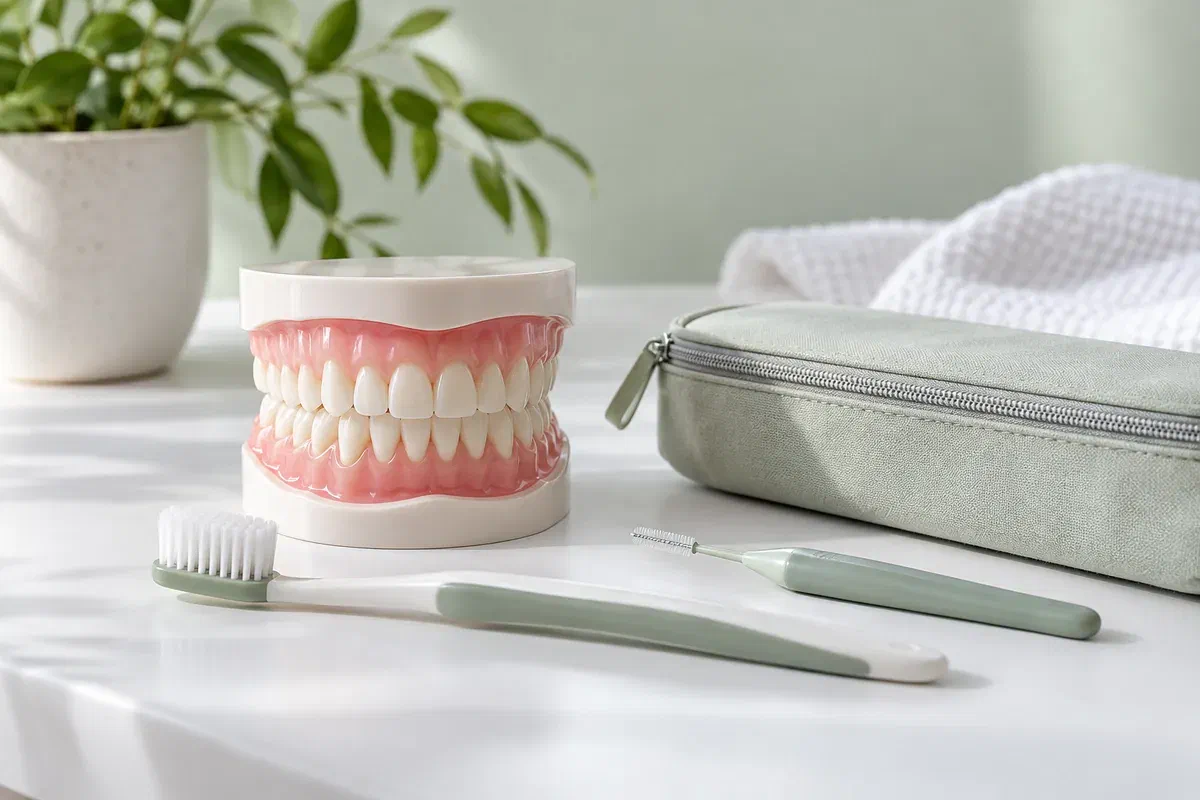
Dental model, toothbrush, interdental brush, and plain travel pouch
Add these to your list

Write down what you have noticed.

Symptoms that come and go are easy to forget by appointment day. Note changes in comfort, bleeding, dryness or healing, and jot down roughly when they began compared with any health change.

Gum bleeding, swelling or looseness

Gum disease is more likely when you have diabetes and can be more serious if glucose is hard to control. Record where you notice bleeding or puffiness, and whether any tooth feels loose. The examination will show whether prevention, gum therapy or referral to a specialist makes sense.

Dry mouth or tender areas

Note whether dryness is worse at night or during the day, and where any sore spots or denture rubbing occur. Several factors can be responsible, so a clear description helps the dentist narrow things down.

Medicines and recent changes

List every medicine with its dose, including insulin and anything new, and note any recent lows. If your diabetes team has given advice about procedures or appointments, write that down too. Our records may only reflect your last visit.

Your list does not need to include any meal or medicine changes for a routine visit; carry on as usual. If a planned procedure involves fasting or will alter what you can eat afterward, the arrangements should be written down and agreed with your clinicians first.

Why good notes matter

Clear information on both sides, fewer loose ends

Gum health and diabetes are linked. Diabetes can affect the gums and slow their healing, and active gum disease can work against steady glucose. Caring for the gums is worth it for your mouth, though it does not replace your diabetes treatment or promise any particular result.

When we know your routine, appointments become more predictable. Should a treatment be likely to leave you sore or unable to chew normally for a while, we will say so beforehand. Write down what you hear about the recovery period, and ask whether your doctor should be involved in any temporary adjustments.

Patient information: NIDCR — diabetes and oral health

A written record of your gums

We chart the gums and supporting tissues and can share the key findings. Bring that note to your next visit, or ask us to compare, so you can both see what has changed and where to focus.

Home-care steps you can write down

If hands, eyesight, fatigue or time make cleaning difficult, tell us. We will keep the advice short enough to fit on a card, and demonstrate it so you are not relying on memory.

Clarity on who contacts whom

If a procedure needs medical input, the dentist will explain why, whether we will contact your doctor or you will, and what to bring. That way no one assumes someone else made the call.

Using your notes

How the appointment unfolds

Bring your list of medicines and doses, recent diabetes information, your questions and a short description of your normal day. Note any past episode of low glucose during an appointment.

  1. Go through your list together

    We review your reason for coming, your diabetes management, other conditions and recent changes. Glucose information is one item on the list, considered with everything else rather than used as a single deciding figure.

  2. Examine and add to the notes

    We examine each tooth and the gum around it, the lining of the mouth and any denture or retainer. When an X-ray would help answer a specific question, the dentist will explain why. Show us the areas you wrote down as difficult or sore.

  3. Write out the plan and next steps

    The dentist sets out the recommendation and its reasons, and flags anything your doctor should weigh in on first. Sedation or a procedure that limits eating requires both plans to fit. Medicines are adjusted only by the prescribing clinician.

  4. Leave with aftercare instructions

    We confirm how to care for the area, when the review will be and how to contact us if eating becomes difficult or symptoms worsen. Keep following your diabetes plan, and bring recovery concerns to your medical team.

Between appointments

Keep a few notes for next time.

Home care should support treatment and be easy to keep up. If a recommendation does not fit your abilities, symptoms or medical instructions, write it down and tell us.

Daily cleaning, noted

Twice-daily brushing with a fluoride paste, plus one between-teeth clean, is the core routine. If a spot keeps bleeding or cleaning hurts, make a note of where and call for advice, rather than skipping it or pressing harder.

Track dryness

A dry mouth raises dental risk. Ask about suitable products, keep your medicine list current and note if dryness changes after a new prescription. Do not stop any medicine yourself; discuss it with your doctor.

Bring the notes to your review

Follow-up visits check gum response, healing or prevention. Your notes make them faster and more useful. Call earlier if pain increases, swelling begins or an appliance rubs.

What the plan might include

Options, explained and written down

Dental care for diabetes is not one standard package. Ask what the dentist found, how it supports the recommendation and what will be checked next time.

When things are stable

Prevention and routine visits

Expect the focus to be on daily cleaning, protection against decay and check-ups spaced to suit your risk. Mention practical difficulties even with good findings. Prevention should be updated as your mouth or health changes.

When the gums need more care

Gum treatment

Targeted treatment and reassessment may be recommended, with periodontist involvement if needed. Ask what the treatment aims to improve and how daily cleaning supports it. It works alongside diabetes care, not instead of it.

When a tooth or denture is the issue

Repair or appliance work

A damaged tooth or uncomfortable denture gets its own assessment and options. Your health may influence how it is treated and how it heals. Write down what eating limits and follow-up to expect before you decide.

Preparation questions

What to write down, and why

Ask about meals, medicines, comfort or healing early. These are general answers, and your own dentist and medical team will confirm anything specific to a planned treatment.

(905) 876-4488
What exactly should I list before a dental visit with diabetes?
Include all medicines and doses, recent changes, how you usually experience lows, other health conditions, and any advice from your diabetes team about procedures. Add your dental symptoms and questions.
Who arranges contact with my doctor if the dentist needs information?
The dentist will explain what is needed and agree with you who will make the request. Sometimes the clinic contacts your doctor; sometimes it is easier for you to bring a note or recent results.
Can I bring a printout from my glucose monitor?
You can, if you would like to. The dentist may not need every reading but may find recent patterns useful when planning a particular procedure.
Do I have to give my diabetes history every visit?
A quick update is helpful each time, especially if anything has changed. Your notes make that fast and avoid relying on an older record.
Should I take antibiotics I have at home before dental work?
No. Antibiotics should only be taken when prescribed for a specific reason. The dentist will consider your diagnosis, treatment and health, and diabetes alone does not mean you need them.
What should I eat after a procedure that leaves my mouth sore?
Ask the dentist about eating limits beforehand, then talk with your diabetes team about meals that work. Do not change doses yourself, and keep a contact number handy in case eating is harder than expected.
Visiting from Erin

Notes in hand, questions answered

Contact our Bronte Street team with your dental concern and a note of how your diabetes is managed. We will arrange an assessment and explain anything else worth adding to your list. Details about your day help us plan clearly.

A line about any recent diabetes change is useful when you book. For toothache or swelling, please call rather than waiting for a reply.

Visit Milton Dental Clinic
Unit 1, 342 Bronte St. S, Milton, ON L9T 5B7
Get directions Clinic hours
Monday–Thursday
11am–7pm
Friday–Sunday
By appointment only

Areas we serve

  • Milton
  • Oakville
  • Mississauga
  • Georgetown
  • Halton Hills
  • Acton
  • Campbellville
  • Brampton
  • Burlington
  • Puslinch
  • Rockwood
  • Erin
  • Caledon
  • Etobicoke
  • Old Milton
  • Bronte Meadows
  • Timberlea
  • Dorset Park
  • Dempsey
  • Clarke
  • Beaty
  • Coates
  • Harrison
  • Scott
  • Willmott
  • Ford
  • Bowes
  • Cobden
  • Walker
  • Mountain View
  • Milton Heights
  • Hawthorne Village
  • Valley View
  • Fallingbrook
  • Nassagaweya
  • Trafalgar
  • Esquesing
  • Nelson
  • Brookville
  • Moffat
  • Glen Williams
  • Norval
  • Limehouse
  • Stewarttown
  • Ashgrove
  • Hornby
  • Silver Creek
  • Speyside
  • Scotch Block
  • North Oakville
  • River Oaks
  • Glen Abbey
  • West Oak Trails
  • Palermo
  • Bronte Creek
  • College Park
  • Joshua Creek
  • Uptown Core
  • Preserve
  • Iroquois Ridge
  • Lisgar
  • Meadowvale
  • Meadowvale Village
  • Churchill Meadows
  • Erin Mills
  • Central Erin Mills
  • Streetsville
  • East Credit
  • Creditview
  • Heartland
  • Sheridan
  • Mount Pleasant
  • Credit Valley
  • Huttonville
  • Churchville
  • Springbrook
  • Northwest Brampton
  • Bram West
  • Fletcher's Meadow
  • Fletcher's Creek South
  • Alton Village
  • Orchard
  • Millcroft
  • Headon Forest
  • Tansley
  • Brant Hills
  • Tyandaga
  • Kilbride
  • Lowville
  • Aberfoyle
  • Morriston
  • Arkell
  • Hillsburgh
  • Freelton
  • Carlisle
  • Waterdown
  • Flamborough
  • Mountsberg

How can we help?

Milton Dental Clinic

Have a question about your smile? Choose the option that works best for you.

For urgent dental concerns, please call.
Messages are reviewed during clinic hours.