

Illustrative dental consultation about health history and appointment planning
General & Family Dentistry

Dental Care for Diabetic Patients in Old Milton

Years of living with diabetes often mean a longer medication list and a mouth that has seen a lot of dental work. We help people from Old Milton review gums, dryness and older restorations against their current health.

Old Milton, many years in

When your health record has grown, your dental plan should keep up

Plenty of people have managed diabetes for a decade or more. Over that time, medicines get added or swapped, other conditions appear, and a crown, bridge or partial denture may have joined the natural teeth. Each of those changes can quietly affect how your mouth feels and what a dental visit needs to account for.

That is why we ask for the current picture rather than relying on what was written years ago. Tell us how your diabetes is managed today, what your doctor has adjusted recently, and how your mouth has been behaving. A cleaning, gum treatment and a procedure that limits chewing for a few days each bring different considerations.

Our Bronte Street practice is a short way from Milton's historic downtown, and many people who come to us from Old Milton have been seeing dentists for most of their lives. Experience is welcome. So are questions. Mention a denture that has started rubbing, gums that bleed more than they used to, or a past visit that left you feeling unwell, and we will build those details into a plan you can follow.

Review your dental care with your current health
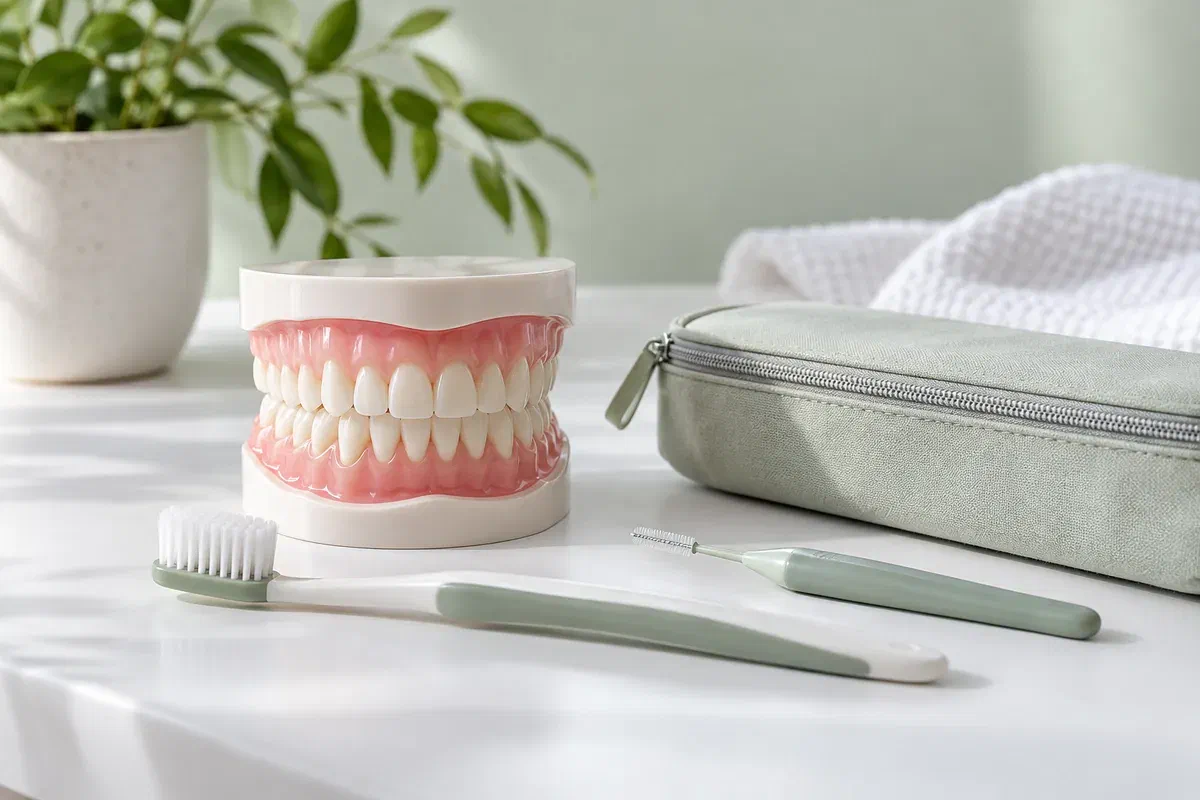
Dental model, toothbrush, interdental brush, and plain travel pouch
What may have shifted

Older dental work, newer symptoms

A change does not have to hurt to be worth checking. Describe anything different about comfort, chewing, cleaning or healing, and whether it lined up with a change in your health or medicines.

Gums pulling back or loosening teeth

Gum disease is more common and can be more severe in people with diabetes, particularly when glucose is hard to control. Receding gums, bleeding or a tooth that moves should be examined. You will hear whether the findings point toward prevention, gum therapy or a specialist referral.

Sore spots under a denture or a dry mouth

A partial or full denture that once fit well may start to rub, and a mouth that stays dry can make that worse. Several things can cause these symptoms, including medicines. Note when the discomfort shows up and what relieves it so the cause can be narrowed down.

A medicine list that keeps growing

New tablets, an insulin change, a recent low glucose episode or fresh instructions from your diabetes team all matter for planning. Bring the list you use at the pharmacy. What was on file at a past dental visit may no longer be accurate.

A dental booking is never a reason to miss a meal or alter your diabetes medicines. If treatment would require fasting or change how you can eat afterward, ask for the dental and medical plans to be agreed in advance.

The value of the full picture

Mouth and body, considered side by side

Research describes a two-way relationship: diabetes can affect gum tissue and healing, and gum disease may make glucose more difficult to manage. Looking after your gums is worth doing for your mouth, but it should never be treated as a substitute for diabetes care or a promise of better numbers.

Knowing your history also helps appointments go as expected. If a procedure might affect chewing, comfort or your day, we would rather talk about it first than surprise you afterward. Ask what you will be able to eat and whether your doctor should help with any temporary adjustments.

Patient information: NIDCR — diabetes and oral health

A record you can compare over time

Charting your gums and supporting bone gives a reference point. Repeat measurements help explain what is changing and which areas need attention first. Ask what the team hopes to see improve by the next review.

Techniques that work for older hands

Arthritis, changes in eyesight or fatigue can make flossing and brushing harder than they once were. Tell us. A larger-handled brush, a different between-teeth tool or a short demonstration may help more than a cupboard full of products.

Medical advice brought in when it counts

Some treatments call for information from your doctor or diabetes team. The dentist can say when that applies, who will ask for it and what you should bring. Advice from an earlier procedure should not be assumed to cover a new one.

What happens at the appointment

Four steps, at a comfortable pace

Bring your current medicines, any recent diabetes information and a description of your usual day. If your glucose has dropped during an appointment in the past, let us know so preparation can reflect it.

  1. Update your history

    We talk about the reason for your visit, how your diabetes is managed now, other health conditions and anything that has changed. Your dentist might ask whether your readings have been steady. These details form part of a wider assessment, not a cut-off that decides everything.

  2. Check teeth, gums and appliances

    The examination can include gums, natural teeth, older fillings and crowns, soft tissues and any denture. X-rays are taken when they would answer a clinical question. Show us places that are difficult to clean and symptoms that come and go.

  3. Explain options and who else is involved

    You will hear what is recommended, why, and whether medical input is needed first. Sedation or a procedure that affects eating means the dental and diabetes plans must fit together. Medication changes should only come from the clinician who prescribes them.

  4. Plan healing and the review

    We confirm aftercare for the treated area and when healing or gum health will be rechecked. You will know whom to call if eating becomes hard or symptoms worsen. Keep following your diabetes plan, and contact your medical team if recovery gets in the way.

Looking after things at home

Gentle routines, kept up

Home care should support your treatment without becoming a burden. Tell us if a recommendation does not suit your hands, your symptoms or medical instructions you already follow.

Reach the gumline, crowns and gaps

Brush with fluoride toothpaste and clean between teeth and around bridges with a method that suits you. Ask us to demonstrate a tricky area. If bleeding keeps happening or cleaning hurts, get advice rather than avoiding the spot or scrubbing harder.

Care for a denture and a dry mouth

Clean a denture daily and give your gums time without it as advised. Dryness can increase discomfort and dental risk, so ask about protective products and list all your medicines. Do not stop a prescription on your own, and check that fluid advice fits your medical guidance.

Return for the review

Follow-up visits check gum response, healing or prevention. The interval should match what was found. Contact us sooner if a treated area becomes more painful, swelling appears or a denture starts causing a sore.

Matching care to what we find

Your diagnosis guides the treatment, not the label.

Diabetes alone does not decide what dental care you need or how often you should come in. Ask which findings support each recommendation and how progress will be judged.

When the aim is to keep things stable

Ongoing prevention

Care may focus on cleaning, cavity prevention and a review interval that suits you. Raise symptoms and day-to-day difficulties even after a reassuring exam. Prevention should be adjusted as your mouth or health changes.

When the supporting tissues need treatment

Gum therapy

Gum findings may lead to targeted treatment and reassessment, with a periodontist involved where appropriate. Ask what the treatment should achieve and what you can do between visits. It supports oral health and does not replace your diabetes management.

When a tooth, crown or denture is the issue

Repairing teeth or adjusting appliances

A worn crown, broken tooth or ill-fitting denture needs its own diagnosis and options. Your medical situation may affect the procedure and healing. Ask how chewing might be limited and what follow-up is needed before you decide.

Questions we hear often

Plain answers before you book

Ask about meals, medicines, comfort or healing early on. These answers are general; your own dentist and diabetes team will give instructions for any particular treatment.

(905) 876-4488
My dentures have started to feel loose. Could that be connected to diabetes?
It might be, but there are several possible reasons, including normal changes in the gums and bone over time. Dryness or sore spots can make a looser fit more noticeable. An examination can show whether the denture needs adjusting, relining or another look.
Is it normal for healing to take longer after a dental procedure when you have diabetes?
Healing can be slower for some people, particularly when glucose is difficult to manage. The dentist will explain what to expect for your procedure and when it will be reviewed. Report pain or swelling that gets worse rather than waiting it out.
Do I still need to mention diabetes if I have had it for many years?
Yes. Your management, medicines and other health conditions may have changed since your last dental record was updated. A current account helps the team plan visits and treatment that reflect where things stand today.
Should I change my insulin before a dental appointment?
Not unless the clinician who manages your diabetes tells you to. Routine dental visits do not usually call for changes. If a procedure involves sedation or limits eating, the plan for medicines and meals should be agreed ahead of time.
Will I be given antibiotics because I have diabetes?
Not automatically. The dentist looks at your diagnosis, the planned treatment and your medical situation. Antibiotics are prescribed for specific reasons, and it is important not to take leftover tablets or start a course without a prescription.
Why would the dentist want to contact my doctor?
Some procedures or medical situations benefit from extra information or advice. The dentist will explain why it is needed, what will be asked and who will make the request. You can also bring recent notes or results to help.
From Old Milton to Bronte Street

Let us know what has changed, and we will plan around it.

Reach out to our Bronte Street clinic with your dental concern and anything about your diabetes we should prepare for. We can arrange an assessment and tell you what to bring. Knowing your routine helps us explain each step clearly.

A quick word about your diabetes, and how its management has changed, is helpful at booking. For a toothache or swelling, ring us rather than waiting.

Visit Milton Dental Clinic
Unit 1, 342 Bronte St. S, Milton, ON L9T 5B7
Get directions Clinic hours
Monday–Thursday
11am–7pm
Friday–Sunday
By appointment only

Areas we serve

  • Milton
  • Oakville
  • Mississauga
  • Georgetown
  • Halton Hills
  • Acton
  • Campbellville
  • Brampton
  • Burlington
  • Puslinch
  • Rockwood
  • Erin
  • Caledon
  • Etobicoke
  • Old Milton
  • Bronte Meadows
  • Timberlea
  • Dorset Park
  • Dempsey
  • Clarke
  • Beaty
  • Coates
  • Harrison
  • Scott
  • Willmott
  • Ford
  • Bowes
  • Cobden
  • Walker
  • Mountain View
  • Milton Heights
  • Hawthorne Village
  • Valley View
  • Fallingbrook
  • Nassagaweya
  • Trafalgar
  • Esquesing
  • Nelson
  • Brookville
  • Moffat
  • Glen Williams
  • Norval
  • Limehouse
  • Stewarttown
  • Ashgrove
  • Hornby
  • Silver Creek
  • Speyside
  • Scotch Block
  • North Oakville
  • River Oaks
  • Glen Abbey
  • West Oak Trails
  • Palermo
  • Bronte Creek
  • College Park
  • Joshua Creek
  • Uptown Core
  • Preserve
  • Iroquois Ridge
  • Lisgar
  • Meadowvale
  • Meadowvale Village
  • Churchill Meadows
  • Erin Mills
  • Central Erin Mills
  • Streetsville
  • East Credit
  • Creditview
  • Heartland
  • Sheridan
  • Mount Pleasant
  • Credit Valley
  • Huttonville
  • Churchville
  • Springbrook
  • Northwest Brampton
  • Bram West
  • Fletcher's Meadow
  • Fletcher's Creek South
  • Alton Village
  • Orchard
  • Millcroft
  • Headon Forest
  • Tansley
  • Brant Hills
  • Tyandaga
  • Kilbride
  • Lowville
  • Aberfoyle
  • Morriston
  • Arkell
  • Hillsburgh
  • Freelton
  • Carlisle
  • Waterdown
  • Flamborough
  • Mountsberg

How can we help?

Milton Dental Clinic

Have a question about your smile? Choose the option that works best for you.

For urgent dental concerns, please call.
Messages are reviewed during clinic hours.