

Illustrative dental consultation about health history and appointment planning
General & Family Dentistry

Dental Care for Diabetic Patients in Rockwood

You may have read that gum disease and blood sugar are connected and wondered what that means for you. For people travelling from Rockwood, we explain the link honestly and check your gums with your diabetes history in mind.

Rockwood · understanding the link

Gums and glucose: what the connection really means

Headlines about gum disease and diabetes can be confusing. Some make it sound as if a cleaning will fix your blood sugar; others make every bleeding gum sound like an alarm. The truth sits in the middle. The two do affect each other, and that is a good reason to take gum health seriously without expecting it to replace anything your doctor prescribes.

In practice, we start with your story. How do you manage diabetes now, and has anything changed in recent months? What have you noticed when you brush? A routine examination, a course of gum therapy and a procedure that limits chewing for a few days each have different implications, and we want to plan the one that fits.

Making the trip in from Rockwood, you may want clear answers in one sitting. Bring your questions, including the ones you found online. Before agreeing to treatment, tell us about bleeding, dryness or a visit that did not go well in the past. We will explain the dental plan, whether medical coordination is needed, and what you can realistically do between appointments.

Ask how your gums and diabetes connect
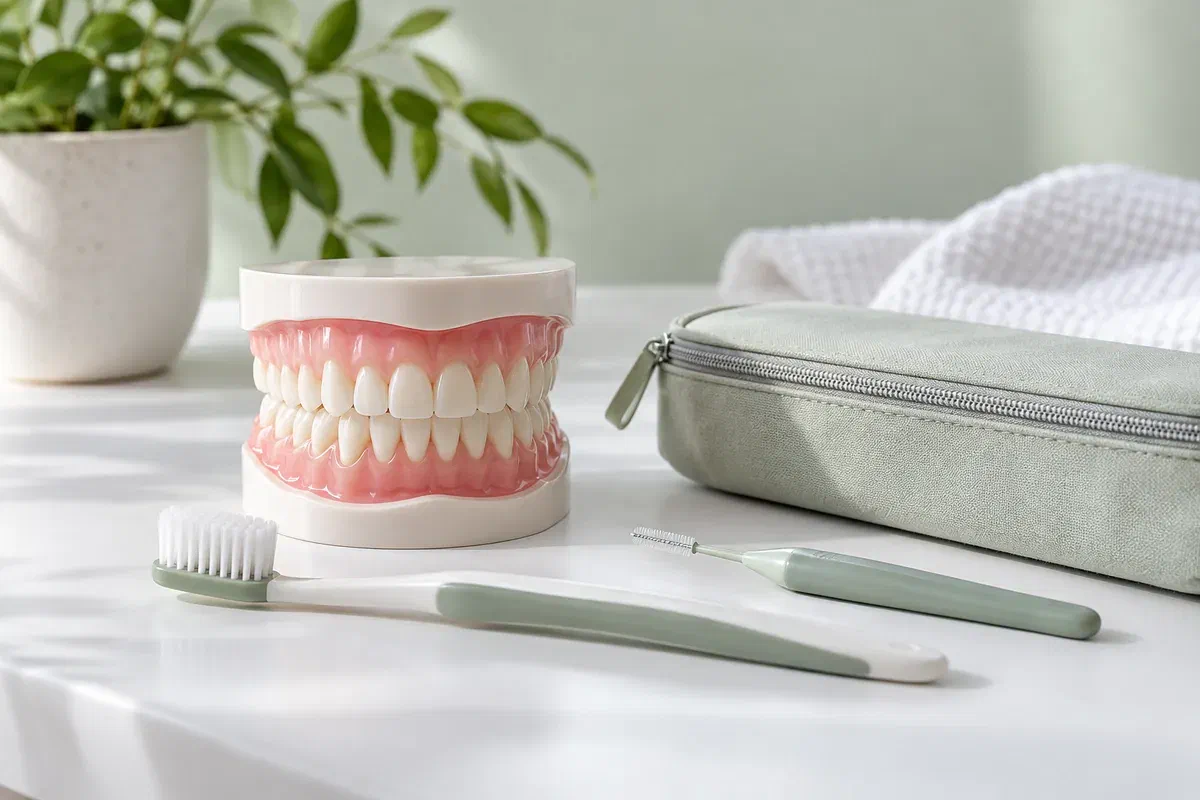
Dental model, toothbrush, interdental brush, and plain travel pouch
Where the link shows up

Signs that the gums need attention

Tenderness is only one clue. Changes in bleeding, gum shape, tooth stability, dryness or healing are worth describing, along with any health change that came around the same time.

Inflamed or bleeding gums

Diabetes increases the likelihood of gum disease, and poorly controlled glucose can make it more severe. Red, swollen or bleeding gums, or a tooth that has started to move, should be examined. From there, you will hear whether the next move is better prevention, active gum treatment or a periodontist's opinion.

Dryness and slow-to-settle sores

Lasting dryness or a sore that lingers can be uncomfortable and may affect how the gums respond. There are many possible causes. Keep track of when it happens and what helps, rather than assuming diabetes is the only reason.

Shifts in your diabetes treatment

A change in medicines, a run of lows or highs, or new advice from your diabetes team can all be relevant. Bring your current list so we are not relying on details from a past appointment.

Do not change meals or medicines because a dental check is coming up. Should a procedure require fasting, or leave you unable to eat normally for a time, a joint plan with your clinicians needs to be in place first.

The two-way relationship

Healthier gums help your mouth, and diabetes care stays essential.

Research suggests that ongoing gum inflammation can make blood glucose more difficult to control, and that diabetes, particularly when it is not well managed, can make the gums more vulnerable and slow their healing. Treating gum disease is valuable for your teeth and comfort. Your diabetes treatment still does the main job, and no one can promise it will change your test results.

Understanding your diabetes also helps us plan appointments that go smoothly. If treatment could affect eating or comfort for a while, we explain that before you commit. Ask how the following days are likely to feel, and check with your doctor if short-term changes to medicines or meals might be needed.

Patient information: NIDCR — diabetes and oral health

Measurements you can see change

Gum charting records pocket depths and bleeding points. Repeating it at review shows whether inflammation is settling, which is far more useful than a vague impression. Ask us to walk you through the numbers.

Realistic cleaning advice

If hand pain, eyesight, fatigue or time is a barrier, say so. A routine you will keep up is worth more than an ambitious one. We can demonstrate a technique and focus on a small number of changes.

Joined-up care when it is needed

Some treatments benefit from input from your doctor or diabetes educator. We will tell you when, who is making the request and what you need to provide, so you are not left wondering whether old advice still applies.

How we assess your gums

Talk, measure, explain, review

Bring a current medicine list, any recent diabetes results and an outline of your daily routine. If you have ever had low glucose during a dental visit, let us know so the appointment can be planned around it.

  1. Your health and goals

    We discuss why you came, how your diabetes is managed, other conditions and recent changes. Glucose information may come up as part of the wider picture, never as one number that settles every decision.

  2. Gum measurements and examination

    We examine the gums closely, along with teeth, soft tissues and any appliance. X-rays can show bone levels around teeth and are recommended when they would add useful information. Point out areas that bleed or are hard to clean.

  3. What the findings mean

    We explain what is recommended and why, and whether medical advice should come first. If sedation is needed or eating will be limited, the dental and diabetes plans must agree. Medicines should only ever be changed by your prescriber.

  4. Reassessment

    After gum treatment, a recheck shows how the tissues have responded. We confirm aftercare and how to reach us if eating becomes difficult or symptoms get worse. Your diabetes plan carries on throughout, with your medical team advising if recovery interferes.

Supporting gum healing

What you do daily shapes what we see at review.

Home care should reinforce treatment and be manageable. Let us know if anything we suggest does not fit your abilities, symptoms or existing medical instructions.

Gentle, thorough cleaning at the gumline

Use a fluoride toothpaste and clean between teeth every day with a method you can handle. Ask for a demonstration in any area you find awkward. Some bleeding may ease as gums settle, but if it persists or cleaning hurts, check in with us.

Protect against dryness

A dry mouth leaves teeth less protected and can make gums feel sore. Ask which products might help and share every medicine you take. Stopping a prescription is a decision for your doctor, and fluid advice should respect any medical limits.

Return for the gum recheck

The review measures how your gums have responded and whether prevention needs changing. If pain builds, a new swelling appears or an appliance begins to rub before then, call us.

Possible next steps

From prevention to periodontal care

There is no one-size dental plan for diabetes. Ask what the dentist found, which option it supports and how improvement will be judged.

When your gums are in good health

Prevention and regular checks

The plan may centre on cleaning technique, cavity prevention and a check-up schedule that matches your risk. Mention any struggles even when the news is good. Prevention should evolve as your health changes.

When inflammation or pockets need treatment

Gum therapy and reassessment

Targeted cleaning below the gumline and a recheck may be recommended, sometimes with a referral to a periodontist. Ask what the treatment should improve and how your daily routine affects the outcome. It supports oral health alongside your diabetes management.

When a specific tooth or denture needs care

Restoring teeth or appliances

A damaged tooth or uncomfortable denture has its own diagnosis and set of choices. Your health can influence treatment and recovery. Ask how eating might be affected and what the follow-up looks like.

The gum–glucose connection

Clearing up common confusion

Ask about meals, medicines, comfort or healing whenever questions come up. These answers are general, and your own dentist and diabetes team will advise on any particular treatment.

(905) 876-4488
Is it true that gum disease can raise blood sugar?
Research suggests ongoing gum inflammation can make glucose harder to manage for some people. That is one reason to treat gum disease, but the main tools for managing diabetes remain the ones your medical team prescribes.
If my gums get healthier, can I cut back on diabetes medicine?
No. Only the clinician managing your diabetes should decide on medicine changes. Gum treatment helps your mouth and may support your overall health, but it is not a reason to adjust prescriptions on your own.
What is a deep cleaning, and why might I need one?
It is a type of gum treatment that cleans below the gumline where deposits and inflammation build up. The dentist will explain whether your gum measurements suggest it and how healing will be reviewed.
Do people with diabetes get gum disease more often?
Diabetes does increase the risk, particularly when glucose is hard to control. Regular checks and daily cleaning help catch and manage problems early.
Will I need to see a gum specialist?
Not always. Many gum problems are managed by the general dental team. If findings are more advanced or not responding, the dentist may suggest a periodontist.
Should I tell my doctor about my gum treatment?
It can be helpful, since your doctor is looking at your overall health. With your permission, we can share relevant information, or you can mention it at your next diabetes appointment.
From Rockwood

Get a clear answer about your gums.

Write or call our Bronte Street team about the gum or tooth concern on your mind and how your diabetes is managed. We will set up an assessment and say what is useful to have with you. A sense of your daily routine helps us explain each finding.

Include any new diabetes medicines or recent changes with your request. If pain or swelling is the issue, phone so we can advise straight away.

Visit Milton Dental Clinic
Unit 1, 342 Bronte St. S, Milton, ON L9T 5B7
Get directions Clinic hours
Monday–Thursday
11am–7pm
Friday–Sunday
By appointment only

Areas we serve

  • Milton
  • Oakville
  • Mississauga
  • Georgetown
  • Halton Hills
  • Acton
  • Campbellville
  • Brampton
  • Burlington
  • Puslinch
  • Rockwood
  • Erin
  • Caledon
  • Etobicoke
  • Old Milton
  • Bronte Meadows
  • Timberlea
  • Dorset Park
  • Dempsey
  • Clarke
  • Beaty
  • Coates
  • Harrison
  • Scott
  • Willmott
  • Ford
  • Bowes
  • Cobden
  • Walker
  • Mountain View
  • Milton Heights
  • Hawthorne Village
  • Valley View
  • Fallingbrook
  • Nassagaweya
  • Trafalgar
  • Esquesing
  • Nelson
  • Brookville
  • Moffat
  • Glen Williams
  • Norval
  • Limehouse
  • Stewarttown
  • Ashgrove
  • Hornby
  • Silver Creek
  • Speyside
  • Scotch Block
  • North Oakville
  • River Oaks
  • Glen Abbey
  • West Oak Trails
  • Palermo
  • Bronte Creek
  • College Park
  • Joshua Creek
  • Uptown Core
  • Preserve
  • Iroquois Ridge
  • Lisgar
  • Meadowvale
  • Meadowvale Village
  • Churchill Meadows
  • Erin Mills
  • Central Erin Mills
  • Streetsville
  • East Credit
  • Creditview
  • Heartland
  • Sheridan
  • Mount Pleasant
  • Credit Valley
  • Huttonville
  • Churchville
  • Springbrook
  • Northwest Brampton
  • Bram West
  • Fletcher's Meadow
  • Fletcher's Creek South
  • Alton Village
  • Orchard
  • Millcroft
  • Headon Forest
  • Tansley
  • Brant Hills
  • Tyandaga
  • Kilbride
  • Lowville
  • Aberfoyle
  • Morriston
  • Arkell
  • Hillsburgh
  • Freelton
  • Carlisle
  • Waterdown
  • Flamborough
  • Mountsberg

How can we help?

Milton Dental Clinic

Have a question about your smile? Choose the option that works best for you.

For urgent dental concerns, please call.
Messages are reviewed during clinic hours.