

Illustrative conversation between an older adult and a dental clinician
General & Family Dentistry

Dental Care for Older Adults in Burlington

A new prescription, a parched mouth at night, a denture that suddenly rubs. For older adults from Burlington, we look at how health changes affect teeth and gums, then plan care you can manage comfortably.

Burlington · when health and mouth connect

A glass of water by the bed every night

That habit sometimes begins quietly, a few weeks after a new medicine is started. The tongue feels sticky on waking, crackers are harder to swallow, and a denture that sat well now seems to rub. Changes in general health and the mouth are closely linked, so a dental visit is a sensible place to sort out what is going on.

Our approach does not begin with a number on your birth certificate. It begins with your teeth, gums and any appliance, your medical history, and the things you care about most. Some people want to keep every natural tooth they can. Others simply want to eat and talk without fuss. Both goals deserve a careful assessment and an honest explanation.

Plenty of Burlington households share a car or a calendar, and you are welcome to bring someone with you. Say how you would like them to help. If hearing, eyesight, getting in and out of the chair or communication need extra thought, mention it when you book.

Ask how health changes affect your mouth
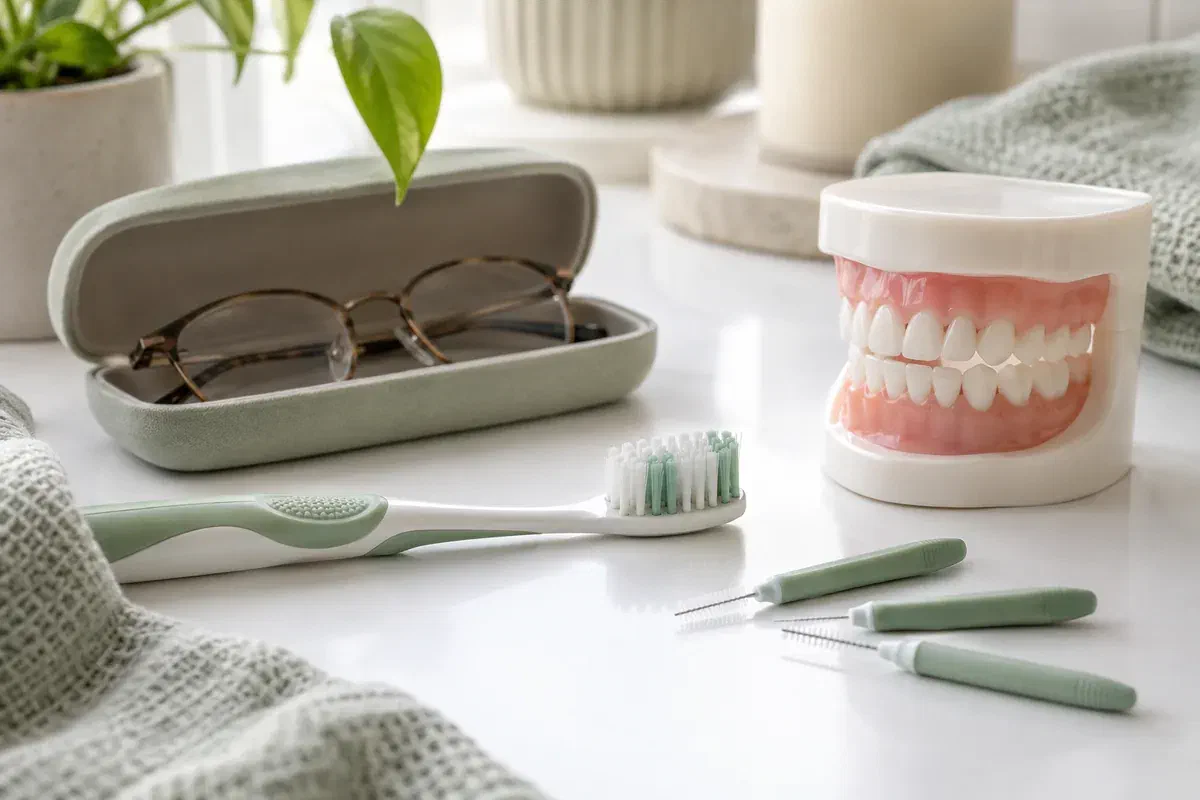
Easy-grip toothbrush, interdental brushes, dental model, and reading glasses
Signals to pass along

Something feels different. Worth a mention.

Changes in health often show up in the mouth before anywhere else. Let us know about new discomfort, reduced saliva or tasks that have become fiddly, even when the change seems slight.

Fillings and crowns behaving differently

Dry conditions can make the edges of older restorations more vulnerable. Report a rough patch, food catching in one place, or a bite that has shifted. The dentist examines the tooth and its surroundings and then explains whether watching, repairing or replacing is reasonable.

Persistent dryness or soreness

Lasting dry mouth is not an unavoidable feature of later life. Many medicines and conditions can reduce saliva. A burning sensation, sore patch or tissue that looks unusual should be examined, not soothed indefinitely with home remedies that have not been checked.

Denture comfort or cleaning slipping

Less saliva can make a denture feel looser or more abrasive, and changes in grip or vision can make cleaning slower. Tell us which step is tricky and when rubbing occurs, so the appliance and the gums beneath it can be reviewed.

Please do not put every change down to age. A sore that stays, a new lump, unexplained bleeding, or a new difficulty chewing or swallowing should be reported so it can be properly assessed.

Planning around your health

Care that keeps pace with your medical picture

Good planning connects what the examination shows with what you want to achieve. For one person that means protecting teeth from the extra decay risk that dryness can bring. For another, it means a denture that feels comfortable again. You can ask how each suggestion helps and what maintenance it will need.

Health appointments can pile up, so the logistics matter. Discuss the number of dental visits, likely recovery, costs and any help you would need at home. Care can sometimes be staged around other commitments. The recommendation should let you compare reasonable options rather than assume a single answer for everyone.

Clarity about existing restorations

Ask which fillings, crowns and bridges look healthy and which need monitoring. Knowing the difference helps you see what is pressing and what can wait. A restoration that is intact and trouble-free is not replaced just because it has been there a long time.

A home routine adapted to you

The team can suggest easier-grip brushes, interdental aids and ways to reach awkward areas. If a partner or carer helps with your routine, a quick demonstration lets them support you as you prefer.

A plan that adjusts with your health

New diagnoses, medicines or energy levels can change what is practical. Let us know when an agreed plan stops fitting. Revisiting choices is part of ongoing care, and the reasoning can be explained again whenever you ask.

Step by step

How a visit unfolds

A current list of medicines, including recent changes, is the most useful thing to bring. Add any health updates, the dentures or appliances you wear, and a few notes about your main worries.

  1. Go over medicines and medical history

    We ask what prompted the visit, review your health and prescriptions, and learn how you eat and care for your mouth. Recent medicine changes are especially relevant. Tell us whether hearing, vision, positioning or communication support would make things easier.

  2. Examine teeth, gums and tissues

    The dentist checks the areas relevant to you, including gums, natural teeth, restorations and the tissues under any denture. Saliva and the condition of the soft tissues may be noted. Imaging may be suggested if it would answer a specific question.

  3. Talk through realistic choices

    For each option, you can ask what it involves now and later, its benefits and limits, the costs and the number of visits. If your physician or pharmacist should be consulted, or a specialist referral makes sense, the reason will be explained.

  4. Leave with a clear plan

    Confirm what will be treated or monitored, the home-care steps and the next review date. Written notes can be provided. A support person may help with arrangements if you wish, while decisions continue to include you.

Everyday care

Protecting a drier mouth at home

Home care should fit your natural teeth, your dental work and any appliance, especially if saliva has decreased. A hands-on demonstration of key steps usually helps more than switching between products.

Brush and clean between with care

Fluoride toothpaste helps protect natural teeth, which matters more when the mouth is dry. Choose an interdental cleaner that suits your gaps, and try a thicker handle if gripping is hard. Show us your routine so advice fits the real obstacle.

Keep the denture clean and comfortable

Follow cleaning directions for your appliance’s material, and look after the gums underneath. Ask how long to wear it and when to take it out. A drier mouth can increase rubbing, so report soreness instead of adding adhesive.

Report dryness and medicine changes

Jot down roughly when dryness began and whether it followed a new prescription. Symptom relief and extra protection for teeth can be discussed. Keep taking prescribed medicines unless your doctor advises otherwise, and mention any fluid limits you have been given.

Patient information: NIDCR — understanding persistent dry mouth · NIDCR — oral health resources for older adults

Shaping the plan

Different goals lead to different care

Care might focus on protecting what is working, fixing one problem or improving an appliance. You can ask how the expected benefit compares with the effort of treatment and the upkeep afterward.

When things are comfortable but at risk

Extra prevention for a dry mouth

The plan may centre on keeping natural teeth and dental work healthy through careful cleaning, preventive measures and regular review. Areas being watched will come with a clear explanation of what would lead to treatment. Comfort today does not replace a proper examination.

When one issue needs attention

Treating a specific problem

Decay, a gum concern or an uncomfortable crown may call for focused treatment. Ask about conservative options, how long a repair could last and the follow-up needed. Recommendations should reflect findings and health rather than age.

When missing teeth affect eating or speech

Reviewing a denture or replacement

Options may include adjusting an existing appliance or considering other ways to replace teeth. Which one suits you rests on the examination, your general health, your wishes and the upkeep you can handle. Describe what you want to eat or say more comfortably so the comparison stays practical.

Your questions

Health, medicines and your mouth

Ask about alternatives, the reason for any recommendation and how appointments fit your schedule. Notes or a companion can help you keep track of the answers.

(905) 876-4488
Which medicines can cause a dry mouth?
Many common prescriptions and some over-the-counter products list dry mouth as a possible side effect. Bring a complete list and the team can consider whether any may be contributing. Do not stop or change a medicine yourself; any concern can be raised with your doctor or pharmacist.
Will sipping water fix dry mouth?
Frequent sips can ease the feeling for a while, but they may not address the cause or the effect on your teeth. The dentist can discuss other relief measures and preventive steps. If your physician has limited your fluids, mention that so advice respects it.
Can a dry mouth cause bad breath or a change in taste?
Reduced saliva can contribute to both. Other causes are possible too, including gum problems or a denture that needs cleaning differently. Tell us what you have noticed and when, so the examination can look for likely reasons.
My health has changed recently. Should I tell my dentist?
Yes. New diagnoses, surgeries, treatments and medicines can all affect dental care, including what is safe to do and when. Share updates at each visit, even ones that seem unrelated, so recommendations take your current health into account.
Does an old bridge have to come out if it still works?
Not automatically. The dentist checks the supporting teeth, the gums around them and any sign of decay or looseness. Some bridges serve well for many years. If something is found, you can ask whether monitoring or repair is a reasonable alternative to replacement.
Can I group a dental visit with other appointments when travelling from Burlington?
Tell us when you book which days you will already be out and about, and we will try to offer a suitable time. If several dental needs come up, ask whether some can be handled together. Call ahead if anything changes.
Older adult dental care for Burlington

Let’s get your mouth comfortable again

Contact our Bronte Street practice to describe what has changed and any arrangements you need. You might be protecting natural teeth, struggling with a denture or noticing dryness for the first time. We start with an assessment and a clear talk about your options.

Mention hearing, sight, mobility or seating needs when you call, so we can have arrangements ready.

Visit Milton Dental Clinic
Unit 1, 342 Bronte St. S, Milton, ON L9T 5B7
Get directions Clinic hours
Monday–Thursday
11am–7pm
Friday–Sunday
By appointment only

Areas we serve

  • Milton
  • Oakville
  • Mississauga
  • Georgetown
  • Halton Hills
  • Acton
  • Campbellville
  • Brampton
  • Burlington
  • Puslinch
  • Rockwood
  • Erin
  • Caledon
  • Etobicoke
  • Old Milton
  • Bronte Meadows
  • Timberlea
  • Dorset Park
  • Dempsey
  • Clarke
  • Beaty
  • Coates
  • Harrison
  • Scott
  • Willmott
  • Ford
  • Bowes
  • Cobden
  • Walker
  • Mountain View
  • Milton Heights
  • Hawthorne Village
  • Valley View
  • Fallingbrook
  • Nassagaweya
  • Trafalgar
  • Esquesing
  • Nelson
  • Brookville
  • Moffat
  • Glen Williams
  • Norval
  • Limehouse
  • Stewarttown
  • Ashgrove
  • Hornby
  • Silver Creek
  • Speyside
  • Scotch Block
  • North Oakville
  • River Oaks
  • Glen Abbey
  • West Oak Trails
  • Palermo
  • Bronte Creek
  • College Park
  • Joshua Creek
  • Uptown Core
  • Preserve
  • Iroquois Ridge
  • Lisgar
  • Meadowvale
  • Meadowvale Village
  • Churchill Meadows
  • Erin Mills
  • Central Erin Mills
  • Streetsville
  • East Credit
  • Creditview
  • Heartland
  • Sheridan
  • Mount Pleasant
  • Credit Valley
  • Huttonville
  • Churchville
  • Springbrook
  • Northwest Brampton
  • Bram West
  • Fletcher's Meadow
  • Fletcher's Creek South
  • Alton Village
  • Orchard
  • Millcroft
  • Headon Forest
  • Tansley
  • Brant Hills
  • Tyandaga
  • Kilbride
  • Lowville
  • Aberfoyle
  • Morriston
  • Arkell
  • Hillsburgh
  • Freelton
  • Carlisle
  • Waterdown
  • Flamborough
  • Mountsberg

How can we help?

Milton Dental Clinic

Have a question about your smile? Choose the option that works best for you.

For urgent dental concerns, please call.
Messages are reviewed during clinic hours.