

Illustrative conversation between an older adult and a dental clinician
General & Family Dentistry

Dental Care for Older Adults in Campbellville

Nothing hurts and you would like to keep it that way. For older couples and households in Campbellville, we focus on prevention, timely reviews and sensible scheduling, so teeth and dentures stay comfortable.

Campbellville · prevention that fits rural life

Staying ahead is easier than catching up

Out in the countryside, a trip into town tends to serve several purposes: groceries, the pharmacy, perhaps a medical appointment. Dental care fits best when it slots into that rhythm. For many people in later life the aim is not dramatic treatment but steady upkeep, catching small changes early so the mouth stays comfortable and the calendar stays calm.

Being a certain age tells us little on its own. A careful look at your teeth, gums, existing dental work and any partial or full denture tells us much more, especially alongside your medical history and medicines. From there we can explain what looks stable, what deserves watching, and what, if anything, needs doing.

Couples from Campbellville often prefer to come in together, and that works well. Each of you has your own conversation and your own decisions. If hearing, eyesight, mobility or communication support would help either of you, mention it when booking so it can be arranged.

Plan a preventive visit
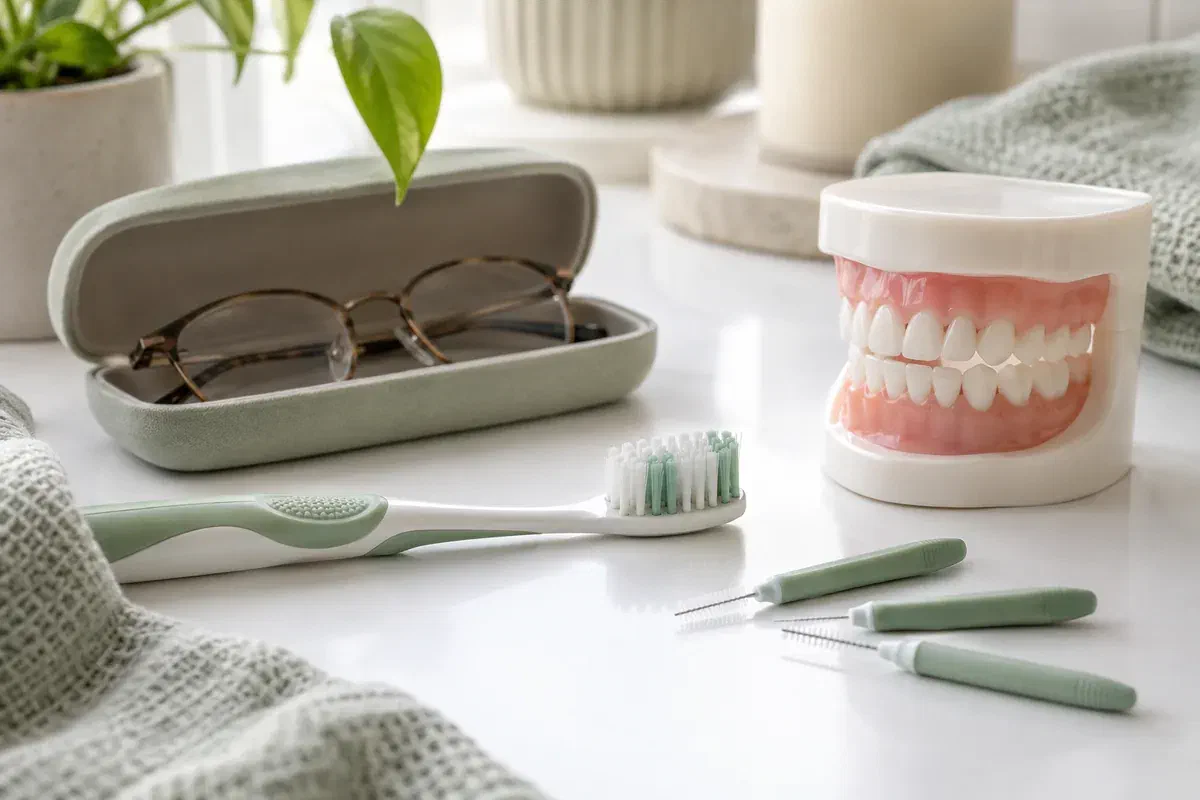
Easy-grip toothbrush, interdental brushes, dental model, and reading glasses
Early signs, easy to miss

Quiet changes worth catching

Many dental problems start without pain. A slight change in how something feels, looks or functions is a good enough reason to bring it up at your next visit, or to call sooner.

Wear at the edges of older work

After many years, fillings and crowns can develop gaps or rough spots that catch floss or trap bits of food. You may also notice that your back teeth meet a little differently. The dentist checks the restoration and the tooth around it before suggesting a course.

Dryness, burning or a sore spot

Lasting dryness is often linked to medicines or health conditions, and it can quietly raise the risk of decay. It is not something age obliges you to accept. A sore area or tissue that looks different also deserves a proper examination rather than another home remedy.

Routines and appliances that need tweaking

Hands that tire more easily or eyes that struggle at close range can make thorough cleaning harder. A partial denture may begin to catch or rub. Describe which task has changed and when an appliance bothers you, so both it and your gums can be assessed.

Even with a preventive focus, certain signs need prompt attention. Please let us know straight away about a sore that lingers, a new lump, unexplained bleeding, or new difficulty chewing or swallowing.

Why prevention pays off

Fewer surprises, simpler decisions

Prevention works best with a clear target. Perhaps that is keeping all your remaining teeth comfortable, protecting a bridge you rely on, or making sure a denture keeps fitting well. The examination tells us how close you are to that goal, and each suggestion should explain how it helps and what ongoing effort it asks of you.

Practicalities shape any plan. Ask about how often reviews are needed for your situation, what treatment would involve if something is found, the costs and whether you would need a lift home. Care can be staged when sensible. You should be able to compare choices on your own terms rather than follow a standard template for your age.

Monitoring with a clear threshold

When an older filling or crown is being watched, the dentist can explain what change would mean it needs attention. That keeps you informed and avoids unnecessary work. Being old is not, in itself, a reason to replace a restoration.

A cleaning routine you will keep up

The team can show brush styles, interdental cleaners and approaches for awkward areas that suit your hands and your dental work. A partner can learn alongside you if you help each other, and every suggestion respects what you prefer.

Reviews that adjust over time

As health, energy and circumstances change, the interval between visits and the focus of your care can change too. Tell us when the current plan stops fitting, and ask for anything to be explained again.

A preventive appointment

Check, clean, explain, plan

Bring your up-to-date medicines, any news from your doctor and the dentures or appliances you wear. If you and a partner are booking together, each of you should bring your own list.

  1. Start with what has changed

    We ask how things have been since your last visit and review your medical history and medicines. Eating, cleaning and any appliance use are part of the conversation. Mention seating, hearing, vision or communication preferences so the appointment feels comfortable.

  2. Look for early changes

    The examination covers gums, natural teeth, existing dental work and the tissues that support a denture. Radiographs may be recommended at intervals suited to your situation, when they would help answer a specific question.

  3. Talk through findings plainly

    If something is found, you will hear the reasonable options with benefits, limits, costs and visit numbers. When your physician or a specialist ought to be consulted, the reason is explained before anything is arranged.

  4. Set the next review

    Agree on home-care steps, any treatment, and when to return. Written notes can be provided. With your agreement, a partner or relative may help with practical arrangements, and you continue to take part in every decision.

Everyday prevention

What you do at home matters most

Good home care should match your natural teeth, dental work and any appliance. Learning a few key techniques in person tends to be more effective than collecting tips from many different packages.

Fluoride and cleaning between teeth

Brush natural teeth with fluoride toothpaste twice a day and clean between them with an aid that fits your gaps. If small handles are awkward, a broader grip may help. Bring your tools so we can watch how you use them.

Denture care alongside gum care

Clean your appliance according to its material, and clean your gums and tongue as well. Check with the team about daily wearing time and rest. If the denture starts to rub or loosen, have it looked at rather than adding adhesive.

Watching for dryness

Note when a dry feeling began and whether it followed a medicine change. We can suggest ways to ease it and protect your teeth. Keep taking prescribed medicines unless your doctor says otherwise, and let us know about any fluid restrictions.

Patient information: NIDCR — understanding persistent dry mouth · NIDCR — oral health resources for older adults

Possible plans

Most of the time, the goal is to keep things steady

For most people coming in for prevention, little needs to change. When something does, the choice is usually between watching, repairing and rethinking an appliance, each with its own balance of benefit, visits and upkeep.

When your mouth feels comfortable

Ongoing preventive care

This plan keeps natural teeth and dental work healthy through cleaning, prevention and regular review. You will know which changes would prompt treatment. Feeling fine is welcome news, though it does not replace an examination.

When an early problem is found

A small, timely repair

Catching decay, a gum concern or a worn restoration early may allow a simpler treatment. Ask about conservative options, likely durability and follow-up. The advice should reflect your findings and health, not assumptions about age.

When missing teeth affect comfort

Keeping a denture working

Options range from adjusting a current appliance to considering other ways to replace teeth. What suits you will reflect the examination, your general health, your wishes and the upkeep you prefer. Tell us what you would like to eat or say more easily.

Prevention questions

Keeping a comfortable mouth comfortable

Ask about alternatives, timing and the reason for any recommendation. Notes or a companion can help you keep track of what was discussed.

(905) 876-4488
Does fluoride toothpaste still matter in my seventies?
Yes. Fluoride helps protect natural teeth at any age, including root surfaces that may be exposed if gums have receded. The team can advise whether any additional fluoride measures would be useful for you.
What is root decay, and am I at risk?
Root decay affects the part of the tooth below the enamel, which can become exposed as gums recede. Dry mouth, difficulty cleaning and frequent sugar can increase the risk. The dentist can check for it and suggest preventive steps.
What does a preventive visit actually involve?
Typically an examination of your teeth, gums and soft tissues, a review of your health and medicines, and advice on home care. Cleaning and imaging may be included depending on your needs. You will hear what was found and what comes next.
Is gum disease something to watch for later in life?
Gum problems can occur at any age, and factors such as certain health conditions, medicines and cleaning difficulty can play a part. Bleeding, tenderness or loose teeth are worth mentioning. The dentist can assess your gums and suggest how to look after them.
Can my husband and I book our appointments back to back?
Often, yes. Tell us when you call that you would like paired visits, and the team will look for suitable times. Each of you will have your own examination and conversation, coming in from Campbellville together.
Should I keep a denture I rarely wear?
Bring it to your visit. The dentist can check whether it still fits and discuss why you avoid wearing it. Sometimes an adjustment helps, and sometimes other options are worth exploring.
Preventive care for older adults in Campbellville

Book the visit that keeps the next one simple

Our Bronte Street practice can arrange a preventive check for you, or for you and your partner. Tell us about recent changes, any denture you wear and what you would like to protect. We start with an examination and a clear account of what we see.

Mention mobility, hearing, vision or seating needs, and whether you would like paired appointments, when you call.

Visit Milton Dental Clinic
Unit 1, 342 Bronte St. S, Milton, ON L9T 5B7
Get directions Clinic hours
Monday–Thursday
11am–7pm
Friday–Sunday
By appointment only

Areas we serve

  • Milton
  • Oakville
  • Mississauga
  • Georgetown
  • Halton Hills
  • Acton
  • Campbellville
  • Brampton
  • Burlington
  • Puslinch
  • Rockwood
  • Erin
  • Caledon
  • Etobicoke
  • Old Milton
  • Bronte Meadows
  • Timberlea
  • Dorset Park
  • Dempsey
  • Clarke
  • Beaty
  • Coates
  • Harrison
  • Scott
  • Willmott
  • Ford
  • Bowes
  • Cobden
  • Walker
  • Mountain View
  • Milton Heights
  • Hawthorne Village
  • Valley View
  • Fallingbrook
  • Nassagaweya
  • Trafalgar
  • Esquesing
  • Nelson
  • Brookville
  • Moffat
  • Glen Williams
  • Norval
  • Limehouse
  • Stewarttown
  • Ashgrove
  • Hornby
  • Silver Creek
  • Speyside
  • Scotch Block
  • North Oakville
  • River Oaks
  • Glen Abbey
  • West Oak Trails
  • Palermo
  • Bronte Creek
  • College Park
  • Joshua Creek
  • Uptown Core
  • Preserve
  • Iroquois Ridge
  • Lisgar
  • Meadowvale
  • Meadowvale Village
  • Churchill Meadows
  • Erin Mills
  • Central Erin Mills
  • Streetsville
  • East Credit
  • Creditview
  • Heartland
  • Sheridan
  • Mount Pleasant
  • Credit Valley
  • Huttonville
  • Churchville
  • Springbrook
  • Northwest Brampton
  • Bram West
  • Fletcher's Meadow
  • Fletcher's Creek South
  • Alton Village
  • Orchard
  • Millcroft
  • Headon Forest
  • Tansley
  • Brant Hills
  • Tyandaga
  • Kilbride
  • Lowville
  • Aberfoyle
  • Morriston
  • Arkell
  • Hillsburgh
  • Freelton
  • Carlisle
  • Waterdown
  • Flamborough
  • Mountsberg

How can we help?

Milton Dental Clinic

Have a question about your smile? Choose the option that works best for you.

For urgent dental concerns, please call.
Messages are reviewed during clinic hours.