Illustrative conversation between an older adult and a dental clinician
General & Family Dentistry

Dental Care for Older Adults in Erin

The evening routine at the sink has grown longer and harder to finish. For older adults coming from Erin or Hillsburgh, we streamline home care for teeth, bridges and dentures, and check what needs attention.

Erin · a home routine that works

Ten o’clock, tired, and still three steps to go

Brush, thread the floss under the bridge, take out the partial, scrub it, rinse, soak. By the end of a long day, that list can feel endless, and steps begin to fall away. A routine that has outgrown your energy or your hands is one of the most common reasons older adults ask for help, and one of the most fixable.

Of course, a routine only makes sense once we know what it has to protect. So the visit includes a full look at teeth, gums, crowns, bridges and any denture, plus your health and medicines. Your age is not the guide here; your mouth and your priorities are. Then we can work out which steps matter most and how to make them easier.

Rural evenings can be long and quiet, and in many households one person ends up helping the other at the sink. If that is true for you, bring them in from Erin so they can learn alongside you, in whatever way you prefer. Tell us about hearing, eyesight, mobility or communication needs when you book.


Get help simplifying your routine
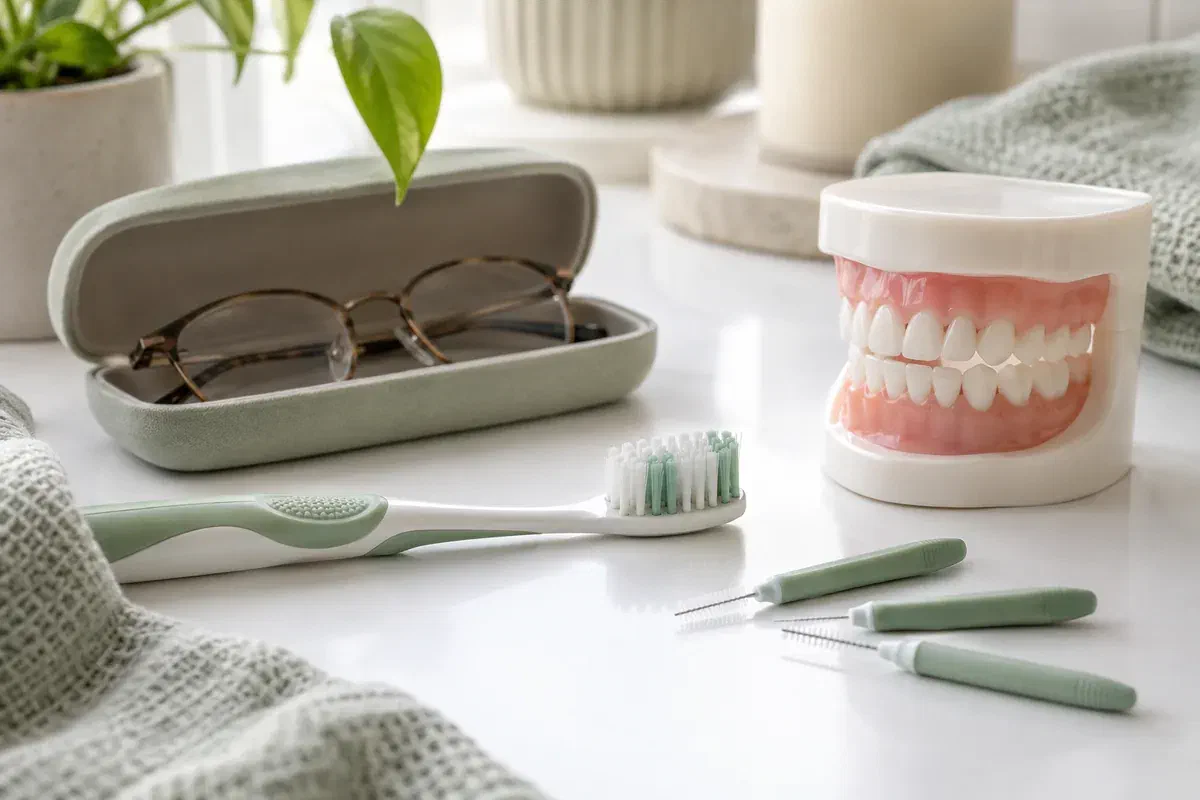
Easy-grip toothbrush, interdental brushes, dental model, and reading glasses
Clues the routine needs a rethink

Steps you have started skipping

Shortcuts often creep in without a conscious decision. If cleaning has become rushed, painful or confusing, or a denture is harder to manage, those are signs worth sharing at your visit.

Hard-to-clean dental work

Bridges, crowns and older fillings have edges and spaces that trap plaque. If cleaning around them has become difficult, or you notice food packing, a rough edge or a change in your bite, mention it. The dentist assesses the area and explains the options.

Dryness that makes cleaning uncomfortable

A persistently dry mouth can make brushing sting and dentures stick or rub. It commonly relates to medicines or health conditions and is not simply age. A burning sensation, a sore spot or unusual-looking tissue should also be examined.

Dentures that take too much effort

Removing, cleaning and storing an appliance can be fiddly with tired or stiff hands. Tell us which part is hardest. If the denture rubs or loosens, explain when, so both it and the gums carrying it can be checked at the same visit.

A routine is not the place to manage warning signs. If a sore will not heal, you feel a lump, bleeding appears without a clear reason, or chewing or swallowing changes, call so an assessment can be arranged.

A plan that lightens the load

Do the steps that matter, well

Not every step carries equal weight. Once the examination shows where your risks lie, the plan can prioritise, perhaps cleaning under a bridge, protecting roots that have become exposed, or caring for a denture properly. Each suggestion should say what it achieves and how much daily effort it adds, so you can judge whether it is worth it.

Treatment questions belong in the same conversation. How many appointments would a repair take? What would recovery be like, what would it cost, and would someone need to help? Staging work may make sense. You should be able to compare choices for yourself, without anyone deciding that people your age all want the same outcome.

Knowing which dental work needs extra care

The dentist can point out restorations that need careful cleaning or closer monitoring and those that are trouble-free. That helps you focus effort where it counts. Being old is not, alone, a reason to replace a filling.

Tools that save time and strain

Powered brushes, interdental brushes in the right size, floss threaders and denture brushes with larger handles can each make a difference. The team can show you, and anyone helping you, how to use them, and suggest which one or two to keep so the bathroom shelf does not fill with gadgets.

A routine that can change again

If your energy, hands or health change, the routine can be adjusted. Tell us when it no longer feels manageable, and we can revisit the plan and explain the reasoning once more.

During your visit

We examine your mouth, then your routine

Bring your medication list, health updates, any denture, and the brushes and cleaning aids you use each day. Being able to see your tools helps us give practical advice.

  1. Learn about your day and health

    We ask why you came, go through your health record and prescriptions, and talk about how meals and the evening clean really go, including which step tends to get dropped first. Mention hearing, vision, positioning or communication preferences that would help.

  2. Check teeth, gums and appliances

    The dentist examines natural teeth, gums, crowns and bridges and the areas a denture rests on, looking for places where plaque collects. Radiographs may be advised when they would help answer a specific question.

  3. Try out simpler methods

    The team may demonstrate different brushes or cleaning aids and watch you use them. Treatment options, if any, are explained with their benefits, limits, costs and visit numbers, and any need for medical or specialist input is made clear.

  4. Agree on a realistic routine

    Leave with a plan for treatment or monitoring, a home-care routine you can manage and a return date. Written steps can be provided. A helper may join the practical side if you wish, while you stay involved in decisions.

The evening clean

Fewer steps, better results

Your routine should match the teeth, restorations and appliances you have now. Practising with the team is generally more useful than piecing together advice from different packages.

Brush and clean between, simply

Use fluoride toothpaste on natural teeth, and pick one interdental aid that reaches your gaps rather than juggling several. A thicker handle or powered brush may help tired hands. Bring your tools so the advice targets the real problem.

Streamline denture care

Clean the appliance according to its material over a basin of water, store it as advised, and clean your gums too. Ask the dentist about wearing time and overnight rest. Report rubbing rather than adding adhesive.

Keep dryness in mind

If brushing stings because your mouth is dry, note when it started and any new medicine. Ways to ease it and protect your teeth can be discussed. Any change to a prescription is a decision for your doctor, so keep taking it in the meantime, and mention any fluid limits.

Patient information: NIDCR — understanding persistent dry mouth · NIDCR — oral health resources for older adults

Next steps

Protect, repair or reconsider

Care might maintain what works, fix one issue or improve an appliance. Each choice carries its own benefit and its own demands on your time, energy and routine.

When things are comfortable

Maintain with a simpler routine

The plan keeps natural teeth and dental work healthy through efficient cleaning, prevention and regular review. Anything being watched has a trigger point for treatment, agreed and explained in advance. Comfort is a good sign, though not a replacement for examination.

When one area keeps causing trouble

Treat a specific problem

Decay, a gum problem or a restoration that traps food may need direct attention, which can also make cleaning easier. Ask about conservative options, durability and follow-up. What the dentist finds, together with your general health, shapes that advice; your age does not.

When an appliance is hard to manage

Reconsider a denture or bridge

Sometimes adjusting, simplifying or replacing an appliance makes daily care far easier. Suitability depends on the examination, your health, your preferences and maintenance. Describe the parts of your day the appliance makes harder.

Home-care questions

Small questions that make a big difference

Ask about products, technique, alternatives and the reason for any recommendation. Bringing your tools, or the person who helps you, makes the advice more practical.

(905) 876-4488
How often should I replace my toothbrush?
A common guideline is every three months, or sooner if the bristles are frayed. Worn bristles clean less effectively. If you use a powered brush, the same idea applies to its replacement heads.
Do I need to use mouthwash?
Not everyone does. Some rinses may be suggested for specific reasons, while others are not necessary. If your mouth is dry, certain products may feel uncomfortable. Ask the team whether a rinse would add anything for you.
Which toothpaste is best for sensitive teeth?
Toothpastes for sensitivity are available, and fluoride remains important. Sensitivity can also signal a problem that needs examination, such as exposed roots or decay. Mention it so the cause can be checked.
How do I clean under a fixed bridge?
Floss threaders, special floss or small interdental brushes can reach under the false tooth. The team can show you which suits your bridge and let you practise. Cleaning there helps protect the supporting teeth and gums.
Can I soak my denture in hot water to clean it?
Very hot water may damage or distort some denture materials. Follow the cleaning instructions for your appliance, and ask the team if you are unsure which products and temperatures are suitable.
What can I do on evenings when I am too tired to do everything?
Ask the team which steps matter most for your mouth. Sometimes cleaning at a different time of day, using a powered brush or simplifying denture care helps. A routine you can keep up is better than an ideal one you skip.
Older adult dental care for Erin

Make tonight’s routine easier

Call our Bronte Street practice and mention what has become hard at home. We will check your teeth, gums and any denture, look at the tools you use, and suggest a routine that fits your hands, your energy and the dental work you have.

Let us know about mobility, hearing or vision needs, and whether a helper will join you, when you book.

Visit Milton Dental Clinic
Unit 1, 342 Bronte St. S, Milton, ON L9T 5B7
Get directions Clinic hours
Monday–Thursday
11am–7pm
Friday–Sunday
By appointment only

Areas we serve

  • Milton
  • Oakville
  • Mississauga
  • Georgetown
  • Halton Hills
  • Acton
  • Campbellville
  • Brampton
  • Burlington
  • Puslinch
  • Rockwood
  • Erin
  • Caledon
  • Etobicoke
  • Old Milton
  • Bronte Meadows
  • Timberlea
  • Dorset Park
  • Dempsey
  • Clarke
  • Beaty
  • Coates
  • Harrison
  • Scott
  • Willmott
  • Ford
  • Bowes
  • Cobden
  • Walker
  • Mountain View
  • Milton Heights
  • Hawthorne Village
  • Valley View
  • Fallingbrook
  • Nassagaweya
  • Trafalgar
  • Esquesing
  • Nelson
  • Brookville
  • Moffat
  • Glen Williams
  • Norval
  • Limehouse
  • Stewarttown
  • Ashgrove
  • Hornby
  • Silver Creek
  • Speyside
  • Scotch Block
  • North Oakville
  • River Oaks
  • Glen Abbey
  • West Oak Trails
  • Palermo
  • Bronte Creek
  • College Park
  • Joshua Creek
  • Uptown Core
  • Preserve
  • Iroquois Ridge
  • Lisgar
  • Meadowvale
  • Meadowvale Village
  • Churchill Meadows
  • Erin Mills
  • Central Erin Mills
  • Streetsville
  • East Credit
  • Creditview
  • Heartland
  • Sheridan
  • Mount Pleasant
  • Credit Valley
  • Huttonville
  • Churchville
  • Springbrook
  • Northwest Brampton
  • Bram West
  • Fletcher's Meadow
  • Fletcher's Creek South
  • Alton Village
  • Orchard
  • Millcroft
  • Headon Forest
  • Tansley
  • Brant Hills
  • Tyandaga
  • Kilbride
  • Lowville
  • Aberfoyle
  • Morriston
  • Arkell
  • Hillsburgh
  • Freelton
  • Carlisle
  • Waterdown
  • Flamborough
  • Mountsberg

How can we help?

Milton Dental Clinic

Have a question about your smile? Choose the option that works best for you.

For urgent dental concerns, please call.
Messages are reviewed during clinic hours.