

Illustrative conversation between an older adult and a dental clinician
General & Family Dentistry

Dental Care for Older Adults in Etobicoke

A longer trip calls for a well-organised plan. Older adults coming from Etobicoke can have teeth, gums and dentures assessed, with visits arranged sensibly and clear guidance on when to seek care closer to home.

Etobicoke · planning care across a longer trip

Make each appointment count

When the journey to an appointment takes real planning, nobody wants to make it twice for something that could have been settled once. That is especially true in later life, when energy, transport and other medical visits all compete for space in the week. Good dental care can be organised with those limits in mind, without cutting corners on the examination itself.

Every plan begins with your own mouth rather than your age: the teeth you have, the condition of your gums, the dental work you rely on, and any appliance you wear. Your medical history and priorities matter just as much. With those in view, the dentist can explain what needs attention now, what can wait for review, and how visits might be grouped.

If someone is driving you in from Etobicoke, they are welcome to join the conversation in whatever way you choose. Mention hearing, vision, positioning or communication needs when you book, along with any timing constraints, so arrangements are confirmed before you set out.

Plan your visits with us
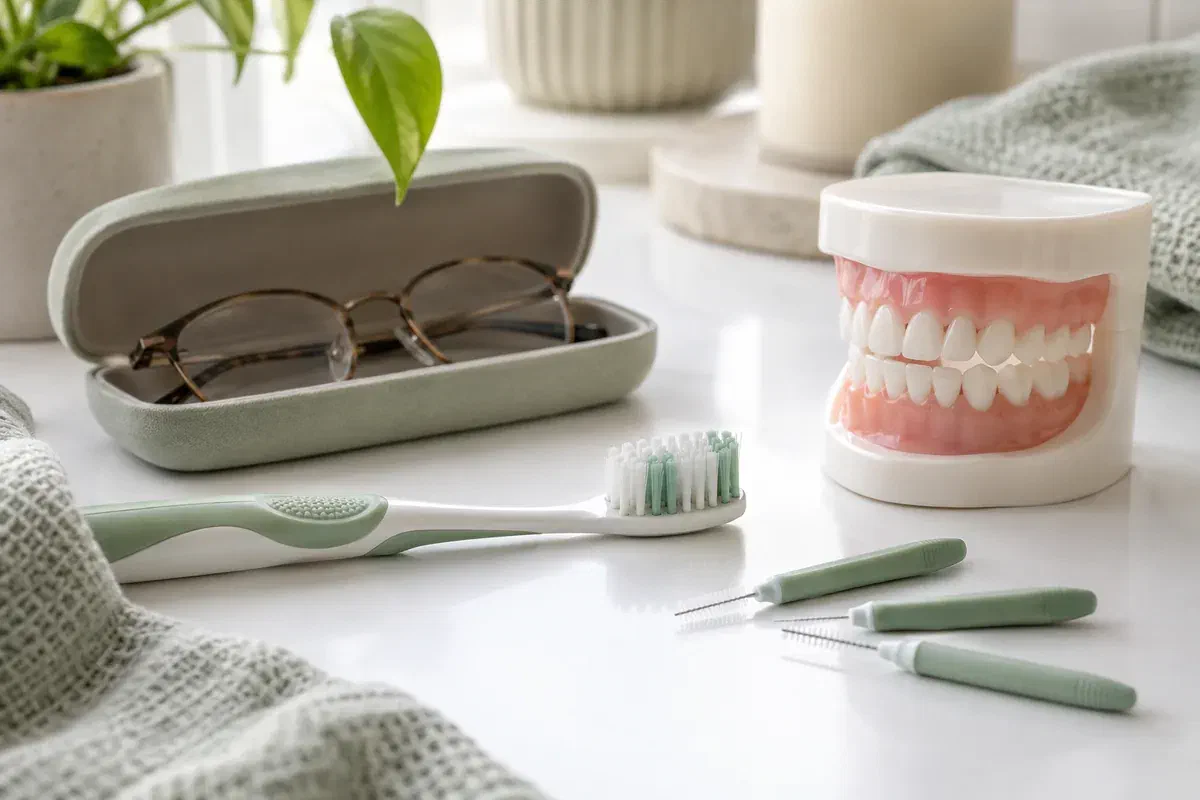
Easy-grip toothbrush, interdental brushes, dental model, and reading glasses
Before you set out

Which changes justify the trip?

Mild, lasting changes are often worth an appointment, even without pain. Telling us about them in advance helps the team plan a visit that addresses everything at once where that is reasonable.

Dental work showing its age

A crown, bridge or filling can develop problems after many trouble-free years. Food catching, a rough edge or a bite that feels uneven are all worth reporting when you book. The dentist examines the tooth and surrounding area before outlining whether to monitor, repair or replace.

Dryness or tissue that will not settle

A dry mouth that persists is not something to simply accept with age. Medicines and medical conditions commonly contribute. A sore patch, burning sensation or unexplained change in the tissues needs to be examined rather than managed indefinitely at home.

Daily care or dentures getting difficult

Changes in hand strength, eyesight or support at home can make cleaning harder. A denture that rubs or loosens is another reason to come in. Describe when it happens so the appliance and gums can be assessed in the same visit.

Age does not explain every change. A sore that lingers, a new lump, bleeding without a clear reason, or difficulty chewing or swallowing should be reported promptly so the right assessment can be arranged, nearby if that is quicker.

Planning that respects the distance

Fewer trips, no shortcuts

A useful plan joins what you want with what the examination finds. You might want to protect a key tooth, make a denture more comfortable, or simplify your routine. Each recommendation should come with its reason and an outline of the ongoing care it needs, so you can judge whether it is worth the travel involved.

Ask about the logistics openly: how many visits, how long each might take, what recovery involves, the costs, and whether someone should drive you home. Some treatment can be staged, and some steps can occasionally be combined. Options should be presented so you can compare them, not on the assumption that everyone of a similar age wants the same thing.

Knowing what can safely wait

The dentist can explain which restorations are working well and which need closer watching. That distinction helps you plan travel around genuine needs. An older filling that is sound is not replaced simply because of its age.

Home care that reduces surprises

A routine suited to your hands and dental work lowers the chance of unexpected trips. The team can show you suitable brushes, interdental aids and techniques. Anyone helping you at home can watch too, so their support matches your wishes.

A plan you can revisit by phone first

If your health, transport or priorities change, call to talk it through before deciding whether a visit is needed. Revisiting choices is part of continuing care, and the reasoning can be explained again at any point.

An efficient first visit

Prepared in advance, thorough in the chair

Before you travel, gather a current medication list, recent health news, any dentures or appliances, and records from previous dental care if you have them. A written list of concerns helps us use the time well.

  1. Share health and needs ahead of time

    When you book, outline the reason for your visit and any access needs. At the appointment we review your medical history and medicines and ask what mealtimes and your cleaning routine are like. Mention changes that seem unrelated, as they may still matter.

  2. Examine everything relevant at once

    In one sitting, the dentist reviews your gums, any remaining teeth, crowns and fillings, and the ridges a denture rests on. Imaging may be suggested if it would help answer a specific question. Describe symptoms that come and go, since they may not appear on the day.

  3. Weigh options, including the travel

    For each reasonable choice, ask what it involves, the number and length of visits, benefits, limits and costs. If your physician or a specialist should be involved, you will hear why and whether that could happen closer to home.

  4. Leave with a clear schedule

    Confirm the treatment or monitoring plan, home-care steps and the date of your next visit. Written notes can be provided. With your permission, a support person can help with transport and scheduling, while you stay involved in decisions.

Between appointments

Steady habits at home, fewer unplanned trips

Your routine should fit your teeth, restorations and appliances. Learning the key steps hands-on during a visit is more reliable than combining advice from many products and websites.

Keep cleaning simple and thorough

Use fluoride toothpaste on natural teeth and an interdental aid that suits your spaces. A wider handle may help if your grip is weak. Show us how you clean so that suggestions deal with the real difficulty.

Look after the denture and your gums

Clean the appliance as its material requires and care for the tissues beneath it. Ask how long to wear it and when to rest your gums. Report rubbing or looseness rather than covering the problem with more adhesive.

Track dryness and medicine changes

Write down when dryness started and whether it followed a new medicine or diagnosis. Relief and protective measures can then be discussed. Do not stop prescribed medication without medical advice, and mention any fluid limits.

Patient information: NIDCR — understanding persistent dry mouth · NIDCR — oral health resources for older adults

Weighing the routes forward

Which approach suits your goals and your calendar?

Care may protect what works, address one problem or improve an appliance. Ask how the likely benefit compares with the appointments, travel and upkeep each option involves.

When things feel comfortable

Prevention with planned reviews

The plan focuses on keeping natural teeth and current restorations healthy through good cleaning, prevention and scheduled reviews. Areas being watched come with a clear sign of what would prompt treatment. Feeling fine does not replace an examination.

When one problem needs solving

Focused treatment

A damaged tooth, gum issue or uncomfortable crown may need specific care. Ask about conservative options, likely durability, follow-up and how many visits each requires. Findings and health guide the advice, rather than age.

When gaps affect eating or speech

Replacing missing teeth

You may consider adjusting your current denture or other ways to replace teeth. What suits you will reflect your mouth, health, wishes and the maintenance involved, including follow-up visits. Explain what you want to eat or say with more ease.

Planning questions

Getting the most from each visit

Ask about alternatives, timing and the reasons for each recommendation. A written list or a companion can help you remember the answers on the trip home.

(905) 876-4488
Can several treatments be done in a single appointment?
Sometimes. It depends on what is needed, how long it would take and how comfortable you are with a longer session. Ask the dentist whether combining steps is reasonable for you, or whether separate visits would be safer or easier.
Should my previous dentist send my records before I come?
If you can arrange it, earlier X-rays and treatment notes can be helpful. Tell us who your previous dentist was when you book. The examination will still be thorough, but past records can add useful context.
What should I do if a dental problem flares up when I am far from the clinic?
Call us first for advice when you can. Depending on the symptoms, you may be guided to come in or to seek care nearby. Swelling that affects breathing or swallowing needs emergency medical help right away, wherever you are.
Is it safe to postpone treatment I have been offered?
That depends on what was found. Some problems can be monitored, while others may worsen if left. Ask the dentist what delay would mean for that particular tooth or area, and what signs should prompt you to call sooner.
Will I still need regular visits if my mouth feels fine?
Comfort is encouraging, but some problems develop without symptoms. The dentist will suggest a review interval based on your teeth, gums, appliances and health. That interval can change as your needs do.
How can I keep visits from Etobicoke to a minimum?
Share your concerns and records when booking, keep up a home routine suited to you, and ask whether any steps can be grouped. Calling first when something changes can also prevent an unnecessary trip.
Dental care for older adults from Etobicoke

One well-planned visit is a good place to start

Ring our Bronte Street practice and tell us what is bothering you, how you will be travelling and what would make the day easier. Protecting natural teeth, sorting out a troublesome denture or checking a new symptom can all be planned for, starting with an assessment and an unhurried talk about choices.

Mention access, transport timing, hearing or vision needs when booking, so everything is ready when you arrive.

Visit Milton Dental Clinic
Unit 1, 342 Bronte St. S, Milton, ON L9T 5B7
Get directions Clinic hours
Monday–Thursday
11am–7pm
Friday–Sunday
By appointment only

Areas we serve

  • Milton
  • Oakville
  • Mississauga
  • Georgetown
  • Halton Hills
  • Acton
  • Campbellville
  • Brampton
  • Burlington
  • Puslinch
  • Rockwood
  • Erin
  • Caledon
  • Etobicoke
  • Old Milton
  • Bronte Meadows
  • Timberlea
  • Dorset Park
  • Dempsey
  • Clarke
  • Beaty
  • Coates
  • Harrison
  • Scott
  • Willmott
  • Ford
  • Bowes
  • Cobden
  • Walker
  • Mountain View
  • Milton Heights
  • Hawthorne Village
  • Valley View
  • Fallingbrook
  • Nassagaweya
  • Trafalgar
  • Esquesing
  • Nelson
  • Brookville
  • Moffat
  • Glen Williams
  • Norval
  • Limehouse
  • Stewarttown
  • Ashgrove
  • Hornby
  • Silver Creek
  • Speyside
  • Scotch Block
  • North Oakville
  • River Oaks
  • Glen Abbey
  • West Oak Trails
  • Palermo
  • Bronte Creek
  • College Park
  • Joshua Creek
  • Uptown Core
  • Preserve
  • Iroquois Ridge
  • Lisgar
  • Meadowvale
  • Meadowvale Village
  • Churchill Meadows
  • Erin Mills
  • Central Erin Mills
  • Streetsville
  • East Credit
  • Creditview
  • Heartland
  • Sheridan
  • Mount Pleasant
  • Credit Valley
  • Huttonville
  • Churchville
  • Springbrook
  • Northwest Brampton
  • Bram West
  • Fletcher's Meadow
  • Fletcher's Creek South
  • Alton Village
  • Orchard
  • Millcroft
  • Headon Forest
  • Tansley
  • Brant Hills
  • Tyandaga
  • Kilbride
  • Lowville
  • Aberfoyle
  • Morriston
  • Arkell
  • Hillsburgh
  • Freelton
  • Carlisle
  • Waterdown
  • Flamborough
  • Mountsberg

How can we help?

Milton Dental Clinic

Have a question about your smile? Choose the option that works best for you.

For urgent dental concerns, please call.
Messages are reviewed during clinic hours.