

Illustrative conversation between an older adult and a dental clinician
General & Family Dentistry

Dental Care for Older Adults in Georgetown

It has been a few years, and that is fine. Older adults coming from Georgetown can return to dental care at their own pace, starting with an honest look at teeth, gums and dentures and a plan without pressure.

Georgetown · coming back after a long break

No lecture. Just a fresh start.

Life gets busy, a longtime dentist retires, a spouse falls ill, and suddenly five or ten years have slipped by without a check-up. Many people in their sixties, seventies and beyond find themselves in exactly that position. Returning can feel awkward, but there is no judgement here, only a practical interest in where things stand today.

A first visit back focuses on the present. We look at the teeth you have, the health of your gums, any crowns, bridges or dentures, and how your general health and medicines may be affecting your mouth. Age is part of the background rather than the deciding factor. Your own findings and your own goals shape what we suggest.

Bringing someone from Georgetown for company or for help remembering details is entirely up to you. Tell us what role you would like them to play. If you have particular needs around hearing, eyesight, getting into the chair or communicating, mention them when you call so the appointment is arranged accordingly.

Book your first visit back
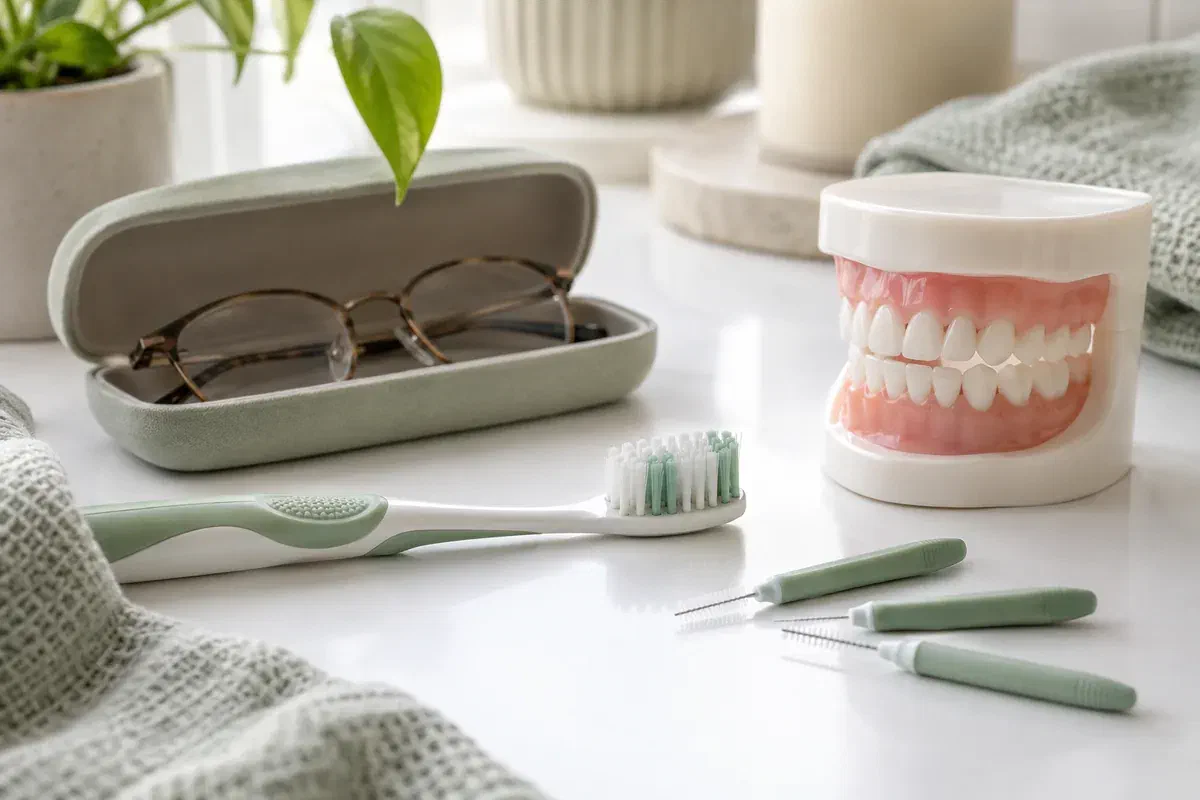
Easy-grip toothbrush, interdental brushes, dental model, and reading glasses
What may have changed in the meantime

A few years can bring quiet changes

Some changes build slowly and without pain. It helps to mention anything that feels different from the last time you saw a dentist, however minor it seems, so the examination can look for it.

Dental work that has aged since your last visit

Fillings, crowns and bridges placed years ago can wear, chip or develop decay at the edges, often without much warning. Mention snagging floss, trapped food or a bite that feels off. The dentist checks each area before discussing whether to leave, mend or replace it.

New dryness or tissue changes

Medicines started since your last visit may have reduced saliva, and a dry mouth is not simply a feature of age. Look out too for burning, a sore that keeps returning or tissue that looks unusual, and let the dentist examine it rather than relying on home remedies.

Routines and appliances that drifted

Over a long gap, brushing habits often change and a denture may have been worn far longer than planned. If cleaning has become harder or the appliance rubs, wobbles or clicks, say when it happens so it can be checked along with the gums.

However long it has been, some signs should not wait for a routine booking. A sore that does not heal, a new lump, bleeding without explanation, or new trouble chewing or swallowing should be reported promptly for assessment.

Getting back on track

Priorities first, then a paced plan

After a long break, it is easy to feel there is a mountain of work ahead. A good plan sorts that out. It separates what needs attention soon from what can be monitored, and ties each suggestion to what you want: comfort, a reliable bite, a denture you can trust or a simpler routine. You can ask what each step achieves.

Pacing matters as much as content. Talk about the number of appointments, how you might feel afterward, the costs and whether you will need help getting home. Treatment can often be spread out sensibly. A recommendation should let you compare options, not presume that everyone in your age group wants the same outcome.

A clear picture of what you have

You will learn which restorations are doing well and which need watching. That helps you see what is urgent and what is stable. A filling being decades old is not, by itself, a reason to remove it.

A routine refreshed for today

Products and techniques have changed since many people last had cleaning advice. The team can show you current brush styles, interdental aids and approaches for hard-to-reach areas, and a helper can learn them too if you wish.

Permission to go one step at a time

You do not have to commit to everything at once. Health, energy and circumstances may change, and the plan can change with them. Ask for any part to be explained again before agreeing to the next stage.

Your return visit

A gentle restart in four parts

Gather your current medications, any health changes since your last dental visit, and any dentures or appliances. If you remember the name of your previous dentist, that can help us request old records.

  1. Catch up on your health

    We ask what prompted you to return and go through your medical history, including anything new since your last check-up. Chewing, cleaning and appliance use are discussed too. Mention any support for hearing, vision, seating or communication that would help.

  2. Take stock of your mouth

    The dentist examines your gums, remaining natural teeth, existing dental work and any denture-bearing areas. After a long gap, the dentist may recommend radiographs to check areas hidden from view, such as between teeth or below the gumline. Tell us about symptoms that come and go.

  3. Set priorities together

    Findings are explained in order of importance. For each reasonable option you can ask about benefits, limits, costs and the number of visits. If medical input or a specialist referral is needed, the reason is made clear first.

  4. Agree where to begin

    Confirm the first steps, home-care advice and when to return. Written information is available. With your consent, a support person can help with practical arrangements, while every decision continues to involve you.

Building the habit again

Small, steady steps at home

A routine should fit the teeth, dental work and appliances you have now, which may differ from years ago. Seeing techniques demonstrated in person is usually more helpful than sorting through crowded pharmacy shelves.

Restart with the basics

Brush natural teeth with fluoride toothpaste and add a method for cleaning between them that you can manage. If gripping is uncomfortable, a different handle or aid may help. Show the team your current tools so advice fits your situation.

Refresh your denture routine

Clean the appliance in the way its material requires and keep your gums and tongue clean. Ask how long to wear it each day and when to rest your mouth. An older denture that rubs should be checked, not padded with extra adhesive.

Bring up dryness and medicines

Note whether dryness started after a new prescription or health change. We can then talk about easing the dryness and guarding your teeth against decay. Never stop a medicine without your doctor’s advice, and mention any restrictions on fluids.

Patient information: NIDCR — understanding persistent dry mouth · NIDCR — oral health resources for older adults

Where to go from here

Stabilise, treat, or rebuild

After a break, care may aim to protect what is still working, address specific problems or improve an appliance. Ask how each option’s benefit compares with the treatment and upkeep it involves.

When most things are in good order

Stabilise and prevent

The plan supports your natural teeth and dental work with cleaning, prevention and regular reviews. Anything under observation comes with a clear description of what would prompt treatment. Comfort is encouraging, yet it cannot stand in for an examination.

When specific problems are found

Treat what needs it

Decay, gum concerns or worn restorations may need direct attention, sometimes in a sensible order over several visits. Ask about conservative options, durability and follow-up. The recommendation reflects findings and health rather than age.

When missing teeth limit daily life

Rebuild function

Options might include adjusting or remaking a denture, or exploring other tooth replacement. Suitability depends on your oral findings, overall health, preferences and the maintenance you are comfortable with. Tell us what you would like to eat or say more easily.

Returning patients ask

Questions about coming back

Ask about alternatives, pacing, costs and the reason for any recommendation. Writing questions down before the visit, or bringing a companion, can make the conversation easier.

(905) 876-4488
Will I need X-rays at my first visit back?
Often imaging is helpful after a long gap, because some problems cannot be seen by looking alone. The dentist will explain why any images are recommended and what they are expected to show. If you have recent X-rays from elsewhere, mention them.
I am nervous after so many years away. What can help?
Tell us when you book. We can explain each step before it happens, agree on a signal if you need a pause, and keep the first appointment focused on assessment and conversation. You set the pace.
Can I start with a cleaning and decide about other treatment later?
In many cases, yes. The first visit usually includes an examination so the dentist can see what is needed. From there, you can discuss what to prioritise and whether other work can be scheduled later.
My denture is very old. Should I still bring it?
Please do. Even an appliance you rarely wear can tell the dentist a lot about fit and your mouth’s changes. It can be checked for wear and damage, and you can discuss whether adjusting it or considering a new one makes sense.
What if a lot of work turns out to be needed?
The findings will be explained in order of importance. Treatment can often be staged, and you can ask what happens if certain steps are delayed. Costs and visit numbers can be discussed before you agree to anything.
Can my first visit be booked around a ride from Georgetown?
Yes. Tell us which days and times your driver is available, and the team will look for a suitable slot. If anything changes on the day, call and we can talk about rescheduling.
Older adult dental care for Georgetown

Today is a good day to restart

Our Bronte Street practice welcomes people returning after a long break. Call to explain how long it has been and what you would like help with, whether that is natural teeth, a denture or a symptom you have noticed. We begin with an assessment and a calm conversation.

Mention any hearing, vision, mobility or positioning needs, or anxiety about the visit, when you book.

Visit Milton Dental Clinic
Unit 1, 342 Bronte St. S, Milton, ON L9T 5B7
Get directions Clinic hours
Monday–Thursday
11am–7pm
Friday–Sunday
By appointment only

Areas we serve

  • Milton
  • Oakville
  • Mississauga
  • Georgetown
  • Halton Hills
  • Acton
  • Campbellville
  • Brampton
  • Burlington
  • Puslinch
  • Rockwood
  • Erin
  • Caledon
  • Etobicoke
  • Old Milton
  • Bronte Meadows
  • Timberlea
  • Dorset Park
  • Dempsey
  • Clarke
  • Beaty
  • Coates
  • Harrison
  • Scott
  • Willmott
  • Ford
  • Bowes
  • Cobden
  • Walker
  • Mountain View
  • Milton Heights
  • Hawthorne Village
  • Valley View
  • Fallingbrook
  • Nassagaweya
  • Trafalgar
  • Esquesing
  • Nelson
  • Brookville
  • Moffat
  • Glen Williams
  • Norval
  • Limehouse
  • Stewarttown
  • Ashgrove
  • Hornby
  • Silver Creek
  • Speyside
  • Scotch Block
  • North Oakville
  • River Oaks
  • Glen Abbey
  • West Oak Trails
  • Palermo
  • Bronte Creek
  • College Park
  • Joshua Creek
  • Uptown Core
  • Preserve
  • Iroquois Ridge
  • Lisgar
  • Meadowvale
  • Meadowvale Village
  • Churchill Meadows
  • Erin Mills
  • Central Erin Mills
  • Streetsville
  • East Credit
  • Creditview
  • Heartland
  • Sheridan
  • Mount Pleasant
  • Credit Valley
  • Huttonville
  • Churchville
  • Springbrook
  • Northwest Brampton
  • Bram West
  • Fletcher's Meadow
  • Fletcher's Creek South
  • Alton Village
  • Orchard
  • Millcroft
  • Headon Forest
  • Tansley
  • Brant Hills
  • Tyandaga
  • Kilbride
  • Lowville
  • Aberfoyle
  • Morriston
  • Arkell
  • Hillsburgh
  • Freelton
  • Carlisle
  • Waterdown
  • Flamborough
  • Mountsberg

How can we help?

Milton Dental Clinic

Have a question about your smile? Choose the option that works best for you.

For urgent dental concerns, please call.
Messages are reviewed during clinic hours.