

Illustrative conversation between an older adult and a dental clinician
General & Family Dentistry

Dental Care for Older Adults in Old Milton

When a favourite meal turns into careful chewing on one side, it is time for a conversation. Close to Old Milton, our team looks at natural teeth, dentures and dental work with your everyday comfort in mind.

Old Milton · comfort at the table

Mealtimes tell us a lot

Think about the last time you passed on an apple, cut your steak into tiny pieces, or let your tea cool because a tooth objected. Small adjustments like these often come before anyone mentions a dental problem. They are worth raising, because the cause could be a worn filling, a gum issue, a loose denture or something else entirely.

Age by itself never answers the question of what your mouth needs. We look at your teeth, the tissues around them, any appliance you wear and your general health, and then we ask what you would like to be able to do again. That conversation shapes everything that follows, from simple monitoring to specific treatment.

For those living along the older streets of Milton’s historic downtown, our Bronte Street practice is close by, and you are welcome to come with a friend or relative. Tell us how much you want them to take part. Mention any hearing, mobility or seating needs ahead of time so the visit runs smoothly.

Tell us what you would like to eat again
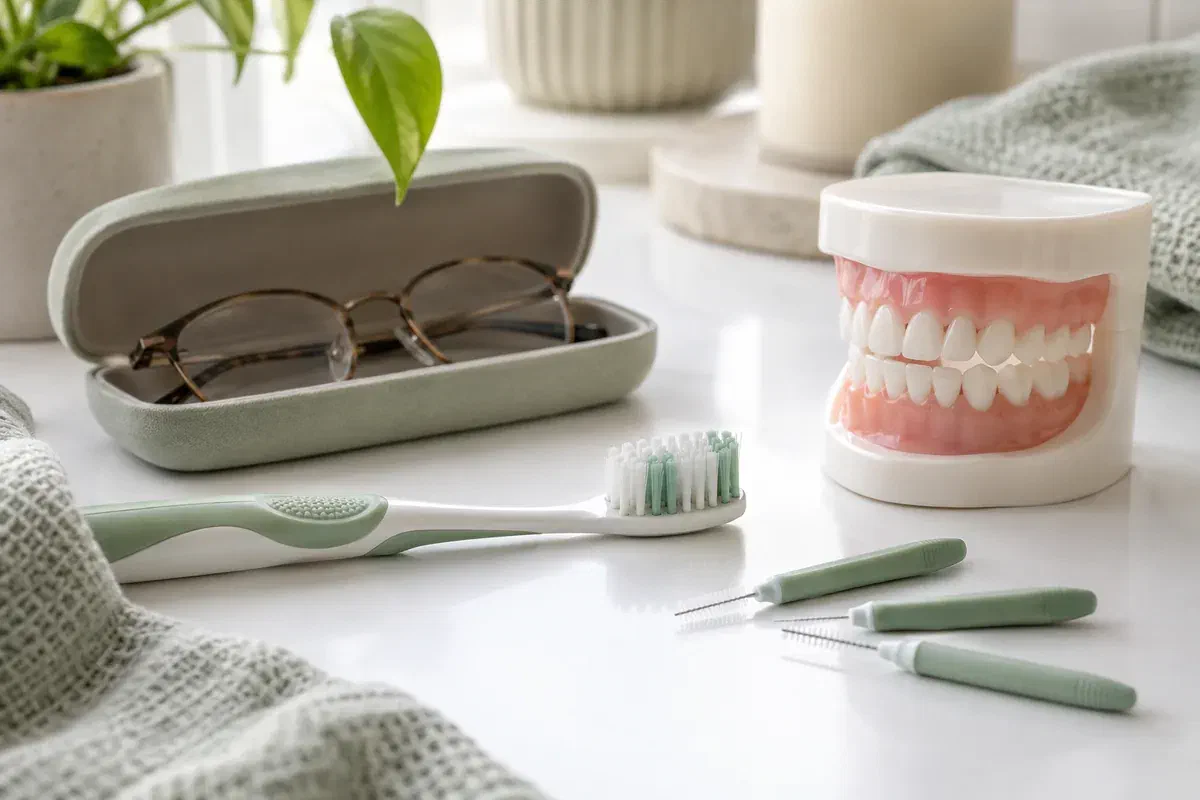
Easy-grip toothbrush, interdental brushes, dental model, and reading glasses
Clues in daily life

Are you working around a problem without noticing?

People often adapt quietly to discomfort. If you have started avoiding certain foods, chewing on one side or rinsing after every meal, let us know. Those habits point to something worth checking.

Biting on older fillings or crowns

Restorations that were comfortable for years can still break down at the margins. A sharp edge, a spot that catches food, or a bite that suddenly feels uneven are all worth describing. The dentist examines the tooth and its neighbours before discussing next steps.

A mouth that feels dry or raw

Dryness that lasts can make swallowing food harder and dentures less comfortable. It is common with certain medicines and conditions, yet it is not just part of ageing. Burning, a tender spot or a change in how the tissue looks should be examined promptly.

Dentures that shift while eating

An appliance that lifts with sticky food or rubs after a meal deserves a look. So does a cleaning routine that has become tiring. Describe when the trouble starts, and the denture and the gums supporting it can be assessed together.

Some changes need prompt attention whatever your age. Report a sore that will not heal, a new lump, bleeding without a clear cause, or new trouble chewing or swallowing, so the proper assessment can be arranged.

Why a plan helps

Practical goals you can taste

Clear goals make dental decisions easier. Maybe you want to bite into corn on the cob again, stop a denture from moving when you laugh, or keep one important tooth for as long as it stays healthy. The plan should connect each recommendation to a goal like that, along with the care it will need over time.

Beyond the clinical findings, practical questions deserve answers. How many visits would this take? What would recovery be like, and what would it cost? Will you need someone to help afterward? Spacing treatment out can sometimes be sensible, and two people born the same year may reasonably choose very different paths.

Knowing where your dental work stands

You can ask which restorations look sound and which the dentist would like to watch. That distinction separates what is urgent from what can safely wait. An old filling that is intact and causing no trouble does not need replacing simply for being old.

Home care you can actually do

We can suggest brushes with easier handles, interdental cleaners and ways to reach the back teeth. Anyone who helps you at home can watch a short demonstration, so their support matches your preferences rather than guesswork.

Freedom to change your mind

Life shifts. A plan that suited you last year may feel too demanding now, or your health may have improved. Speak up when that happens. Reviewing options is ordinary continuing care, and explanations can be repeated whenever you need them.

How we go about it

Four stages, starting with a conversation

Bring your medication list, news of any recent health changes, and dentures or appliances you want looked at. A few notes about what bothers you, especially at meals, help us focus.

  1. Hear about your health and meals

    We cover your reason for coming, your medical history and medicines, and what eating and cleaning are like for you now. Mention changes even if they seem unconnected. Let us know about any hearing, vision, positioning or communication support you would like.

  2. Look closely at teeth and tissues

    The examination focuses on what matters for you, such as gums, remaining teeth, crowns and the areas where a denture sits. Imaging may be suggested when it would answer a specific question. Explain symptoms that appear only when you eat, since they may not show during the visit.

  3. Lay out the choices

    For every reasonable option, you can hear what is involved now and later, the benefits and limits, the likely number of visits and the cost. When input from your doctor or a specialist is needed, you will know why before anything is booked.

  4. Agree on next steps

    Confirm what will be done or watched, how to care for your mouth at home, and when to return. Written instructions can be provided. A companion may help with arrangements if you wish, while you stay part of each decision.

Between visits

Small changes that make home care easier

Your routine should fit the mix of natural teeth, dental work and appliances in your mouth. Seeing the key steps demonstrated is usually more helpful than trying several products at random.

After meals, a manageable clean

Use a fluoride toothpaste on natural teeth and an interdental cleaner that suits the gaps you have. A chunkier handle or a different style of aid may help if gripping is hard. Show us your current tools so suggestions address the real difficulty.

Rinse and rest the denture each night

Care for it as its material and design require, and clean your gums too. Ask how many hours to wear it and when to take it out. If it rubs after eating or feels loose, tell us instead of relying on more adhesive.

Notice dryness at mealtimes

If food has become harder to swallow, note when the dryness started and whether a medicine or health change came first. Relief and protective steps can be discussed. Keep taking prescribed medicines unless your doctor advises otherwise, and mention any fluid restrictions.

Patient information: NIDCR — understanding persistent dry mouth · NIDCR — oral health resources for older adults

Possible directions

Which outcome would make the biggest difference?

Some plans protect what is working, others fix one problem, and some improve an appliance. You can ask how much each would help compared with the visits and upkeep it requires.

When eating is comfortable

Keep healthy teeth healthy

The focus stays on keeping natural teeth and current restorations healthy through cleaning, preventive care and planned reviews. Anything being watched comes with a clear sign of what would prompt action. Comfort is welcome, but it is not the same as an examination.

When one tooth gets in the way

Repair the troublesome tooth

A broken tooth, a gum problem or a crown that hurts to bite on may need specific work. Ask about the least invasive reasonable choice, how long it might last and what follow-up looks like. Findings and health guide the advice, not age.

When gaps limit what you eat

Rethink how gaps are filled

This could mean adjusting the denture you have or exploring other ways to replace teeth. What suits you depends on your mouth, health, preferences and upkeep. Describe the foods and conversations you miss so the comparison stays rooted in real life.

Questions we hear

Nothing is too small to ask about.

Ask about alternatives, scheduling, help at home or the reason behind any suggestion. A written list or a trusted companion can make the appointment feel less rushed.

(905) 876-4488
Should I just switch to softer foods if chewing hurts?
Softer food can ease things for a short while, but it does not explain the cause. Pain when biting may come from a cracked tooth, a failing filling, a gum problem or a denture issue. An examination helps you understand what is happening and what could restore comfortable chewing.
Why does my denture feel looser than it used to?
The gums and bone under a denture can change shape over time, and the appliance itself can wear. Either can affect fit. Bring it with you, describe when it moves, and the dentist can assess whether an adjustment or another approach is worth discussing.
Can a dry mouth make it harder to swallow food?
Yes, reduced saliva can make chewing and swallowing drier and less comfortable, and it can affect teeth and denture comfort. Tell us when it started and which medicines you take. Persistent trouble swallowing should also be raised with your physician.
Is it worth fixing a back tooth I hardly use?
That depends on the tooth’s condition, its role in your bite, any symptoms, and your priorities. Sometimes a tooth supports chewing or neighbouring teeth more than you realise. The dentist can explain the choices, including monitoring, so you can weigh them yourself.
Do I need to arrange a driver after an appointment?
For most examinations and routine care, no. Some treatments or sedation may make it wise to have someone take you home. Ask when the plan is made, and we will tell you in advance whether support afterward would be sensible.
I live in Old Milton and tire easily. Can I book a shorter visit?
Appointment length depends on what needs to be done, but tell us if long sessions are tiring. Care can sometimes be divided into more manageable visits. Mention it when you call, and the team will consider what is practical for your situation.
Older adult care near Old Milton

Bring back the foods you have been avoiding

Phone our Bronte Street practice to share what has changed and any arrangements you need. You may want to protect the teeth you have, get a denture checked or understand a new symptom. An examination and a plain-language discussion of options come first.

Tell us about hearing, vision, mobility or seating needs when you book, and we will prepare before you arrive.

Visit Milton Dental Clinic
Unit 1, 342 Bronte St. S, Milton, ON L9T 5B7
Get directions Clinic hours
Monday–Thursday
11am–7pm
Friday–Sunday
By appointment only

Areas we serve

  • Milton
  • Oakville
  • Mississauga
  • Georgetown
  • Halton Hills
  • Acton
  • Campbellville
  • Brampton
  • Burlington
  • Puslinch
  • Rockwood
  • Erin
  • Caledon
  • Etobicoke
  • Old Milton
  • Bronte Meadows
  • Timberlea
  • Dorset Park
  • Dempsey
  • Clarke
  • Beaty
  • Coates
  • Harrison
  • Scott
  • Willmott
  • Ford
  • Bowes
  • Cobden
  • Walker
  • Mountain View
  • Milton Heights
  • Hawthorne Village
  • Valley View
  • Fallingbrook
  • Nassagaweya
  • Trafalgar
  • Esquesing
  • Nelson
  • Brookville
  • Moffat
  • Glen Williams
  • Norval
  • Limehouse
  • Stewarttown
  • Ashgrove
  • Hornby
  • Silver Creek
  • Speyside
  • Scotch Block
  • North Oakville
  • River Oaks
  • Glen Abbey
  • West Oak Trails
  • Palermo
  • Bronte Creek
  • College Park
  • Joshua Creek
  • Uptown Core
  • Preserve
  • Iroquois Ridge
  • Lisgar
  • Meadowvale
  • Meadowvale Village
  • Churchill Meadows
  • Erin Mills
  • Central Erin Mills
  • Streetsville
  • East Credit
  • Creditview
  • Heartland
  • Sheridan
  • Mount Pleasant
  • Credit Valley
  • Huttonville
  • Churchville
  • Springbrook
  • Northwest Brampton
  • Bram West
  • Fletcher's Meadow
  • Fletcher's Creek South
  • Alton Village
  • Orchard
  • Millcroft
  • Headon Forest
  • Tansley
  • Brant Hills
  • Tyandaga
  • Kilbride
  • Lowville
  • Aberfoyle
  • Morriston
  • Arkell
  • Hillsburgh
  • Freelton
  • Carlisle
  • Waterdown
  • Flamborough
  • Mountsberg

How can we help?

Milton Dental Clinic

Have a question about your smile? Choose the option that works best for you.

For urgent dental concerns, please call.
Messages are reviewed during clinic hours.