

Illustrative consultation reviewing health information before dental care
General & Family Dentistry

Dental Care for Patients Taking Multiple Medications in Burlington

Planning a filling, extraction or other dental work while taking several medicines? If you are coming from Burlington, our team will review your list ahead of time, flag any questions for your prescriber, and help the treatment day run as planned.

Getting treatment ready, for Burlington visitors

A treatment plan works best when the medicine questions are already answered.

Picture the morning of a planned extraction. You have arranged the time off and someone to drive you home, and then a question about one of your medicines comes up that nobody can answer on the spot. Reviewing your full list in advance is how we try to avoid that. Regular prescriptions, occasional pain relief and supplements may all bear on the plan.

For us, a medication history is about the person in the chair, not a count of bottles. We look at what you take, its purpose where you know it, anything recently changed, and how it relates to the specific procedure being discussed. Deciding which medicine matters for a given treatment is the dentist’s task, done with you, so you do not have to sort it first.

Mention any mouth symptoms too, such as dryness, soreness, a change in taste, bleeding or difficulty keeping teeth clean. They can arise for several reasons and may affect timing. When the dentist needs advice from a pharmacist or prescriber, the question will be specific to your treatment. Do not adjust or pause a medicine in preparation unless the responsible clinician tells you to.

Plan treatment with a medication review
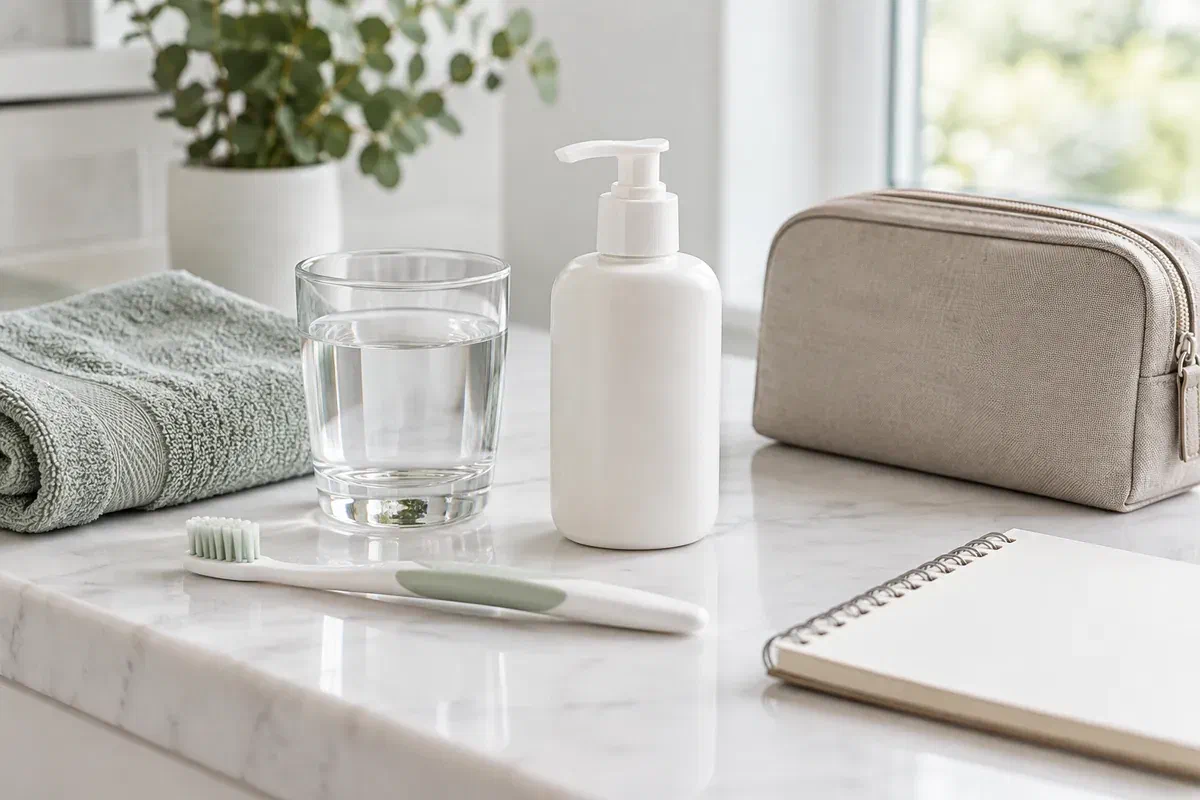
Water, toothbrush, plain oral moisturizing bottle, and notebook on a light counter
Before the procedure is booked

Things the dentist needs to hear early

Your history should describe your current routine, including medicines you take only now and then. Point out anything new or changed in recent weeks, plus any mouth symptoms that showed up around the same time.

Dryness or discomfort that affects healing

A dry, sticky mouth or a denture that has become uncomfortable can matter when planning treatment and recovery. Medicines may contribute, but other causes are possible. Tell us when it began and whether it is worse at night or after certain changes.

Recent changes from another clinician

A hospital stay, a new specialist or an adjusted dose can leave an older list behind. Bring current details and highlight what you are unsure about. Remember medicines given by injection or infusion on a schedule, not only daily tablets.

What you might be prescribed afterward

If pain relief, an antibiotic or a rinse is likely after treatment, ask how it fits with your regular medicines before the day. Share previous reactions and pharmacist advice. A product you have used before is not automatically right with your present combination.

Include over-the-counter pain relievers, sleep aids, herbal and vitamin products, inhalers and as-needed medicines. Describe medicines by name rather than by the look of the tablet.

Why reviewing ahead helps

Fewer surprises on treatment day

What you take can affect bleeding, mouth comfort, saliva and the dental medicines that are suitable for you. The details depend on the real combination and your health. Looking at the history before a procedure helps the dentist judge whether a question needs answering first, whether a prescription should be reconsidered, or whether medical advice is needed.

Planning ahead also keeps you from carrying messages between offices on short notice. Ask what the dentist needs and which professional should respond. A current pharmacy list, prescriber contact details and a note of recent changes give everyone time to answer properly.

Patient information: American Dental Association — medication considerations in dental care

A plan built on current facts

Checking your medicines now separates what you still take from prescriptions that ended. Let us know if a prescriber has stopped something or if you take a medicine differently from the label.

Symptoms checked before treatment

A mouth change around the time of a new medicine is worth noting, but timing is not proof. The examination may find a dental or tissue problem that needs its own care, possibly before the planned procedure. Ask what the findings show and what is uncertain.

Clear aftercare from the start

Recovery instructions, prevention and review visits can be tailored to your circumstances. You should know what to do at home, which changes to report, and when to contact a pharmacist or physician.

From consultation to treatment

Review early, treat with confidence.

An updated pharmacy printout or other reliable record is the best place to start. Fill in what it misses, and add allergies, past reactions and the contact details of your prescribers.

  1. Go through the list at the consultation

    We confirm names, doses, schedules and recent changes where relevant to the planned work. Explain what you use occasionally and what you cannot confirm. Unclear items are flagged for follow-up so they are not treated as settled.

  2. Examine the mouth and the treatment area

    The dentist examines your concerns and the area to be treated, considering the medication history alongside the findings. Dryness, sores or gum changes may change the approach. Tell us whether eating, speaking, sleep or an appliance is affected.

  3. Resolve questions before the booking

    The dentist considers interactions and medical factors linked to the procedure and any prescription. A prescriber or pharmacist may need to be consulted first. Ask whether your appointment can be confirmed or whether a particular answer is still pending.

  4. Confirm the plan for the day and after

    We agree on instructions for treatment day, comfort measures and follow-up. If another clinician changes a medicine before then, let us know. Written aftercare helps keep a short dental prescription separate from your usual medicines.

Recovery and everyday care

Follow the dental advice and keep your medical routine steady.

Home care should reflect the treatment and examination while fitting the health advice you already have. If anything we suggest seems to contradict another clinician’s instructions, raise it with us.

If your mouth stays dry

Ask about moisturizing products and added cavity prevention if dryness continues after treatment. Water can help some people, but fluid limits from your doctor still apply. Choose products for comfort, swallowing ease and the dentist’s findings rather than labels alone.

Cleaning around a treated area

Use fluoride toothpaste and clean between your teeth as advised, adjusting near any healing area as instructed. If tenderness makes a step difficult, ask about technique or tools. A strong rinse is no substitute for finding the reason behind irritation.

Keep the dental prescription separate

Add any short-course dental medicine to your list and note when it ends. Update the record if a prescriber changes your usual treatment. If you are unsure how a dental medicine fits with the rest, ask your pharmacist before taking them together.

Patient information: NIDCR — dry mouth causes and care

Where the review leads

Treatment may proceed, pause or include a consultation.

Taking several medicines does not decide your dental treatment for you. The next step depends on symptoms, the examination and whether more information is needed to recommend something with care.

When protection and symptom relief are the priority

Prevention and comfort measures

Your plan may include specific cleaning advice, dryness management and a review schedule. Ask how to tell whether a measure is helping and when to report lasting symptoms. It can be updated as your medical treatment changes.

When decay, damage or gum disease needs care

The planned dental treatment

A cavity, failing restoration or gum problem may need treatment even when medicines add to your symptoms. The dentist explains the diagnosis and options. A prescription change would not repair a dental problem that is already present.

When a medicine question must be settled first

Advice from a prescriber or pharmacist

We may ask about an interaction, an oral effect or something to consider for the procedure. Changing an existing prescription remains the decision of the clinician responsible. Ask who will relay the answer and how it affects your booking.

Burlington questions about treatment and medicines

Before the appointment, ask away.

Questions about products, symptoms or conflicting advice are all welcome. Identifying interactions is not your responsibility; the team simply needs accurate information to review.

(905) 876-4488
How far ahead of a planned extraction should I share my medication list?
As early as you can, ideally at the consultation when the treatment is first discussed. That leaves time for any question to a prescriber or pharmacist to be answered before the day. Update the clinic if anything changes in between.
I take a blood thinner. Does that mean I cannot have dental work?
Not necessarily. The dentist needs to know about it, along with your other medicines and health, to plan safely. Sometimes advice from your prescriber is needed. Never stop or change a blood thinner yourself before dental treatment.
Should I take my usual morning medicines on the day of treatment?
Follow your prescriber’s instructions unless you have been given specific advice otherwise. If you are unsure whether anything should be handled differently, ask well before the appointment, not on the morning itself.
Why might my appointment be moved after the medication review?
Occasionally a question about an interaction or a medical factor needs an answer before treatment can go ahead. Postponing until it is settled is safer than guessing. The team will explain what is outstanding and who is being asked.
Will the clinic contact my doctor directly?
When advice is needed, the team will discuss with you how the question will be sent and who will reply. Bringing your prescribers’ names and contact details makes this simpler. Ask how and when you will hear the outcome.
What if a supplement I take was not on the list I gave at the consultation?
Tell the clinic as soon as you remember, before treatment. Some non-prescription products can be relevant to bleeding, sedation or interactions. The dentist or pharmacist can then look at your actual combination.
Booking from Burlington

Set up the review before you set the treatment date.

Contact our Bronte Street office to book a consultation and ask what to bring. Sorting out medicine questions at that first visit gives you a clearer path to treatment, and a reliable history means the dental plan can work with, not against, your medical treatment.

Bring your current medication list and report any recent changes. Call directly about urgent symptoms rather than using an online appointment request.

Visit Milton Dental Clinic
Unit 1, 342 Bronte St. S, Milton, ON L9T 5B7
Get directions Clinic hours
Monday–Thursday
11am–7pm
Friday–Sunday
By appointment only

Areas we serve

  • Milton
  • Oakville
  • Mississauga
  • Georgetown
  • Halton Hills
  • Acton
  • Campbellville
  • Brampton
  • Burlington
  • Puslinch
  • Rockwood
  • Erin
  • Caledon
  • Etobicoke
  • Old Milton
  • Bronte Meadows
  • Timberlea
  • Dorset Park
  • Dempsey
  • Clarke
  • Beaty
  • Coates
  • Harrison
  • Scott
  • Willmott
  • Ford
  • Bowes
  • Cobden
  • Walker
  • Mountain View
  • Milton Heights
  • Hawthorne Village
  • Valley View
  • Fallingbrook
  • Nassagaweya
  • Trafalgar
  • Esquesing
  • Nelson
  • Brookville
  • Moffat
  • Glen Williams
  • Norval
  • Limehouse
  • Stewarttown
  • Ashgrove
  • Hornby
  • Silver Creek
  • Speyside
  • Scotch Block
  • North Oakville
  • River Oaks
  • Glen Abbey
  • West Oak Trails
  • Palermo
  • Bronte Creek
  • College Park
  • Joshua Creek
  • Uptown Core
  • Preserve
  • Iroquois Ridge
  • Lisgar
  • Meadowvale
  • Meadowvale Village
  • Churchill Meadows
  • Erin Mills
  • Central Erin Mills
  • Streetsville
  • East Credit
  • Creditview
  • Heartland
  • Sheridan
  • Mount Pleasant
  • Credit Valley
  • Huttonville
  • Churchville
  • Springbrook
  • Northwest Brampton
  • Bram West
  • Fletcher's Meadow
  • Fletcher's Creek South
  • Alton Village
  • Orchard
  • Millcroft
  • Headon Forest
  • Tansley
  • Brant Hills
  • Tyandaga
  • Kilbride
  • Lowville
  • Aberfoyle
  • Morriston
  • Arkell
  • Hillsburgh
  • Freelton
  • Carlisle
  • Waterdown
  • Flamborough
  • Mountsberg

How can we help?

Milton Dental Clinic

Have a question about your smile? Choose the option that works best for you.

For urgent dental concerns, please call.
Messages are reviewed during clinic hours.