

Illustrative patient-led dental conversation using a notebook for communication
General & Family Dentistry

Dental Care for Patients with Special Healthcare Needs in Mississauga

A tablet, a picture board, a few signed words or simply more time to answer. Tell us how this person communicates, and we will build the dental visit around that way of talking.

Communication comes first

Every person has a way of saying yes, no and stop.

A dental exam is unusual because the mouth, one of the main tools for talking, is busy. For someone who already communicates with a speech device, symbols, sign, gestures or slow, careful speech, that can make an appointment feel like being switched off. Planning how they will be heard is often the most useful step.

Tell us how this person expresses themselves on a good day and on a stressful one. Which words, pictures or signals mean pain, comfort or a need to pause? How long do they need before answering? Family or a support worker from Mississauga may know these details well, and we will still put our questions to the patient.

Once we understand that, we can judge whether care at our clinic is a reasonable start and what needs extra thought. Some situations call for a doctor's input, a specialist or a hospital setting instead. Communicating differently does not determine the plan, and we avoid one-size approaches. We will be clear about what we can do.

Share how this person communicates
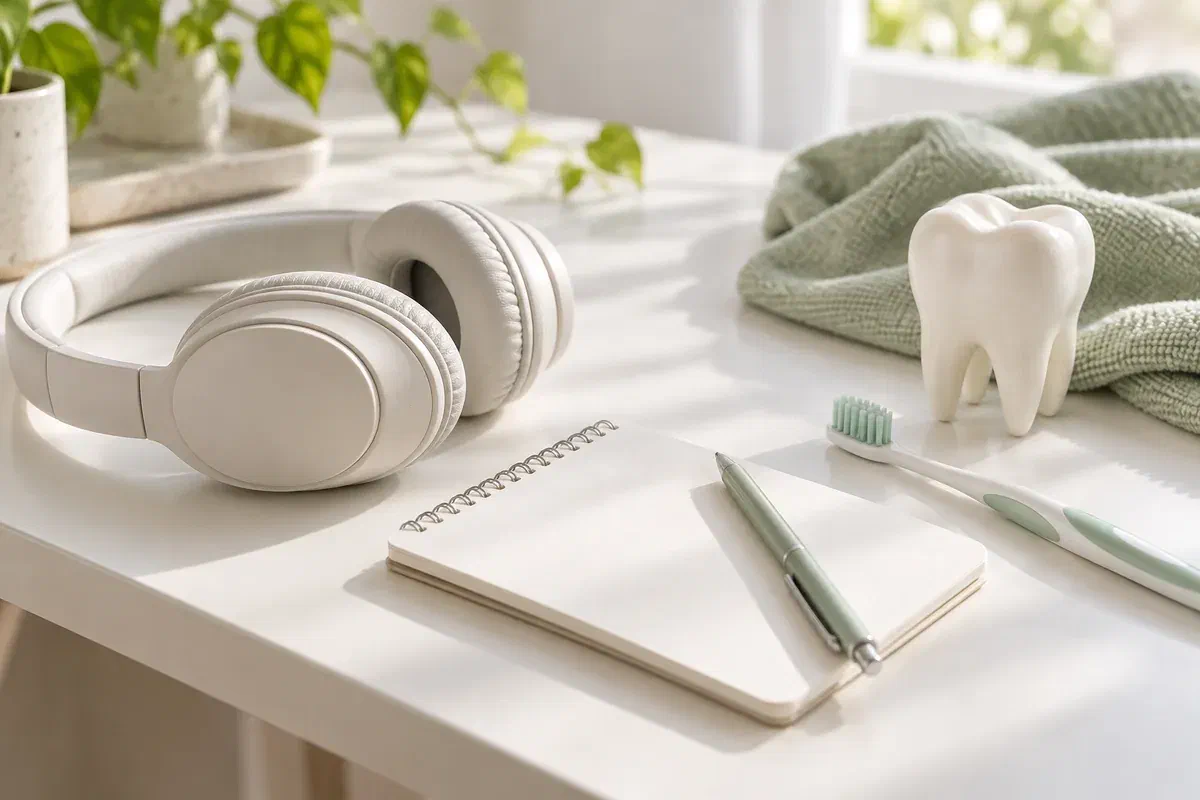
Headphones, notebook, toothbrush, and tooth model illustrating preparation for an individual dental visit
Help us listen well

Tell us the method, the timing and the signals.

Practical, specific notes help most. Describe how communication works, what affects comfort, which health details matter and what is going on in the mouth, rather than relying on a diagnosis.

The tools and pace that work

List what they use, such as an AAC app, a core-word board, sign or writing, and whether it can be held during the exam. Mention how many seconds or minutes help before a reply. We direct questions to the patient and wait.

What makes communicating harder

Stress, noise, bright light or having hands occupied may reduce someone's ability to express themselves. Share what restores calm and which signal means stop. We will discuss which preferences can be arranged before the visit.

Health, movement and swallowing

Bring a medication list, allergies and guidance from other clinicians, such as a speech-language pathologist. Mention seizures, involuntary movement, positioning limits or swallowing concerns. These details help the dentist plan safely and decide whether more support is needed.

A person who cannot say where it hurts may still show it. Look for chewing on one side, touching the cheek, waking at night or new resistance to brushing. Share these observations with us. They call for an exam but do not, on their own, confirm a dental diagnosis.

What good communication planning does

The patient can be heard even with a mouth full of instruments.

Agreeing on communication ahead of time helps a person feel prepared to take part. It lets the dental team review health information, pick clear wording or visuals and work out the practical setup. The first appointment can then have an achievable aim, without the pressure of finishing every task at once.

Families and support staff benefit from that clarity as well. Decide which documents or devices to bring, who will join and what the visit will include. If another setting is recommended, ask for the reasons and who arranges it. Make sure the dental issue has a specific follow-up before you leave.

Patient information: NIDCR — individual needs and oral health care

Real participation

Questions might be offered as choices, shown on a picture card or given more time. Let us know how the person signals preference and worry. Support should help them contribute rather than routinely answer for them.

Steps explained in advance

Knowing each step helps people who process information differently. Ask whether visual schedules, a short first visit or agreed pauses would help. These are discussed and confirmed with the team, not assumed from a description online.

Brushing instructions they can follow

Home advice should suit comfort, physical ability and the support available. Tell us which part of the routine gets confusing or difficult. Picture-based steps or one simple change, shown in person, may help more than lengthy written guidance.

The visit in four parts

Listen first, then look.

The first appointment may focus on understanding needs and checking what can be examined comfortably. Treatment choices follow the findings, health information and a consent conversation that suits the person.

  1. Learn the communication system

    We ask about the dental concern, medical history, medicines and past visits, and how the person communicates. With permission, a speech-language pathologist or physician can clarify how best to explain options or answer a specific question.

  2. Explain options accessibly

    The dentist describes proposed care using words, visuals or written choices the patient can follow, and confirms the consent arrangements. Using a device or sign does not mean someone lacks decision-making ability. A substitute decision-maker's role, if needed, is confirmed properly.

  3. Check in throughout the exam

    We agree on a stop signal that works with hands and mouth occupied, such as raising a hand. The exam may include breaks to let the person use their communication tools. If it is not going well, we adjust. Distress is never ignored.

  4. Share the plan in an accessible form

    We explain findings, options and whether more visits, medical coordination or referral are needed. You will know who organizes the next step and how to report urgent concerns. Visual or plain-language summaries can help the patient review it later.

Home routines

Mouth care that makes sense to the person doing it.

A routine should reflect comfort, communication and any swallowing or medical instructions already in place. Ask our team to demonstrate techniques so you are not left guessing.

Find the confusing or hard part

The barrier may be holding the brush, tolerating a flavour, reaching certain teeth or remembering the order of steps. A picture sequence, adapted handle or gradual approach may be discussed, recognizing that each person needs something a little different.

Ask before helping

Agree how the person says go ahead, not now or stop, perhaps with a card or a sign. If you assist, request guidance that suits their abilities. Ongoing refusal or upset might be a sign of pain or another problem that deserves assessment rather than more pressure.

Record what you notice

Watch for differences in appetite, rest, facial comfort or acceptance of brushing, especially if pain is hard to express. Tell us what you saw and when. Updated medication and health information helps us weigh new concerns in context.

Finding the right setting

Support for communicating; treatment for what we find.

The choice depends on dental needs, medical factors, comfort and what can be provided appropriately here. Ask why an option is suggested and what it will involve.

When a visit here is suitable

Clinic assessment with communication supports

Care may begin with an exam using the agreed communication methods, pacing and practical adjustments. A first visit can set priorities without any promise that all care is completed. Agree beforehand what a helpful appointment would include.

When preparation and staging help

Visits built up over time

When clinically appropriate, a few short visits can build familiarity with the room and the vocabulary of care, or treatment may be done in stages. Ask how current problems will be addressed along the way, so urgent disease is not left waiting.

When more clinical support is needed

Specialist or hospital-based dentistry

Some medical or treatment needs are better met in another setting. Sedation or general anaesthesia, if considered, requires its own assessment, consent and suitable provider. It is never automatic, and our clinic may not offer it.

Communication questions from Mississauga

Answers about being understood at the dentist.

Let us know what helps or hinders a visit and what you want to know beforehand. Plans should be clear without suggesting every appointment will feel identical.

(905) 876-4488
Can my daughter keep her AAC device with her in the dental chair?
In most cases it can stay within reach, and it is worth planning where it will sit. Tell us about the device beforehand. The dentist may pause so she can use it, since her hands and mouth may be occupied during parts of the exam.
Is it possible to receive information in pictures or plain language?
Ask us. Explanations can often be simplified, written down or paired with pictures. If the person has visual supports they already use, bring them, and we can talk about which steps of the visit to illustrate.
How much extra time is allowed for someone who answers slowly?
Give us a rough idea of how long the person usually needs so we can plan the appointment length accordingly. We aim to wait for answers rather than move on. If more time is needed than one visit allows, another visit may be arranged.
If my brother uses sign language, who makes treatment decisions?
Using sign does not affect his right to decide. The dentist needs to communicate in a way he understands and confirms consent arrangements that apply to him. Raise interpreter needs early so they can be discussed before the appointment.
What can families describe when pain is not communicated in words?
Describe changes from the person’s usual behaviour, such as eating differently, sleeping poorly, rubbing the face or avoiding brushing. Explain their normal communication so differences stand out. An exam is still needed to find the cause.
Can a first visit stay short and focused on getting to know each other?
Often it can. An early appointment might cover health details, communication and a brief exam. Discuss the plan ahead of time. If the dentist finds something urgent, they will explain how to manage it rather than delay indefinitely.
Communication-first dental care near Mississauga

Start with the way this person talks to the world.

Call our Bronte Street practice to explain the dental concern, health information and the communication support that works. We can outline the assessment and whether further planning or a referral may be needed. A clear first conversation helps everyone prepare.

Please raise particular support, interpreter or medical needs with us before the visit. A request through the website does not confirm specialist resources or a specific treatment method.

Visit Milton Dental Clinic
Unit 1, 342 Bronte St. S, Milton, ON L9T 5B7
Get directions Clinic hours
Monday–Thursday
11am–7pm
Friday–Sunday
By appointment only

Areas we serve

  • Milton
  • Oakville
  • Mississauga
  • Georgetown
  • Halton Hills
  • Acton
  • Campbellville
  • Brampton
  • Burlington
  • Puslinch
  • Rockwood
  • Erin
  • Caledon
  • Etobicoke
  • Old Milton
  • Bronte Meadows
  • Timberlea
  • Dorset Park
  • Dempsey
  • Clarke
  • Beaty
  • Coates
  • Harrison
  • Scott
  • Willmott
  • Ford
  • Bowes
  • Cobden
  • Walker
  • Mountain View
  • Milton Heights
  • Hawthorne Village
  • Valley View
  • Fallingbrook
  • Nassagaweya
  • Trafalgar
  • Esquesing
  • Nelson
  • Brookville
  • Moffat
  • Glen Williams
  • Norval
  • Limehouse
  • Stewarttown
  • Ashgrove
  • Hornby
  • Silver Creek
  • Speyside
  • Scotch Block
  • North Oakville
  • River Oaks
  • Glen Abbey
  • West Oak Trails
  • Palermo
  • Bronte Creek
  • College Park
  • Joshua Creek
  • Uptown Core
  • Preserve
  • Iroquois Ridge
  • Lisgar
  • Meadowvale
  • Meadowvale Village
  • Churchill Meadows
  • Erin Mills
  • Central Erin Mills
  • Streetsville
  • East Credit
  • Creditview
  • Heartland
  • Sheridan
  • Mount Pleasant
  • Credit Valley
  • Huttonville
  • Churchville
  • Springbrook
  • Northwest Brampton
  • Bram West
  • Fletcher's Meadow
  • Fletcher's Creek South
  • Alton Village
  • Orchard
  • Millcroft
  • Headon Forest
  • Tansley
  • Brant Hills
  • Tyandaga
  • Kilbride
  • Lowville
  • Aberfoyle
  • Morriston
  • Arkell
  • Hillsburgh
  • Freelton
  • Carlisle
  • Waterdown
  • Flamborough
  • Mountsberg

How can we help?

Milton Dental Clinic

Have a question about your smile? Choose the option that works best for you.

For urgent dental concerns, please call.
Messages are reviewed during clinic hours.