

Illustrative patient-led dental conversation using a notebook for communication
General & Family Dentistry

Dental Care for Patients with Special Healthcare Needs in Old Milton

Health, memory, movement and communication can change over the years, and dental visits may need to change with them. We plan around the person you are supporting today.

When things are not the way they used to be

What worked ten years ago may need rethinking.

Plenty of households in Old Milton, Milton's historic downtown, include someone whose needs have shifted. A parent starts new medicines, a stroke affects speech, a spouse finds lying back harder, or an adult child with a lifelong disability moves into a new stage. The words special healthcare needs cover all of this, yet each situation calls for its own plan.

So we begin with the individual. Before you book, tell us how the person communicates now, what dental visits used to feel like, and what has become difficult since. Describe how they show pain, ease or a wish to stop. A relative or caregiver often knows these details well, and the patient still stays at the centre of the discussion.

That early talk tells us whether an appointment at our Bronte Street practice makes sense and which parts need more planning. Some situations call for a physician's input, a specialist or a hospital dental clinic. A diagnosis alone never settles what is appropriate, and we do not use a single formula. You will hear honest expectations and a clear next step.

Talk about changing needs
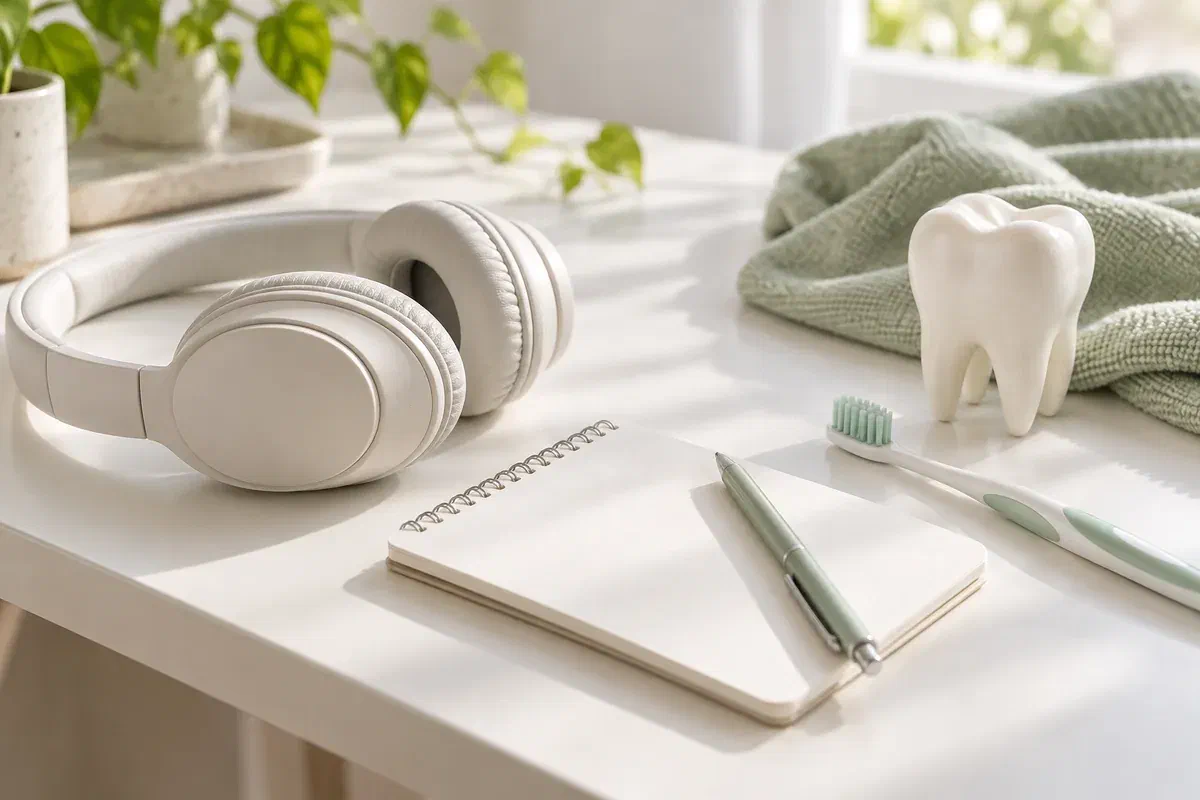
Headphones, notebook, toothbrush, and tooth model illustrating preparation for an individual dental visit
Telling us what has changed

Describe today, not just the medical history.

A recent, everyday picture of the person helps more than a list of conditions. Explain how they communicate, what bothers them, which health facts are current and what is happening in the mouth.

Speech, hearing and understanding

Hearing loss, aphasia after a stroke or memory changes may alter how someone follows a conversation. Tell us whether writing, gestures, a quieter voice or extra time helps. We will keep addressing the patient, even when a companion helps translate.

Moments that cause unease

Some people become unsettled by bright lights, a reclined chair, unfamiliar faces or water in the mouth. Let us know what calms them, perhaps a familiar phrase or holding a hand. We can then discuss which preferences are practical to arrange before the day.

Medicines, mobility and safety

Bring a current medication list, including blood thinners, plus allergies and instructions from other clinicians. Mention falls, transfers from a wheelchair, tremor, seizures or swallowing difficulty. These facts guide the dentist's assessment and any extra support required.

A person living with memory loss may stop mentioning a sore tooth. Watch for refusing favourite foods, restless nights, rubbing the jaw or resisting dentures or brushing. These signs warrant an exam, though only an assessment can tell whether the mouth is the cause.

Why it pays to plan

A visit designed around who the person is now.

Discussing things ahead lets us find out what helps the patient feel settled and able to cooperate. The dentist can review recent health changes, choose how to explain things and think through physical arrangements. The appointment gets a realistic aim, so nobody walks in expecting every task to be finished in one sitting.

Family members and caregivers gain too. Decide together what to bring, who will accompany the patient and what the visit is likely to cover. If another setting would be safer, ask the reason and who will coordinate the move. Every dental concern deserves a defined follow-up rather than an open question.

Patient information: NIDCR — individual needs and oral health care

Keeping the patient involved

Someone with changing abilities may need simpler questions, a slower pace or a yes-and-no format. Show us how they express choice and concern. Support from a companion should help the person participate, not stand in for them by default.

Knowing what comes next

Predictability can reduce worry for people with memory or anxiety changes. Ask whether a brief first visit, step-by-step explanation or planned rest breaks would suit. Each arrangement is discussed and confirmed, not taken for granted.

A routine that matches new abilities

Advice should reflect grip strength, dentures, sensory comfort and who helps at home. Tell us where the routine now falls apart and what you have already tried. A single practical adjustment, demonstrated in the room, often works better than detailed instructions.

From first contact to follow-up

Learn, agree, examine, plan.

An early visit may concentrate on understanding needs and seeing what can be checked without strain. Any treatment decision follows from the findings, current health and a consent discussion suited to the person.

  1. Bring the story up to date

    We ask about the dental problem, recent health events, medicines and how earlier appointments went. Explain communication preferences and any physical help needed. With permission, a family doctor or care home nurse can clarify a specific question.

  2. Settle who decides

    The dentist explains the proposed care in terms the patient can follow and confirms the consent arrangements. Memory loss or a communication change does not automatically remove someone's ability to decide. A substitute decision-maker's authority is confirmed properly, never presumed.

  3. Look gently and adjust

    We agree on a way to signal discomfort or ask for a rest. The exam may involve pauses, repeated explanation or a narrower focus. If something is not working, we try another way. A challenging visit gives us planning information and never means ignoring distress.

  4. Set out the route ahead

    We go over the findings, the options and whether more appointments, medical coordination or referral are needed. We confirm who books the next step and how to handle urgent problems in the meantime. A written summary can help relatives who were not present.

At home and in care settings

Mouth care that changes when the person does.

A daily routine has to respect comfort, communication and any swallowing or medical guidance already in place. Ask us to demonstrate a method rather than working it out by trial and error.

Pinpoint the hard step

Perhaps holding the brush has become tricky, the mint flavour is unpleasant, dentures are hard to remove or the order of steps gets lost. Each barrier suggests a different solution. We can talk about adapted tools or a simpler sequence without assuming one answer suits all.

Assist without pushing

Agree how the person shows they are happy to continue, uncomfortable or finished. If you help with brushing or denture care, ask for guidance that matches their abilities. Repeated refusal or agitation may signal pain or another issue that needs checking, not more persistence.

Track changes and report them

Keep note of shifts in eating, sleep, facial comfort or acceptance of mouth care, especially where pain is difficult to describe. Tell us what you saw and when it began. Updated medication and health details help us understand new concerns in context.

Deciding where and how

Different needs, different routes to care.

The right path depends on oral health, medical issues, comfort and what can safely be done here. Ask the dentist why an approach is advised and what it will involve for this person.

When an appointment here is suitable

A clinic exam with adjustments

Care can open with an examination that uses the agreed communication approach, pace and physical arrangements. The first visit can set priorities with no pledge to finish everything. Decide together what a worthwhile appointment would look like.

When preparation or staging helps

Several shorter appointments

Where it is clinically reasonable, care may be split across visits so the person can settle into the routine. Ask how any active problem will be treated during that time. Gradual preparation should not leave a painful or worsening condition waiting.

When extra clinical resources are needed

Hospital or specialist dental care

Complex medical conditions or demanding treatment may be better managed elsewhere. If sedation or general anaesthesia comes up, it requires its own assessment, consent and qualified provider. It is not automatic, and it should not be assumed available at our clinic.

Old Milton questions about changing needs

Questions that come up as needs evolve.

Share what makes appointments easier or harder for the person you support and what you need to know in advance. We give specific plans without suggesting every visit will feel the same.

(905) 876-4488
My father has dementia and has always seen a dentist. What should change now?
Start by telling us how his memory and communication have shifted and what upsets him. A shorter, calmer appointment with clear explanations may suit him better. The dentist will also review medicines and discuss how consent applies to the care being proposed.
Can someone stay with a parent who uses a wheelchair during the exam?
Usually a companion can stay if the patient wishes. Let us know about wheelchair use and transfers before you come over from Old Milton so we can discuss what is practical in the treatment room and whether staying seated is possible for part of the assessment.
How is consent handled if a relative holds power of attorney for personal care?
The dentist first considers whether the patient can make this particular decision, with support if needed. If they cannot, the appropriate substitute decision-maker is involved. Bring any relevant documents, as attending alongside the patient does not establish that role on its own.
Do new medicines matter to the dentist even if they seem unrelated?
Yes. Some medicines affect bleeding, dry mouth, healing or how certain dental care is planned. Bring an up-to-date list, including over-the-counter products and supplements. The dentist decides what is relevant and whether to check anything with the prescribing clinician.
What if my mother refuses to open her mouth at the appointment?
We will not force the exam. Pausing, explaining again or ending the visit are all reasonable. Refusal can itself be a clue to discomfort. The dentist will talk with you about what was learned and how to plan the next attempt or another route.
Is general anaesthesia the answer when cooperation has become difficult?
Not automatically. Some people manage well with adjustments, while others may need a specialist opinion. General anaesthesia or sedation involves a separate assessment of health risks and benefits, consent, and a suitable provider and setting.
Support for families in Old Milton

Call us before the next appointment.

Contact our Bronte Street practice to describe the dental concern, recent health changes and the help the person relies on. We can explain what an assessment would involve and whether further planning or a referral is likely. A first conversation gives everyone a clearer path.

Please mention any particular support or medical requirements ahead of the visit. A web form request is a starting point only; it cannot confirm specialist facilities or a set treatment plan.

Visit Milton Dental Clinic
Unit 1, 342 Bronte St. S, Milton, ON L9T 5B7
Get directions Clinic hours
Monday–Thursday
11am–7pm
Friday–Sunday
By appointment only

Areas we serve

  • Milton
  • Oakville
  • Mississauga
  • Georgetown
  • Halton Hills
  • Acton
  • Campbellville
  • Brampton
  • Burlington
  • Puslinch
  • Rockwood
  • Erin
  • Caledon
  • Etobicoke
  • Old Milton
  • Bronte Meadows
  • Timberlea
  • Dorset Park
  • Dempsey
  • Clarke
  • Beaty
  • Coates
  • Harrison
  • Scott
  • Willmott
  • Ford
  • Bowes
  • Cobden
  • Walker
  • Mountain View
  • Milton Heights
  • Hawthorne Village
  • Valley View
  • Fallingbrook
  • Nassagaweya
  • Trafalgar
  • Esquesing
  • Nelson
  • Brookville
  • Moffat
  • Glen Williams
  • Norval
  • Limehouse
  • Stewarttown
  • Ashgrove
  • Hornby
  • Silver Creek
  • Speyside
  • Scotch Block
  • North Oakville
  • River Oaks
  • Glen Abbey
  • West Oak Trails
  • Palermo
  • Bronte Creek
  • College Park
  • Joshua Creek
  • Uptown Core
  • Preserve
  • Iroquois Ridge
  • Lisgar
  • Meadowvale
  • Meadowvale Village
  • Churchill Meadows
  • Erin Mills
  • Central Erin Mills
  • Streetsville
  • East Credit
  • Creditview
  • Heartland
  • Sheridan
  • Mount Pleasant
  • Credit Valley
  • Huttonville
  • Churchville
  • Springbrook
  • Northwest Brampton
  • Bram West
  • Fletcher's Meadow
  • Fletcher's Creek South
  • Alton Village
  • Orchard
  • Millcroft
  • Headon Forest
  • Tansley
  • Brant Hills
  • Tyandaga
  • Kilbride
  • Lowville
  • Aberfoyle
  • Morriston
  • Arkell
  • Hillsburgh
  • Freelton
  • Carlisle
  • Waterdown
  • Flamborough
  • Mountsberg

How can we help?

Milton Dental Clinic

Have a question about your smile? Choose the option that works best for you.

For urgent dental concerns, please call.
Messages are reviewed during clinic hours.