

Illustrative conversation with a dental hygienist before an appointment
General & Family Dentistry

Dental Hygiene Appointments

Give your daily routine a professional review. A dental hygiene appointment in Milton can address deposits, assess gum health, and help you find cleaning methods that work for your mouth.

A closer look at dental hygiene appointments

Care for the places your everyday routine can miss.

A hygiene appointment is an opportunity to review how your gums and teeth are doing, not simply a chance to make the surfaces feel smoother. Professional care can address deposits that are difficult or impossible to remove at home and identify areas where your daily cleaning could work more effectively.

At Milton Dental Clinic, tell us what you have noticed between visits. Bleeding when brushing, food catching in one space, sensitivity, or difficulty using floss can guide the conversation. The care recommended should reflect the condition of your mouth rather than a fixed package that assumes every patient needs the same procedures.

You do not need to arrive with a perfect routine. Explain the steps that are manageable and the ones you tend to avoid because they hurt, take too long, or feel confusing. A useful appointment gives you a clearer understanding of your gum health and practical advice you can continue using after leaving the chair.

Arrange a hygiene appointment
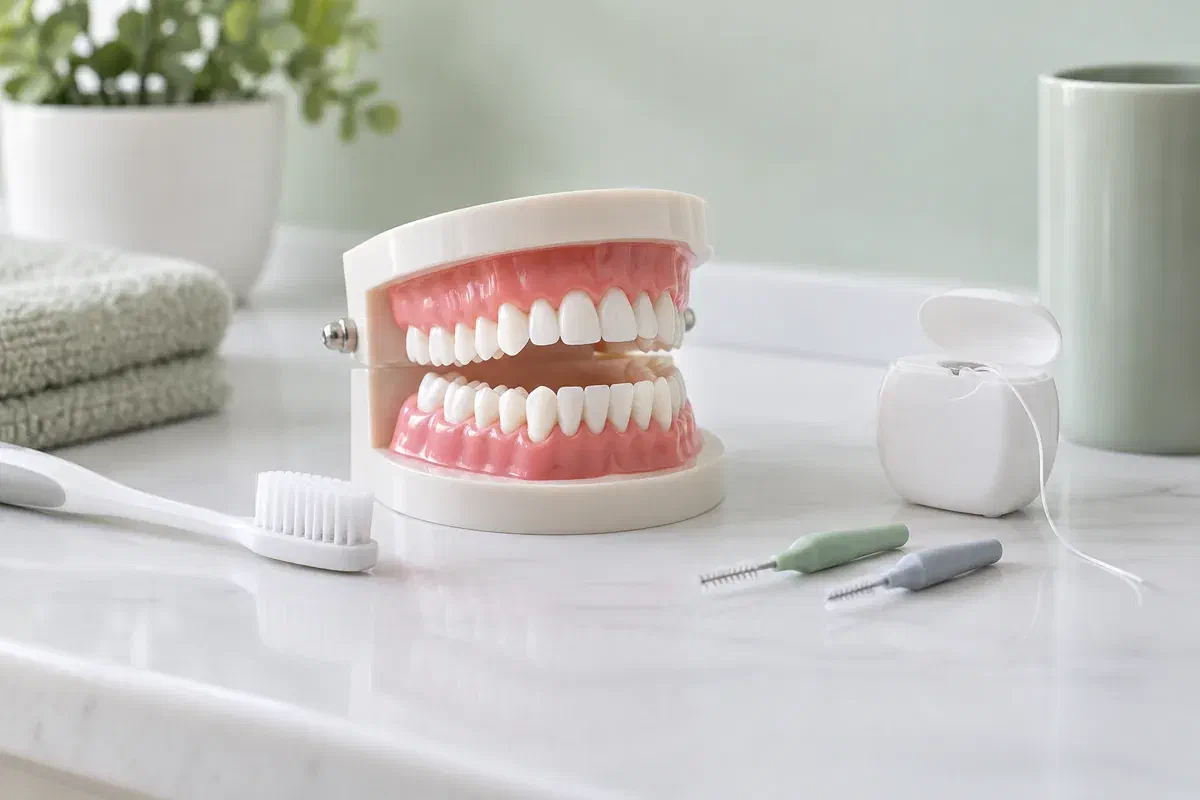
Dental teaching model with a toothbrush, interdental brushes, and floss
Reasons to review your routine

Bring the small frustrations into the appointment.

Changes in cleaning or comfort may be useful clues even when no tooth hurts. Tell the team where a problem occurs, how long it has been happening, and what you have already tried.

Bleeding or tenderness around the gums

Bleeding deserves assessment rather than an assumption that brushing is simply too rough. Plaque-related inflammation and other factors may be involved. Explain whether it happens in one area or throughout the mouth and whether there is swelling or a change in tooth stability.

Deposits or areas that feel hard to clean

Hardened deposits cannot be removed reliably with ordinary brushing. Crowded teeth, bridges, or other dental work can also make certain surfaces harder to reach. Ask the team to identify the area and demonstrate a suitable cleaning method.

Sensitivity or an uncomfortable past visit

Tell us if cold water, instruments, or staying in the chair has previously been difficult. Describe what happened rather than feeling you must tolerate the same experience again. The team can discuss the proposed care, pacing, and appropriate comfort measures.

Mention changes in health, pregnancy, medicines, or medical instructions before the visit. A hygiene appointment still needs an accurate history, even when you expect only routine cleaning.

What professional hygiene care adds

Combine a clearer assessment with better day-to-day technique.

Plaque is a soft bacterial film, while tartar is hardened material that requires professional removal. Both can be relevant to gum inflammation. A hygiene visit considers the deposits and the condition of the surrounding tissues, so the recommendation addresses more than the visible appearance of the teeth.

The visit also gives you a chance to practise. A small adjustment in brush position or the size of an interdental aid can make advice easier to use. Ask to see the specific area being discussed and explain whether the technique feels realistic for your hands and routine.

Patient information: NIDCR — oral hygiene and professional care

A record of gum health over time

Relevant measurements and observations can help the team explain changes between visits. Ask which findings are reassuring and which need attention. An improvement plan is easier to understand when you know what will be checked again.

Cleaning directed to your needs

The extent and type of professional cleaning depend on the findings. Some visits focus on maintenance, while others reveal a need for more involved gum care. The team should explain that distinction before you assume all treatment will fit into one appointment.

A practical choice of home-care tools

Brushes, floss, and interdental aids are not equally convenient for every space or person. Ask for recommendations linked to your mouth, including dental work or dexterity needs. You do not need a collection of products without a clear purpose for each.

During your hygiene visit

Review the mouth, explain the care, and keep you involved.

Let the team know what you want to understand and how to signal for a pause. The appointment can be more useful when discomfort, uncertainty, and home-care difficulties are discussed openly.

  1. Update the history and your concerns

    We review relevant health information and ask about symptoms since the last visit. Mention bleeding, dryness, sensitivity, changes in medicines, and any areas you avoid cleaning. If it has been a long time since your last appointment, say so without feeling you need to explain it away.

  2. Assess the gums and cleaning needs

    The team considers deposits, tissue condition, and relevant gum measurements. A dentist's examination or imaging may be needed according to the findings and your overall care plan. A hygiene visit does not automatically replace every other part of a dental assessment.

  3. Provide appropriate professional cleaning

    Hand or powered instruments may be used according to the area and care required. Polishing or additional preventive measures are considered when appropriate rather than assumed to be mandatory. Tell us if an area is sensitive so the approach can be discussed.

  4. Demonstrate and agree the next review

    Before leaving, ask for a demonstration of the home-care steps recommended for you. Confirm whether further gum treatment or reassessment is needed and why a particular interval is suggested. The next appointment should have a purpose beyond simply repeating the last one.

Making the appointment count at home

Keep the routine consistent and the technique gentle.

Professional care and daily cleaning support each other. Follow any instructions specific to the treatment provided and ask for clarification if you are unsure how to care for a sensitive area.

Brush with attention to the gumline

Use fluoride toothpaste and a comfortable technique that reaches the surfaces discussed at your visit. More pressure is not necessarily more effective. Ask about brush choice or positioning if you struggle to reach an area or notice that cleaning is uncomfortable.

Clean between teeth in a suitable way

Use the method and size of aid recommended for the spaces in your mouth. Avoid forcing an interdental brush through a tight area or snapping floss into the gum. If a tool repeatedly catches, report the problem rather than repeatedly pulling harder.

Report persistent or changing symptoms

Follow the advice given for temporary tenderness after care, but contact the clinic if pain is worsening or bleeding persists. A new swollen area, loose tooth, or change in chewing needs attention. Do not wait for the next routine hygiene date when symptoms have changed.

Matching care to gum health

Routine maintenance and gum treatment serve different needs.

The examination helps establish which type of care is appropriate. Ask what the findings mean and whether a further assessment is needed before the treatment plan is complete.

When ongoing prevention is the focus

Routine hygiene maintenance

Care may involve removing relevant deposits, reviewing gum health, and adjusting daily cleaning advice. The visit interval should reflect your needs. A comfortable mouth still benefits from periodic assessment rather than relying on symptoms alone.

When gum disease requires treatment

More involved periodontal care

Findings may call for treatment below the gumline, reassessment, or periodontal referral. This is not simply a more vigorous version of polishing. Ask about the diagnosis, expected appointments, comfort measures, and how response to treatment will be evaluated.

When technique or access is the main barrier

Targeted support for a difficult routine

The appointment may place extra emphasis on cleaning around bridges, crowded spaces, or appliances and adapting tools to your abilities. Demonstration should connect directly to the area you find difficult, with a chance to ask questions.

Patient information: NIDCR — gum disease assessment and treatment

Questions before a hygiene appointment

Understand what the visit is intended to achieve.

Your gum findings and practical needs shape the recommendation. Ask about the expected scope, fees, comfort, and any further visits needed before care begins.

(905) 876-4488
Is a dental hygiene appointment the same as a complete dentist's examination?
They have related but different purposes. Hygiene care focuses on gums, deposits, prevention, and daily cleaning, while a dentist’s examination may assess additional concerns and treatment needs. Ask what is included in your booking and whether an examination or imaging is also recommended.
Why might my hygiene visit need more than one cleaning appointment?
The amount of deposits, gum condition, treatment required, and your comfort can affect the plan. Some findings call for staged care or reassessment. The team should explain why additional visits are recommended and how they relate to a defined oral health need.
Can professional polishing change the natural colour of my teeth?
Polishing may remove some surface staining when appropriate, but it is not the same as whitening the underlying tooth colour. Ask what kind of stain or colour change is present. A cosmetic concern should be discussed separately from the care needed for gum health.
Should I avoid brushing an area that bleeds before my hygiene appointment?
Do not assume avoidance is the answer. Continue gentle cleaning and arrange assessment of the bleeding, asking for specific advice if the area is painful or bleeding is significant. The team can review the cause and show a suitable technique for that part of your mouth.
Can I ask the hygienist to demonstrate cleaning around my bridge?
Yes. Explain where food catches or where your usual tools do not reach. A demonstration with an appropriate aid can help you understand the route around the restoration. Tell the team if the method feels awkward so alternatives can be discussed.
Is every hygiene recall automatically scheduled six months apart?
No single interval suits every mouth. Gum findings, dental risk, home care, medical factors, and previous treatment can affect the recommendation. Ask why your review interval is suggested and whether symptoms or changes in health should bring you back sooner.
Dental hygiene appointments in Milton

Let’s make your daily care more effective and manageable.

Contact our Bronte Street practice to arrange a hygiene visit and discuss any areas of concern. Bring questions about bleeding, sensitivity, tools, or your usual routine. We can explain the care recommended and the next steps for maintaining your oral health.

Mention discomfort or a new dental problem when booking so the appropriate assessment can be considered alongside hygiene care.

Visit Milton Dental Clinic
Unit 1, 342 Bronte St. S, Milton, ON L9T 5B7
Get directions Clinic hours
Monday–Thursday
11am–7pm
Friday–Sunday
By appointment only

How can we help?

Milton Dental Clinic

Have a question about your smile? Choose the option that works best for you.

For urgent dental concerns, please call.
Messages are reviewed during clinic hours.