

Illustrative conversation with a dental hygienist before an appointment
General & Family Dentistry

Dental Hygiene Appointments in Acton

Picks, tape, tiny brushes, water jets: the choice is endless and most of it ends up unused. Hygiene care for Acton clears hardened build-up and narrows your kit to the tools your mouth needs.

Hygiene appointments for Acton

A drawer full of floss picks you never use.

Most bathrooms have one: the drawer with three kinds of floss, a pack of picks bought on impulse and a set of interdental brushes still in the wrapper. Products are easy to find. Knowing which one fits the gap between your lower molars, or works around a crown, is the harder part, and that is where a hygienist can help.

The visit begins with your gums and teeth. Deposits that have hardened beyond the reach of any home tool are removed, the tissue is checked for inflammation and the surfaces you tend to miss are identified. Only then does it make sense to talk about tools, because the right choice depends on what is found.

Bring your usual brush, or the aid you keep giving up on, if that helps the conversation. Tell us which gaps catch food, where floss shreds or snaps, whether your hands get stiff and whether any area bleeds. With that, the hygienist can suggest a short kit with a clear purpose for each item.

Book an appointment
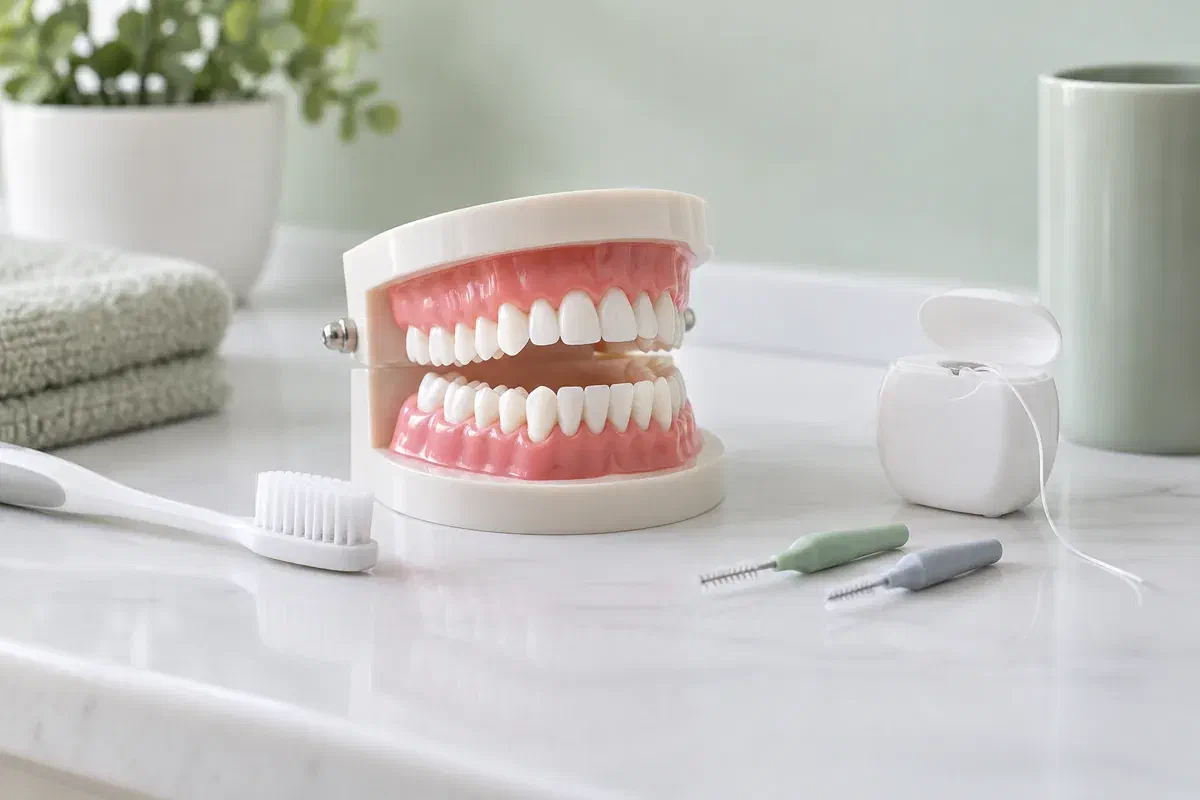
Dental teaching model with a toothbrush, interdental brushes, and floss
Clues from your routine

When the tools fight back

Frustration with cleaning is often a sign that the method or size is wrong, not that you are doing it badly. Point out where the trouble happens and what you have tried.

Bleeding where an aid goes in

Gums can bleed when they are inflamed, and plaque left between teeth is a common reason. Sometimes the aid is also the wrong size. Let us know which spaces bleed, how long it has been happening and whether you have seen swelling or a tooth that feels less firm.

Gaps that collect food and tartar

Wide spaces, tight contacts, crowded teeth and bridges each trap debris differently. Once plaque hardens into tartar, no floss or brush will lift it. Ask the hygienist to identify the area and show you which aid actually reaches the surface.

Sore fingers, sensitive teeth or a hard past visit

Arthritis, a weak grip or sensitive teeth can turn flossing into a chore, and a rough earlier cleaning may have left you wary. Explain what has been difficult. The team can suggest easier tools, talk through the appointment and agree how to pause.

Before the visit, tell us about medical conditions, pregnancy, medicines or any advice from a physician. These details shape safe care, even when the appointment is mostly about technique.

Why a professional opinion helps

The right tool, used the right way, beats a cupboard of options.

Plaque is soft at first and can be cleared by brushing and cleaning between teeth. Where it lingers, it mineralises into tartar that sticks to the tooth and has to be removed with professional instruments. Gum inflammation can follow from either, so the hygienist looks at the tissue along with the deposits.

Choosing a tool is only half the answer; the other half is handling it. The hygienist can show you how far to insert an interdental brush, how to curve floss around a tooth or how to hold a handle if your grip is limited. Ask to try it yourself while they watch, and say if it feels clumsy.

Patient information: NIDCR — oral hygiene and professional care

A gum record to check against

Measurements and notes taken at each appointment show whether your new tools are helping. Ask which areas have improved and which will be looked at again. Seeing progress makes it easier to stay with a routine.

Cleaning that follows the findings

A visit may be simple upkeep, or it may reveal gum disease that needs a different kind of treatment. The hygienist should explain which it is, so you know whether one appointment is likely to be enough.

A short, sized kit

Interdental brushes come in many widths, floss in several textures and handles in different lengths. Ask for specific sizes for specific gaps, including around crowns or implants. Each tool should earn its place in the drawer.

The appointment, step by step

Clean first, then fit the tools.

Let the team know what you would like to learn and how you will indicate a pause. Talking openly about sore fingers, tender gums or awkward aids makes the time more useful.

  1. Go over health and home habits

    We review medical details and medicines and ask what you notice day to day. Mention bleeding, sensitivity, dryness and the tools you have tried. If it has been a long while since your last cleaning, that is fine to say.

  2. Examine gums and gaps

    The hygienist checks deposits, gum condition and the size of the spaces between teeth, with pocket measurements where needed. Your findings may lead to a recommendation for a dentist's exam or radiographs. Hygiene care sits alongside those, rather than in place of them.

  3. Remove deposits carefully

    Hand scalers, ultrasonic instruments or both may be used to suit each area. Polishing or fluoride is offered where it helps, not by habit. Tell us if anything feels tender so the approach can be discussed.

  4. Try the tools and agree a review

    Before leaving, practise with the aids suggested for you until they feel manageable. Ask whether a gum recheck or further treatment is planned and why that timing has been chosen. The next visit can then check how the new kit is working.

Using your kit at home

Little and often, with the right sizes.

Your daily routine and professional care support each other. Follow any specific advice from your visit, and get in touch if a gap or tool is still giving you trouble.

Brush softly towards the gum

Fluoride toothpaste and a soft brush, angled at the gumline, will do more than scrubbing. If your grip is limited, a thicker handle or a powered brush may help. Ask about options if any area stays out of reach.

Match each aid to each gap

Use the interdental brush size or floss type recommended for every space. A brush that has to be forced is too big, and floss should never be snapped into the gum. If a tool keeps bending or catching, tell us so the size can be reviewed.

Keep an eye on stubborn symptoms

Mild soreness after a cleaning often fades within days. Phone the clinic if pain grows, bleeding carries on, a gum swells or a tooth begins to feel loose. Those changes deserve a look before your next planned hygiene visit.

Matching the visit to the need

Upkeep, gum therapy or a focus on technique.

What the hygienist finds guides which care is suitable. Ask what the results show and whether further assessment is needed before a plan is set.

For mouths that are largely healthy

Preventive upkeep

The visit clears deposits, reviews gum health and refines your tools and technique. How often you return should depend on your risk. A mouth that feels comfortable still benefits from periodic checks, because gum changes are often quiet at first.

For diagnosed periodontal disease

Gum therapy

Findings may lead to cleaning below the gumline, a reassessment or a referral to a periodontist. That is a separate treatment rather than a tougher polish. Ask about the diagnosis, expected visits and how progress will be measured.

For routines held back by access or grip

Technique and tool fitting

Extra time can go into bridges, implants, crowded teeth and adapted handles. Demonstration should focus on the exact area you struggle with, with time to try more than one option and ask questions.

Patient information: NIDCR — gum disease assessment and treatment

Tool questions from Acton

Which floss, which brush, and how?

Suggestions depend on your gums, your gaps and your hands. Before treatment starts, ask what is planned, what it costs, how comfort is managed and whether further visits are likely.

(905) 876-4488
Are floss picks as good as regular string floss?
They can work well for some people, especially at the front of the mouth. String floss may wrap around a tooth more closely. Ask the hygienist which suits your teeth and whether picks reach the back gaps effectively.
How do I know which size of interdental brush to use?
The right size fits snugly without forcing. Many people need more than one size for different gaps. The hygienist can test sizes during your visit and tell you which to use where.
What can help if arthritis makes flossing hard?
Floss holders, longer-handled interdental brushes, water flossers and powered toothbrushes may be easier to manage. Bring the tools you use now and explain what is hard. The team can suggest alternatives to try.
How often should I replace my toothbrush or brush head?
Replace it when the bristles look worn or splayed, and after an illness if you prefer. Worn bristles clean less effectively. Ask the hygienist if your brushing pattern seems to wear bristles out quickly.
Should I be cleaning my tongue as well?
Some people find tongue cleaning helps their mouth feel fresher. It does not replace cleaning teeth and gums. Ask the hygienist whether it would be useful for you and how to do it comfortably.
Can the hygienist show me how to clean around my bridge or implant?
Yes. Point out where food catches and which tools have not worked. The hygienist can demonstrate a threader, a specialised brush or another aid and watch you try it before you leave.
Booking from Acton

Leave with a routine that finally works.

Call our Bronte Street practice to arrange a hygiene visit. Bring the tools you have, the gaps that frustrate you and any questions about bleeding or sensitivity. We will explain what we find and help you settle on a practical kit.

Pain, a broken tooth or new swelling? Let the team know when you call, so time can be planned to check it during the visit.

Visit Milton Dental Clinic
Unit 1, 342 Bronte St. S, Milton, ON L9T 5B7
Get directions Clinic hours
Monday–Thursday
11am–7pm
Friday–Sunday
By appointment only

Areas we serve

  • Milton
  • Oakville
  • Mississauga
  • Georgetown
  • Halton Hills
  • Acton
  • Campbellville
  • Brampton
  • Burlington
  • Puslinch
  • Rockwood
  • Erin
  • Caledon
  • Etobicoke
  • Old Milton
  • Bronte Meadows
  • Timberlea
  • Dorset Park
  • Dempsey
  • Clarke
  • Beaty
  • Coates
  • Harrison
  • Scott
  • Willmott
  • Ford
  • Bowes
  • Cobden
  • Walker
  • Mountain View
  • Milton Heights
  • Hawthorne Village
  • Valley View
  • Fallingbrook
  • Nassagaweya
  • Trafalgar
  • Esquesing
  • Nelson
  • Brookville
  • Moffat
  • Glen Williams
  • Norval
  • Limehouse
  • Stewarttown
  • Ashgrove
  • Hornby
  • Silver Creek
  • Speyside
  • Scotch Block
  • North Oakville
  • River Oaks
  • Glen Abbey
  • West Oak Trails
  • Palermo
  • Bronte Creek
  • College Park
  • Joshua Creek
  • Uptown Core
  • Preserve
  • Iroquois Ridge
  • Lisgar
  • Meadowvale
  • Meadowvale Village
  • Churchill Meadows
  • Erin Mills
  • Central Erin Mills
  • Streetsville
  • East Credit
  • Creditview
  • Heartland
  • Sheridan
  • Mount Pleasant
  • Credit Valley
  • Huttonville
  • Churchville
  • Springbrook
  • Northwest Brampton
  • Bram West
  • Fletcher's Meadow
  • Fletcher's Creek South
  • Alton Village
  • Orchard
  • Millcroft
  • Headon Forest
  • Tansley
  • Brant Hills
  • Tyandaga
  • Kilbride
  • Lowville
  • Aberfoyle
  • Morriston
  • Arkell
  • Hillsburgh
  • Freelton
  • Carlisle
  • Waterdown
  • Flamborough
  • Mountsberg

How can we help?

Milton Dental Clinic

Have a question about your smile? Choose the option that works best for you.

For urgent dental concerns, please call.
Messages are reviewed during clinic hours.