

Illustrative conversation with a dental hygienist before an appointment
General & Family Dentistry

Dental Hygiene Appointments in Brampton

One household, several mouths and very different routines. Hygiene visits for families from Brampton check each person's gums, clear stubborn deposits and teach habits suited to every age.

Family hygiene care for Brampton

Everyone in the house brushes differently.

A seven-year-old who races through brushing, a teenager working around brackets and a parent who has not had a cleaning since before the kids were born can all live under one roof. Their needs are not the same, and a good hygiene appointment treats each person as an individual rather than running through one standard routine.

For each family member, the hygienist checks gum health, removes hardened deposits that a brush cannot shift and spots the places that keep getting missed. Children learn what thorough cleaning feels like. Adults get a clearer picture of whether their gums are stable or need closer care.

Before the visit, jot down anything you have noticed at home: a child who complains when brushing, a teen whose gums bleed around the braces, your own sensitivity or food that wedges between two teeth. Sharing those details helps the team decide what each appointment should focus on.

Book visits for your family
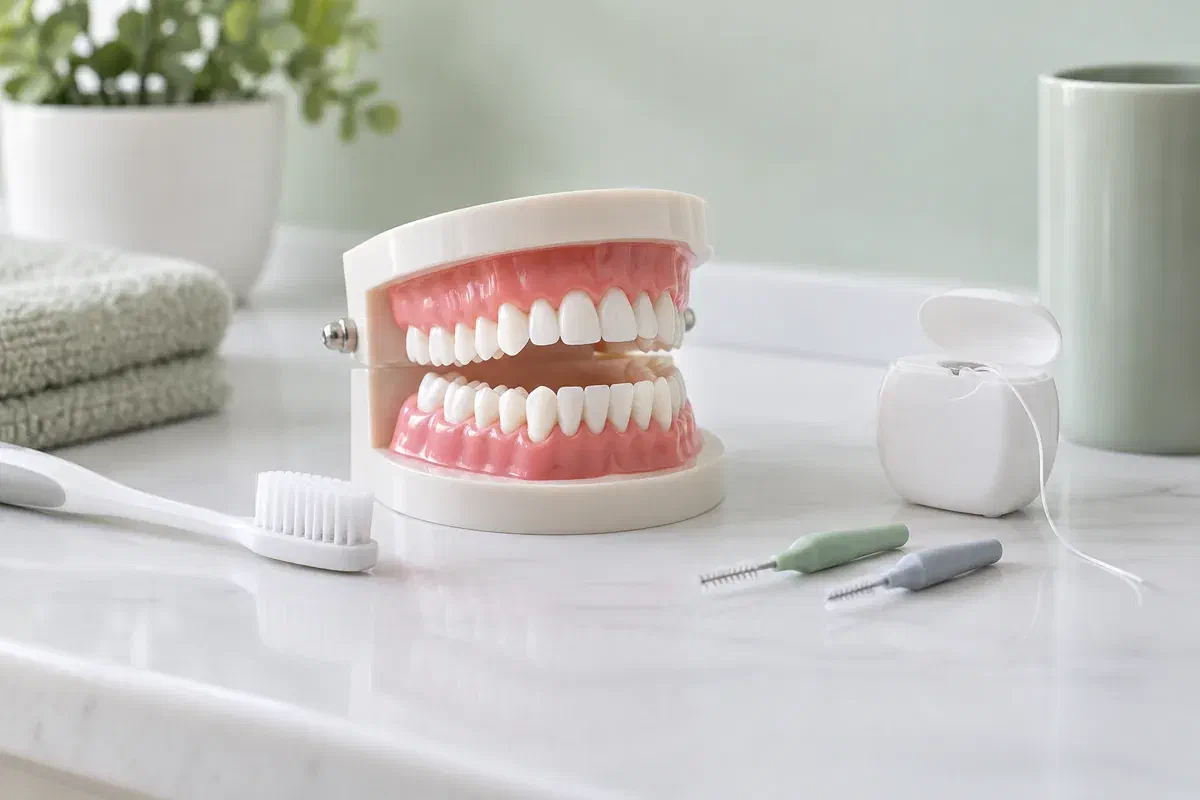
Dental teaching model with a toothbrush, interdental brushes, and floss
Things parents mention

Small complaints at the bathroom sink

Comments made while brushing can carry real clues. Tell us who is affected, where the problem shows up, how long it has been happening and what you have tried.

Bleeding gums, at any age

Gums can bleed in children, teens and adults, often because plaque is irritating the tissue. It does not necessarily mean someone brushes too hard. Mention whether it is in one spot or all over, and whether there is swelling or a tooth that feels unsteady.

Build-up around braces or crowded teeth

Brackets, wires and overlapping teeth create edges where plaque collects and hardens. Once tartar forms, brushing alone will not remove it. Ask the hygienist to show your teen, or you, exactly where it gathers and which tool reaches it.

Nervousness about the dental chair

Children often pick up on a parent's worries, and adults may carry memories of a difficult past visit. Let us know if anyone in the family finds appointments hard. The team can explain each step, agree a stop signal and discuss ways to make the visit more comfortable.

Tell us about each person's health conditions, medicines, allergies or pregnancy before the visit. Accurate information helps the team plan safe care, even for a routine cleaning.

What each person takes home

Healthier gums today, and better habits that grow with your kids.

Plaque is a sticky bacterial layer that returns every day and can be removed with good brushing. When it stays in place, it hardens into tartar, which only a professional can clear. Both can inflame the gums, so the hygienist pays attention to the tissue as well as the teeth.

Children and adults alike benefit from seeing technique up close. A smaller brush for little hands, a floss holder for a teenager or an adjusted angle for a parent's back teeth can make cleaning feel less like a chore. Ask the hygienist to show each person and check that the method is realistic.

Patient information: NIDCR — oral hygiene and professional care

A record that follows each person

Notes and gum measurements build a picture over time for every family member. Ask which findings are reassuring and which will be checked again. It is easier to support a child's habits when you know what to watch for.

Care matched to each mouth

One person may need simple maintenance while another shows signs that need gum treatment. The hygienist should explain the difference so you are not surprised if one appointment takes longer or needs a follow-up.

Tools for every age and stage

Children, teens with appliances and adults with crowns each need different aids. Ask for suggestions tied to each person's mouth and dexterity. A few well-chosen items are more useful than a cupboard full of samples.

A typical visit

Each appointment follows the same four steps, at each person's pace.

Let the team know what you would like explained and how each person will signal for a break. Talking openly about worries, sore spots and tricky tools makes the visit more useful.

  1. Update health details and concerns

    We go over medical history, medicines and anything noticed since the last cleaning. For children, parents can share what they see at home. Mention bleeding, sensitivity, dryness or areas that get skipped. A long gap needs no apology.

  2. Look at the gums and any build-up

    The hygienist checks tissue health, deposits and gum measurements where appropriate. A dentist's examination or X-rays may be recommended depending on age and findings. Hygiene care works alongside the rest of each person's dental care.

  3. Clean with suitable instruments

    Hand or ultrasonic tools are chosen for each area and each patient. Polishing, fluoride or other preventive steps are considered where helpful, not applied by default. Anyone who feels tenderness should say so, and the approach can be discussed.

  4. Teach, then plan the next visit

    Before leaving, each person can try the recommended technique with guidance. Ask whether further gum care or a recheck is needed and why the suggested interval suits that person. The next appointment should have a clear purpose.

Keeping it going at home

Make daily cleaning a shared habit.

Professional cleaning and good habits at home depend on each other. Follow any specific instructions given, and call if you are unsure how to care for a sore area.

Brush where the gums meet the teeth

Use fluoride toothpaste in the amount suggested for each age and a soft brush aimed at the gumline. Gentle, steady strokes clean better than heavy pressure. Supervise younger children and ask about brush sizes if anyone struggles to reach the back.

Clean between teeth with the right aid

Floss, floss picks or small interdental brushes should match the gaps and any braces. Avoid forcing a tool into a tight space or snapping floss into the gum. If something keeps catching, mention it rather than pulling harder.

Watch for changes that do not settle

Mild tenderness after a cleaning can pass, but call if pain grows or bleeding continues. New swelling, a loose adult tooth or difficulty chewing needs assessment. Do not wait for the next family recall date when symptoms change.

Care for each family member

The right visit depends on whose gums we're looking at.

Findings for each person shape the plan. Each person, or their parent, can hear the results explained and learn whether more checks are needed before care is finalised.

For keeping healthy gums healthy

Preventive hygiene visits

Deposits are cleared, gums are reviewed and home routines are adjusted. Intervals should reflect each person's needs. Regular visits help even when nobody complains, because early gum and tooth changes are often painless.

When an adult's gums need more care

Treatment for gum disease

Cleaning below the gumline, reassessment or referral to a periodontist may be suggested. It is a different treatment from routine cleaning, with its own aims. Ask about the diagnosis, likely visits and how improvement will be judged.

When cleaning is hard to manage

Coaching for braces and tricky spots

Time can be set aside for cleaning around orthodontic appliances, bridges or crowded teeth, using tools that suit small or less nimble hands. Demonstrations should target the exact area that is difficult, with time for questions.

Patient information: NIDCR — gum disease assessment and treatment

Family hygiene questions

What Brampton families tend to ask.

Recommendations depend on each person's findings and circumstances. Parents can ask about costs, comfort and possible follow-up visits for each child before anything is done.

(905) 876-4488
At what age should my child start having hygiene visits?
Children benefit from early dental visits, and the timing of their first cleaning depends on their teeth and comfort. Ask the team what is recommended for your child’s age. Early, positive experiences can make later appointments easier.
Can my teenager have a cleaning while wearing braces?
Yes. Hygiene care around braces focuses on removing plaque and checking the gums near the brackets. Bring any instructions from the orthodontist. The hygienist can also demonstrate tools that reach under the wires.
Is it okay for a parent to stay in the room?
Many younger children feel more settled with a parent nearby. Let the team know your preference and your child’s needs when booking. Older children and teens may prefer some independence, and that can be discussed too.
Will my child be offered fluoride or sealants?
Preventive treatments are considered based on each child’s teeth and risk of decay, not applied to everyone automatically. Ask what is recommended, why it may help and whether it fits with your child’s other care.
Do adults and children really need different recall intervals?
Often, yes. Gum health, decay risk, orthodontic treatment and medical factors vary from person to person. Ask why a particular interval is suggested for each family member and what might bring someone back sooner.
Can we book several family members on the same day?
Ask when you call. Grouping appointments can make a trip from Brampton easier to fit around school and work. The team can suggest how to arrange visits so each person still gets the time they need.
Hygiene visits for Brampton households

Bring the whole family's questions in one go.

Contact our Bronte Street practice to arrange hygiene appointments. Bring questions about braces, children's brushing, bleeding gums or how often each person should return. We will explain what we find and agree on next steps for everyone.

Is one of the kids complaining of a sore tooth, or has a parent noticed swelling? Tell us as you book, and that person's visit can include a proper check.

Visit Milton Dental Clinic
Unit 1, 342 Bronte St. S, Milton, ON L9T 5B7
Get directions Clinic hours
Monday–Thursday
11am–7pm
Friday–Sunday
By appointment only

Areas we serve

  • Milton
  • Oakville
  • Mississauga
  • Georgetown
  • Halton Hills
  • Acton
  • Campbellville
  • Brampton
  • Burlington
  • Puslinch
  • Rockwood
  • Erin
  • Caledon
  • Etobicoke
  • Old Milton
  • Bronte Meadows
  • Timberlea
  • Dorset Park
  • Dempsey
  • Clarke
  • Beaty
  • Coates
  • Harrison
  • Scott
  • Willmott
  • Ford
  • Bowes
  • Cobden
  • Walker
  • Mountain View
  • Milton Heights
  • Hawthorne Village
  • Valley View
  • Fallingbrook
  • Nassagaweya
  • Trafalgar
  • Esquesing
  • Nelson
  • Brookville
  • Moffat
  • Glen Williams
  • Norval
  • Limehouse
  • Stewarttown
  • Ashgrove
  • Hornby
  • Silver Creek
  • Speyside
  • Scotch Block
  • North Oakville
  • River Oaks
  • Glen Abbey
  • West Oak Trails
  • Palermo
  • Bronte Creek
  • College Park
  • Joshua Creek
  • Uptown Core
  • Preserve
  • Iroquois Ridge
  • Lisgar
  • Meadowvale
  • Meadowvale Village
  • Churchill Meadows
  • Erin Mills
  • Central Erin Mills
  • Streetsville
  • East Credit
  • Creditview
  • Heartland
  • Sheridan
  • Mount Pleasant
  • Credit Valley
  • Huttonville
  • Churchville
  • Springbrook
  • Northwest Brampton
  • Bram West
  • Fletcher's Meadow
  • Fletcher's Creek South
  • Alton Village
  • Orchard
  • Millcroft
  • Headon Forest
  • Tansley
  • Brant Hills
  • Tyandaga
  • Kilbride
  • Lowville
  • Aberfoyle
  • Morriston
  • Arkell
  • Hillsburgh
  • Freelton
  • Carlisle
  • Waterdown
  • Flamborough
  • Mountsberg

How can we help?

Milton Dental Clinic

Have a question about your smile? Choose the option that works best for you.

For urgent dental concerns, please call.
Messages are reviewed during clinic hours.