

Illustrative conversation with a dental hygienist before an appointment
General & Family Dentistry

Dental Hygiene Appointments in Campbellville

When nothing hurts, a cleaning is easy to postpone. For Campbellville households, a hygiene appointment finds the quiet changes in your gums early and removes deposits before they cause trouble.

Preventive care for Campbellville

Nothing hurts. So why book?

Out in the north part of Milton, a dental appointment can feel like one more errand competing with work, school runs and chores around the property. If your teeth feel fine, it is natural to let the cleaning slide. The trouble is that gum disease often develops without pain, so comfort alone is not a reliable sign that all is well.

A hygiene visit is designed to catch what you cannot feel. The hygienist removes hardened deposits, checks how the gums respond when they are gently measured and notes areas that are starting to change. Finding those early usually means simpler care and clearer advice about what to do at home.

Even without a complaint, small observations are useful. A bit of bleeding now and then, a bad taste, a gap that catches meat or a tooth that reacts to cold can all point the team somewhere specific. Mention them, and the appointment can be planned around your mouth instead of a generic routine.

Book a preventive cleaning
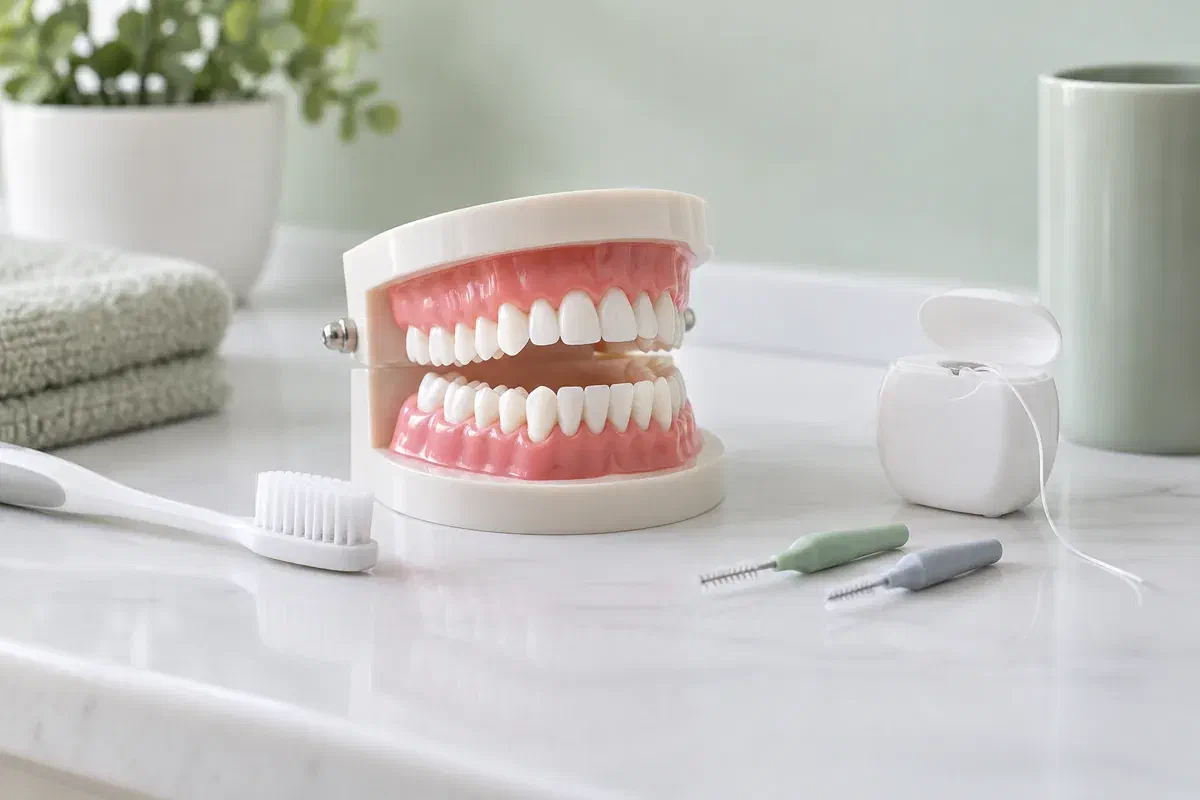
Dental teaching model with a toothbrush, interdental brushes, and floss
Quiet signs

Changes that rarely announce themselves

Many gum problems are painless at first. Tell us about anything unusual, where you notice it and how long it has been going on, even if it seems minor.

Occasional bleeding

A little blood on the brush now and then can be easy to dismiss. It may reflect gum inflammation from plaque, though other causes are possible. Say whether it happens in one place or around many teeth, and whether the gums look swollen or a tooth feels different.

Tartar you might not notice

Hardened deposits often sit below eye level, between teeth or just under the gum edge. A toothbrush passes right over them. Crowns, bridges and overlapping teeth can add more ledges. The hygienist can show you where build-up has formed and how to reach those surfaces.

Putting it off because of past discomfort

Sometimes the real reason for delay is a cleaning that once felt unpleasant. If that is the case, tell us what happened. The team can discuss the plan, agree a way for you to stop the appointment briefly and talk about comfort options.

Share any health updates before the visit, including pregnancy, new medicines, recent surgery or guidance from your physician. Good information supports safe care, whether or not you have symptoms.

The case for prevention

Catch small problems while they are still small.

Plaque is a soft layer of bacteria that daily brushing and cleaning between teeth can disturb. Over time, what is missed hardens into tartar, which only professional instruments can remove. Since both can contribute to gum inflammation, the hygienist checks the tissue carefully alongside the deposits.

Prevention also depends on what happens at home. A slight change in how you hold your brush, or an aid that fits a particular gap, can keep a quiet problem from becoming a noisy one. Ask the hygienist to show you the spot, then say whether the advice is something you will really do.

Patient information: NIDCR — oral hygiene and professional care

A baseline for the future

Gum measurements recorded while you have no symptoms are valuable. They give the team something to compare against later. Ask which numbers look healthy and what would prompt closer monitoring.

Care matched to findings

Often, a preventive cleaning is all that is needed. Sometimes it reveals early gum disease that requires a different approach. The hygienist should explain the difference before you plan your time around a single visit.

Simple tools with a clear job

Ask for a recommendation tied to your teeth and any dental work, rather than a pile of products. One well-chosen interdental aid can be more effective than several that never leave the drawer.

During a preventive visit

Look closely, clean thoroughly, explain clearly.

Tell the team what you would like to understand and agree how you will ask for a moment. Mentioning tender spots or tools that do not work helps the visit stay useful.

  1. Check in on your health

    We review your medical history and medicines and ask whether anything has changed. Mention dryness, occasional bleeding, sensitivity or areas you skip. If a few years have passed since your last cleaning, simply let us know.

  2. Assess what you cannot feel

    The hygienist examines deposits and gum tissue and takes pocket measurements where appropriate. If findings suggest it, an examination by the dentist or updated radiographs may be advised. Hygiene care is part of a fuller picture, not the whole of it.

  3. Remove build-up with suitable tools

    Depending on the area, hand instruments, an ultrasonic scaler or both may be used. Polishing and preventive treatments are considered on merit. If an area feels sore, tell the hygienist so the approach can be discussed.

  4. Show the technique and set a sensible return

    Before leaving, practise any new step with the hygienist. Find out whether the gums will be rechecked or need more care, and what reasoning sits behind your return date. Planning the next date now can help a rural household stay on track.

Staying ahead at home

Prevention is mostly ordinary daily habits.

What you do every day and what happens at the clinic reinforce each other. Follow any advice given after your cleaning, and call if you have questions about a sore area.

Brush the gum edge, not just the teeth

Use fluoride toothpaste and a soft brush tilted towards the gumline. Light, careful strokes remove more plaque than force. If a back corner is always hard to reach, ask about a smaller brush head or a different position.

Clean between teeth regularly

Use the floss or interdental brush size suggested for each space. Never jam a brush into a gap or snap floss against the gum. If one space keeps catching your aid, mention it so the cause can be looked at.

Do not ignore new symptoms

Short-lived tenderness after a cleaning is common, but call if discomfort increases or bleeding persists. A swollen gum, a tooth that moves or a sudden change in how your teeth meet should be checked soon rather than at your next routine visit.

What your findings may mean

Prevention, treatment or targeted coaching.

The assessment shows which kind of care suits your mouth. Ask what the results mean and whether anything else needs evaluating before the plan is agreed.

For gums with no active disease

Preventive maintenance

Deposits are cleared, the gums are reviewed and your routine is adjusted. The interval should reflect your own risk. Regular checks matter most when you feel fine, because that is when early changes are most likely to go unnoticed.

For periodontal changes that need care

Treatment for gum disease

This may include cleaning below the gumline, reassessment or referral to a periodontal specialist. It serves a different purpose from routine cleaning. Ask about the diagnosis, the visits involved and how healing will be evaluated.

For spots that are hard to keep clean

Coaching for awkward areas

The visit can focus on crowded teeth, bridges, appliances or tools that suit your hands. Practice should centre on the area you find difficult, and you should have time to ask about anything unclear.

Patient information: NIDCR — gum disease assessment and treatment

Questions about preventive cleaning

Why come in when everything feels fine?

Your findings and situation determine what is recommended. Ask about what is included, likely costs, comfort and any follow-up visits before care starts.

(905) 876-4488
If my teeth don't hurt, can gum disease still be present?
Yes. Gum disease often causes little or no pain in its early stages. Signs such as bleeding or deeper gum pockets may only be found during an assessment, which is one reason regular hygiene care is recommended.
Can a professional cleaning help with bad breath?
Removing plaque and tartar and improving gum health can help in some cases. Bad breath has several possible causes, though, including dry mouth and other health factors. Mention it so the team can consider what might be involved.
What happens if I skip cleanings for a few years?
Tartar may build up and gum problems can progress unnoticed. Your next visit might take longer or involve more than one appointment. There is no need to feel embarrassed; the team will start from where things are now.
Should I bring my night guard or sports mouthguard?
If you wear one, bringing it can be helpful. The team can look at its condition and talk about how to keep it clean. Mention any changes in fit or comfort.
Is a polish part of every hygiene visit?
Not necessarily. Polishing is offered when it serves a purpose, such as removing surface stain. It does not change the natural colour of your teeth. Ask what is planned and why.
Can a Campbellville household book everyone in one trip?
Ask when you call. Grouping appointments is often possible and can save repeat journeys. Fridays through Sundays are by appointment only, so mention early if a weekend visit would suit your family.
From Campbellville to Bronte Street

Stay ahead of problems you cannot feel.

Contact our Bronte Street practice to book a preventive hygiene appointment. Bring questions about bleeding, tartar, tools or how often to come in. We will explain what we see, even when the news is good, and suggest practical next steps.

Something already bothering you, like a sore tooth or a swollen gum? Tell us at booking so the visit can include a proper look.

Visit Milton Dental Clinic
Unit 1, 342 Bronte St. S, Milton, ON L9T 5B7
Get directions Clinic hours
Monday–Thursday
11am–7pm
Friday–Sunday
By appointment only

Areas we serve

  • Milton
  • Oakville
  • Mississauga
  • Georgetown
  • Halton Hills
  • Acton
  • Campbellville
  • Brampton
  • Burlington
  • Puslinch
  • Rockwood
  • Erin
  • Caledon
  • Etobicoke
  • Old Milton
  • Bronte Meadows
  • Timberlea
  • Dorset Park
  • Dempsey
  • Clarke
  • Beaty
  • Coates
  • Harrison
  • Scott
  • Willmott
  • Ford
  • Bowes
  • Cobden
  • Walker
  • Mountain View
  • Milton Heights
  • Hawthorne Village
  • Valley View
  • Fallingbrook
  • Nassagaweya
  • Trafalgar
  • Esquesing
  • Nelson
  • Brookville
  • Moffat
  • Glen Williams
  • Norval
  • Limehouse
  • Stewarttown
  • Ashgrove
  • Hornby
  • Silver Creek
  • Speyside
  • Scotch Block
  • North Oakville
  • River Oaks
  • Glen Abbey
  • West Oak Trails
  • Palermo
  • Bronte Creek
  • College Park
  • Joshua Creek
  • Uptown Core
  • Preserve
  • Iroquois Ridge
  • Lisgar
  • Meadowvale
  • Meadowvale Village
  • Churchill Meadows
  • Erin Mills
  • Central Erin Mills
  • Streetsville
  • East Credit
  • Creditview
  • Heartland
  • Sheridan
  • Mount Pleasant
  • Credit Valley
  • Huttonville
  • Churchville
  • Springbrook
  • Northwest Brampton
  • Bram West
  • Fletcher's Meadow
  • Fletcher's Creek South
  • Alton Village
  • Orchard
  • Millcroft
  • Headon Forest
  • Tansley
  • Brant Hills
  • Tyandaga
  • Kilbride
  • Lowville
  • Aberfoyle
  • Morriston
  • Arkell
  • Hillsburgh
  • Freelton
  • Carlisle
  • Waterdown
  • Flamborough
  • Mountsberg

How can we help?

Milton Dental Clinic

Have a question about your smile? Choose the option that works best for you.

For urgent dental concerns, please call.
Messages are reviewed during clinic hours.