

Illustrative conversation with a dental hygienist before an appointment
General & Family Dentistry

Dental Hygiene Appointments in Etobicoke

Coming in from Etobicoke is a longer trip, so each visit should earn its place. Our hygiene appointments assess your gums, remove hardened deposits and set out a clear plan for what comes next.

Planning hygiene care from Etobicoke

Make one trip do more.

When the drive to a dental appointment takes a good part of your afternoon, you want to leave with more than smooth teeth. A well-planned hygiene visit gives you a clear reading of your gum health, removes the deposits brushing cannot reach and answers the questions that have built up since your last cleaning.

Planning starts at the booking stage. Ask whether an examination or X-rays are due at the same time, mention anything that has been bothering you and let the team know if you would like to discuss gum treatment in the same sitting. Organising things this way can reduce the number of separate trips you need.

Write down what you have noticed before you set out. Bleeding after flossing, a spot where food keeps lodging, sensitivity to cold or a tool you have given up on all shape what the hygienist focuses on. Care should respond to your mouth rather than following a one-size routine.

Plan your hygiene visit
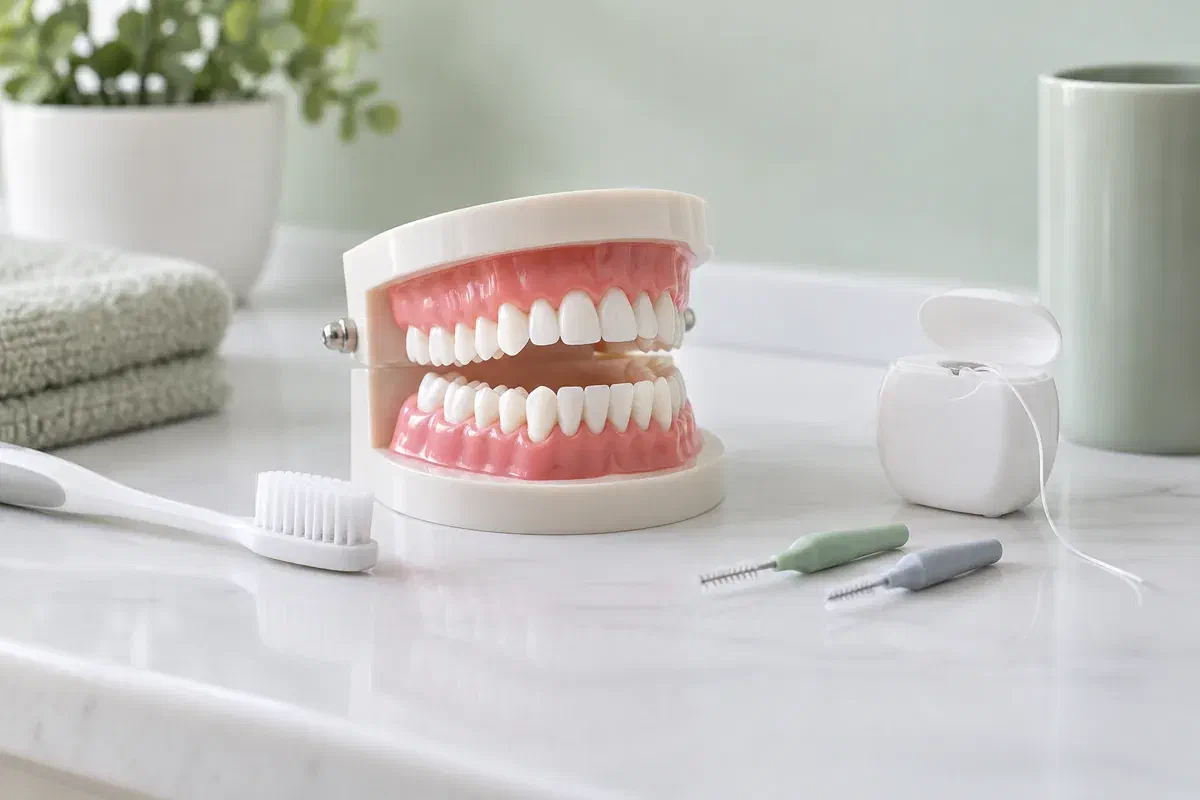
Dental teaching model with a toothbrush, interdental brushes, and floss
Worth raising at booking

Tell us early, and the visit can be planned around it.

A concern that does not hurt can still change what the appointment should include. Share where it is, how long it has been going on and anything you have already tried.

Tender or bleeding gums

Inflammation from plaque is a common reason for gums to bleed, but other health factors may also be involved. Mention whether it is localised or widespread, and whether you have seen swelling or felt a tooth move. That may affect how much time is set aside.

Deposits that keep coming back

Hardened tartar bonds to the tooth and cannot be brushed away. If it builds up quickly in your mouth, often behind the lower front teeth or around crowns, say so. The hygienist can show you where it forms and suggest a way to slow it down.

A difficult experience in the past

If an earlier cleaning was painful or stressful, explain what happened when you book. Knowing in advance helps the team plan pacing, breaks and comfort measures, so a long trip does not end in a visit you would rather forget.

Mention health changes, pregnancy, medicines or physician instructions before the appointment. Having accurate details in advance avoids surprises on the day, even for a routine cleaning.

Getting value from the visit

Clearer findings, firmer plans and better habits between trips.

Plaque forms on teeth every day and can be brushed away while soft. Over time, any that remains hardens into tartar, which requires professional removal. Both can irritate the gums, so the hygienist assesses the tissue as well as the deposits, giving you a fuller sense of how things stand.

Because you may not visit often, the coaching part of the appointment matters. Practising a new brush angle or a between-teeth aid in the chair means you can carry on confidently at home for months. Ask the hygienist to watch you try it and to adjust the method until it feels manageable.

Patient information: NIDCR — oral hygiene and professional care

Notes that track change between trips

Recorded gum measurements let the team compare your mouth from one visit to the next. Ask which readings are healthy and which areas will be reviewed. Clear notes make a longer interval easier to manage with confidence.

Care scoped before you arrive

Maintenance cleaning and gum disease treatment can involve very different time commitments. Ask the team to explain which seems likely, so you can plan the number of trips rather than discover it on the day.

A small, focused toolkit

Ask for one or two aids that suit your gaps, dental work and hands, instead of a range of products to sort through. Knowing exactly what each tool is for makes it easier to keep going between appointments.

On the day

A structured visit with no wasted steps.

Tell the team what you would like explained and how you will ask for a pause. Raising tender spots or tool frustrations early helps the appointment cover what matters to you.

  1. Confirm history and priorities

    We review medical information and ask what has changed since your last cleaning. Mention bleeding, dryness, sensitivity, new medicines and spots you avoid. If it has been years since your last visit, that is simply part of the picture.

  2. Assess deposits and gum health

    The hygienist checks build-up, tissue condition and pocket depths where relevant. A dentist's examination or X-rays may be recommended, ideally arranged for the same trip where possible. Hygiene care is one part of a complete assessment.

  3. Carry out suitable cleaning

    Hand or ultrasonic instruments may be used depending on the area. Polishing and preventive measures are added when they help. If a spot is sensitive, say so and the approach can be talked through.

  4. Practise, then agree the plan ahead

    Try any recommended technique before you leave. Ask whether further gum treatment or a reassessment is needed, how many visits that might involve and why the suggested interval suits you. Booking the next step before you go can save a call later.

Until your next trip

Steady care at home bridges the gap.

Professional cleaning works best when home care continues between visits. Follow any instructions you were given, and call if you are unsure how to look after a tender area.

Brush along the gumline daily

Use fluoride toothpaste and a soft brush, angled towards the areas the hygienist pointed out. Heavy pressure does not improve cleaning. If an area stays hard to reach, phone or ask at your next visit about a different brush.

Keep up between-teeth cleaning

Use the aid and size recommended for each gap. Do not force a brush through a tight contact or snap floss into the gum. If a tool repeatedly catches, mention it when you call rather than pushing harder.

Know when to call, and when to go closer

Mild tenderness can follow a cleaning, but contact us if pain increases or bleeding continues. New swelling, a loose tooth or a change in your bite needs attention. For severe symptoms, seeking care nearer home may be the faster option.

What kind of visit you need

Three reasons for a hygiene appointment, each with its own plan.

The assessment shows which type of care fits. Ask what the findings mean and whether further evaluation is needed before your plan is finalised.

When prevention is the goal

Routine maintenance

Deposits are removed, gums are reviewed and home care is fine-tuned. The interval between visits should be based on your needs. Regular checks still matter when nothing hurts, since early gum changes are often silent.

When gum disease needs addressing

Periodontal treatment

Care may include cleaning below the gumline, reassessment or referral to a periodontist. It has different aims from a routine cleaning. Ask about the diagnosis, how many trips to expect and how healing will be judged.

When reaching some areas is the challenge

Hands-on technique help

The visit can concentrate on bridges, crowded teeth, braces or tools adapted to your grip. Practice should centre on the exact area you find difficult, with time for questions.

Patient information: NIDCR — gum disease assessment and treatment

Planning questions

Answers for a longer trip.

Recommendations depend on your findings and circumstances. Check the extent of the work, the fees, the comfort options and the likely number of trips before care starts.

(905) 876-4488
Can my exam, X-rays and cleaning be booked for the same trip?
Often they can, depending on what is due and how much time is available. Ask when you book. Combining appointments may reduce the number of journeys, though some findings may still call for a separate visit.
Should I bring records from my previous dentist?
It can help. Recent X-rays, treatment notes or gum measurements give the team useful background. You can ask your previous office to send them, or mention when you book that you are a new patient.
If I need gum treatment, can it be done in fewer, longer visits?
Sometimes, depending on the extent of treatment and your comfort. The hygienist can discuss how care might be divided. Reassessment usually needs its own appointment after healing, so ask how that fits your plans.
What should I do if my gums flare up between visits?
Keep cleaning gently and call to describe what has changed. The team can advise whether you need to come in. For severe pain or swelling, urgent care closer to Etobicoke may be quicker than waiting for a trip.
Does a longer gap between cleanings put my gums at risk?
It depends on your gum health and how much build-up you tend to form. Some mouths need closer monitoring. Ask why a particular interval is recommended and what signs should bring you back sooner.
Can polishing take away the yellow tinge on my teeth?
Polishing can lift some surface stains, but it does not alter the underlying colour of the tooth. If shade is a priority, mention it so cosmetic options can be discussed separately from gum care.
Booking from Etobicoke

Plan a visit that's worth the drive.

Contact our Bronte Street practice to arrange a hygiene appointment. Let us know what is due, what has been bothering you and how many trips suit your schedule. We will explain our findings and help you plan follow-up care sensibly.

Pain or swelling that has started recently is worth raising before you set out. We can advise whether to come in as planned or look for care closer to home.

Visit Milton Dental Clinic
Unit 1, 342 Bronte St. S, Milton, ON L9T 5B7
Get directions Clinic hours
Monday–Thursday
11am–7pm
Friday–Sunday
By appointment only

Areas we serve

  • Milton
  • Oakville
  • Mississauga
  • Georgetown
  • Halton Hills
  • Acton
  • Campbellville
  • Brampton
  • Burlington
  • Puslinch
  • Rockwood
  • Erin
  • Caledon
  • Etobicoke
  • Old Milton
  • Bronte Meadows
  • Timberlea
  • Dorset Park
  • Dempsey
  • Clarke
  • Beaty
  • Coates
  • Harrison
  • Scott
  • Willmott
  • Ford
  • Bowes
  • Cobden
  • Walker
  • Mountain View
  • Milton Heights
  • Hawthorne Village
  • Valley View
  • Fallingbrook
  • Nassagaweya
  • Trafalgar
  • Esquesing
  • Nelson
  • Brookville
  • Moffat
  • Glen Williams
  • Norval
  • Limehouse
  • Stewarttown
  • Ashgrove
  • Hornby
  • Silver Creek
  • Speyside
  • Scotch Block
  • North Oakville
  • River Oaks
  • Glen Abbey
  • West Oak Trails
  • Palermo
  • Bronte Creek
  • College Park
  • Joshua Creek
  • Uptown Core
  • Preserve
  • Iroquois Ridge
  • Lisgar
  • Meadowvale
  • Meadowvale Village
  • Churchill Meadows
  • Erin Mills
  • Central Erin Mills
  • Streetsville
  • East Credit
  • Creditview
  • Heartland
  • Sheridan
  • Mount Pleasant
  • Credit Valley
  • Huttonville
  • Churchville
  • Springbrook
  • Northwest Brampton
  • Bram West
  • Fletcher's Meadow
  • Fletcher's Creek South
  • Alton Village
  • Orchard
  • Millcroft
  • Headon Forest
  • Tansley
  • Brant Hills
  • Tyandaga
  • Kilbride
  • Lowville
  • Aberfoyle
  • Morriston
  • Arkell
  • Hillsburgh
  • Freelton
  • Carlisle
  • Waterdown
  • Flamborough
  • Mountsberg

How can we help?

Milton Dental Clinic

Have a question about your smile? Choose the option that works best for you.

For urgent dental concerns, please call.
Messages are reviewed during clinic hours.