

Illustrative conversation with a dental hygienist before an appointment
General & Family Dentistry

Dental Hygiene Appointments in Mississauga

Short on time in the morning? A hygiene appointment for Mississauga households clears built-up deposits, checks your gums and helps you get more out of the few minutes you spend cleaning.

For busy weeks in Mississauga

Two minutes at the sink. Make them count.

Mornings tend to be a blur of lunches, commutes and messages, and brushing often happens on autopilot. Flossing gets skipped more nights than not. That is normal, and it is exactly why a hygiene visit can be so useful: it shows where a short routine falls short and how to close the gap without adding much time.

During the appointment, deposits that have hardened beyond the reach of a toothbrush are removed and the gums are assessed for inflammation. The hygienist will point out the specific surfaces you tend to miss, so your next two minutes are spent where they matter most.

Be candid about your habits. If you brush once a day, rush at night or keep forgetting the floss in the drawer, say so. Mention bleeding, sensitivity or food that sticks between particular teeth too. That honesty helps the team suggest changes you are likely to keep, rather than an ideal you cannot fit into the week.

Find a hygiene time
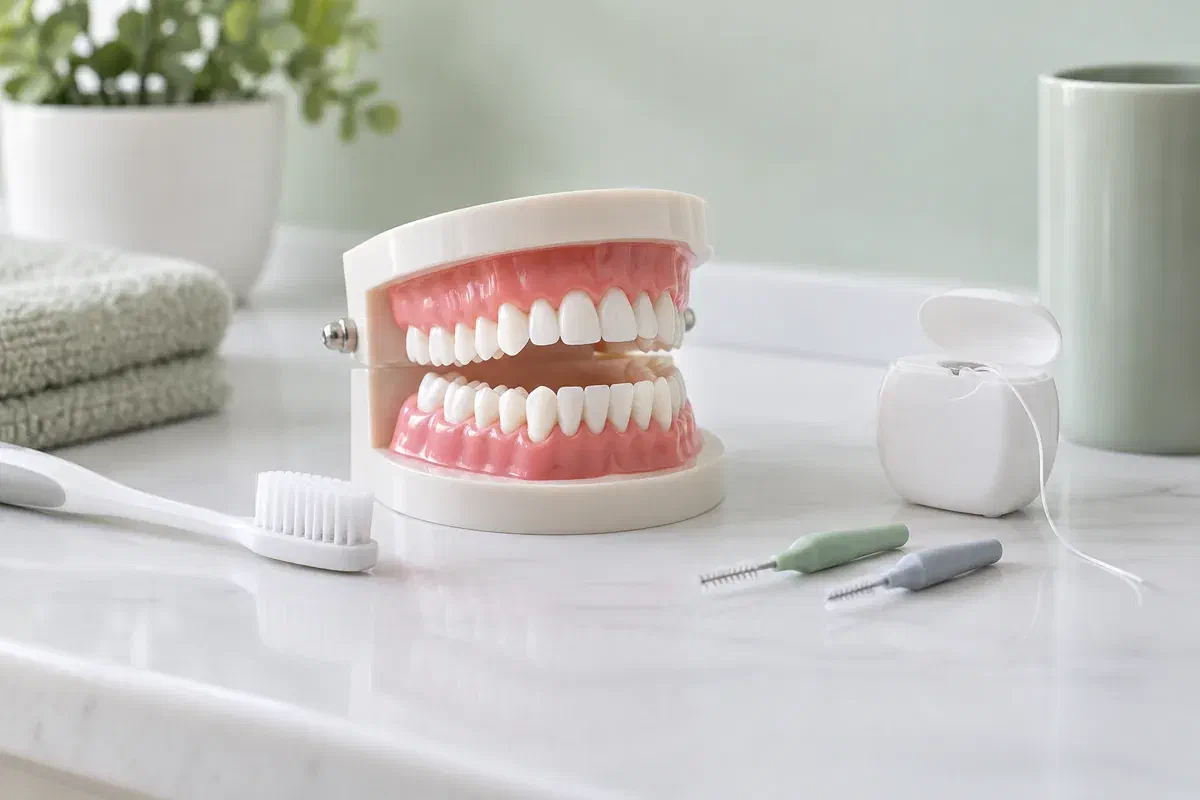
Dental teaching model with a toothbrush, interdental brushes, and floss
Signals from a rushed routine

Where a quick clean tends to fall short

Problems that do not hurt can still tell us a lot. Explain where you notice them, when they started and what, if anything, you have changed.

Bleeding gums at the back

Molars and the inner sides of teeth often get the least attention in a hurried brush, and the gums there may become inflamed. Plaque is a common cause, but not the only one. Mention which areas bleed and whether you have noticed swelling or a tooth that shifts.

Build-up you can feel with your tongue

A rough, gritty patch near the gumline is often tartar that has set in place. Brushing slides over it rather than removing it. Tight or overlapping teeth and older fillings can make the problem worse. Ask the hygienist to show you where it forms.

Sensitivity that makes you hurry

Sharp twinges from cold water or the brush can lead you to cut cleaning short. If a past cleaning was unpleasant, tell us what happened. The team can explain the plan, agree on a stop signal and talk through comfort options.

Before the visit, let us know about health changes, pregnancy, medicines or instructions from a physician. Even a quick routine cleaning relies on an accurate history.

Time well spent

A professional reset, then a routine that fits your schedule.

Every day a thin layer of bacterial plaque forms on your teeth, and brushing clears most of it. What remains can harden into tartar, which bonds to the tooth and must be removed by a professional. Because both can irritate the gums, the hygienist checks tissue health alongside the deposits.

Often the most useful outcome is a faster, smarter technique. Starting in the area you usually miss, or switching to an interdental brush that takes seconds, can make the same amount of time far more effective. Ask the hygienist to demonstrate and tell them what is realistic for you.

Patient information: NIDCR — oral hygiene and professional care

Progress you can check

Gum measurements and notes from each visit give a reference point. Ask which areas look healthy and which are being monitored. You can then see whether small changes in your routine are paying off.

The right scope of care

Some appointments are straightforward maintenance, while others show signs that need gum treatment. The hygienist should explain which applies to you before you assume everything will fit into a single slot.

Quick tools that suit your gaps

Interdental brushes, floss picks or a water flosser each suit different spaces and habits. Ask what would work best in your mouth, including around crowns or braces. Fewer, better-matched tools are easier to stick with.

How your visit unfolds

Efficient, but never rushed through.

Say up front what you would like explained and how you will signal for a break. Being open about sore spots and awkward tools helps make good use of the time.

  1. Quick catch-up on health and habits

    We review your medical details and ask what has changed since the last cleaning. Mention bleeding, dryness, sensitivity and any area you avoid. If it has been a while, that simply helps us plan.

  2. Assessment of gums and deposits

    The hygienist checks for tartar, inflammation and pocket depths where relevant. A dentist's exam or X-rays may be recommended based on the findings. A hygiene appointment complements other parts of your care rather than replacing them.

  3. Cleaning tailored to each area

    Ultrasonic and hand instruments may both be used, depending on what is found. Polishing and preventive steps are included when they help. Tell us if an area is tender so the approach can be adjusted or explained.

  4. A short demonstration and next steps

    Before you head out, practise any new technique with the hygienist watching. Ask whether further gum treatment or a recheck is needed and why the suggested timing fits. Each return visit should have a clear reason.

Back to everyday life

Small habits, done most days, add up.

Daily cleaning and professional care support each other. Follow any specific advice you were given and reach out if you are unsure about a tender area.

Brush the gumline first

Use fluoride toothpaste and a soft brush, starting with the areas you were shown. Gentle, angled strokes work better than scrubbing. If a spot stays awkward to reach, ask about a smaller brush head or a powered option.

Clean between teeth in seconds

Keep the recommended interdental aid where you will see it, and use the right size for each space. Never force it through a tight gap. If an aid catches or frays in one place, mention it at your next contact.

Act on symptoms that persist

Mild tenderness after a cleaning can settle, but call if pain increases or bleeding continues. New swelling, a loose tooth or a change in your bite needs a check. Do not wait for your next routine cleaning.

Choosing the right appointment

Upkeep, treatment or technique help.

Your assessment helps decide which type of care fits. Get a quick summary of the results, and confirm nothing else needs evaluating before the plan is set.

For keeping healthy gums on track

Regular maintenance

This typically includes removing deposits, reviewing gum health and adjusting your routine. How often you return should suit your needs. Regular checks help even when nothing feels wrong, since early gum changes are usually painless.

For periodontal problems that need treatment

Gum disease care

Cleaning below the gumline, a reassessment visit or a referral to a periodontist may be suggested. This is a separate treatment with its own goals. Ask about the diagnosis, the appointments involved and how improvement will be checked.

For the spots that are hard to clean

Routine troubleshooting

The visit can focus on braces, bridges, crowded teeth or tools adapted to your hands. Demonstration should centre on the exact place that gives you trouble, with time for any questions you have.

Patient information: NIDCR — gum disease assessment and treatment

Mississauga questions, answered

What busy people want to know.

Recommendations depend on your gums and your circumstances. You can ask about cost, comfort and any follow-up appointments before a single instrument is picked up.

(905) 876-4488
How long does a typical hygiene appointment take?
It varies with the amount of build-up, the condition of your gums and whether other assessments are included. Ask when booking how much time to set aside. If you need more than one visit, the team can explain why.
Can I eat and drink normally right after a cleaning?
Usually, yes, though it depends on the care provided. If fluoride or another treatment was applied, follow the specific advice given. Ask the hygienist before you leave if you are unsure.
Is a water flosser enough on its own?
A water flosser can help some people, particularly around braces or bridges. Whether it is enough depends on your gaps and gum health. Ask the hygienist whether it suits your mouth or should be paired with another aid.
I only floss a few times a week. Is that worth doing?
Some cleaning between teeth is better than none, and building up gradually is a realistic goal. Talk to the hygienist about where your gums need it most. They may suggest a faster tool that makes daily use easier.
Why are some people told to come back sooner than six months?
The right interval depends on gum health, risk of decay, past treatment and medical factors. Some mouths need closer monitoring. Ask why a particular interval is recommended for you and what might change it.
What times suit people travelling from western Mississauga?
From Monday to Thursday we see patients until 7pm, and Friday to Sunday visits are arranged by appointment only. People from areas such as Meadowvale or Churchill Meadows often ask about later slots. Mention your preferences when you call.
From Mississauga to our chair

Book a visit that makes your routine easier.

Contact our Bronte Street practice to schedule a hygiene appointment. Bring questions about bleeding, quick cleaning tools or how often to return. We will explain what we find and agree on practical next steps that fit your week.

A sore tooth or a puffy gum changes what the visit needs to cover. Let reception know when you call so the hygienist and dentist can allow for it.

Visit Milton Dental Clinic
Unit 1, 342 Bronte St. S, Milton, ON L9T 5B7
Get directions Clinic hours
Monday–Thursday
11am–7pm
Friday–Sunday
By appointment only

Areas we serve

  • Milton
  • Oakville
  • Mississauga
  • Georgetown
  • Halton Hills
  • Acton
  • Campbellville
  • Brampton
  • Burlington
  • Puslinch
  • Rockwood
  • Erin
  • Caledon
  • Etobicoke
  • Old Milton
  • Bronte Meadows
  • Timberlea
  • Dorset Park
  • Dempsey
  • Clarke
  • Beaty
  • Coates
  • Harrison
  • Scott
  • Willmott
  • Ford
  • Bowes
  • Cobden
  • Walker
  • Mountain View
  • Milton Heights
  • Hawthorne Village
  • Valley View
  • Fallingbrook
  • Nassagaweya
  • Trafalgar
  • Esquesing
  • Nelson
  • Brookville
  • Moffat
  • Glen Williams
  • Norval
  • Limehouse
  • Stewarttown
  • Ashgrove
  • Hornby
  • Silver Creek
  • Speyside
  • Scotch Block
  • North Oakville
  • River Oaks
  • Glen Abbey
  • West Oak Trails
  • Palermo
  • Bronte Creek
  • College Park
  • Joshua Creek
  • Uptown Core
  • Preserve
  • Iroquois Ridge
  • Lisgar
  • Meadowvale
  • Meadowvale Village
  • Churchill Meadows
  • Erin Mills
  • Central Erin Mills
  • Streetsville
  • East Credit
  • Creditview
  • Heartland
  • Sheridan
  • Mount Pleasant
  • Credit Valley
  • Huttonville
  • Churchville
  • Springbrook
  • Northwest Brampton
  • Bram West
  • Fletcher's Meadow
  • Fletcher's Creek South
  • Alton Village
  • Orchard
  • Millcroft
  • Headon Forest
  • Tansley
  • Brant Hills
  • Tyandaga
  • Kilbride
  • Lowville
  • Aberfoyle
  • Morriston
  • Arkell
  • Hillsburgh
  • Freelton
  • Carlisle
  • Waterdown
  • Flamborough
  • Mountsberg

How can we help?

Milton Dental Clinic

Have a question about your smile? Choose the option that works best for you.

For urgent dental concerns, please call.
Messages are reviewed during clinic hours.