
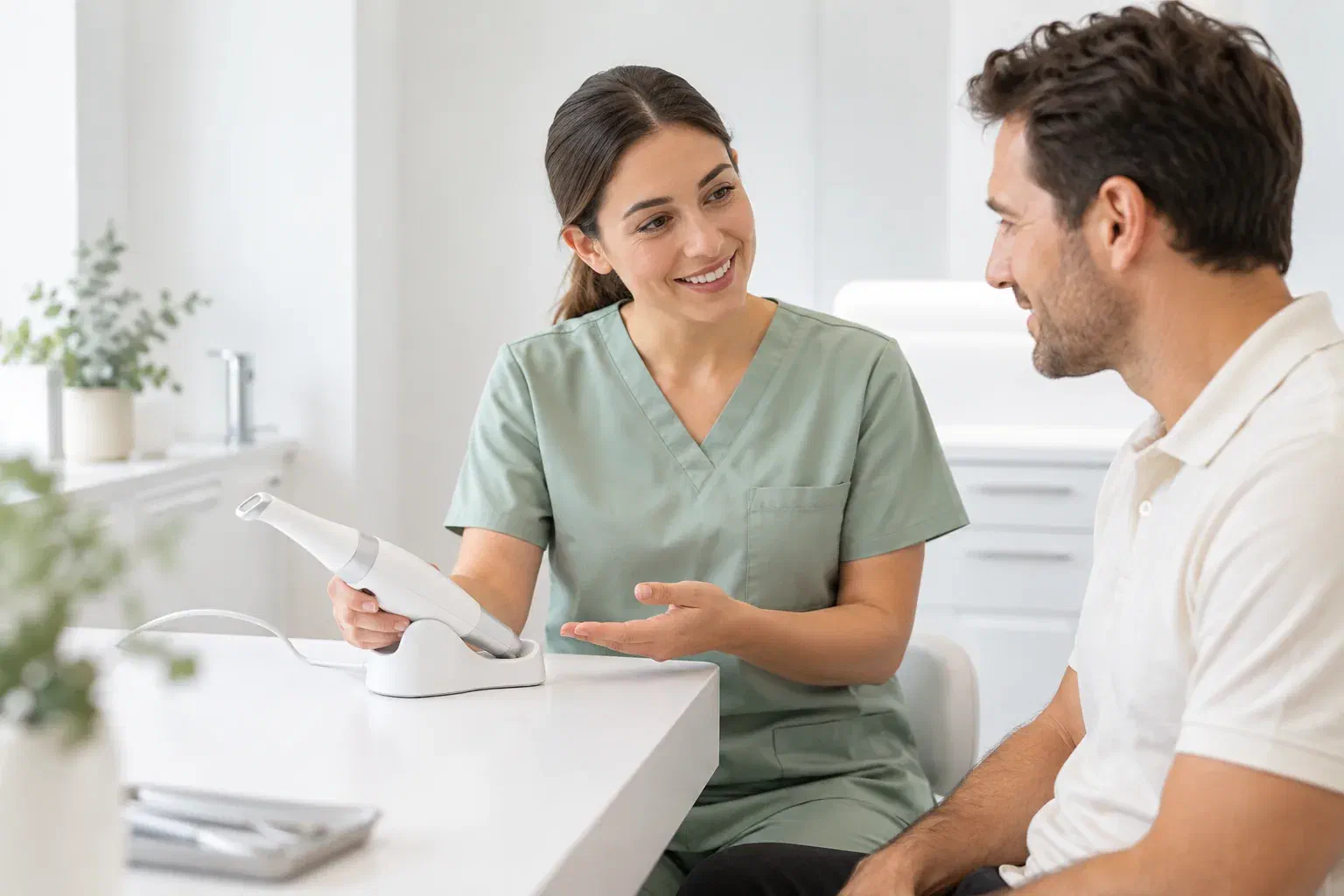
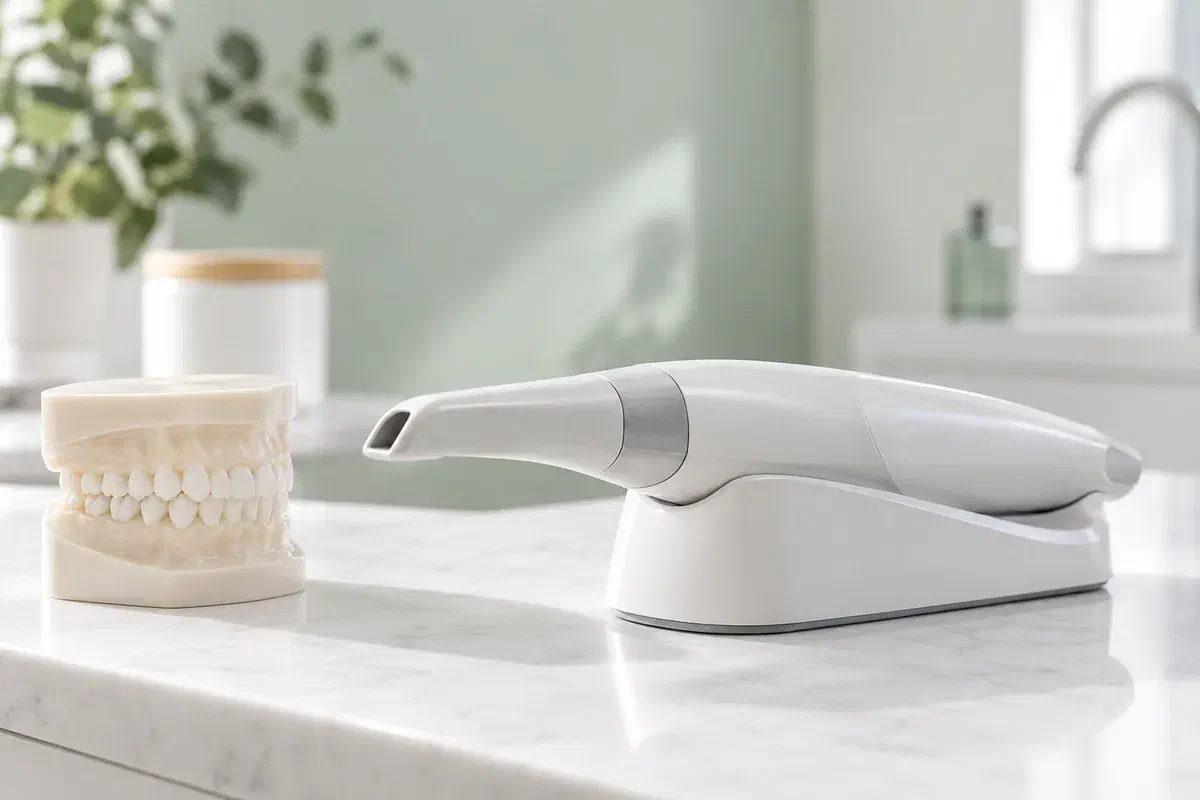
Illustrative discussion of an optical dental scanner, not a photograph of clinic equipment
General & Family Dentistry

Digital Dental Impressions

Understand how a digital record of your teeth can support a restoration or appliance. Ask our Milton team whether an optical impression is suitable for your treatment and what the appointment would involve.

A closer look at digital dental impressions

Capture the shape of the teeth for the care being planned.

An impression records the shape and arrangement of teeth and nearby tissues so that a restoration, appliance, or treatment plan can be developed. A digital impression uses an optical scanner to build a virtual surface model. It is one way of collecting the information needed for dental work, rather than a treatment for the tooth itself.

For suitable cases, scanning can provide an alternative to a tray filled with impression material. The choice depends on the area being recorded, the proposed work, and the quality of information required. Digital does not automatically mean that every impression can be taken this way or that a finished restoration will need no adjustment.

At Milton Dental Clinic, ask how impressions would be obtained for your particular care and confirm the available arrangements. Tell us about a sensitive gag reflex, difficulty opening, or an earlier impression experience that was uncomfortable. We can discuss suitability and the steps involved without assuming that the same method works best for every person or procedure.

Ask about impressions for your treatment
Illustrative unbranded optical scanner beside a dental teaching model
When impressions enter the conversation

Start with the dental work that needs a record.

The impression method should serve a defined treatment need. Ask which surfaces must be captured and how the resulting record will be used in planning or making your dental work.

A restoration or appliance being planned

A crown or another suitable restoration may require a detailed record of prepared teeth, neighbouring teeth, and the bite. Some appliances also depend on an accurate model. Ask what information is needed for your case rather than requesting a scan without a treatment purpose.

Difficulty with conventional impression material

A tray or material in the mouth can be challenging for some people. Explain what triggered discomfort or gagging previously. An optical approach may be worth discussing where suitable, but it still involves a device near the teeth and is not guaranteed to remove every difficulty.

A change since an earlier record

Recent dental work, tooth movement, or a change in the treatment plan may affect whether an older impression is useful. Tell the team what has changed. Reusing a file is appropriate only when it provides the information required for the current care.

An optical impression records visible surface shape. It is different from a dental X-ray or CBCT scan and does not replace imaging needed to assess structures beneath those surfaces.

What a digital record can contribute

A useful model supports the next stage of care.

A digital model can be reviewed as it is captured and used within an appropriate clinical and laboratory workflow. If an area is missing or unclear, further recording may be needed before the file is accepted. The important outcome is a usable record of the required surfaces, not simply that a scanner was used.

For some patients, avoiding a full tray of impression material may make the appointment easier. Comfort varies, and the amount of scanning depends on the case. Discuss pauses, mouth opening, and positioning beforehand so the process can be considered around your needs.

Patient information: UCLH — digital impressions in dental care

A clearer view of what is being recorded

Where the system allows, the team can explain the surface model and the areas being captured. This can help you understand why neighbouring teeth or the opposing arch are also included. The model is a planning record, not a complete diagnosis.

Information that can support laboratory work

A suitable digital file may be shared through the relevant professional workflow to help design or manufacture dental work. Ask what the next stage involves and who is responsible for it. A scan alone does not establish the delivery date.

An opportunity to check completeness

The record must show the details needed for the proposed restoration or appliance. A section may need another pass or another recording method if information is inadequate. That quality check is part of obtaining a useful impression.

What an optical impression may involve

Record the required surfaces and check the relationship between them.

The exact appointment depends on the treatment being planned. Confirm whether the visit is only for records or also includes tooth preparation, a temporary restoration, or another procedure.

  1. Confirm the purpose and method

    The dentist explains why an impression is needed and whether a digital approach is appropriate and available for your case. Discuss limitations, alternatives, and any separate fees. Tell us about gagging, restricted opening, or positioning needs before recording begins.

  2. Prepare the area for recording

    The required surfaces need to be accessible and sufficiently clear for the scanner. Preparation may include drying or managing the surrounding tissues according to the procedure. If a tooth has been prepared for a restoration, its detailed margins must be captured appropriately.

  3. Capture teeth and bite information

    A handheld optical scanner is moved around the relevant teeth to build the model. Records of the opposing teeth and how the bite comes together may also be needed. Follow positioning instructions and use the agreed signal if you need a pause.

  4. Review the record and explain what follows

    The team checks whether the captured information is suitable for the planned use. Additional scanning or another impression method may be needed. Confirm the next appointment, any temporary care instructions, and when the restoration or appliance will be assessed for fit.

After the record is taken

Follow the instructions for the treatment, not just the scan.

An optical impression itself generally does not require a recovery period. Any tooth preparation, anaesthesia, temporary restoration, or other care completed at the same visit may have its own instructions.

Care for any temporary dental work

If you leave with a temporary restoration, follow the dentist's advice about eating and cleaning. Contact the clinic if it loosens, breaks, or becomes uncomfortable. The fact that the final work has been scanned does not make a damaged temporary safe to ignore.

Report changes before the fitting visit

Tell the team if a tooth breaks, a restoration is replaced elsewhere, or the bite changes after the impression. The existing record may need review. New pain or swelling should be assessed rather than treated as an expected part of waiting for laboratory work.

Keep the fitting appointment

A restoration or appliance still needs clinical checks when it is delivered. Ask about fit, bite, comfort, cleaning, and any adjustments required. Digital manufacture does not remove the need for this evaluation or for follow-up when something does not feel right.

Choosing how to make the record

The right impression method depends on the case.

The dentist considers what information is needed and whether it can be recorded reliably. Ask why a particular method is recommended rather than treating the newest-looking option as automatically preferable.

When surface scanning suits the planned work

An optical digital impression

A scanner creates a virtual record that may be used in an appropriate restorative or appliance workflow. Suitability and availability should be confirmed. Capturing the record is one stage; assessment, design, manufacture, and fitting remain separate considerations.

When a physical impression is appropriate

A conventional material impression

A tray and impression material may still be recommended for certain clinical needs or arrangements. Tell the team about previous difficulties so comfort can be discussed. Choosing this method does not by itself mean the planned dental work is inferior.

When the available information is incomplete

Additional records or reassessment

Photographs, bite records, imaging, or another impression may be needed to answer different questions. The team should explain what each adds. A surface scan cannot supply every detail about the tooth, supporting tissues, or treatment suitability.

Questions about digital impressions

Understand the record and the care it supports.

Ask about the planned procedure, the method available for your case, and what happens after the impression. The answers should connect the technology with a specific clinical purpose.

(905) 876-4488
Is an optical dental impression the same thing as a CBCT scan?
No. An optical impression records surface shape using light, while CBCT is an X-ray examination used for different diagnostic questions. A virtual tooth model does not show all the structures beneath the surface. Any additional imaging should be selected for a clinical reason.
Will a digital impression guarantee that I will not gag?
No guarantee can be made. Avoiding impression material may help some people, but a scanning tip still needs access to the relevant areas. Explain your previous triggers and ask about pauses, positioning, and whether the method is suitable for the work being planned.
Can every crown, denture, or appliance be made from a digital impression?
Not every case or workflow is suitable. The dentist considers the tissues and details that must be recorded, the proposed design, and available clinical and laboratory arrangements. A conventional impression or additional records may be recommended when they better meet the requirements.
Does taking a digital impression mean my final restoration will be ready that day?
No. Timing depends on the treatment and the design and manufacturing arrangements. A scan is a record-taking step, not a promise of same-day delivery. Ask how many visits are expected and whether temporary care is needed while the final work is prepared.
Why might the clinician scan one part of my mouth more than once?
The team may need a clearer view or additional detail in an area before the record is suitable. Saliva, access, movement, and the surfaces being captured can affect the process. Rechecking the record helps identify missing information before the next stage.
Can an old digital impression always be reused for new dental work?
Only if it remains appropriate for the current purpose. Teeth, restorations, and the planned treatment may have changed since it was taken. The dentist should assess whether the existing record is sufficiently current and complete rather than reusing it simply because a file exists.
Digital dental impressions in Milton

Let’s connect the impression method with the treatment you need.

Contact our Bronte Street practice to discuss your planned restoration or appliance and any concerns about impressions. We can explain what records may be required and confirm the available arrangements for your care. Bring questions about comfort, timing, and the next appointment.

Confirm suitability and availability for your specific treatment. Illustrative scanner images do not identify equipment used at the clinic.

Visit Milton Dental Clinic
Unit 1, 342 Bronte St. S, Milton, ON L9T 5B7
Get directions Clinic hours
Monday–Thursday
11am–7pm
Friday–Sunday
By appointment only

How can we help?

Milton Dental Clinic

Have a question about your smile? Choose the option that works best for you.

For urgent dental concerns, please call.
Messages are reviewed during clinic hours.