

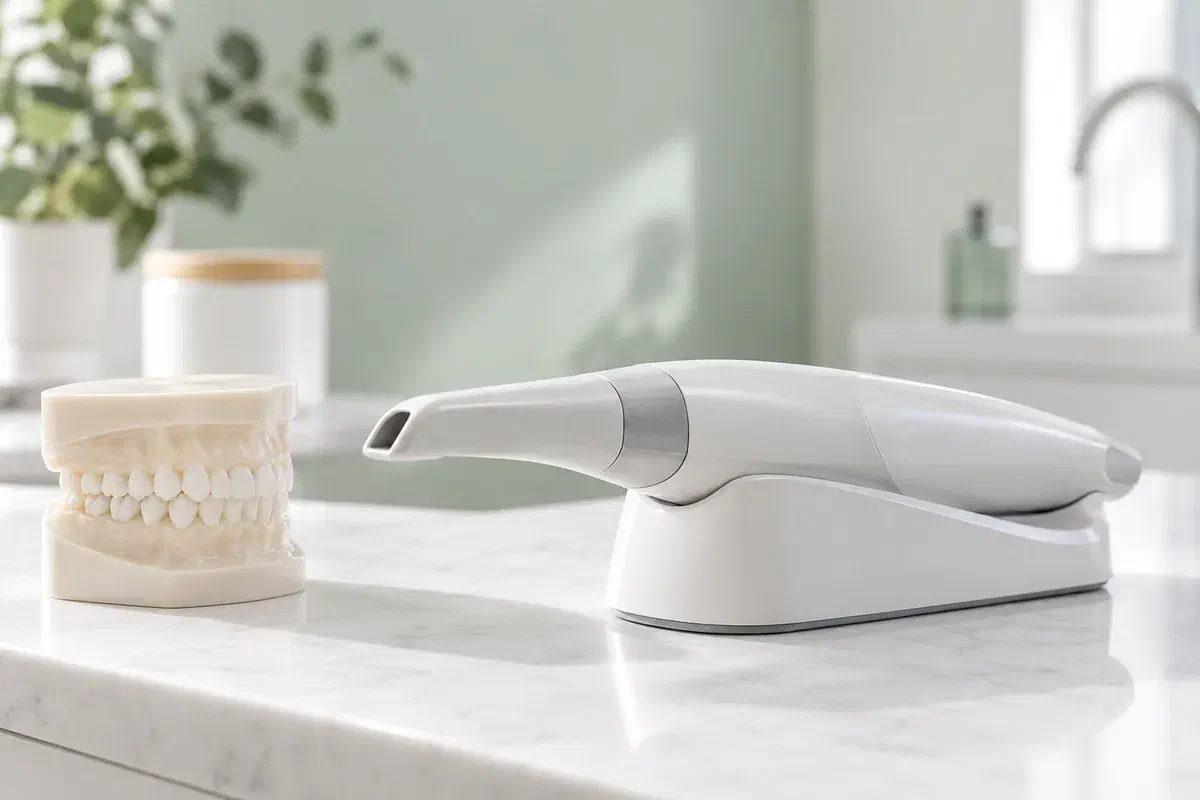
Illustrative discussion of an optical dental scanner, not a photograph of clinic equipment
General & Family Dentistry

Digital Dental Impressions in Puslinch

The scan is done and the crown is being made, so what about the weeks in between? For anyone travelling from Puslinch, learn what a digital impression starts, how to care for a temporary while you wait and when to call instead of waiting.

Scan to fitting, for Puslinch

What happens in the weeks between scan and crown?

Most attention goes to the appointment itself, yet much of the experience happens after it. An impression records the shape and position of the teeth and nearby tissue so that a restoration, appliance or plan can be designed and made. When it is captured with an optical scanner, it becomes a digital surface model that can move on to the next stage while you carry on with daily life, often with a temporary in place.

None of that treats the tooth on its own. The scan is a way of gathering information, and in suitable cases it replaces a tray of impression material. Whether it applies depends on the area to be recorded, the proposed work and the detail required. It also does not mean the finished piece will be ready immediately or need no adjustment when it arrives.

Ask how your record will be taken, what arrangements are available and what the wait is likely to look like. Mention a strong gag reflex, a jaw that does not open far or an earlier impression you found hard. Our team can explain the steps and the in-between period without assuming every case runs the same way.

Ask what to expect after the scan
Illustrative unbranded optical scanner beside a dental teaching model
Where a record fits in

The scan starts a sequence.

An impression is the first link in a chain that ends with your finished work. Ask which surfaces need recording and what happens to the model once it leaves the chair.

Work that has to be made elsewhere

Crowns and many other restorations, along with certain appliances, are produced from a record of the shaped tooth, the teeth flanking it and how your jaws close. Ask what yours needs and roughly how the making stage works, so the scan has a clear purpose and the wait has a clear end.

Hoping for an easier appointment

If trays have made you gag or feel uneasy, explain what happened. Scanning may be an option where it suits the work, although the wand still moves around the teeth and some discomfort remains possible.

Something changes during the wait

A tooth that chips, a lost temporary or a filling replaced elsewhere can affect whether the existing scan still fits the plan. Tell the team promptly. The dentist decides whether the record still holds what the work needs.

An optical record captures outer shape only. Dental X-rays and CBCT examinations serve different purposes, and a scan cannot stand in for imaging needed to assess what lies under the visible surface.

What the model does next

From chairside file to finished piece.

During the visit, the model appears as it is captured, so the team can usually spot an incomplete area and rescan it before accepting the record. That reduces the chance of discovering a gap only after the file has moved on. Once accepted, it enters the clinical and laboratory workflow that designs and produces your work. A record good enough to build from is the point.

For some patients, skipping a tray of material makes the day easier; for others the difference is small, and scanning time depends on what has to be captured. Before you begin, agree on pauses, opening and the most comfortable position.

Patient information: UCLH — digital impressions in dental care

Knowing what was recorded

Where the system displays it, the team can show you the model and explain why neighbouring or opposing teeth appear in it. That can make the plan easier to follow. The model aids planning and does not diagnose anything.

A file sent on through the right channels

A suitable record may be shared through the appropriate professional workflow so the piece can be designed and made. Ask who does that work and how long it typically takes. The scan by itself does not set a delivery date.

Fewer surprises at the fitting

The model must hold every detail the planned work relies on. Rescanning an area, or using a different method, during the first visit helps avoid problems discovered later when the piece is tried in.

On the day of the scan

Four steps, then the wait begins.

The appointment depends on the treatment involved. Ask whether you are booked for records only or whether the tooth will also be prepared and a temporary placed, since that shapes the weeks that follow.

  1. Understand the plan and the timeline

    The dentist explains the reason for the impression and whether a scan is appropriate and offered in your case. Ask about alternatives, fees and roughly how long the making stage takes. Mention comfort concerns before starting.

  2. Prepare the surfaces

    The teeth must be dry and reachable for the scanner. Depending on the procedure, gum tissue around a prepared tooth may be managed so its edges show clearly, which matters for how the crown will seal.

  3. Capture the teeth and bite

    A handheld scanner travels over the relevant teeth while the model forms. The opposite jaw and how your bite closes may be recorded too. Follow the positioning cues, and signal for a break when needed.

  4. Leave with clear instructions

    After the team confirms the record is suitable, or repeats parts of it, you should know your fitting date, how to look after the temporary and what problems warrant a call before then.

Living with a temporary

Small precautions until the real thing arrives.

The scan itself usually needs no recovery. A prepared tooth, freezing that is wearing off or a newly placed temporary may each come with their own instructions for the hours and weeks ahead.

Chew and clean with care

Follow the dentist’s advice about foods to avoid and how to floss around the temporary. If it loosens, cracks, comes off or becomes painful, call the clinic. A finished scan of the final crown does not mean a broken temporary can simply be left.

Report changes during the wait

A chipped tooth, work redone at another office or a bite that feels different should be mentioned before the fitting. The record may need to be reviewed. New pain or swelling needs assessing rather than putting off until the crown is ready.

Treat the fitting as a check, not a formality

When the finished work arrives, it is tried in and checked for how it seats, how your teeth meet and how comfortable it feels, with adjustments where needed. A digital process does not replace that step or any later follow-up.

How the record might be made

Pick the method that gives the lab what it needs.

Whoever makes your piece needs particular details, and some methods record them more dependably in some mouths than others. Ask why one approach is advised for you, rather than assuming the most modern option is always the better choice.

If surface scanning suits the planned piece

Optical impression

A scanner forms a virtual model that may feed an appropriate restorative or appliance process. Confirm that it suits your treatment and is offered. Capturing the record is only the opening step; design, manufacture and fitting follow.

If a physical mould will serve better

Conventional impression

Some clinical needs and arrangements still call for material in a tray. Let the team know about earlier difficulty so they can plan for comfort. A conventional impression does not, on its own, mean the finished work is lesser.

If more detail is required

Extra records

Photographs, bite records, X-rays or a second impression may be needed for other questions. Ask what each adds. A surface model cannot reveal everything about a tooth, its supporting tissues or whether a treatment is suitable.

Puslinch questions about the wait

Temporaries, timing and the fitting visit.

Most questions here are about the in-between weeks, though the planned work and recording method are fair game too. Clear answers link each step to the finished piece.

(905) 876-4488
How long is the usual gap between the scan and the fitting?
It varies with the type of work and how it is designed and made. Ask the team for an estimate when the scan is booked, and plan around it, keeping in mind that some cases take longer than expected.
Can I chew on the side with the temporary crown?
That depends on the advice you were given for your tooth. Many people are asked to avoid very sticky or hard foods on that side while the temporary is in place. If biting on it hurts or it feels high, call the clinic.
What should I do if my temporary falls out on a weekend?
Keep the temporary, call the clinic and follow the guidance you are given. Fridays to Sundays are by appointment only. If you have severe pain or swelling and cannot reach us, seek urgent care, and get emergency help for swelling affecting breathing or swallowing.
Is it normal for the tooth to feel sensitive under a temporary?
Some sensitivity can occur after a tooth has been prepared. If it is strong, keeps getting worse or comes with swelling, contact the clinic so the tooth can be checked rather than waiting for the fitting.
If my temporary breaks, will I need another scan?
Not necessarily. If the prepared tooth itself has not changed, the existing record may still be suitable. The dentist will check the tooth and decide whether the scan still matches before the work goes ahead.
How can I plan the fitting trip from Puslinch?
Ask for the fitting date as early as possible and how long the visit will take. If the household has other appointments due, ask whether they can be grouped. Call before setting out if anything about the tooth or temporary has changed.
From Puslinch to our practice

Let’s plan both the scan and the wait that follows.

Call our Bronte Street practice to discuss the crown, bridge or appliance you need and how the impression would be taken. We can explain the records involved, what the period before fitting usually involves and the arrangements available. Ask anything about comfort, timing and temporaries.

Scanning depends on your treatment and on what is available, so please confirm. The scanner images shown here are illustrations, not clinic equipment.

Visit Milton Dental Clinic
Unit 1, 342 Bronte St. S, Milton, ON L9T 5B7
Get directions Clinic hours
Monday–Thursday
11am–7pm
Friday–Sunday
By appointment only

Areas we serve

  • Milton
  • Oakville
  • Mississauga
  • Georgetown
  • Halton Hills
  • Acton
  • Campbellville
  • Brampton
  • Burlington
  • Puslinch
  • Rockwood
  • Erin
  • Caledon
  • Etobicoke
  • Old Milton
  • Bronte Meadows
  • Timberlea
  • Dorset Park
  • Dempsey
  • Clarke
  • Beaty
  • Coates
  • Harrison
  • Scott
  • Willmott
  • Ford
  • Bowes
  • Cobden
  • Walker
  • Mountain View
  • Milton Heights
  • Hawthorne Village
  • Valley View
  • Fallingbrook
  • Nassagaweya
  • Trafalgar
  • Esquesing
  • Nelson
  • Brookville
  • Moffat
  • Glen Williams
  • Norval
  • Limehouse
  • Stewarttown
  • Ashgrove
  • Hornby
  • Silver Creek
  • Speyside
  • Scotch Block
  • North Oakville
  • River Oaks
  • Glen Abbey
  • West Oak Trails
  • Palermo
  • Bronte Creek
  • College Park
  • Joshua Creek
  • Uptown Core
  • Preserve
  • Iroquois Ridge
  • Lisgar
  • Meadowvale
  • Meadowvale Village
  • Churchill Meadows
  • Erin Mills
  • Central Erin Mills
  • Streetsville
  • East Credit
  • Creditview
  • Heartland
  • Sheridan
  • Mount Pleasant
  • Credit Valley
  • Huttonville
  • Churchville
  • Springbrook
  • Northwest Brampton
  • Bram West
  • Fletcher's Meadow
  • Fletcher's Creek South
  • Alton Village
  • Orchard
  • Millcroft
  • Headon Forest
  • Tansley
  • Brant Hills
  • Tyandaga
  • Kilbride
  • Lowville
  • Aberfoyle
  • Morriston
  • Arkell
  • Hillsburgh
  • Freelton
  • Carlisle
  • Waterdown
  • Flamborough
  • Mountsberg

How can we help?

Milton Dental Clinic

Have a question about your smile? Choose the option that works best for you.

For urgent dental concerns, please call.
Messages are reviewed during clinic hours.