

Illustrative consultation before an oral tissue examination
General & Family Dentistry

Oral Cancer Screening in Acton

A patch that does not hurt is easy to forget about. That is exactly why it deserves a look. An oral tissue examination checks the area and decides whether a recheck, tests, or referral should follow.

Painless changes, explained for Acton

Pain is a poor guide to what matters.

We tend to judge a body change by how much it bothers us. In the mouth, that instinct can mislead. A white film that will not wipe away, a velvety red area on the gum or a slightly raised spot on the tongue may cause no discomfort at all. Most such patches are harmless, but some need closer attention, and only an examination can sort one from the other.

A general screen is a search for signs nobody has noticed. A patch you have already seen is different: it is a concern to assess, so describe it when you book. Its exact location, how many weeks it has been there and whether its colour, size or texture is shifting give the dentist far more to go on than pain does.

Coming from Acton, northwest of Milton, bring any question about your lips, gums, tongue or inner cheeks. The dentist will explain what is seen and what should happen next. A reassuring result is helpful, though no exam can exclude every cancer, and a patch that remains after your visit should still be followed up.

Have a painless patch looked at
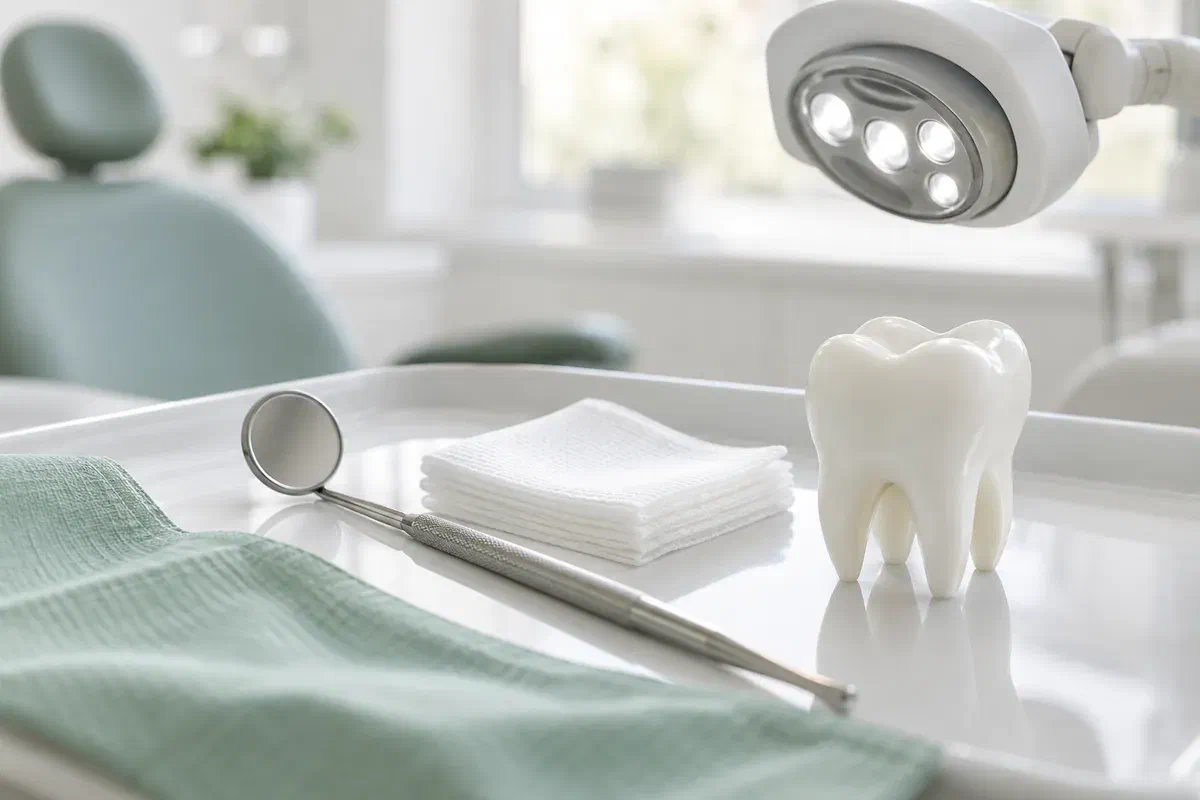
Dental mirror, gauze, examination light, and tooth model illustrating an oral examination
Quiet signs to report

If you can see it or feel it, mention it.

There is no need to work out first whether it is dental. A change lasting more than about two weeks should be assessed, and one that looks worrying or alters quickly may need attention before that point.

White, red, or speckled areas

A white patch that will not rub off, a red or mixed red-and-white area, a sore that has not healed or tissue that feels thicker than usual should be examined. Note whether it bleeds, spreads or keeps returning. No pain is not a green light.

Lumps and areas of reduced feeling

A firm lump inside the mouth or under the jaw, numbness that does not fade or a denture that suddenly fits differently are all worth reporting. Each has several possible causes. Examination, sometimes followed by tests, identifies which applies.

Subtle changes in how your mouth works

Slight stiffness of the tongue, a change in speech, or new difficulty chewing or swallowing can be easy to dismiss. Ongoing hoarseness or throat symptoms may need a doctor to examine areas past the dentist’s view. We can help you decide.

Two weeks is a reference point, not a rule to sit and wait. Contact a dentist or doctor sooner about a worrying, worsening or unexplained change, and go to emergency care for difficulty breathing or swallowing.

Why it is worth the appointment

Turn a quiet doubt into a documented finding.

A painless patch is easy to forget until next year. Examining it now lets the dentist describe its size and appearance, compare it at future visits, review your history and decide whether investigation is warranted. Occasionally there is an obvious cause, such as friction from a rough tooth. Otherwise the area may need a specialist opinion. Either way, you should leave with a clear explanation and an honest view of what is still uncertain.

Screening does not prevent cancer, and a normal exam does not prove there is none. It is a tool for recognizing abnormal tissue so it can be followed up in time. If a patch is still there after a reassuring appointment, return for another look rather than letting the first result settle the matter.

A baseline for comparison

Share when you noticed the patch, whether it has faded and returned and anything that seems to affect it. Previous lesions and medical treatment are relevant. A recorded starting point makes later changes easier to spot.

Honesty about what is and is not clear

You can ask whether a cause has been found or whether more information is needed. A patch can be seen without being diagnosed. Understanding why a recheck or referral is advised helps you act without fear taking over.

A follow-up you will not forget

Make sure you know who will contact you, when the next look is due and what to do if the area changes. If referred, ask what to do when no appointment comes through. A painless patch is exactly the kind of concern that slips through.

What to expect

Your account first, then a thorough check.

Before the examination, point to the area or describe exactly where it is. Mention any tenderness or trouble opening wide so the dentist can explain each part and keep a comfortable pace.

  1. Describing the patch and your background

    We ask how long it has been there, whether it has changed and whether anything accompanies it. Questions about tobacco, alcohol, earlier lesions and medical care may follow. They shape the exam, though a symptom is never safe to ignore just because those risks are absent.

  2. Looking closely and feeling gently

    The lips, gums, cheeks, tongue, palate and nearby structures are examined visually and by light touch as appropriate. Removable dentures may come out. Tell us about any discomfort and ask what is being checked.

  3. Weighing whether to investigate

    A suspicious patch calls for prompt biopsy or specialist referral rather than ongoing routine screening. A biopsy examines a small tissue sample to help reach a diagnosis. The site and circumstances determine who carries it out.

  4. Settling the next date

    Know the next step and who is arranging it before you leave. If a brief recheck is suggested for a lower-concern area, confirm the timing and what changes should prompt an earlier call. A patch that persists or grows needs reassessment.

Afterward

Painless does not mean finished.

The examination itself normally needs no recovery. What matters afterward is attending any review or investigation and reporting changes, instead of assuming that observation closes the matter.

Keep an eye on it, lightly

Note whether the patch changes colour, size or texture, and whether it affects eating or speech. Try not to rub or scrape it. A photo may help you describe it, but it is no substitute for an examination or a diagnosis.

Return for the review

Attend rechecks and specialist appointments even though the area does not hurt. If it changes beforehand, call. Ask how you will receive results, and do not assume that hearing nothing means a test was normal.

Talk about tobacco and alcohol

If you smoke, chew tobacco or drink regularly, we can offer information and support for cutting down. It can be part of your ongoing care. Reducing these habits is worthwhile, but a patch that is already there still needs proper investigation.

What happens next

The finding shapes the follow-up.

Your plan depends on the examination and what you report. Ask what each recommendation will tell you, and check who is responsible for seeing it through.

Nothing concerning today

Ongoing routine care

Continue regular checkups and report anything new or persistent. A normal examination describes that visit only. It is not a permanent all-clear, and a fresh change warrants another appointment.

A patch worth watching briefly

A recheck on a set date

The dentist may remove a likely irritant and see whether the patch fades. That review should have a fixed date and a plan if it does not. A patch that stays or changes should not be monitored indefinitely.

Features that need investigating

Prompt specialist assessment or biopsy

A tissue sample or specialist exam may be the only way to know what a patch is. Referral does not mean cancer has been diagnosed. Ask which clinic will see you, what information is sent and how results will come back to you.

Acton questions about patches

White, red, and everything in between.

An examination is where understanding a change starts. Ask about any finding or recommendation you are unsure of, and about the follow-up that will answer it.

(905) 876-4488
Why would a patch that does not hurt need any attention?
Many significant changes in the mouth cause little or no discomfort at first. Appearance, duration and change over time matter more than pain. A patch lasting beyond about two weeks should be examined.
What is leukoplakia?
It is a term for a white patch that cannot be wiped off and has no other obvious cause. Most are not cancer, but some can change over time, so the dentist may recommend monitoring, a biopsy or a referral.
My tongue has a white coating. Is that the same thing?
Not necessarily. A coating that brushes or wipes away is often related to debris, dryness or an infection such as thrush. A white area that cannot be removed, or that stays for weeks, is worth having examined.
Are red patches as important as white ones?
Red or mixed red-and-white patches are less common but are considered more concerning when they have no clear cause. Have one assessed promptly rather than waiting to see whether it fades.
Can I show the dentist photos of how the patch looked earlier?
Yes. Photos taken at home can help explain how an area has changed, even though they cannot replace an examination. Note the date of each one so the timeline is clear.
The patch seems to be fading. Should I still keep my appointment?
Yes. A fading patch is encouraging, but the dentist should still confirm that it has resolved and record what was seen. If it has gone, that information is useful if anything returns later.
Book from Acton

Even if it does not hurt, let’s take a look.

Call our Bronte Street practice to arrange a tissue examination or to discuss a patch you have noticed. Mention where it is, roughly when it appeared and whether it has changed. The dentist will examine it and set out whether review, further testing or referral is appropriate.

Changing quickly or getting worse? Tell us by phone. The online form is not watched as an emergency service, and screening cannot replace diagnostic follow-up when it has been recommended.

Visit Milton Dental Clinic
Unit 1, 342 Bronte St. S, Milton, ON L9T 5B7
Get directions Clinic hours
Monday–Thursday
11am–7pm
Friday–Sunday
By appointment only

Areas we serve

  • Milton
  • Oakville
  • Mississauga
  • Georgetown
  • Halton Hills
  • Acton
  • Campbellville
  • Brampton
  • Burlington
  • Puslinch
  • Rockwood
  • Erin
  • Caledon
  • Etobicoke
  • Old Milton
  • Bronte Meadows
  • Timberlea
  • Dorset Park
  • Dempsey
  • Clarke
  • Beaty
  • Coates
  • Harrison
  • Scott
  • Willmott
  • Ford
  • Bowes
  • Cobden
  • Walker
  • Mountain View
  • Milton Heights
  • Hawthorne Village
  • Valley View
  • Fallingbrook
  • Nassagaweya
  • Trafalgar
  • Esquesing
  • Nelson
  • Brookville
  • Moffat
  • Glen Williams
  • Norval
  • Limehouse
  • Stewarttown
  • Ashgrove
  • Hornby
  • Silver Creek
  • Speyside
  • Scotch Block
  • North Oakville
  • River Oaks
  • Glen Abbey
  • West Oak Trails
  • Palermo
  • Bronte Creek
  • College Park
  • Joshua Creek
  • Uptown Core
  • Preserve
  • Iroquois Ridge
  • Lisgar
  • Meadowvale
  • Meadowvale Village
  • Churchill Meadows
  • Erin Mills
  • Central Erin Mills
  • Streetsville
  • East Credit
  • Creditview
  • Heartland
  • Sheridan
  • Mount Pleasant
  • Credit Valley
  • Huttonville
  • Churchville
  • Springbrook
  • Northwest Brampton
  • Bram West
  • Fletcher's Meadow
  • Fletcher's Creek South
  • Alton Village
  • Orchard
  • Millcroft
  • Headon Forest
  • Tansley
  • Brant Hills
  • Tyandaga
  • Kilbride
  • Lowville
  • Aberfoyle
  • Morriston
  • Arkell
  • Hillsburgh
  • Freelton
  • Carlisle
  • Waterdown
  • Flamborough
  • Mountsberg

How can we help?

Milton Dental Clinic

Have a question about your smile? Choose the option that works best for you.

For urgent dental concerns, please call.
Messages are reviewed during clinic hours.