

Illustrative consultation before an oral tissue examination
General & Family Dentistry

Oral Cancer Screening in Caledon

Thinking about quitting tobacco, or quit years ago? Either way, an honest conversation and a careful oral tissue exam help decide whether any change in your mouth needs review, tests, or referral.

Caledon · an honest, no-judgement check

Your habits are part of the story, not a verdict.

Some people dread the question about smoking or drinking and quietly skip dental visits because of it. That is a shame, because the answer simply helps the dentist know where to look most carefully. Current smokers, people who quit long ago and people who never started all benefit from the same thing: a thorough look at the lips, tongue, cheeks, gums and neck.

Keep in mind which visit you are booking. Screening means checking someone with no symptoms. A sore, patch or lump you have already noticed changes that, because now there is something specific to assess, and you should mention it on the phone. The site, the number of weeks and any change in appearance tell us more than pain does.

From Bolton or anywhere else in Caledon, northeast of Milton, you are welcome to talk about your mouth and about any habit you would like to change. The dentist explains what the exam shows and what comes next. A reassuring finding is good to have, yet it cannot rule out every cancer, and a symptom that remains still deserves follow-up.

Book a judgement-free tissue check
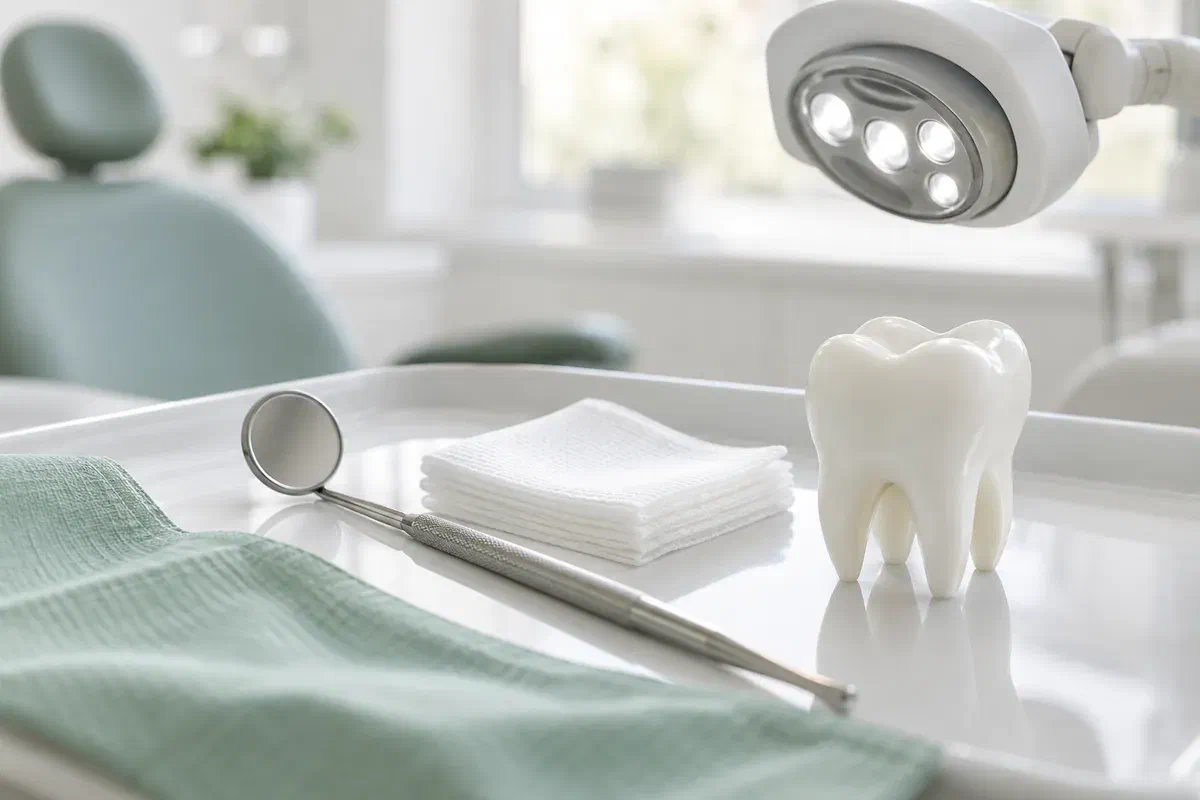
Dental mirror, gauze, examination light, and tooth model illustrating an oral examination
Changes to bring up, whatever your history

If it is new and it is staying, we want to know.

Whether or not the change seems dental, raise it. Two weeks or more without improvement is a reason to have it checked. Anything that alarms you or seems to be changing quickly can be seen sooner.

Sores, white or red areas, thickening

Tell us about a sore that will not close, a patch of white or red, or tissue that feels leathery or thicker than usual, especially where you hold a cigarette, pipe or chew. Note bleeding or growth. Comfort is no proof it is harmless.

Swellings, numbness, or a different denture fit

A new swelling inside the cheek or under the jaw, a lip or tongue that stays numb, or a denture that has started to rock are all worth describing. Different conditions can produce these, and an examination, sometimes followed by tests, tells them apart.

Harder to chew, swallow, or speak

Report new difficulty eating, swallowing, talking or moving your tongue. A long-lasting hoarse voice or throat discomfort may need your doctor to examine areas past the reach of a dental check. We can help you decide where to start.

There is no need to sit on a symptom for two weeks. Contact a dentist or doctor sooner for a change that worries you, worsens or has no explanation, and get emergency care if breathing or swallowing becomes difficult.

Why the check is worthwhile

Useful whether you smoke, quit, or never started.

Knowing your history helps the dentist focus. The examination itself is what finds and records a change, connects it to that history and decides whether investigation is needed. A plain local cause, such as a jagged tooth rubbing the cheek, may account for it. If not, a specialist may need to see it. Expect an explanation in everyday words and openness about the parts that are still unclear.

Screening does not prevent cancer, and a normal exam is not a promise there is none. Its strength is catching abnormal tissue so it can be followed up without delay. If a symptom continues after a reassuring visit, book another look rather than trusting the earlier result to cover it.

An honest timeline

Share when you noticed the change, whether it has cleared and returned and what makes it better or worse. Include when you started or stopped smoking or chewing, and any earlier lesions. Accurate history leads to a better examination.

Straightforward talk about the finding

You can ask directly whether the cause is clear or whether more is needed to know. Spotting a patch is different from diagnosing it. Hearing the reasoning behind a recheck or referral helps you respond calmly.

Follow-up that someone owns

Agree on who will be in touch, when the next look is due and what should prompt an earlier call. For a referral, find out whom to phone if weeks go by with no date. A concern should not drift between offices.

What the exam looks like

Honest questions, a careful exam, a clear plan.

Let the dentist know what concerns you before the examination begins. If an area is sore or you find it hard to open wide, say so, and each step can be explained and taken at your pace.

  1. A frank conversation

    We ask about the change and its timing, and about tobacco, vaping, alcohol, earlier lesions and medical treatment. There are no wrong answers. These details guide the exam, and they never mean someone with a low-risk history should dismiss a symptom.

  2. Looking and feeling, lips to neck

    The dentist inspects and lightly feels your lips, cheeks, gums, tongue, palate and nearby areas, paying attention to places where tobacco has been held. Dentures may be removed. Speak up if something is sore.

  3. Deciding on further investigation

    When an area looks suspicious, the right move is a prompt biopsy or specialist referral rather than more routine checks. A biopsy examines a small sample of tissue to help establish a diagnosis. Who performs it depends on where the area is.

  4. Settling the follow-up

    Before you go, know what happens next and who will set it up. For a lower-concern area with a short recheck, put the date in your calendar along with the signs that justify an earlier call. Persistent or growing changes need another look.

After the exam

Follow-up first, habit changes alongside.

The exam itself usually leaves nothing to recover from. What matters next is going to any recheck or investigation that was suggested and reporting changes, so that keeping watch never quietly becomes the whole plan.

Note what you see

Write down when symptoms show up and whether the area is shrinking, growing or making eating or speech harder. Leave it alone rather than checking it often. A photo may help describe it, but it is no replacement for an exam.

Keep the appointments

Go to rechecks and specialist visits even if the area hardly bothers you. If it changes before then, phone for advice. Find out how results will reach you, and treat a silence past the expected date as a reason to call.

Get support to cut back or quit

If you want to reduce smoking, chewing, vaping or drinking, we can share information and point you toward support. That can carry on at every visit. Quitting is worthwhile, but it does not remove the need to investigate a lesion you already have.

Making sense of the result

Clear, watch briefly, or look deeper.

Your plan reflects what was seen and what you shared. Ask what each recommendation is meant to clarify, and confirm who will see it through.

No concerning finding

Routine care, with support if you want it

Continue regular checkups, keep working on any habit change you have chosen, and report new or persistent symptoms. A normal exam reflects that day. It is not permanent clearance.

An area worth reviewing soon

A dated recheck

The dentist may remove a likely irritant and look again to see whether the tissue heals. The recheck should have a firm date and a plan if it does not improve. An area that lasts or worsens should not be watched endlessly.

Findings that need investigation

Biopsy or specialist assessment

Further assessment may be needed to learn what a lesion is. Being referred is not the same as being diagnosed with cancer. Ask which clinic will see you, what information they will receive and how your results will come back.

Caledon questions about tobacco and screening

Smoking, quitting, and what the check can tell you.

The examination is where understanding a change begins. If anything about your result or your risk is unclear, ask, and find out what will settle the question.

(905) 876-4488
I quit smoking years ago. Should I still mention it?
Yes. Past tobacco use is part of your history and helps the dentist decide where to look most carefully. Quitting is very worthwhile, and the examination simply makes sure any change is noticed.
Does vaping count when the dentist asks about tobacco?
Please mention it. Research on the long-term effects of vaping on the mouth is still developing, so the dentist will want to know. As with any habit, persistent mouth changes should be assessed.
Can the dentist help me quit tobacco?
We can talk about your goals, share information and point you toward support programs. Many people find it helps to have their dental team check in on progress at each visit.
Will I be judged for my drinking or smoking?
No. The questions are there to guide the examination, not to lecture you. Honest answers help the dentist give you the best care.
If I stop smoking, will a patch I already have go away?
Some changes may improve after quitting, but you should not wait to find out. An existing unexplained patch still needs to be examined and, if advised, investigated, whatever you decide about tobacco.
Can a normal screening tell me I am no longer at risk?
No. A normal result describes your mouth on that day. It cannot exclude every cancer or predict the future, so keep up regular checks and report any new or lasting change.
Booking from Caledon

Come as you are, and let’s take a careful look.

Call our Bronte Street practice to book a tissue examination or to talk about a change in your mouth. Let us know where it is, about when it started and anything else you have noticed. The dentist will assess it without judgement and explain whether a recheck, testing, referral or routine care fits.

If the change is worsening, please phone us. Online booking requests are not read as emergencies, and screening does not stand in for a biopsy or referral that has been recommended.

Visit Milton Dental Clinic
Unit 1, 342 Bronte St. S, Milton, ON L9T 5B7
Get directions Clinic hours
Monday–Thursday
11am–7pm
Friday–Sunday
By appointment only

Areas we serve

  • Milton
  • Oakville
  • Mississauga
  • Georgetown
  • Halton Hills
  • Acton
  • Campbellville
  • Brampton
  • Burlington
  • Puslinch
  • Rockwood
  • Erin
  • Caledon
  • Etobicoke
  • Old Milton
  • Bronte Meadows
  • Timberlea
  • Dorset Park
  • Dempsey
  • Clarke
  • Beaty
  • Coates
  • Harrison
  • Scott
  • Willmott
  • Ford
  • Bowes
  • Cobden
  • Walker
  • Mountain View
  • Milton Heights
  • Hawthorne Village
  • Valley View
  • Fallingbrook
  • Nassagaweya
  • Trafalgar
  • Esquesing
  • Nelson
  • Brookville
  • Moffat
  • Glen Williams
  • Norval
  • Limehouse
  • Stewarttown
  • Ashgrove
  • Hornby
  • Silver Creek
  • Speyside
  • Scotch Block
  • North Oakville
  • River Oaks
  • Glen Abbey
  • West Oak Trails
  • Palermo
  • Bronte Creek
  • College Park
  • Joshua Creek
  • Uptown Core
  • Preserve
  • Iroquois Ridge
  • Lisgar
  • Meadowvale
  • Meadowvale Village
  • Churchill Meadows
  • Erin Mills
  • Central Erin Mills
  • Streetsville
  • East Credit
  • Creditview
  • Heartland
  • Sheridan
  • Mount Pleasant
  • Credit Valley
  • Huttonville
  • Churchville
  • Springbrook
  • Northwest Brampton
  • Bram West
  • Fletcher's Meadow
  • Fletcher's Creek South
  • Alton Village
  • Orchard
  • Millcroft
  • Headon Forest
  • Tansley
  • Brant Hills
  • Tyandaga
  • Kilbride
  • Lowville
  • Aberfoyle
  • Morriston
  • Arkell
  • Hillsburgh
  • Freelton
  • Carlisle
  • Waterdown
  • Flamborough
  • Mountsberg

How can we help?

Milton Dental Clinic

Have a question about your smile? Choose the option that works best for you.

For urgent dental concerns, please call.
Messages are reviewed during clinic hours.