

Illustrative consultation before an oral tissue examination
General & Family Dentistry

Oral Cancer Screening in Erin

A quick look in the mirror now and then helps you notice when something in your mouth is new. A professional tissue exam then decides whether that change needs a recheck, tests, or referral.

Home checks and exams for Erin

A mirror, good light, and two minutes.

Getting to know what your own mouth normally looks like makes it much easier to spot when something changes. Lift your lips, look at your gums, pull your cheeks aside, check the top, sides and underside of your tongue, and feel along your jaw and neck. You are not trying to diagnose anything. You are simply noticing what is new.

Once you have found something, it is no longer a matter of routine screening. Screening is a look when no symptoms are known; a spot you have seen is a concern to assess, and you should say so when you call. Note where it is, roughly when you first saw it and whether it is changing. Those details count even when it does not hurt.

For households in Erin, Hillsburgh and the surrounding countryside, a visit is a chance to bring what you have noticed and have it examined properly. The dentist explains what is seen and what should follow. A reassuring answer is welcome, but no exam can exclude every cancer, and a change that stays still needs another look.

Have a new mouth change checked
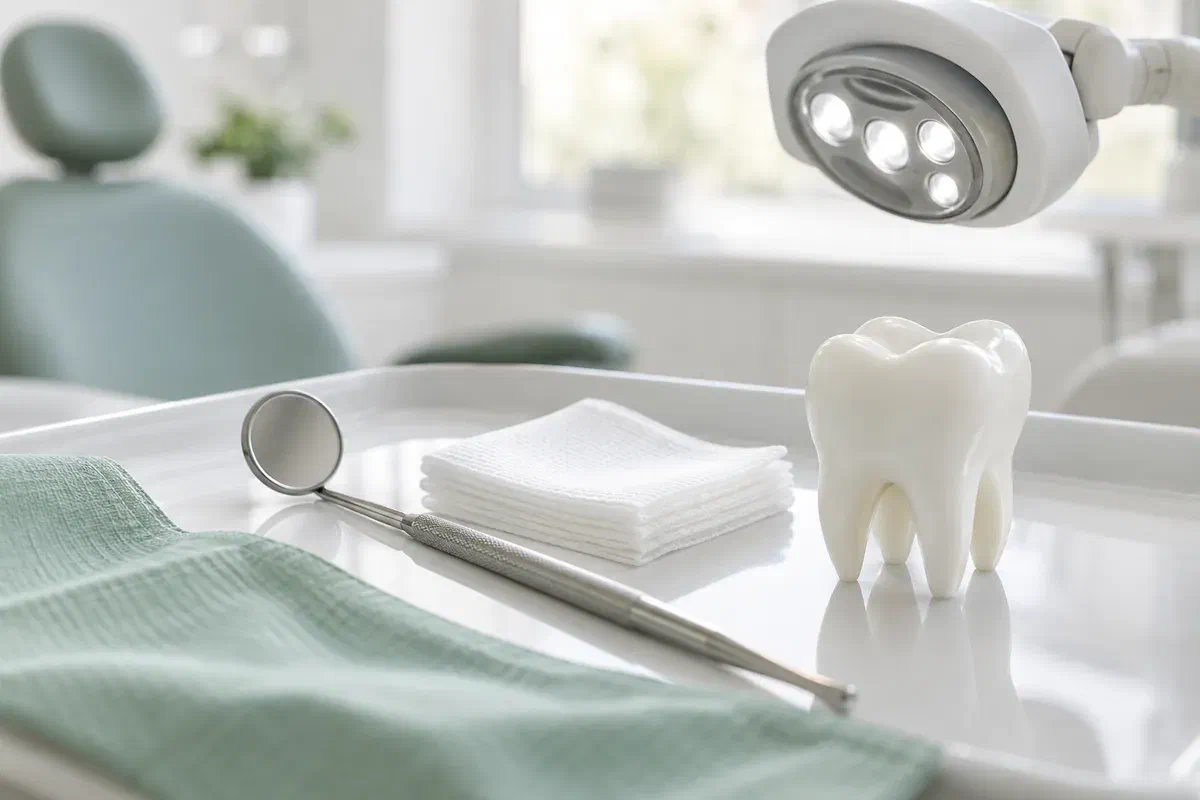
Dental mirror, gauze, examination light, and tooth model illustrating an oral examination
What a home check might turn up

Things worth noting in the mirror.

Do not hold back because you are unsure it is dental. A change you can still see after about two weeks should be assessed, and something alarming or quickly changing may need to be seen before that.

Sores, coloured patches, thick spots

A mouth ulcer that is not healing, a white or red area, or tissue that feels rougher or firmer than the rest should be shown to a dentist. Note whether it bleeds, comes back or seems larger. It can be painless and still need attention.

Bumps under the skin, or areas gone numb

When you run your fingers along your jaw and neck, a new lump is worth reporting, as is numbness of the lip or tongue or a denture that suddenly fits differently. Any of these has several possible causes, and an exam sorts out which.

Changes you feel rather than see

Difficulty chewing, swallowing, speaking or moving your tongue may not show in the mirror at all. A voice that stays hoarse or a throat that keeps bothering you can need a doctor to check areas further back. We can help work out who.

Finding something does not mean you should wait two weeks. Call a dentist or doctor sooner for a change that worries you, grows or has no explanation, and seek emergency care for breathing or swallowing difficulty.

Where home checks stop

You notice. The dentist interprets.

A home check is good at one thing: noticing change. The examination does the rest. The dentist can pinpoint and record the area, compare it with your history and decide whether investigation is needed. Sometimes a likely cause appears, like a rough filling catching the cheek. Sometimes a specialist should take a look. Either way, you deserve a clear explanation and frankness about what remains uncertain.

Neither checking at home nor a professional screen prevents cancer, and neither proves it is absent. Together they make it more likely that abnormal tissue is noticed and followed up in good time. If a change persists after a reassuring appointment, book again instead of leaning on the earlier result.

Your notes make the visit sharper

Tell us when you first saw the change, whether it disappeared and returned, and what seemed to affect it. Mention earlier lesions or treatment. Your record gives the dentist a timeline a single look cannot.

An explanation in plain words

Ask whether a cause has been identified or whether more information is needed. Seeing something in the mirror, or in the chair, is not a diagnosis. Knowing the reasoning helps you take the next step without fearing the worst.

A next step with a date on it

Agree who will contact you, when the area should be rechecked and what to do if it changes in the meantime. If referred, know whom to call if the appointment does not materialize. Nothing important should fall between offices.

What the professional exam adds

The same areas you check, examined with training.

Tell the dentist what you found at home before the exam begins, ideally with dates. Mention any tender spot or difficulty opening so each step can be explained and paced comfortably.

  1. Going over what you noticed

    The dentist asks about the change, how long it has been visible and anything that came with it, along with tobacco, alcohol, earlier lesions and medical history. These answers guide the exam, though a low-risk history never makes a symptom safe to dismiss.

  2. A trained look and feel

    Your lips, gums, cheeks, tongue, palate and nearby structures including the neck are examined by sight and gentle touch as appropriate. Dentures may come out. Say if anything is sore and ask what is being checked.

  3. Deciding whether to investigate

    A suspicious area should go promptly to biopsy or specialist referral, not to a pattern of routine rechecks. A biopsy examines a small tissue sample to help confirm a diagnosis. Where and by whom depends on the location and circumstances.

  4. Agreeing on the follow-up

    Before leaving, confirm the next step and who arranges it. If a short recheck is planned for a lower-concern area, write down when it is due and which changes mean calling earlier. A change that persists or progresses needs reassessment.

Keeping up the routine

Carry on checking, and keep the appointments.

An examination by itself normally needs no recovery. What matters afterward is attending any recommended recheck or investigation and reporting changes, so that keeping an eye on things never replaces actually resolving them.

Continue your home checks, gently

Look at the area every so often and note whether it is healing, growing or affecting eating or speech. Avoid poking it daily. A dated photo can help you describe it, but it cannot replace an exam or confirm a diagnosis.

Go to the recheck or specialist visit

Attend even if the area seems better. If it changes before then, phone for advice. Ask how results will reach you, and if you have heard nothing by the expected time, call rather than assuming all is well.

Talk about tobacco and alcohol if relevant

If you use tobacco or have questions about alcohol and the mouth, ask about information and support. It can be part of your ongoing care. Making a change helps, but a lesion already present still needs to be investigated.

After the professional check

What the result means for your home routine.

The recommendation depends on what was examined and what you have recorded. Ask what each option should clarify, and confirm who will make sure it happens.

Nothing worrying found

Routine visits plus home checks

Keep your usual checkup schedule and continue noticing changes at home. A normal exam describes that day only. It is not lifelong clearance, and anything new is worth reporting.

An area to review soon

A recheck on a known date

The dentist may remove a likely irritant and see whether the tissue heals by the recheck. That date should be fixed, with a plan if healing does not happen. An area that lingers should not be watched indefinitely.

Findings that need investigation

Specialist assessment or biopsy

More assessment may be required to learn what a lesion is. A referral is not a cancer diagnosis. Ask which clinic will see you, what notes are being sent and how results will be shared.

Erin questions about checking at home

Self-checks, records, and when to call.

Checking at home and a professional exam work together. Ask about anything you are unsure of, and about the follow-up that will settle a question.

(905) 876-4488
How do I check my own mouth at home?
Use a mirror and good light. Look at your lips, gums, inner cheeks, roof of the mouth and the top, sides and underside of your tongue. Then gently feel along your jaw and neck for lumps. Note anything new.
How often should I do a home mouth check?
Many people find once a month an easy rhythm, but any routine that helps you notice change is fine. A home check supports, and does not replace, regular dental examinations.
I found something during a self-check. What should I do?
Note the date and where it is, and look again over the next week or two without prodding it. If it is still there, changing or worrying you, call to book an examination. Seek urgent care for severe symptoms.
Are bleeding gums a sign of oral cancer?
Bleeding gums are most often related to gum inflammation. Bleeding that keeps coming from one particular spot, or from a sore or patch, should be examined.
Is it useful to keep a written record of a mouth change?
Yes. Dates, size, colour and any symptoms help the dentist see how an area has behaved over time. Bring the notes, and any dated photos, to your appointment.
I feel perfectly well. Do I still need to have a spot checked?
Yes, if it has lasted beyond about two weeks or keeps changing. Many mouth changes cause no other symptoms. Feeling well is good news but is not a reason to skip an examination.
From Erin to our Bronte Street practice

Found something new? Bring it in.

Call our Bronte Street practice to book a tissue examination or to describe a change you spotted at home. Share where it is, when you first noticed it and whether it has altered. The dentist will look carefully and tell you clearly whether a recheck, testing or referral is appropriate.

If the change is spreading or getting worse, please phone rather than booking online, as the form is not monitored for emergencies. A screening visit is not a substitute for recommended diagnostic follow-up.

Visit Milton Dental Clinic
Unit 1, 342 Bronte St. S, Milton, ON L9T 5B7
Get directions Clinic hours
Monday–Thursday
11am–7pm
Friday–Sunday
By appointment only

Areas we serve

  • Milton
  • Oakville
  • Mississauga
  • Georgetown
  • Halton Hills
  • Acton
  • Campbellville
  • Brampton
  • Burlington
  • Puslinch
  • Rockwood
  • Erin
  • Caledon
  • Etobicoke
  • Old Milton
  • Bronte Meadows
  • Timberlea
  • Dorset Park
  • Dempsey
  • Clarke
  • Beaty
  • Coates
  • Harrison
  • Scott
  • Willmott
  • Ford
  • Bowes
  • Cobden
  • Walker
  • Mountain View
  • Milton Heights
  • Hawthorne Village
  • Valley View
  • Fallingbrook
  • Nassagaweya
  • Trafalgar
  • Esquesing
  • Nelson
  • Brookville
  • Moffat
  • Glen Williams
  • Norval
  • Limehouse
  • Stewarttown
  • Ashgrove
  • Hornby
  • Silver Creek
  • Speyside
  • Scotch Block
  • North Oakville
  • River Oaks
  • Glen Abbey
  • West Oak Trails
  • Palermo
  • Bronte Creek
  • College Park
  • Joshua Creek
  • Uptown Core
  • Preserve
  • Iroquois Ridge
  • Lisgar
  • Meadowvale
  • Meadowvale Village
  • Churchill Meadows
  • Erin Mills
  • Central Erin Mills
  • Streetsville
  • East Credit
  • Creditview
  • Heartland
  • Sheridan
  • Mount Pleasant
  • Credit Valley
  • Huttonville
  • Churchville
  • Springbrook
  • Northwest Brampton
  • Bram West
  • Fletcher's Meadow
  • Fletcher's Creek South
  • Alton Village
  • Orchard
  • Millcroft
  • Headon Forest
  • Tansley
  • Brant Hills
  • Tyandaga
  • Kilbride
  • Lowville
  • Aberfoyle
  • Morriston
  • Arkell
  • Hillsburgh
  • Freelton
  • Carlisle
  • Waterdown
  • Flamborough
  • Mountsberg

How can we help?

Milton Dental Clinic

Have a question about your smile? Choose the option that works best for you.

For urgent dental concerns, please call.
Messages are reviewed during clinic hours.