

Illustrative consultation before an oral tissue examination
General & Family Dentistry

Oral Cancer Screening in Etobicoke

When the trip is longer, every visit should count. An oral tissue examination, ideally paired with your regular care, gives a mouth change a proper look and a clear decision on review, testing, or referral.

Planning a visit from Etobicoke

One well-planned appointment beats three rushed ones.

If you are making the trip from Toronto’s west end, it makes sense to get the most out of each appointment. A soft-tissue examination can usually be folded into a checkup or cleaning. What should not be folded in quietly is a specific worry, such as a sore under the tongue or a lump along the jaw. That needs to be named so it gets proper attention.

Routine screening and checking a known symptom are different requests. The first looks for signs no one has noticed yet. The second is an assessment of something you have seen or felt, and the booking should say so. Its site, its duration in weeks and whether it is growing or fading are more useful than whether it is painful.

Bring your questions about the lips, mouth, tongue or neck, and we will explain what the dentist finds and what should happen next. A calm result is valuable. Still, it cannot exclude every cancer, and a symptom that hangs on after the visit needs to be seen again, either here or by a clinician nearer home.

Plan a tissue check with your next visit
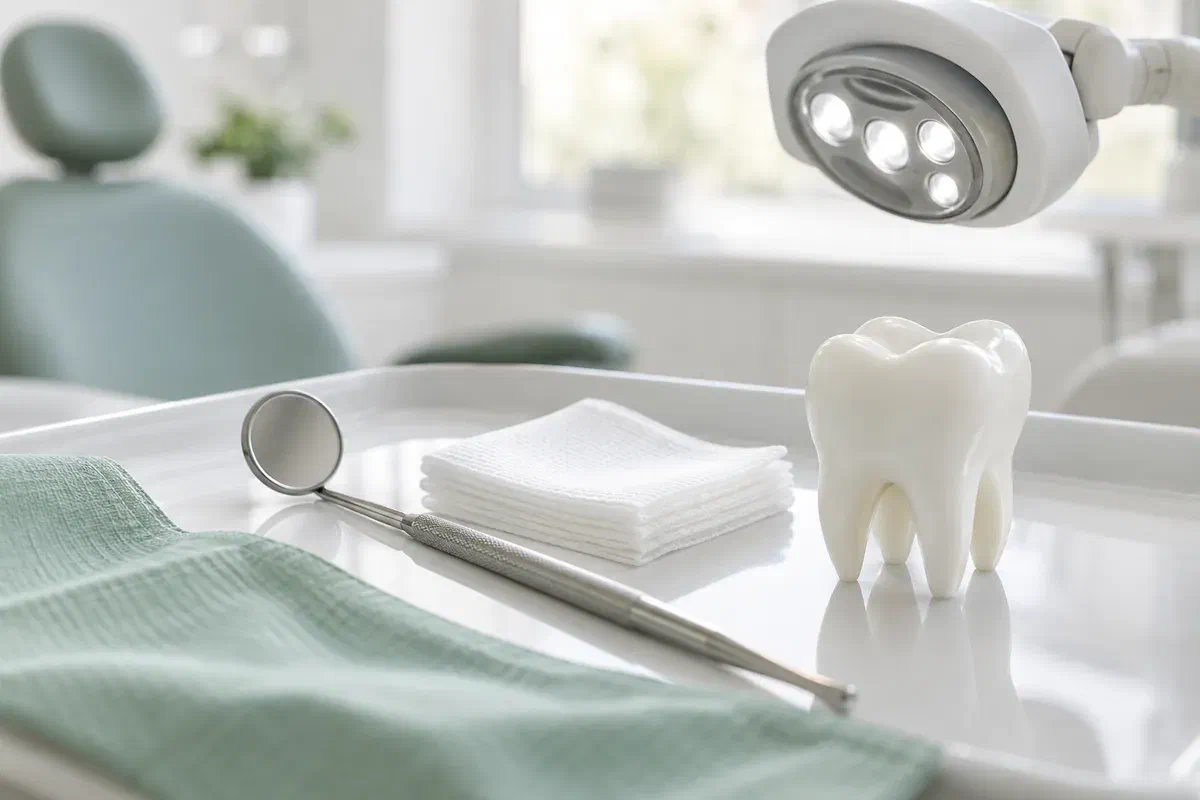
Dental mirror, gauze, examination light, and tooth model illustrating an oral examination
Before you book, note these

Write the change down so nothing is missed on the day.

Unsure if it is a dental issue? Mention it anyway. A change lasting past roughly two weeks warrants assessment, and anything alarming or fast-moving may need someone to look at it sooner, possibly closer to where you live.

Unhealed sores or unusual patches

Note any ulcer that has not healed, a white or red patch, or a section of tissue that feels thicker than the rest. Record whether it bleeds, comes and goes or is spreading. Not hurting is not the same as not mattering.

Lumps, numb spots, or a changed denture fit

Jot down a lump you can feel in the mouth or neck, numbness that stays, or a denture that has begun to sit differently. Several causes are possible, and only examination, sometimes with tests, can tell which one applies.

Changes in chewing, swallowing, or speech

If eating, swallowing, speaking or moving your tongue has become harder, include that. A hoarse voice or throat symptom that lingers may need a family doctor to examine areas a dental exam cannot reach.

Distance is never a reason to wait. For anything worrying, worsening or unexplained, contact a dentist or doctor promptly, including one nearer home, and go to emergency care for trouble breathing or swallowing.

Making the visit worthwhile

Leave with answers, not another question mark.

A focused examination lets the dentist locate the change, record its appearance, go over your history and decide whether investigation is called for. Sometimes a simple irritant like a broken tooth edge explains it. Sometimes the area needs a specialist, who may be closer to you than we are. The point is to come away with a clear explanation and a plan that is honest about what remains uncertain.

No screening check prevents cancer or proves it is absent. It supports early recognition of abnormal tissue and timely follow-up. If a symptom continues after a reassuring appointment, get it reassessed, whether that means another visit here or a check with your doctor, rather than relying on the earlier result.

A timeline brought from home

Arrive knowing when you first noticed the change, whether it has healed and returned and what helps or worsens it. Include earlier lesions and relevant treatment. A written timeline saves time and helps the dentist see the pattern.

A straightforward read on the finding

Ask whether a cause has been identified or whether further information is needed. Noting an area is different from diagnosing it. A clear explanation helps you understand a recheck or referral without assuming the worst.

Follow-up that suits your location

Agree who will contact you, when the next look is needed and what to do if the area changes. If you are referred, ask where and how to follow up if no appointment arrives. A concern should not slip between providers.

On the day

How we use the appointment time.

Tell the dentist about your exact concern at the start. Mention any tender spot or difficulty opening so the examination can be explained and paced comfortably within the visit.

  1. Going over your notes

    We ask about the change, its duration and related symptoms, then about tobacco, alcohol, past lesions and medical treatment. Your answers help guide the exam. A person with no known risk factors should still never brush off a symptom.

  2. Examining the mouth and nearby areas

    The dentist looks at and gently feels the lips, inner mouth, tongue and neighbouring structures as appropriate. Dentures may be taken out. Let us know about tender areas and ask what each part of the check covers.

  3. Deciding what further steps are needed

    A suspicious area should lead promptly to biopsy or specialist referral rather than more routine screening. A biopsy studies a small tissue sample to help establish a diagnosis. The location and circumstances determine where and by whom.

  4. Settling the plan before you head home

    Confirm the next step, who will arrange it and whether any part can happen nearer to you. For a short recheck of a less concerning area, note the date and the changes that mean calling earlier. Persistent symptoms need reassessment.

Back home in Etobicoke

Stay on top of it between trips.

The examination itself seldom needs any recovery. Afterward, the job is to keep recommended reviews or investigations and report changes, rather than treating observation as the end of care.

Keep a running record

Note when symptoms come and whether the area is healing, enlarging or affecting how you eat or talk. Avoid repeatedly checking or pressing it. A photo may help you describe it, though it cannot replace examination or diagnosis.

Book follow-ups early

Schedule the recheck before you leave so it fits your plans, and attend specialist visits even if discomfort is mild. If the area changes sooner, call us or your doctor. Ask how results will be shared, and never take silence as a normal result.

Get help with tobacco or alcohol if useful

If you use tobacco or want to discuss alcohol and oral health, ask for information and support. That can carry on alongside regular care. Changing habits is worthwhile but does not remove the need to investigate a lesion already present.

Possible next steps

Three outcomes, each with its own logistics.

The plan depends on the examination and your history. Ask what each recommendation will clarify, where it will happen and who will confirm it has been completed.

Nothing worrying found

Routine care and paying attention

Continue your usual checkup schedule and report new or ongoing symptoms, to us or to your family doctor. A normal exam reflects that day. It is not lifelong clearance, and a later change still needs to be seen.

Something to recheck soon

A short, scheduled review

The dentist may treat a likely irritant and see whether the tissue heals. The review needs a firm date and a plan if things do not improve. A lasting or worsening area should not be watched indefinitely, however inconvenient the trip.

Findings that need investigating

Specialist assessment or biopsy, promptly

Further assessment may be required to determine what a lesion is. Referral does not mean cancer has been diagnosed. Ask where you will be seen, what records will be sent and how the appointment and results will be tracked.

Questions about the trip from Etobicoke

Practical answers for patients travelling in.

An examination is where understanding a change begins. If anything is unclear, ask, and find out what follow-up will settle the question and where it can happen.

(905) 876-4488
Can the tissue exam happen at the same visit as my cleaning?
Usually, yes. A soft-tissue check is often part of a regular examination. If you have a particular concern, mention it when booking so enough time is set aside to assess it properly during the same trip.
What should I tell the clinic on the phone so the visit is used well?
Describe where the change is, roughly how long you have noticed it and any other symptoms such as bleeding or numbness. That helps us book the right length of appointment and know what to focus on.
Can my family doctor be kept in the loop?
Yes. Let us know who your doctor is. With your consent, findings or referral details can be shared so care stays coordinated, especially if a throat or neck symptom needs a medical assessment.
Who decides where I am referred if I need a specialist?
The referring dentist suggests a suitable specialist based on the finding and the type of assessment needed. You can ask about options and say where it would be practical for you to attend, as long as it does not delay a concerning referral.
Will the dentist record the area so it can be compared later?
The dentist notes the size, location and appearance of a finding, and may take a clinical photo where appropriate. That record helps judge at a recheck whether the area has healed, stayed the same or changed.
A spot is getting worse before my review date. Do I hold on until then?
Contact us or your doctor rather than waiting for the booked date. Growth, bleeding, new numbness or difficulty swallowing all warrant earlier advice. For breathing problems, seek emergency care nearby.
Booking from Etobicoke

Let’s make the trip count.

Call our Bronte Street practice to arrange a tissue examination, on its own or alongside your regular care. Tell us where the change is, how many weeks you have noticed it and any related symptoms. We will examine it and explain whether review, further testing or referral is the right step.

Is the area changing or getting worse? Tell us on the phone rather than through the online form, which is not watched for emergencies. A screening visit does not replace recommended diagnostic follow-up.

Visit Milton Dental Clinic
Unit 1, 342 Bronte St. S, Milton, ON L9T 5B7
Get directions Clinic hours
Monday–Thursday
11am–7pm
Friday–Sunday
By appointment only

Areas we serve

  • Milton
  • Oakville
  • Mississauga
  • Georgetown
  • Halton Hills
  • Acton
  • Campbellville
  • Brampton
  • Burlington
  • Puslinch
  • Rockwood
  • Erin
  • Caledon
  • Etobicoke
  • Old Milton
  • Bronte Meadows
  • Timberlea
  • Dorset Park
  • Dempsey
  • Clarke
  • Beaty
  • Coates
  • Harrison
  • Scott
  • Willmott
  • Ford
  • Bowes
  • Cobden
  • Walker
  • Mountain View
  • Milton Heights
  • Hawthorne Village
  • Valley View
  • Fallingbrook
  • Nassagaweya
  • Trafalgar
  • Esquesing
  • Nelson
  • Brookville
  • Moffat
  • Glen Williams
  • Norval
  • Limehouse
  • Stewarttown
  • Ashgrove
  • Hornby
  • Silver Creek
  • Speyside
  • Scotch Block
  • North Oakville
  • River Oaks
  • Glen Abbey
  • West Oak Trails
  • Palermo
  • Bronte Creek
  • College Park
  • Joshua Creek
  • Uptown Core
  • Preserve
  • Iroquois Ridge
  • Lisgar
  • Meadowvale
  • Meadowvale Village
  • Churchill Meadows
  • Erin Mills
  • Central Erin Mills
  • Streetsville
  • East Credit
  • Creditview
  • Heartland
  • Sheridan
  • Mount Pleasant
  • Credit Valley
  • Huttonville
  • Churchville
  • Springbrook
  • Northwest Brampton
  • Bram West
  • Fletcher's Meadow
  • Fletcher's Creek South
  • Alton Village
  • Orchard
  • Millcroft
  • Headon Forest
  • Tansley
  • Brant Hills
  • Tyandaga
  • Kilbride
  • Lowville
  • Aberfoyle
  • Morriston
  • Arkell
  • Hillsburgh
  • Freelton
  • Carlisle
  • Waterdown
  • Flamborough
  • Mountsberg

How can we help?

Milton Dental Clinic

Have a question about your smile? Choose the option that works best for you.

For urgent dental concerns, please call.
Messages are reviewed during clinic hours.