

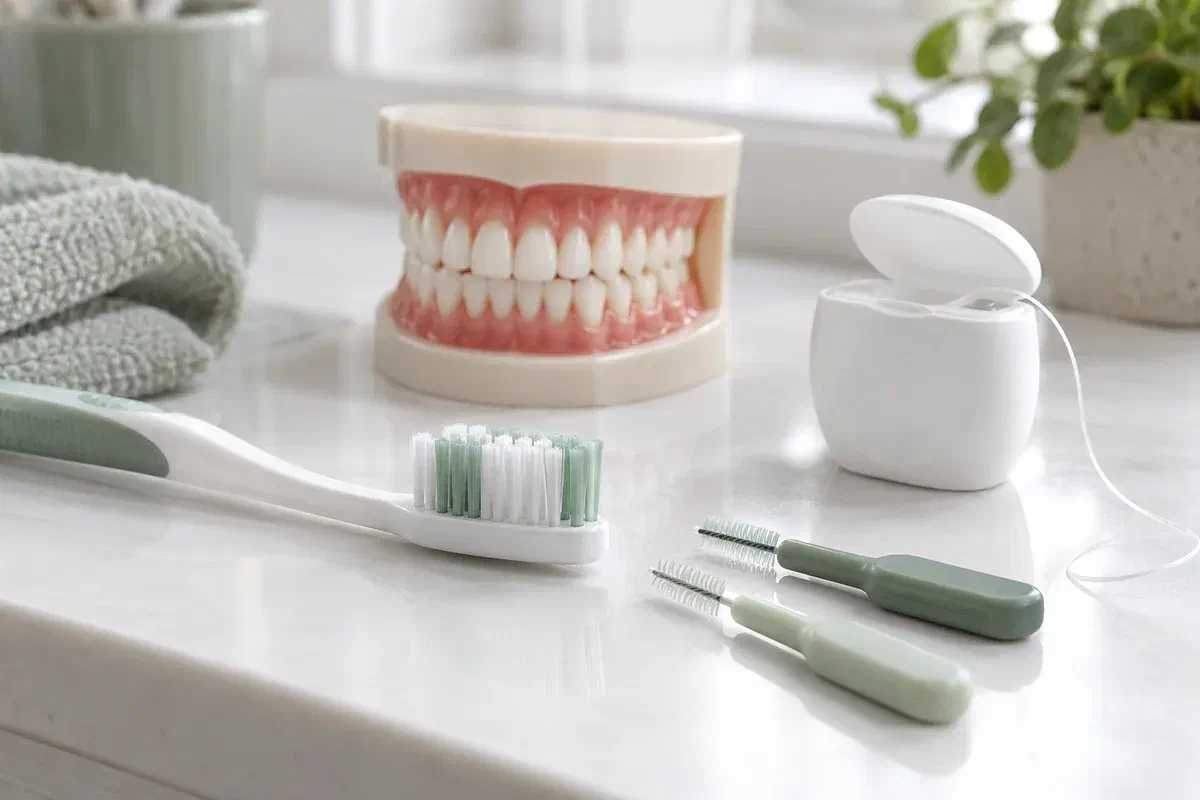
Illustrative brushing demonstration using a dental model
General & Family Dentistry

Oral Hygiene Instruction

Make your daily cleaning routine easier to understand and carry out. Oral hygiene instruction in Milton offers practical demonstrations and advice matched to your teeth, dental work, and abilities.

A closer look at oral hygiene instruction

Learn a routine that works in your own mouth.

Knowing that brushing and cleaning between teeth matter is not always the same as knowing how to do them comfortably. A crowded area, bridge, sensitive gumline, or awkward hand movement can make general advice difficult to apply. Oral hygiene instruction turns that advice into specific steps you can practise.

At Milton Dental Clinic, start by showing us what you use and describing the part that causes trouble. You may be cleaning regularly but missing a surface, using a tool that does not fit, or pressing harder because the area never feels clean. The goal is to understand the barrier and adjust the routine, without blame.

Instruction can be part of ongoing dental or hygiene care and should reflect the examination. A demonstration, a chance to try the technique, and a simple plan can make the guidance easier to remember. You do not need to replace every product at once or master a complicated sequence before making a useful improvement.

Ask for help with your cleaning routine
Soft toothbrush, interdental brushes, floss, and dental model for personal care instruction
Where personal guidance can help

Focus on the step that keeps getting in the way.

Tell the team what happens when you clean, including any pain, catching, gagging, or frustration. A specific example helps us distinguish a technique issue from a problem that needs further assessment.

A space that is difficult to reach

Crowded teeth, a bridge, or another restoration can change the route a cleaning aid needs to take. Ask for the area to be identified and demonstrated. A technique that works between two natural teeth may not be the right method under a bridge.

Bleeding or discomfort with cleaning

Mention where bleeding occurs and whether the area is tender. Gum inflammation, a rough restoration, or forceful technique may need consideration. Do not assume every problem can be corrected simply by brushing harder or changing to a stronger mouthwash.

Grip, stamina, or sensory difficulties

Hand discomfort, limited reach, fatigue, or sensitivity to flavour can affect daily care. Explain what you can manage comfortably. The plan should consider suitable tools, pacing, and support instead of expecting the same routine from everyone.

Bring your usual toothbrush or describe the tools you use. Showing the actual difficulty can be more useful than trying to remember whether your technique matches an instruction you once received.

What personal instruction adds

Turn a broad recommendation into a repeatable skill.

Daily plaque removal depends on reaching the relevant surfaces with an effective, gentle technique. Brushing and cleaning between teeth do different jobs. Instruction helps you understand that difference and select a method suited to the spaces, dental work, and practical needs in your mouth.

The best explanation also checks whether it makes sense to you. Ask to practise or demonstrate the movement back to the team. If a method feels unrealistic, say so while there is an opportunity to adapt it. A manageable routine is more useful than a detailed plan that is abandoned after a few days.

Patient information: NIDCR — oral hygiene techniques and daily care

A reason for each recommended step

Ask which surface or problem a technique is intended to address. Understanding the purpose makes it easier to remember the movement and recognize when a tool is not reaching the intended area. It also helps avoid adding products without a clear need.

Tools chosen for the actual space

Interdental brushes, floss, holders, and other aids have different uses. Size and access matter, particularly around dental work. A recommendation should include how to use the tool and when it would be unsuitable to force it through.

Feedback on progress

A later review can check whether deposits, gum inflammation, or the practical difficulty have improved. Tell the team what was easy to maintain and what was not. The routine can be adjusted rather than treating the first recommendation as a permanent test you must pass.

How the guidance is developed

Show, practise, and refine the steps together.

The conversation works best when the team understands what you currently do. Be candid about habits and barriers; the purpose is to make care more effective, not to judge your routine.

  1. Identify the concern and current method

    We ask how you brush, how you clean between teeth, and which areas are difficult. Mention discomfort, appliances, recent dental work, and any help you receive. The relevant oral findings help establish whether instruction alone is appropriate or treatment is also needed.

  2. Demonstrate a suitable technique

    The team can explain brush placement, movement, and how to approach a particular space. A model, mirror, or direct demonstration may help. Ask for the instructions to focus on the area you find confusing rather than only a general description of the whole mouth.

  3. Check that you can use the method

    Try the movement or explain it back so unclear details can be corrected. Tell us if a handle is awkward, the aid catches, or a step causes discomfort. An alternative may be more appropriate than expecting you to persist with a poorly fitting tool.

  4. Choose priorities and arrange review

    Agree a manageable set of changes and clarify any product recommendations. Ask when improvement should be reviewed and which symptoms need earlier contact. Written notes can help you remember the route around a bridge or the size of a recommended aid.

Putting the instruction into practice

Aim for a steady routine that feels controlled.

Follow the advice developed for your mouth and make room to ask for adjustments. More pressure, more products, or a longer session is not automatically more effective.

Use a consistent brushing approach

Brush with fluoride toothpaste and pay attention to the surfaces demonstrated at your appointment. Work systematically so areas are not missed when you are rushed. If the bristles splay quickly or brushing hurts, ask the team to review pressure and technique.

Clean between teeth without forcing the tool

Use an appropriate aid and the method shown for each relevant area. Different spaces may require different sizes or approaches. Report a tool that repeatedly catches or causes pain; the solution may involve technique, fit, or assessment of the tooth or restoration.

Keep the plan realistic on difficult days

If fatigue, illness, or a change in ability makes your routine harder, ask how to adapt it. A support person may help with agreed tasks where appropriate. Do not assume an unfamiliar product can replace the necessary cleaning simply because it is easier to use.

Patient information: NIDCR — cleaning between teeth and the role of professional care

Choosing the kind of support

Match the guidance to the barrier you are facing.

The right approach may involve a small technique change, a different tool, or help with an appliance. The examination helps identify when professional treatment is also required.

When the routine needs refinement

Brushing and interdental technique

Personal instruction can focus on brush position, cleaning sequence, and reaching the gumline and spaces between teeth. Ask for one area to be demonstrated clearly before adding more steps. The aim is effective daily practice rather than memorizing product names.

When the shape of dental work changes access

Care around restorations or appliances

Bridges, implants, and other dental work may need specific methods suited to their design. Ask which tools are appropriate and how to avoid catching or damaging components. Advice should be based on your actual restoration, not a generic diagram alone.

When comfort or ability affects the task

Adapted or assisted daily care

A different handle, powered brush, alternative aid, or agreed support routine may be discussed. Include the person who helps you if you want them involved. The plan should preserve your participation and respect any medical or swallowing instructions.

Questions about learning a better routine

Ask for a demonstration you can follow at home.

There is no need to pretend a technique is clear when it is not. Explain what feels awkward and ask the team to adapt the advice to your mouth and abilities.

(905) 876-4488
Can oral hygiene instruction help even if I already brush twice every day?
Yes. Frequency is only one part of cleaning. The team can review whether the technique reaches the intended surfaces and whether care between teeth is effective. A small change in position, sequence, or tool choice may address an area that regular brushing misses.
How do I know which interdental brush size to use in different spaces?
Ask the dental team to assess the spaces and demonstrate suitable sizes. One brush may not fit every area. It should not be forced through a tight space, and discomfort or catching should be reviewed rather than treated as proof that more pressure is needed.
Should a cleaning demonstration be different for a bridge than for natural tooth contacts?
Often, yes. The route beneath a bridge and around its supporting teeth differs from a normal contact between separate teeth. Ask for the method to be shown on your restoration and confirm which aid is appropriate. Report any area where the tool catches or cannot pass.
Can mouthwash replace a brushing or interdental step I find difficult?
A rinse is not a general substitute for mechanically removing plaque from tooth surfaces and between teeth. If a step is difficult, ask for an adapted method or suitable aid. A rinse may have a specific role when recommended, but that role should be explained.
Will better home technique remove hardened tartar that is already on my teeth?
Hardened tartar requires professional removal. Instruction helps you manage daily plaque and maintain areas after professional care, but it does not replace cleaning or periodontal treatment when those are needed. Ask which deposits are present and what care is appropriate.
Can I return for help if the technique looked easy at the clinic but feels awkward at home?
Yes. Explain which movement, angle, or tool is causing difficulty and bring the item if useful. The team can review the method and consider alternatives. Advice should be workable in your routine, and needing another demonstration is a reasonable part of learning.
Oral hygiene instruction in Milton

Let’s make the difficult part of your routine easier.

Contact our Bronte Street practice to discuss brushing, interdental cleaning, or care around dental work. Bring your questions and describe the area you struggle with. We can assess the concern and provide practical guidance connected to your everyday needs.

Mention pain, bleeding, or a new oral change when booking so assessment can be considered alongside instruction.

Visit Milton Dental Clinic
Unit 1, 342 Bronte St. S, Milton, ON L9T 5B7
Get directions Clinic hours
Monday–Thursday
11am–7pm
Friday–Sunday
By appointment only

How can we help?

Milton Dental Clinic

Have a question about your smile? Choose the option that works best for you.

For urgent dental concerns, please call.
Messages are reviewed during clinic hours.