

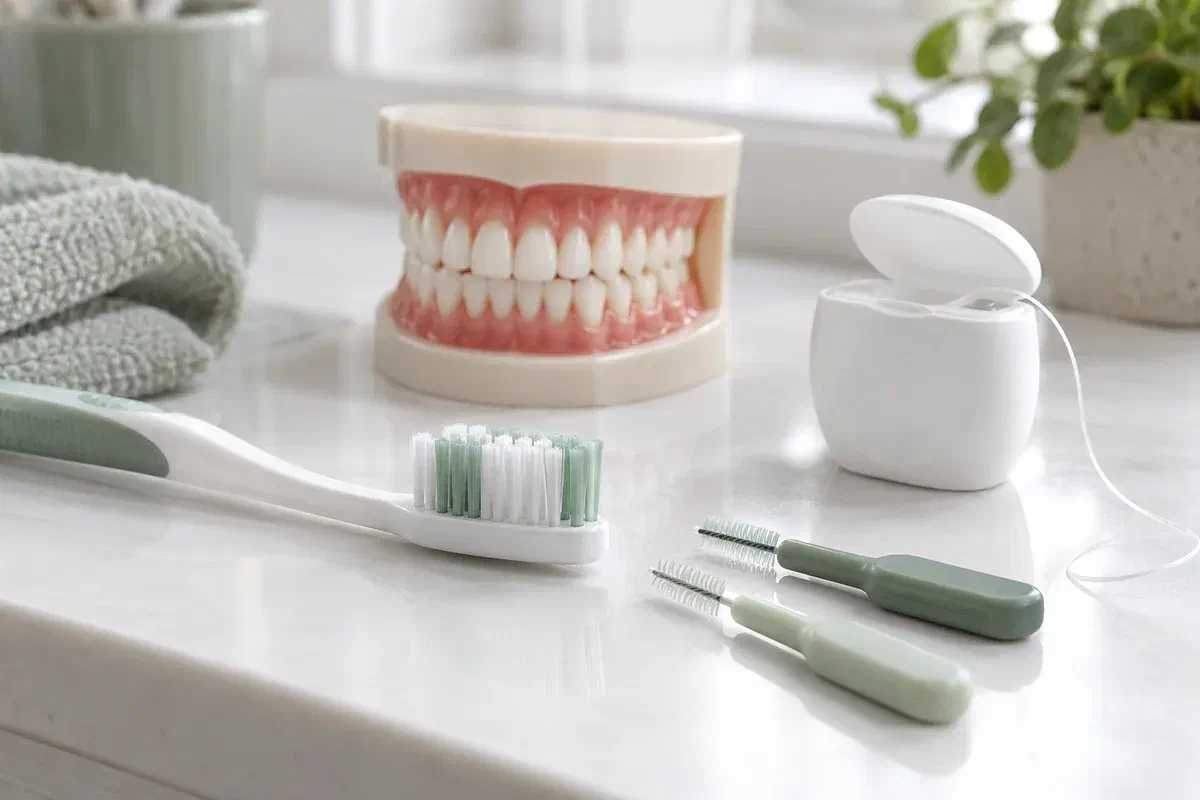
Illustrative brushing demonstration using a dental model
General & Family Dentistry

Oral Hygiene Instruction in Old Milton

A routine learned decades ago may not suit the crowns, bridges and fillings you have now. Personal instruction updates the way you clean so it fits the mouth you have today, at a pace that feels comfortable.

Updating a long-held routine

Your teeth have changed over the years. Your routine can too.

Many of us were shown how to brush once, as children, and have repeated the same motions ever since. Meanwhile the mouth keeps changing. A crown gets added here, a bridge there, a filling alters the contour between two teeth. Methods that suited a younger set of teeth can quietly start missing surfaces that matter now.

For people around Old Milton who have been with the same habits for a long time, the first step is simply showing us what you do. Bring your brush and any floss or picks you use. We look at the spots that cause trouble and work out what is getting in the way, without any suggestion that you have been doing it wrong.

Instruction sits alongside your regular dental and hygiene visits and takes its direction from the examination. Expect a demonstration, a chance to try it, and a short plan. Nobody needs to relearn everything in one sitting, and keeping familiar tools is often fine if they still reach where they should.

Arrange a routine review
Soft toothbrush, interdental brushes, floss, and dental model for personal care instruction
Where older routines slip

Places a familiar method tends to miss

Let us know what cleaning feels like for you, including discomfort, catching, gagging or plain annoyance. A real example helps us separate a technique issue from a problem that calls for further assessment.

Spaces altered by dental work

A bridge, crown or larger filling can change the path floss or a brush has to follow. We can identify those areas and show the way in. Cleaning beneath a bridge is usually a different task from cleaning between two natural teeth.

Tenderness or bleeding at the gumline

Point out where bleeding appears and whether it feels sore. Possible causes include gum inflammation, a rough margin on older dental work or a technique that is too firm. Brushing harder or switching to a stronger rinse is not a reliable answer by itself.

Stiff joints, tired hands or a sensitive palate

Arthritis, reduced reach, fatigue or dislike of a toothpaste flavour can all affect daily care. Tell us what feels manageable. The plan can involve different tools, a gentler pace and help from family rather than one fixed routine for everyone.

Please bring the brush and aids you use at home. Seeing your actual technique is usually more helpful than trying to remember how you were taught years ago.

What a refresher can offer

Fresh eyes on an old habit

Daily plaque control relies on reaching the right surfaces with a gentle, effective motion. Brushing cleans the outer faces of teeth while interdental aids work in between, so each has its own role. Guidance helps you see that split clearly and choose methods that suit your spacing, restorations and physical comfort.

We also want to make sure the explanation makes sense to you. Try the motion in the chair or talk us through it. If any step feels unlikely to happen at home, tell us right away so we can rework it. Something simple that you keep up will serve you better than a long plan you set aside.

Patient information: NIDCR — oral hygiene techniques and daily care

Knowing why each step is there

Ask what a given movement is meant to reach. When the purpose is clear, the technique sticks, and you can tell when an aid is not doing its job. It also keeps the bathroom shelf from filling with products that serve no clear purpose.

Aids sized for your mouth

Interdental brushes, floss, floss holders and similar tools each have their place. Fit and access are particularly important around older restorations. You should hear how to use each one and when not to push it through a tight space.

Progress you can see

A follow-up can show whether plaque or gum inflammation has settled and whether the practical difficulty has eased. Share what was easy to keep up and what wasn't. The routine can be revised as needed, without treating the first version as a final verdict.

Step by step at our Bronte Street practice

From your current habits to a revised routine

We get furthest when we know what you do now. Please be open about habits and obstacles, since the aim is more effective care and never a critique of your routine.

  1. Hear about your routine and history

    We ask how you brush, what you use between teeth and which areas are difficult. Tell us about pain, dentures or other appliances, recent work and any help you get. Findings from the exam show whether instruction is enough or treatment is needed too.

  2. Show the technique clearly

    We demonstrate placement, motion and how to approach a particular space, using a model, a mirror or your own teeth. Ask us to concentrate on the area that puzzles you rather than offering a broad tour of the whole mouth.

  3. Have you practise

    You try the movement or explain it back, which lets us catch any unclear details. Mention if a handle is hard to hold, an aid catches or something causes discomfort. Another option may suit you better than persisting with a tool that fits badly.

  4. Settle on priorities and a check-in

    We agree a few manageable changes and clarify any product suggestions. Ask when we should look again and which symptoms mean calling earlier. A written reminder can help with the route around a bridge or the size of the brush we suggested.

Making the update stick

Calm, controlled cleaning every day

Use the approach we developed for you and come back with questions whenever they arise. Extra force, extra products or a longer session do not automatically mean a better result.

Brush the same way each time

Use fluoride toothpaste and give particular attention to the surfaces we demonstrated. A consistent route around the mouth helps you avoid missing areas on busy days. If brushing hurts or the bristles flatten quickly, let us check your pressure and method.

Guide the aid gently into each space

Use the tool and technique chosen for each area. Some gaps need a different size or approach from others. If something keeps catching or causes pain, report it, since the cause could be technique, fit or a problem with the tooth or restoration itself.

Adapt when health gets in the way

If illness, tiredness or a change in mobility makes cleaning harder, ask how to adjust the routine. A family member or carer may help with agreed tasks where appropriate. A more convenient product does not automatically replace the cleaning your mouth needs.

Patient information: NIDCR — cleaning between teeth and the role of professional care

Support suited to Old Milton households

Different barriers call for different help

The answer could be a modest technique change, a new tool or help cleaning around dental work. The examination shows when treatment is also needed.

When an established routine needs tuning

Brushing and between-teeth refinement

We can focus on brush angle, the order you work in and reaching the gumline and the spaces between teeth. Ask us to demonstrate one area well before moving on. Effective daily habits matter far more than knowing product names.

When restorations change the way in

Cleaning around crowns and bridges

Bridges, implants and other work often need methods matched to their design. Ask which aids suit yours and how to avoid catching or damaging any part. Advice should come from your actual restoration, not a diagram.

When comfort or mobility affects cleaning

Adapted or assisted routines

We might discuss a larger handle, a powered brush, another type of aid or a routine shared with a helper. That person is welcome to attend. You remain at the centre of the plan, and medical or swallowing instructions still apply.

Old Milton questions

Is it worth changing a habit this old?

Say so if a demonstration doesn't make sense yet. Tell us what feels awkward and we'll adjust the advice to your teeth and abilities.

(905) 876-4488
I've brushed the same way for decades. Is it really worth changing now?
It can be, particularly if dental work has been added over the years. Crowns, bridges and fillings can change the spaces your brush and floss need to reach. Often a small adjustment is enough, and we’ll focus on the areas that matter rather than rebuilding everything.
Is floss or an interdental brush better for me?
That depends on the size of the spaces and the dental work around them. Floss may suit tight contacts, while small brushes may suit wider gaps. Ask us to assess your spaces and demonstrate the options, so you can see which one reaches properly without being forced.
What is the right way to get underneath a fixed bridge?
The route under a bridge and around the teeth that support it differs from cleaning a normal contact. We can show the method on your own bridge and suggest a suitable aid. Let us know about any spot where the tool snags or will not pass.
Can my spouse or a family member come in to learn the routine with me?
Yes, if you would like them there. A helper can learn the steps you agree on and support you on harder days. The plan should still keep you involved as much as you want and respect any medical or swallowing guidance you have been given.
Would a stronger mouthwash make up for areas I struggle to reach?
A rinse cannot physically remove plaque from tooth surfaces or between teeth the way brushing and interdental cleaning do. If a step is difficult, ask for an adapted method or a different aid. A rinse can have a specific role when recommended, and that role should be explained to you.
Will you write the steps down so I don't forget them?
We can. Written notes can help you remember the route around a bridge, the order of steps or the size of a recommended brush. Ask for whatever format is easiest for you to follow, and bring the notes back if anything becomes unclear.
Near Milton's historic downtown

A short visit can refresh a lifelong habit.

Reach out to our Bronte Street practice, close to the historic core of Old Milton, to talk about brushing, interdental cleaning or caring for crowns and bridges. Tell us which area is troublesome. We'll assess it and offer practical guidance that fits your daily routine.

When you book, mention any pain, bleeding or new change in your mouth so it can be assessed along with the instruction.

Visit Milton Dental Clinic
Unit 1, 342 Bronte St. S, Milton, ON L9T 5B7
Get directions Clinic hours
Monday–Thursday
11am–7pm
Friday–Sunday
By appointment only

Areas we serve

  • Milton
  • Oakville
  • Mississauga
  • Georgetown
  • Halton Hills
  • Acton
  • Campbellville
  • Brampton
  • Burlington
  • Puslinch
  • Rockwood
  • Erin
  • Caledon
  • Etobicoke
  • Old Milton
  • Bronte Meadows
  • Timberlea
  • Dorset Park
  • Dempsey
  • Clarke
  • Beaty
  • Coates
  • Harrison
  • Scott
  • Willmott
  • Ford
  • Bowes
  • Cobden
  • Walker
  • Mountain View
  • Milton Heights
  • Hawthorne Village
  • Valley View
  • Fallingbrook
  • Nassagaweya
  • Trafalgar
  • Esquesing
  • Nelson
  • Brookville
  • Moffat
  • Glen Williams
  • Norval
  • Limehouse
  • Stewarttown
  • Ashgrove
  • Hornby
  • Silver Creek
  • Speyside
  • Scotch Block
  • North Oakville
  • River Oaks
  • Glen Abbey
  • West Oak Trails
  • Palermo
  • Bronte Creek
  • College Park
  • Joshua Creek
  • Uptown Core
  • Preserve
  • Iroquois Ridge
  • Lisgar
  • Meadowvale
  • Meadowvale Village
  • Churchill Meadows
  • Erin Mills
  • Central Erin Mills
  • Streetsville
  • East Credit
  • Creditview
  • Heartland
  • Sheridan
  • Mount Pleasant
  • Credit Valley
  • Huttonville
  • Churchville
  • Springbrook
  • Northwest Brampton
  • Bram West
  • Fletcher's Meadow
  • Fletcher's Creek South
  • Alton Village
  • Orchard
  • Millcroft
  • Headon Forest
  • Tansley
  • Brant Hills
  • Tyandaga
  • Kilbride
  • Lowville
  • Aberfoyle
  • Morriston
  • Arkell
  • Hillsburgh
  • Freelton
  • Carlisle
  • Waterdown
  • Flamborough
  • Mountsberg

How can we help?

Milton Dental Clinic

Have a question about your smile? Choose the option that works best for you.

For urgent dental concerns, please call.
Messages are reviewed during clinic hours.