

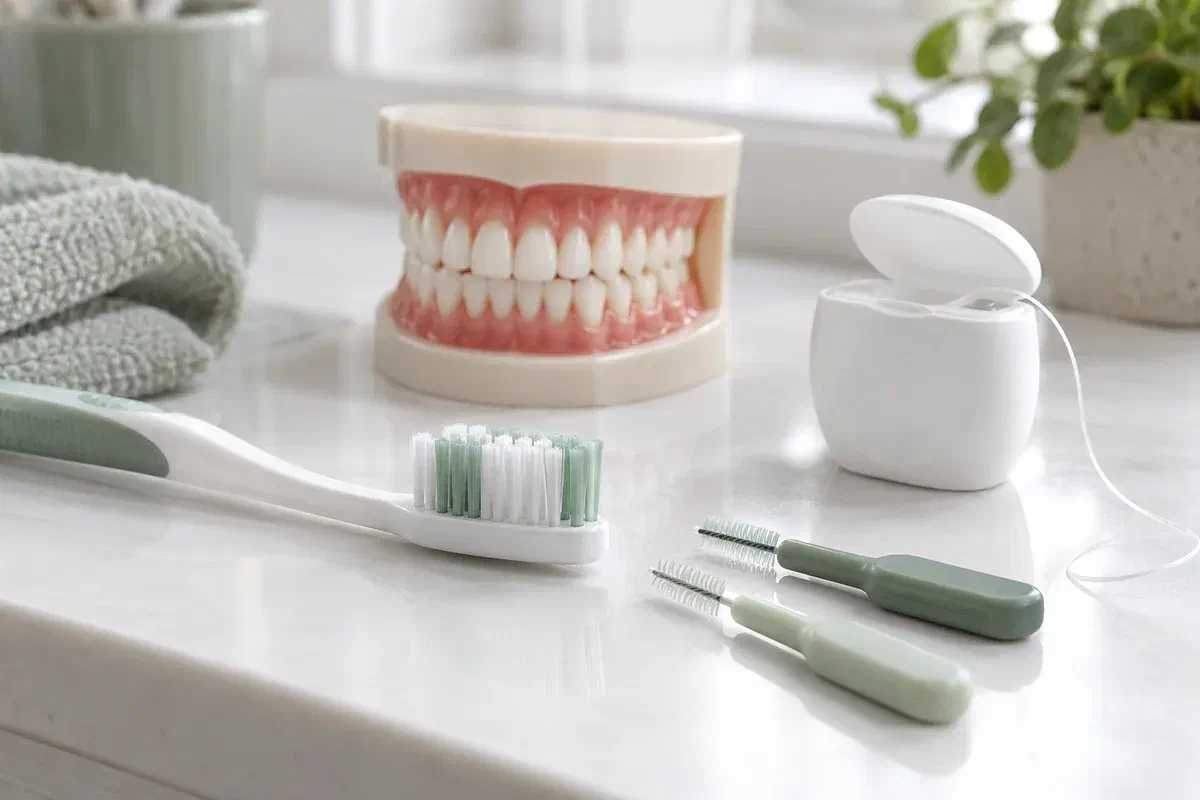
Illustrative brushing demonstration using a dental model
General & Family Dentistry

Oral Hygiene Instruction in Puslinch

Electric or manual, soft or medium, round head or small: the choice of brush matters less than how you use it. We help you pick sensibly and show the technique that suits your teeth and any dental work.

Choosing and using a toothbrush

Manual or powered? Start with technique.

It's one of the most common questions we're asked: is it time to get an electric toothbrush? The honest answer depends on your hands, your mouth and how you use whichever brush you have. A powered brush held at the wrong angle misses surfaces too, while a manual brush used carefully can do a good job.

For people across Puslinch township who prefer to settle a question like this in one visit, bring the brush you use now and any you're considering. We'll watch your technique, look at the areas where plaque collects and explain what would actually make a difference. You'll get straight answers and no pressure to buy anything.

Instruction is part of ongoing dental and hygiene care and is guided by the examination. You can watch a demonstration, try each option and leave with a short plan. There's no need to replace your brush, floss and rinse at once, and keeping your current tools is often perfectly reasonable.

Get advice on brushes and technique
Soft toothbrush, interdental brushes, floss, and dental model for personal care instruction
Questions behind the brush choice

What's really prompting the change?

Tell us what made you start wondering: a missed area, sore gums, tired hands, gagging or frustration. A concrete reason helps us see whether a new brush, a technique change or a closer examination is the right response.

Areas no brush seems to reach

Crowding, a bridge or another restoration can block bristles of any kind. Often an interdental aid is what's missing, not a new brush. We'll show you the area and how to clean it. Beneath a bridge, the method differs from cleaning between natural teeth.

Gums that bleed or feel sore

Show us where bleeding occurs and whether the gum is tender. Inflamed gum tissue, an uneven filling margin or pressing too hard may be involved. A firmer brush, more scrubbing or a stronger rinse is not the reliable answer.

Hands, energy and sensory comfort

Stiff fingers, a limited reach, fatigue or sensitivity to vibration or flavour all affect which brush suits you. Tell us what feels comfortable. We'll weigh handle size, brush type, pacing and help from others.

Bring your current toothbrush, and any powered brush you own or are thinking about. Seeing them in your hand is the quickest way to compare.

Why the demonstration beats the box

The best brush is the one you use well.

Daily plaque removal depends on reaching the right surfaces with a gentle, effective motion, and that's true of any brush. Interdental aids then handle the spaces bristles can't reach. Seeing how the two fit together helps you decide whether a new brush adds anything, or whether the gap is elsewhere in your routine.

We'll ask you to try the technique with the brush you have, and with any alternative, so you can feel the difference yourself. If one feels awkward or unlikely to last, say so. A comfortable routine that suits your hands will outlast a fancy gadget you leave in the drawer.

Patient information: NIDCR — oral hygiene techniques and daily care

Clarity about each tool's role

Ask what a brush or aid is supposed to clean. With the purpose clear, you'll use it properly and notice when it isn't reaching. It also saves money on products you don't need.

Sizes and heads that fit

Brush heads, interdental brushes, floss and holders suit different mouths and spaces, and dental work changes access. We'll show how to use each and when not to force an aid through a tight gap.

Follow-up to confirm the choice

Once you've used your chosen brush for a while, a later visit lets us check your gums and plaque and ask how the routine has felt. Tell us how it's gone. Adjusting is normal.

How we compare options with you

Try before you decide

Knowing what you do now helps us give a fair comparison. Be honest about habits and frustrations; we're here to make care easier, not to judge.

  1. Talk about your current brush and routine

    We ask what kind of brush you use, how you hold it, what you do between teeth and which areas bother you. Let us know about soreness, any appliance, treatment you've had lately and whether anyone assists you. The examination shows whether instruction alone suits or treatment is needed.

  2. Demonstrate both approaches

    We show how a manual brush is angled and moved, and how a powered brush is guided rather than scrubbed, using a model, a hand mirror or your mouth. We'll focus on the areas you find hardest.

  3. Let you test each one

    You try the technique while we watch and refine it. Tell us if a handle feels bulky, vibration is uncomfortable or something hurts. Choosing the option that feels manageable is more important than the price tag.

  4. Decide and plan a review

    We agree on a brush and a few changes, and explain any product suggestions by feature rather than brand. Ask when we should review progress and which symptoms mean calling sooner.

Settling into your choice

Let the bristles do the work.

Use the method we agreed and come back if it doesn't feel right. Pressing harder, adding products or brushing longer won't automatically give a better result.

A light, methodical brush

Use fluoride toothpaste and move through the surfaces we demonstrated in the same order each time. With a powered brush, guide it slowly rather than scrubbing. If bristles fray quickly or brushing hurts, ask us to check your pressure.

Don't forget between the teeth

Even the most advanced brush doesn't replace interdental cleaning. Use the aid chosen for each space, and never force it. If one keeps catching or causes pain, tell us, since the cause could be technique, size or the tooth or restoration itself.

A plan for low-energy days

Colds, long workdays or a sore shoulder can all make brushing feel like a chore. Ask how to keep the essentials going. Someone at home might help with agreed steps. An easier product isn't automatically a stand-in for thorough cleaning.

Patient information: NIDCR — cleaning between teeth and the role of professional care

Help for Puslinch households

Brush choice is only one piece.

A different stroke, an extra aid or a method for your restorations may matter more than the brush itself. We'll say so if the exam points to treatment as well.

When the method matters more than the brush

Brushing and interdental technique

We can refine angle, sequence and how you reach the gumline and spaces between teeth with whichever brush you choose. Ask us to show one area clearly first. The aim is good daily practice, not loyalty to a brand.

When dental work affects the choice

Restorations and appliances

Bridges, implants and other restorations may need specific aids alongside your brush. Ask which suit yours and how to clean without snagging any part. Advice should come from your actual dental work.

When comfort or grip shapes the decision

Adapted or assisted brushing

A built-up grip, a rechargeable brush, a long-handled interdental tool or a family member's help are all on the table. They can join you. You remain involved, and medical or swallowing guidance is respected.

Puslinch questions about toothbrushes

Brushes, bristles and buying decisions

If you're still unsure after trying both, tell us. We'll go over it again and help you choose what fits your mouth and hands.

(905) 876-4488
Is an electric toothbrush worth it, or is my manual brush fine?
Either can clean well when used properly. A powered brush may help some people, particularly with limited grip, while others do well with a manual one. We can watch your technique with each and help you decide based on your mouth and comfort.
Do I need to change my technique if I switch to a powered brush?
Usually, yes. A powered brush is generally guided slowly from tooth to tooth rather than moved back and forth. Ask us to demonstrate with your brush, then try it while we watch, so you can feel the difference before relying on it.
Which bristle firmness should I choose?
Soft bristles are commonly recommended, and a gentle technique matters most. A firmer brush won’t make up for missed areas and may be harder on the gums. Bring your brush and we can check whether it suits you.
How should I store my toothbrush and aids between uses?
Rinsing them after use and letting them air-dry is common advice, and it’s best not to share them. Replace a brush when the bristles fray. Ask the team if you have questions about caring for a powered brush head or other aids.
Can I bring my electric toothbrush to the appointment?
Yes, please do. Seeing how you use your own brush is the most useful way to adjust technique. Bring any interdental aids as well so we can look at your whole routine in one go.
Will you tell me exactly which brush to buy?
We’ll explain the features that suit your mouth and hands, such as head size, bristle type or handle shape, rather than promoting a brand. That way you can choose from what’s available and know what to look for when replacing it.
Planning a visit from Puslinch

Settle the toothbrush question in one appointment.

Contact our Bronte Street practice to ask about brush choice, brushing technique, interdental cleaning or dental work. Bring the brushes you're comparing. We'll assess your mouth and give practical, unbiased guidance you can use every day.

If anything hurts, bleeds or feels newly different in your mouth, mention it when booking so it can be checked as well.

Visit Milton Dental Clinic
Unit 1, 342 Bronte St. S, Milton, ON L9T 5B7
Get directions Clinic hours
Monday–Thursday
11am–7pm
Friday–Sunday
By appointment only

Areas we serve

  • Milton
  • Oakville
  • Mississauga
  • Georgetown
  • Halton Hills
  • Acton
  • Campbellville
  • Brampton
  • Burlington
  • Puslinch
  • Rockwood
  • Erin
  • Caledon
  • Etobicoke
  • Old Milton
  • Bronte Meadows
  • Timberlea
  • Dorset Park
  • Dempsey
  • Clarke
  • Beaty
  • Coates
  • Harrison
  • Scott
  • Willmott
  • Ford
  • Bowes
  • Cobden
  • Walker
  • Mountain View
  • Milton Heights
  • Hawthorne Village
  • Valley View
  • Fallingbrook
  • Nassagaweya
  • Trafalgar
  • Esquesing
  • Nelson
  • Brookville
  • Moffat
  • Glen Williams
  • Norval
  • Limehouse
  • Stewarttown
  • Ashgrove
  • Hornby
  • Silver Creek
  • Speyside
  • Scotch Block
  • North Oakville
  • River Oaks
  • Glen Abbey
  • West Oak Trails
  • Palermo
  • Bronte Creek
  • College Park
  • Joshua Creek
  • Uptown Core
  • Preserve
  • Iroquois Ridge
  • Lisgar
  • Meadowvale
  • Meadowvale Village
  • Churchill Meadows
  • Erin Mills
  • Central Erin Mills
  • Streetsville
  • East Credit
  • Creditview
  • Heartland
  • Sheridan
  • Mount Pleasant
  • Credit Valley
  • Huttonville
  • Churchville
  • Springbrook
  • Northwest Brampton
  • Bram West
  • Fletcher's Meadow
  • Fletcher's Creek South
  • Alton Village
  • Orchard
  • Millcroft
  • Headon Forest
  • Tansley
  • Brant Hills
  • Tyandaga
  • Kilbride
  • Lowville
  • Aberfoyle
  • Morriston
  • Arkell
  • Hillsburgh
  • Freelton
  • Carlisle
  • Waterdown
  • Flamborough
  • Mountsberg

How can we help?

Milton Dental Clinic

Have a question about your smile? Choose the option that works best for you.

For urgent dental concerns, please call.
Messages are reviewed during clinic hours.