

Illustrative conversation about an individual preventive dental plan
General & Family Dentistry

Personalized Preventive Dentistry in Oakville

Rinses, specialty pastes, water flossers and whitening strips can crowd a bathroom shelf without solving much. If you are coming from Oakville, we can sort which steps truly suit your mouth and build a plan around them.

Sorting the shelf, Oakville edition

Which of those products is doing anything for you?

Most of us buy dental products in hope: a rinse that promises fresher breath, a paste for sensitivity, a gadget a friend swore by. Some are useful, some overlap, and a few may not suit your mouth at all. Without knowing what your teeth and gums actually need, it is hard to tell which ones are earning their place.

A personalized plan begins with you rather than the shopping list. Past cavities, gum condition, saliva flow, medicines, restorations and daily habits all help show where risk sits. We ask what you use, what you skip and what feels like a chore, then look for the handful of priorities most likely to help. Nobody needs to feel guilty about the occasional treat.

From there the plan might combine home-care guidance, professional cleaning, chosen protective measures and a date to reassess. Each element should have a stated purpose and fit a realistic day. Prevention lowers risk, but it cannot guarantee a problem-free future, nor can it stand in for treating decay or gum disease you already have.

Plan prevention around your own needs
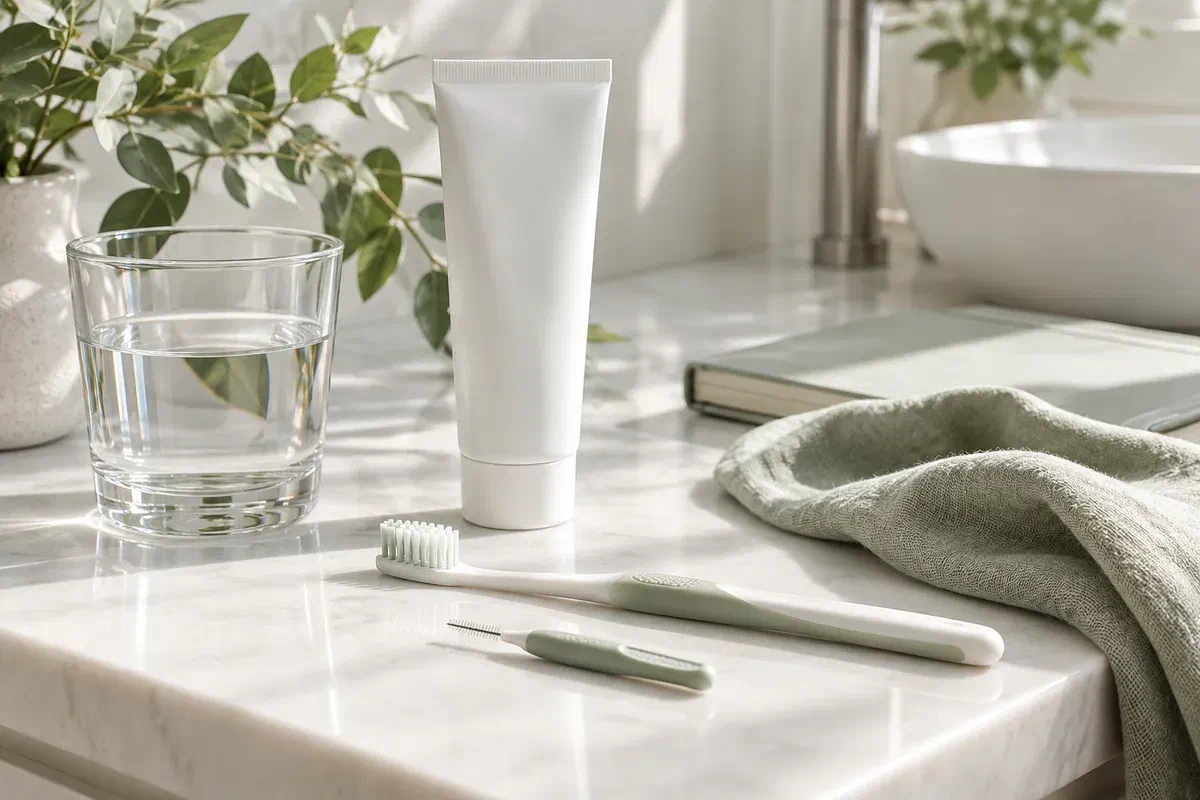
Toothbrush, interdental brush, toothpaste, water, and notebook illustrating a personal care routine
Reasons to rethink the routine

Products change; the underlying pattern often doesn’t.

Describe what keeps happening and what has changed for you lately. A careful examination helps separate genuine contributing factors from assumptions about the cause.

Cavities despite a full product line-up

Fresh decay, even with plenty of products in use, is a reason to examine technique, snacking and sipping habits, fluoride exposure and saliva. Filling a tooth repairs damage, yet the conditions around it may persist. Ask how your plan responds to earlier findings.

Gum bleeding the rinse did not fix

A rinse can mask a problem without reaching the plaque and hardened deposits that sit along the gumline. When bleeding persists, the answer is usually a closer look at technique and at how often you have professional cleaning. Established gum disease may need its own treatment. Tell us what helped before and what slipped.

A routine shaped by new circumstances

Medicines, dryness, shift hours, reduced grip or a new retainer can change what is workable. Mention them even when nothing hurts. A plan that was right a few years ago may need fresh adjustment.

Bring the products themselves or a photo of the shelf. We can explain what each is for without assuming you should buy something more expensive or add more steps.

Why personal beats generic

One well-chosen step can outdo five random ones.

Assessing risk means weighing the things that protect your mouth against those that may drive decay or gum problems. That balance can explain why a certain tooth or type of trouble needs particular attention. The outcome is a basis for discussion, not a guaranteed prediction, and it gives us a way to judge later whether a measure made a difference.

Being personal also means respecting cost, comfort and time. A good plan might start with one or two specific changes, a short demonstration and a follow-up. If a product is too expensive, irritating or awkward to use daily, say so. The team can explain its role and whether something simpler would do the same job.

Patient information: American Dental Association — caries risk and prevention

Each product with a defined role

Ask what a recommended paste, rinse or tool is meant to achieve in your mouth. Understanding the purpose makes it easier to keep using it. A collection of items with no clear job can complicate care while missing the main issue.

Chair-side care with a reason

Cleanings, fluoride applications, sealants and review visits should tie back to what was found. Ask what each is intended to do. Not every preventive service is needed for every tooth or every person.

Adjustments as life moves on

Findings, health and routines change, and the plan can follow. Mention new obstacles or improvements as they come up. Prevention is reviewed as part of ongoing care rather than set once and left unchanged.

From shelf to strategy

Four steps toward a plan that makes sense.

Be candid about what really happens between visits. An accurate account of habits and difficulties is more useful than describing the ideal routine.

  1. Take inventory of history and habits

    We go through past dental problems, health, medicines and the products you use now. Mention recurring symptoms, dryness and the timing of meals, snacks and drinks. We look for patterns that matter without assuming one habit accounts for everything.

  2. Examine and weigh the risks

    The examination identifies current concerns and the areas needing protection or monitoring, with extra records used when clinically helpful. Ask which findings show active disease, which indicate higher risk and which are observations that need no treatment.

  3. Keep what helps, drop what doesn’t

    Together we decide what stays, what changes and what can be retired, from brushing angle to fluoride strength to cleaning frequency. Advice should reflect your age, what we found and how your days run. Ask to see any unfamiliar product used, and ask whether anything already on your shelf can go.

  4. Set a check-in and compare

    We agree when to reassess and what to look at, such as new lesions, gum findings, cleaning results or symptoms. If a measure is not helping, we investigate the reason and adapt instead of simply repeating the instruction.

The plan in daily life

Simple enough for a tired evening.

A routine should be clear enough to manage without thinking hard. Follow the steps chosen for your mouth, and ask before you bring a new treatment product into the mix.

Practise the method you saw

Brush with fluoride toothpaste and clean between your teeth in the way recommended, focusing on the areas we discussed. If the tool still feels clumsy, ask for another demonstration. A technique that suits your hands is easier to repeat.

Spot patterns without blame

Notice when dryness, frequent snacking or skipped cleaning tends to happen, and share what you observe. A small, workable change is often better than a sweeping rule. Any eating advice should also fit medical or nutritional guidance you already follow.

Report what has changed

A fresh prescription, a diagnosis, a night guard or a retainer can all change the picture, so keep us posted. At the review, be frank about which steps survived the month. That helps the dentist separate an ineffective measure from one that simply was not practical.

Patient information: American Dental Association — home oral care

Approaches in a tailored plan

Home habits, added protection or both alongside treatment.

A single plan can draw on more than one approach, as long as each pulls its weight. It helps to know which steps start today, which you may take or leave, and which get another look later.

When most progress can happen at home

Routine and habit coaching

For many people, this is where the plan starts. Coaching might target the inner surfaces of lower teeth, the size of interdental brush that fits your gaps, or how often you sip something sweet at your desk. If your week is unpredictable, ask for a fallback version for busy days.

When the assessment points to more prevention

Additional protective care

Where risk is higher, the dentist may suggest a professional fluoride application, sealants on deep grooves or a prescription-strength paste. You should hear why, what each can and cannot do, and when it will be checked. None of them rebuilds a tooth that is already broken down.

When a problem has already been found

Prevention during active treatment

Sometimes a filling or gum therapy is needed first, with prevention working in the background on the reasons it happened. Ask how the two are sequenced. Once the repair is done, the habits and conditions that led to it still deserve attention.

Oakville product and plan questions

Straight answers about what you really need.

Your plan should hold up when you hold it next to your own records. If it disagrees with a label on the box or a tip from a friend, ask the team to walk you through why.

(905) 876-4488
Do I need a mouthwash as part of my prevention plan?
Not everyone does. A rinse may be suggested for a specific purpose, such as added fluoride, but it does not replace brushing and cleaning between teeth. Ask what a recommended rinse is for and how to use it alongside the rest of your routine.
Is a water flosser a good substitute for string floss?
It depends on your teeth, gums and any dental work. Some people find a water flosser easier, while others clean certain spaces better with floss or an interdental brush. Bring the device you use and ask the team to check whether it reaches the areas of concern.
Why would my plan include fewer products than my neighbour’s?
Plans follow findings, not the number of items. Someone with different decay history, gum health or restorations may need extra measures that you do not. Ask which findings explain your recommendations, and which steps matter most.
Can whitening products fit into a preventive routine?
Mention any whitening products you use or plan to use. The dentist can check for sensitivity, gum irritation or untreated problems that should be addressed first, and advise whether a product is suitable. Whitening does not treat decay or gum disease.
If my cavity risk comes back high, will I keep needing fillings?
Not automatically. A high rating flags a greater chance of trouble ahead; it is not a verdict. Any decay already present is judged on its own merits, and prevention aims to tip the balance against new lesions. Later checkups show whether that is happening.
I can only manage two or three steps a day. Which should they be?
Tell the team honestly what fits. They can help you prioritize the steps most relevant to your findings and suggest a simpler sequence. If one part turns out to be unworkable, say so at the next visit instead of letting everything else lapse with it.
Prevention planning for Oakville

Bring the shelf. Leave with a short list.

Contact our Bronte Street practice to review the products you use and the problems that keep returning. Ask about habits and the corners that are hard to clean. After an assessment, you should go home knowing what to keep, what to drop and when we will look again.

Mention any new symptoms when booking. A planning visit may need to be combined with examination or treatment of a current concern.

Visit Milton Dental Clinic
Unit 1, 342 Bronte St. S, Milton, ON L9T 5B7
Get directions Clinic hours
Monday–Thursday
11am–7pm
Friday–Sunday
By appointment only

Areas we serve

  • Milton
  • Oakville
  • Mississauga
  • Georgetown
  • Halton Hills
  • Acton
  • Campbellville
  • Brampton
  • Burlington
  • Puslinch
  • Rockwood
  • Erin
  • Caledon
  • Etobicoke
  • Old Milton
  • Bronte Meadows
  • Timberlea
  • Dorset Park
  • Dempsey
  • Clarke
  • Beaty
  • Coates
  • Harrison
  • Scott
  • Willmott
  • Ford
  • Bowes
  • Cobden
  • Walker
  • Mountain View
  • Milton Heights
  • Hawthorne Village
  • Valley View
  • Fallingbrook
  • Nassagaweya
  • Trafalgar
  • Esquesing
  • Nelson
  • Brookville
  • Moffat
  • Glen Williams
  • Norval
  • Limehouse
  • Stewarttown
  • Ashgrove
  • Hornby
  • Silver Creek
  • Speyside
  • Scotch Block
  • North Oakville
  • River Oaks
  • Glen Abbey
  • West Oak Trails
  • Palermo
  • Bronte Creek
  • College Park
  • Joshua Creek
  • Uptown Core
  • Preserve
  • Iroquois Ridge
  • Lisgar
  • Meadowvale
  • Meadowvale Village
  • Churchill Meadows
  • Erin Mills
  • Central Erin Mills
  • Streetsville
  • East Credit
  • Creditview
  • Heartland
  • Sheridan
  • Mount Pleasant
  • Credit Valley
  • Huttonville
  • Churchville
  • Springbrook
  • Northwest Brampton
  • Bram West
  • Fletcher's Meadow
  • Fletcher's Creek South
  • Alton Village
  • Orchard
  • Millcroft
  • Headon Forest
  • Tansley
  • Brant Hills
  • Tyandaga
  • Kilbride
  • Lowville
  • Aberfoyle
  • Morriston
  • Arkell
  • Hillsburgh
  • Freelton
  • Carlisle
  • Waterdown
  • Flamborough
  • Mountsberg

How can we help?

Milton Dental Clinic

Have a question about your smile? Choose the option that works best for you.

For urgent dental concerns, please call.
Messages are reviewed during clinic hours.