

Illustrative conversation about an individual preventive dental plan
General & Family Dentistry

Personalized Preventive Dentistry in Old Milton

Teeth that have carried fillings and crowns for decades need different care from a newly restored smile. We help people in Old Milton revisit their prevention so it reflects the mouth they have now, not the one from years ago.

Revisiting prevention in Old Milton

Your routine may be older than your mouth’s current needs.

Plenty of people keep the brushing habit they learned as children and never question it. Over the years, though, the mouth collects history: a crown here, a large filling there, gums that have shifted, perhaps a medicine that leaves things drier than before. A routine that once did its job can quietly stop matching what your teeth now ask of it.

Personalized prevention takes stock of that history. We look at where problems have shown up before, how your gums are doing, what restorations you carry and how saliva and daily habits may be playing a part. Then we talk with you about what is easy, what is a struggle and what has changed in your life, so the advice lands on the things that count.

The resulting plan can include coaching at home, professional cleaning, chosen protective measures and a time to look again. Each element needs a reason you understand and a form you can keep up. Prevention reduces risk; it does not promise an untroubled future, and it is never a substitute for treating disease that has already begun.

Ask about updating your prevention plan
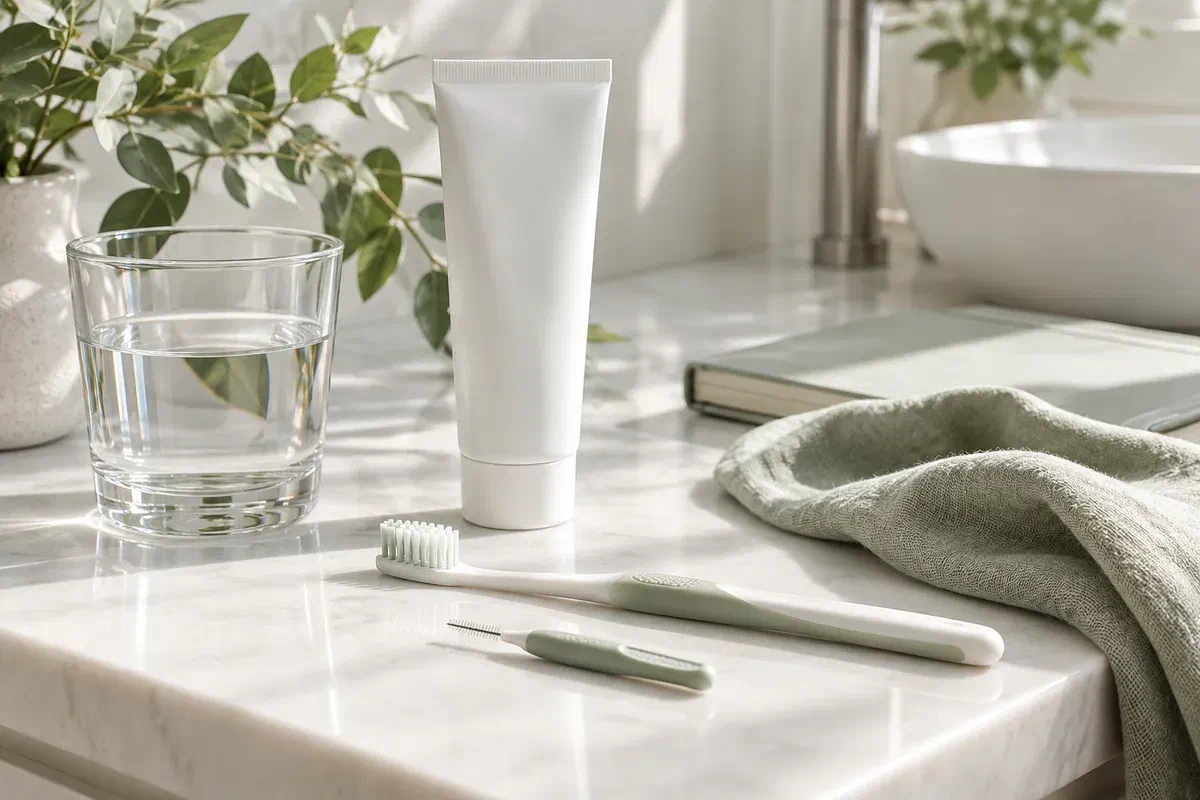
Toothbrush, interdental brush, toothpaste, water, and notebook illustrating a personal care routine
Where long histories show

Old dental work, new questions.

Tell us which concerns keep returning and what has shifted in your health or habits. Examination helps sort out the causes worth acting on from the explanations that only seem likely.

Decay around the edges of older repairs

New decay next to fillings or crowns can prompt a closer look at cleaning, fluoride, snacking patterns and saliva. Replacing a repair fixes the damage, yet the conditions that helped cause it may still be in place. Ask how your plan answers what earlier visits revealed.

Gums that keep flaring in the same place

Bleeding, tartar or a section that never seems clean may call for a review of home care and in-office support. Gum disease already under way can need its own treatment as well as prevention. Describe what got better after past care and what slipped.

Health changes that reach the mouth

New medicines, ongoing dryness, stiffer fingers, a partial denture or a change in daily rhythm after retirement can all alter what works. Raise these even if nothing aches. The plan that suited you in your forties may need rethinking now.

A bag of the products on your bathroom shelf, or a short list, is welcome. We can go over what each one does without nudging you toward something costlier or more elaborate.

The case for a personal plan

Aim the effort, rather than adding to it.

Assessing risk weighs what is protecting your mouth against what may be encouraging decay or gum disease. That can clarify why a crowned molar or a lower front stretch of gum deserves more care than the rest. It is not a certainty about the future. It is a starting point for deciding on preventive steps and for checking, later on, whether they made a difference.

A personal plan also has to be one you can live with. It may begin with a single new tool, a demonstration and a date to review. If something is too costly, uncomfortable or fiddly for your days, please say so plainly. We can explain what it was meant to achieve and whether another route could get you there.

Patient information: American Dental Association — caries risk and prevention

Fewer products, better reasons

Ask which change would help most and why. A routine you understand is one you are more likely to keep. A cupboard full of rinses and gadgets with no defined purpose can complicate care while missing the real concern.

Professional visits with a stated aim

Cleanings, fluoride, sealants and reviews should each tie back to what was found. Ask what a given service is meant to do for you. Not every preventive step is needed for every tooth or every person.

A plan that ages with you

As health, findings and routines change, so can the plan. Tell us about new difficulties and about things that have improved. Prevention is reviewed as care continues, not handed down once and left untouched.

Building the updated plan

We start with what has already happened.

Describe your habits as they really are. Symptoms, practical obstacles and the shortcuts you take tell the team more than a description of the perfect routine.

  1. Look back over your dental story

    We cover past treatment, current health, medicines and how you care for your teeth and any appliance. Mention symptoms that recur, dryness and when you usually eat or have a drink. We look for meaningful patterns but avoid blaming one habit for every finding.

  2. Check teeth, restorations and gums

    The examination notes current concerns and the areas that need protecting or monitoring, including the margins of older dental work. Records are added when they are clinically useful. Ask which findings mean active disease, which mean higher risk and which are simply noted.

  3. Settle on steps that suit you

    That might mean a different brushing angle, a suitable interdental aid, fluoride care, professional cleaning or targeted measures for particular teeth. Recommendations should account for age, findings and your situation. Ask for a demonstration of anything new.

  4. Return, compare and refine

    We set a date to reassess and agree what will be checked, whether new lesions, gum findings, cleaning results or symptoms. When a measure is not helping, we work out why and change course rather than simply repeating the earlier advice.

Keeping it going at home

Small, steady habits outlast big resolutions.

Your routine should be clear enough to follow without notes. Use the recommendations made for your mouth and ask us first before you start a new treatment product.

Use the technique as practised

Brush with fluoride toothpaste and clean between teeth with the aid that suits them, paying attention to the areas we flagged. If a brush or floss holder still feels awkward in your hand, we are happy to show it again. Comfort makes consistency easier.

Notice, rather than scold

Pay attention to when your mouth feels dry, when you graze, or when cleaning gets skipped, and tell us. A modest adjustment is often more realistic than a strict rule. Food suggestions should respect any medical or dietary guidance you already follow.

Share news between visits

Let us know about new prescriptions, health changes or new dental appliances. Keep the review appointment and tell us honestly which steps you kept up. That lets the dentist distinguish a measure that failed from one that was never practical.

Patient information: American Dental Association — home oral care

Choosing the right mix

Not every tooth gets the same measure.

One plan may combine several approaches, each with a clear purpose. Ask what is advised now, what is optional and what will be revisited at the next review.

When daily care offers the biggest gain

Home routine and habit guidance

Coaching might focus on the gumline of a crown, cleaning under a bridge or a workable change to a relevant habit. It should be specific enough to practise tonight. Ask how to adapt it when travel, illness or a busy week gets in the way.

When the findings justify added protection

Targeted protective measures

Fluoride treatments, sealants or other options may be suggested for suitable teeth and risk levels. The dentist should describe the benefits, limits and follow-up. Such measures will not rebuild a tooth that is already broken down or stand in for treatment it requires.

When a problem is already being treated

Maintenance during active care

A cavity or gum condition may be treated while prevention works on lingering risk. Ask how the two connect and what review comes next. Dealing with today’s problem should not mean ignoring the conditions that may invite it back.

Questions we hear around Old Milton

Answers for a mouth with a long record.

Recommendations should make sense against your history and the examination. Ask for the reasoning, especially when it contradicts what you were told years ago.

(905) 876-4488
I have brushed the same way for forty years. Why change now?
Your mouth may have changed even if the routine has not. Gum recession, crowns, bridges and drier tissues can create areas the old method misses. The team can show where cleaning falls short and suggest a small change rather than a complete overhaul.
Do older crowns and fillings need special preventive attention?
The edges of restorations can collect plaque and may develop new decay over time. The dentist checks those margins and may suggest cleaning aids or protective steps for them. Ask which restorations are being watched and what signs would suggest a repair is needed.
Does a higher risk rating at my age mean more treatment is coming?
Not necessarily. A rating reflects the chance of future problems, not a fixed result or a treatment decision already made. Existing concerns are assessed separately, and prevention is discussed beside them. Review shows whether things are stable or whether an area needs care.
My hands are stiffer than they used to be. Can the routine be adjusted?
Yes, tell the team what you find difficult. Options such as a thicker-handled brush, a powered brush or a different interdental aid may be easier to use. Ask for a demonstration so you can try the grip before deciding on anything.
Is a partial denture part of the prevention plan too?
It is. A denture affects how plaque collects on nearby teeth and gums, so cleaning both the appliance and the natural teeth matters. Ask how to care for it, how often to remove it, and what to report if it starts to rub.
Can I still get fluoride benefits as an adult?
Fluoride toothpaste remains useful at any age, and some adults may be advised to use an additional product or have a professional application. Whether that is recommended depends on your findings and risk. Ask how any prescribed product should be used.
Prevention close to Old Milton

Bring your history. We will help you plan what comes next.

Our Bronte Street practice is close to Milton’s historic downtown. Get in touch to talk about recurring problems or to bring an old routine up to date. Ask about products, older dental work and the spots that are hard to keep clean, and we will set out a practical plan with a review date.

Please mention any new symptoms when you book, as the visit may need to include an examination or treatment of a current concern.

Visit Milton Dental Clinic
Unit 1, 342 Bronte St. S, Milton, ON L9T 5B7
Get directions Clinic hours
Monday–Thursday
11am–7pm
Friday–Sunday
By appointment only

Areas we serve

  • Milton
  • Oakville
  • Mississauga
  • Georgetown
  • Halton Hills
  • Acton
  • Campbellville
  • Brampton
  • Burlington
  • Puslinch
  • Rockwood
  • Erin
  • Caledon
  • Etobicoke
  • Old Milton
  • Bronte Meadows
  • Timberlea
  • Dorset Park
  • Dempsey
  • Clarke
  • Beaty
  • Coates
  • Harrison
  • Scott
  • Willmott
  • Ford
  • Bowes
  • Cobden
  • Walker
  • Mountain View
  • Milton Heights
  • Hawthorne Village
  • Valley View
  • Fallingbrook
  • Nassagaweya
  • Trafalgar
  • Esquesing
  • Nelson
  • Brookville
  • Moffat
  • Glen Williams
  • Norval
  • Limehouse
  • Stewarttown
  • Ashgrove
  • Hornby
  • Silver Creek
  • Speyside
  • Scotch Block
  • North Oakville
  • River Oaks
  • Glen Abbey
  • West Oak Trails
  • Palermo
  • Bronte Creek
  • College Park
  • Joshua Creek
  • Uptown Core
  • Preserve
  • Iroquois Ridge
  • Lisgar
  • Meadowvale
  • Meadowvale Village
  • Churchill Meadows
  • Erin Mills
  • Central Erin Mills
  • Streetsville
  • East Credit
  • Creditview
  • Heartland
  • Sheridan
  • Mount Pleasant
  • Credit Valley
  • Huttonville
  • Churchville
  • Springbrook
  • Northwest Brampton
  • Bram West
  • Fletcher's Meadow
  • Fletcher's Creek South
  • Alton Village
  • Orchard
  • Millcroft
  • Headon Forest
  • Tansley
  • Brant Hills
  • Tyandaga
  • Kilbride
  • Lowville
  • Aberfoyle
  • Morriston
  • Arkell
  • Hillsburgh
  • Freelton
  • Carlisle
  • Waterdown
  • Flamborough
  • Mountsberg

How can we help?

Milton Dental Clinic

Have a question about your smile? Choose the option that works best for you.

For urgent dental concerns, please call.
Messages are reviewed during clinic hours.