

Illustrative conversation before a professional teeth-cleaning appointment
General & Family Dentistry

Professional Teeth Cleaning

Address deposits and discuss the cleaning your mouth actually needs. Professional teeth cleaning in Milton combines appropriate removal techniques with attention to gum health, comfort, and care between visits.

A closer look at professional teeth cleaning

Remove the deposits your toothbrush cannot manage alone.

Even a regular home routine can leave areas where deposits collect. Soft plaque can harden into tartar, which needs professional removal. A cleaning appointment addresses the deposits identified in your mouth while considering the condition of the gums and the surfaces being treated.

At Milton Dental Clinic, tell us what you have noticed: a rough feeling near the gumline, staining, bleeding, or sensitivity. The assessment helps establish what kind of cleaning is appropriate. A simple maintenance visit and treatment for established gum disease are different services, even though both may involve removing deposits.

Comfort and explanation belong in the appointment too. Mention a tender area or an earlier cleaning experience that was difficult. Ask what the instruments are intended to do and how to request a pause. The aim is appropriate care for your teeth and gums, followed by instructions that help you maintain the result.

Discuss your professional cleaning needs
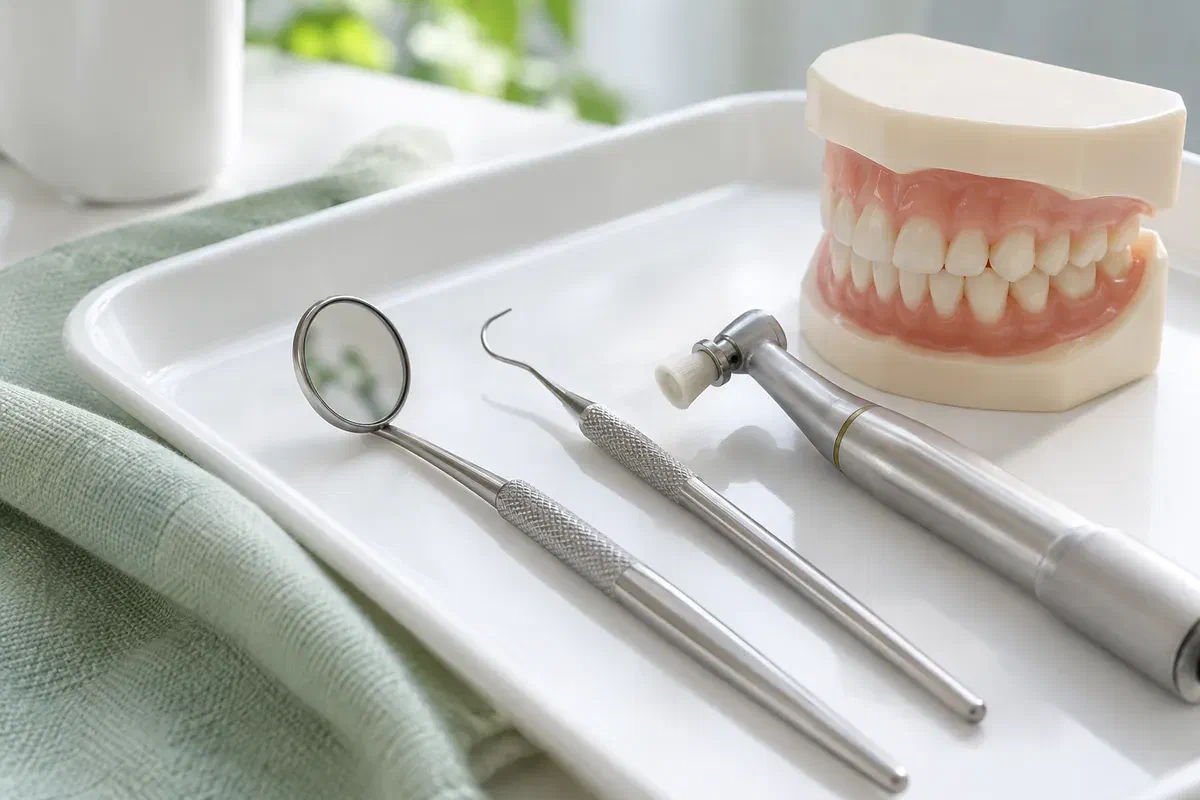
Illustrative dental mirror, scaler, polishing instrument, and teaching model
What to mention before cleaning

Describe the buildup and how the mouth feels.

Visible staining is only one part of the picture. Gum symptoms, existing dental work, and previous experiences can all influence the care recommended.

Hard or rough deposits

Tartar may collect in areas that are difficult to clean effectively at home. Tell the team where you feel roughness or see buildup. Do not try to scrape it away with a metal tool; professional assessment and suitable instruments are needed.

Bleeding or sensitive areas

Mention tenderness, bleeding, or sensitivity to cold before cleaning starts. These symptoms may affect both the assessment and comfort planning. The team can explain whether routine cleaning is appropriate or whether more involved gum care needs discussion.

Stains around teeth or dental work

Surface staining may be considered during cleaning, but not every colour change is removable deposit. Crowns, fillings, natural tooth colour, and deeper discolouration have different implications. Ask what the stain appears to be and what cleaning can reasonably change.

Update your health and medication history before the appointment, including blood thinners, relevant medical advice, and any recent changes. Do not alter prescribed medicines yourself in preparation for cleaning.

What professional removal contributes

Support healthier maintenance with the right care for the deposits.

Professional cleaning can remove hardened material that ordinary brushing and flossing cannot. Plaque and tartar are relevant to gum inflammation, so the purpose extends beyond how smooth the teeth feel afterward. The condition of the gums helps determine the depth, extent, and follow-up needed.

Some surface stains may be reduced with appropriate techniques, but cleaning is not a promise of uniformly white teeth. It also does not repair decay, replace damaged restorations, or regrow lost supporting bone. Ask which findings the cleaning addresses and which need a separate treatment discussion.

Patient information: NIDCR — plaque, tartar, and gum health

Removal directed to the areas that need it

The team identifies where deposits are present and selects techniques suited to the surfaces and tissues. Tell us about crowns, implants, or other work if it is not already in the record. The approach should respect the materials and condition being treated.

A chance to identify a maintenance problem

Repeated buildup in one area can prompt a useful discussion about access and technique. Ask how to clean the site after professional care. A specific demonstration may be more helpful than simply being told to brush for longer.

A review of response and future needs

Gum findings and comfort can be reassessed after appropriate care. The next visit may be routine maintenance or a more focused review. Ask why the interval is recommended and what would justify returning earlier.

What happens during cleaning

Assess first, choose the technique, and keep comfort in view.

The procedure and appointment length depend on the findings. Ask what is included in the planned visit and whether further assessment or additional cleaning appointments may be necessary.

  1. Review history and assess the mouth

    The team considers your symptoms, relevant health information, deposits, and gum condition. Additional examination or records may be needed to clarify treatment needs. Tell us about sensitivity and agree a signal for a pause before instruments are used.

  2. Remove deposits with suitable instruments

    Hand instruments, powered instruments, or a combination may be used according to the area and clinical needs. You may notice pressure, vibration, or water depending on the technique. Speak up if something feels uncomfortable so the care can be discussed and adjusted appropriately.

  3. Consider polishing or other measures

    Polishing may be used where appropriate to address selected surface staining. It is not the same as whitening and is not automatically the most important part of the visit. Any additional preventive product should have a stated purpose and suitable instructions.

  4. Explain aftercare and the next appointment

    Ask what to expect afterward and how to maintain the treated areas. The team can demonstrate suitable tools and explain whether gum reassessment is needed. If more involved treatment is recommended, clarify how it differs from the cleaning already completed.

After your cleaning appointment

Maintain the surfaces and notice how the gums respond.

Follow any instructions specific to the treatment or products used. Advice may differ if the appointment included anaesthesia, periodontal treatment, or another procedure.

Keep cleaning gentle and consistent

Continue the home routine recommended for your teeth and gums, using fluoride toothpaste and suitable interdental care. Avoid trying to recreate professional scaling with a household or purchased metal tool. Ask for help with a difficult area instead of scraping it yourself.

Ask about tenderness or sensitivity

Some people notice temporary sensitivity or gum tenderness after cleaning, depending on the condition treated. Follow the team's advice and contact the clinic if discomfort is worsening, significant, or not settling as expected. Do not assume every new symptom is simply part of a cleaning.

Follow product and review instructions

If fluoride or another product was applied, use the instructions given for that product rather than a universal rule about eating afterward. Keep the recommended review and report ongoing bleeding or changes. The appointment plan should reflect how your mouth responds.

Choosing the appropriate type of care

Routine cleaning, gum treatment, and whitening have different purposes.

The examination helps identify what is needed. Ask which part of the recommendation addresses health, which addresses appearance, and whether more than one type of care is being discussed.

When maintenance and deposit removal are appropriate

Routine professional cleaning

Care focuses on the deposits and areas identified in the assessment, with home-care guidance and a suitable recall plan. The extent varies between people. A familiar cleaning appointment should still be based on current findings.

When gum disease needs more involved care

Periodontal treatment and reassessment

Treatment below the gumline and follow-up may be required when disease affects supporting tissues. The team should explain the diagnosis, expected visits, and comfort options. Routine polishing alone is not an adequate substitute for indicated periodontal care.

When tooth colour remains the concern

A separate cosmetic discussion

If the colour change is not simply surface stain, ask about its cause and appropriate options. Whitening and restoration changes have different limitations and suitability requirements. Cleaning may be part of preparation but does not guarantee the cosmetic result you have in mind.

Questions about professional teeth cleaning

Know what is being removed and what still needs review.

Ask about instruments, sensitivity, staining, or the type of cleaning recommended. An explanation should connect the procedure with the findings in your own mouth.

(905) 876-4488
Can I remove tartar myself with a dental scraper bought online?
Do not attempt to scale your own teeth with a metal scraper. You can injure tissues or damage surfaces without addressing the problem appropriately. Arrange professional assessment and removal, then ask for a home-care technique that helps manage plaque in the area.
Why does a professional cleaning sometimes use both hand and powered instruments?
Different instruments may suit different deposits, surfaces, and access needs. The clinician selects the approach according to the findings and your comfort. Ask what each instrument is doing and report sensitivity so the care can be discussed rather than simply endured.
Will cleaning remove every stain on a crown or an old filling?
Not necessarily. Some changes are surface deposits, while others relate to the restoration material, its condition, or the underlying tooth. The team should assess the cause and explain what cleaning can change. Replacement or other treatment should not be assumed from colour alone.
Does professional cleaning make already loose teeth healthy again?
Removing deposits can be part of gum treatment, but a loose tooth needs assessment of its supporting tissues and other causes. Cleaning does not automatically restore lost support. Ask about the diagnosis, treatment options, and follow-up rather than relying on a routine cleaning alone.
Should I expect the same amount of cleaning time as another family member?
No. Deposits, gum condition, dental work, and comfort needs differ. Some patients need a short maintenance visit, while others require more involved or staged care. Ask what your appointment is intended to cover and why the recommended time or number of visits differs.
Can I eat immediately after a professional cleaning if another product was applied?
Follow the instructions for the actual product and any other treatment completed. Advice after a fluoride application or anaesthesia may differ from cleaning alone. Ask before leaving rather than relying on a single rule that is assumed to apply to every hygiene appointment.
Professional teeth cleaning in Milton

Let’s match the cleaning to your teeth and gums.

Contact our Bronte Street practice to discuss buildup, staining, or your next maintenance visit. Mention sensitivity, bleeding, and any previous difficulties when booking. We can assess your cleaning needs and explain appropriate care and follow-up.

Cleaning needs and appointment length depend on assessment. Mention new pain or swelling so an appropriate examination can be arranged.

Visit Milton Dental Clinic
Unit 1, 342 Bronte St. S, Milton, ON L9T 5B7
Get directions Clinic hours
Monday–Thursday
11am–7pm
Friday–Sunday
By appointment only

How can we help?

Milton Dental Clinic

Have a question about your smile? Choose the option that works best for you.

For urgent dental concerns, please call.
Messages are reviewed during clinic hours.