Deposits you can feel or see
Roughness at the gumline or between teeth often means tartar in an awkward spot. Tell us where. Please avoid scraping at it, particularly if you take a blood thinner, as metal tools can injure gums and scratch teeth.


New prescription, a pregnancy, a heart condition, diabetes: health changes can shape a cleaning. If you’re coming from Caledon, we review your medical picture first, then plan tartar removal and gum care around it.
A great deal can happen between two cleanings. Perhaps you started a blood thinner, learned you are pregnant, had a joint replaced or were diagnosed with diabetes. Each of these can matter to how a cleaning is planned. Tartar still forms the same way, as plaque that hardens beyond the reach of a toothbrush, but the safest approach to removing it depends on you.
So the visit begins with an honest update. Tell us what has changed in your health and medications, and what you have noticed in your mouth: bleeding, tenderness, cold sensitivity or a rough area. From Bolton or one of Caledon’s villages, sharing this when booking helps us decide whether routine maintenance suits, whether gum disease needs separate treatment, or whether we should check with your physician first.
You stay in control throughout. If an earlier cleaning was uncomfortable, mention it, and agree on how you will ask for a break. Ask what any instrument is for. You should leave knowing what was done, how your health was taken into account, and how to care for your teeth and gums at home.
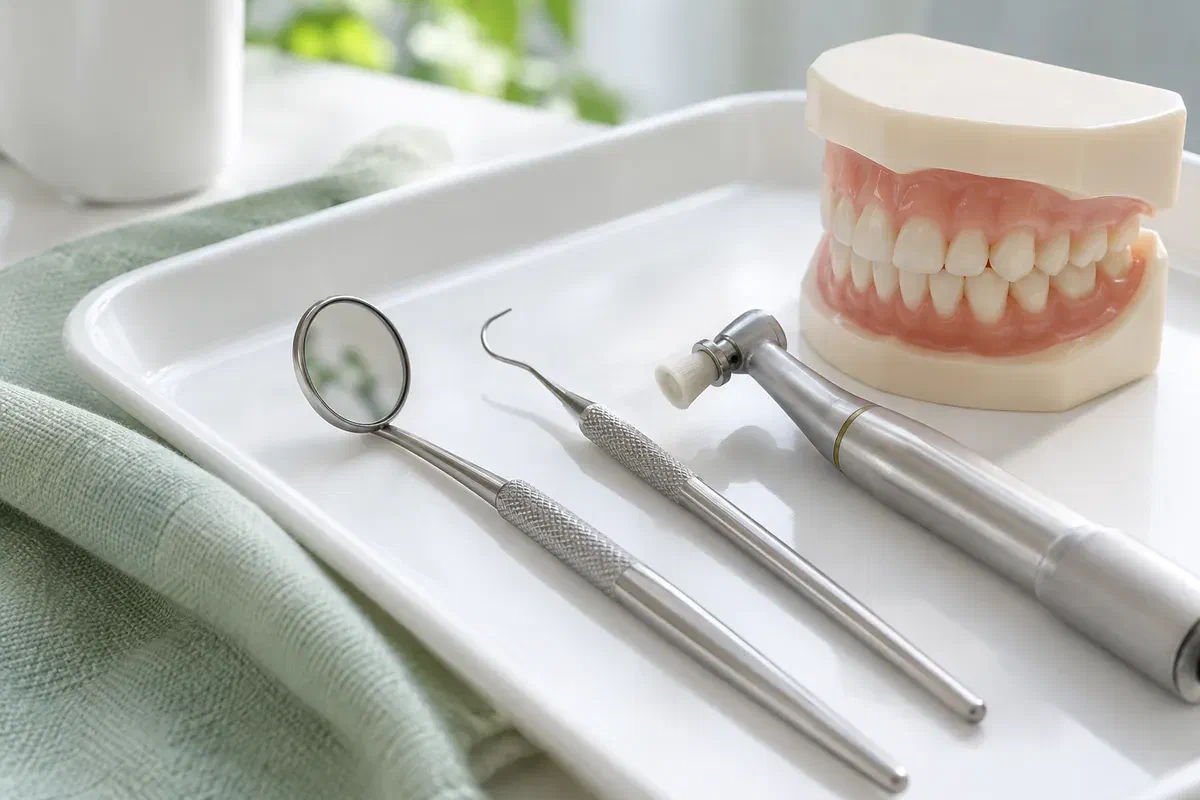
Appearance tells us only part of the story. Gum symptoms, dental work, past experiences and especially your health all inform the plan.
Roughness at the gumline or between teeth often means tartar in an awkward spot. Tell us where. Please avoid scraping at it, particularly if you take a blood thinner, as metal tools can injure gums and scratch teeth.
Bleeding, swelling, tenderness or sharp reactions to cold are useful to report. Some health conditions and medications affect the gums, so these signs help us assess carefully, plan for comfort and judge whether a regular cleaning fits.
Some medications and mouth rinses can contribute to staining. Surface stain may lift with cleaning; colour from crowns, fillings or within the tooth will not. We can explain what you are seeing.
Bring a full list of medications and supplements, including blood thinners, plus any advice from your doctor and recent diagnoses or procedures. Never pause or adjust a prescription yourself before a cleaning; if a change is needed, it should come from your prescriber.
Hardened deposits that brushing and flossing miss can be removed with professional instruments. Since plaque and tartar contribute to inflamed gums, removing them is about tissue health, not only a polished feel. Gum findings, together with your medical history, guide how extensive the cleaning is and how soon we review.
Cleaning may lessen surface stain, but it does not promise teeth of one even colour. It does not treat decay, replace a damaged restoration or rebuild bone lost to gum disease. We will make clear which findings this visit addresses and which need another plan, possibly coordinated with your doctor.
Patient information: NIDCR — plaque, tartar, and gum health
We locate deposits and choose techniques that suit each surface, the tissue around it and your medical needs. Mention implants, crowns or joint replacements that may not be in your record.
If one area keeps building up, or limited mobility makes cleaning harder, we can show you an aid or angle that works. Specific help tends to beat general advice.
After cleaning, we can reassess gums and comfort. Some health conditions may make a shorter interval sensible. Ask how the timing was chosen and what would make an earlier visit worthwhile.
Appointment length depends on the findings and on any medical considerations. Ask what is planned today and whether further assessment or another visit could be needed.
We review medications, conditions and recent changes, then look at buildup and gum condition. Occasionally we may need to speak with your physician before going ahead. X-rays or a fuller exam may also be suggested.
The hygienist may use hand instruments, an ultrasonic scaler or both, adjusting for your health and comfort. Pressure, vibration and water are normal sensations. Raise your hand at any point and we will stop.
Polishing may address some surface stain but is not a whitening treatment. If fluoride or another product is advised, we explain why, check that it suits your health, and give clear instructions.
We tell you what to expect later, especially if a medication affects bleeding or healing, and show you suitable home tools. If gum treatment is recommended, we describe how it differs from the cleaning you just had.
Follow the instructions given for any specific product or treatment. Advice differs if you received freezing, gum therapy or another procedure.
Brush with fluoride toothpaste and use the between-teeth aids recommended for you. Don’t try to replicate professional scaling with picks from home. If a rough spot remains, let us check it.
Sore gums or sensitive teeth can occur for a short time. Some medications make bleeding a little more noticeable, so follow the advice you were given, and phone us if discomfort worsens, is significant or is not easing. New symptoms may have other causes.
Fluoride varnish and other applied products have their own eating and drinking guidance; follow it. Keep your review date, and mention bleeding that has not settled or any change in your health.
Ask about medications, conditions, instruments or anything you have noticed. Answers should take your whole health picture into account.
Whether it is time for your regular cleaning or your health history needs updating first, our Bronte Street practice can help, and we are glad to talk about buildup and stain too. Mention medications, bleeding, sensitivity or past difficulties when booking. You will hear what we find and how your health shaped the plan.
The kind of cleaning and its length depend on assessment and medical considerations. A tooth that has begun to hurt, or gums that have swollen, should be mentioned too, so an examination is added.
