A gritty line near the gums
Hardened deposits gather where brushes and floss struggle to reach. Point out where you feel it. Please leave metal picks alone; scraping at home can hurt the gum and scratch the tooth without clearing the problem.


That rough ridge behind your lower front teeth is often the first clue. Hygiene visits in Milton look at what has built up, how your gums are doing, and how to stay comfortable until next time.
Run your tongue along the inside of your lower front teeth. A gritty feel there is common, even for people who brush twice a day. Plaque that stays put can harden into tartar, and a toothbrush will not lift it. Removing it safely takes professional instruments and a look at the gums around it.
When you book in Milton, tell us what prompted the call: a gum that bleeds when you floss, a brown line on a front tooth, or a twinge with cold water. Those details help decide what kind of cleaning makes sense. Routine maintenance and treatment for gum disease are different, although both remove deposits.
Busy households tend to rush appointments, so we slow the important parts down. Say so if a past cleaning was hard to sit through, and agree on a signal for a break before we start. Ask what any instrument is for. You should leave knowing what was done and how to care for those areas.
How your teeth look is only part of it. What your gums are doing, the dental work already in your mouth, and how earlier visits felt all change what we recommend.
Hardened deposits gather where brushes and floss struggle to reach. Point out where you feel it. Please leave metal picks alone; scraping at home can hurt the gum and scratch the tooth without clearing the problem.
Bleeding when you brush, tender patches, or a twinge from cold drinks are worth mentioning before we begin. They shape both the assessment and comfort planning, and whether a regular cleaning fits or gum care needs discussing first.
Some staining sits on the surface and may lift during cleaning. Other changes come from a filling, a crown, the natural shade of the tooth, or discolouration deeper inside it. We can tell you which seems to be the case and be honest about what a cleaning can change.
Before the visit, bring your health history up to date, including medications such as blood thinners, any advice from your physician, and recent changes. Keep taking prescribed medicines as directed unless the doctor who prescribed them tells you otherwise.
Tartar that brushing and flossing cannot shift can be removed professionally. Plaque and tartar both play a part in gum inflammation, so the goal is healthier gum tissue, not just teeth that feel polished for a day. What we find in the gums guides how far the cleaning goes and what follow-up is sensible.
Some surface stain may fade with the right technique, though a cleaning cannot promise evenly white teeth. It will not fix a cavity, replace a worn or broken filling, or rebuild bone that has already been lost. We will point out which findings the cleaning deals with and which deserve their own treatment discussion.
Patient information: NIDCR — plaque, tartar, and gum health
We map where deposits are and choose techniques that suit each surface. Tell us about implants, crowns or veneers if they are not already in your chart, so the approach protects those materials too.
When tartar keeps returning to the same place, that pattern is useful. It may point to a crowded tooth or an angle your brush misses. A demonstration for that spot helps more than a reminder to brush longer.
After cleaning, we can look again at how your gums respond and whether sensitivity settles. Your next appointment may be routine upkeep or a closer review of one area. You are welcome to ask why we suggest that interval and what would be a reason to come sooner.
How long the visit takes and what it covers depend on what we find. Ask at the start what today includes, and whether more assessment or another cleaning session might follow.
We go over your symptoms, health updates, any buildup, and the state of your gums. Sometimes X-rays or a fuller exam are needed to understand what is going on. This is also when we agree on how you will signal a pause.
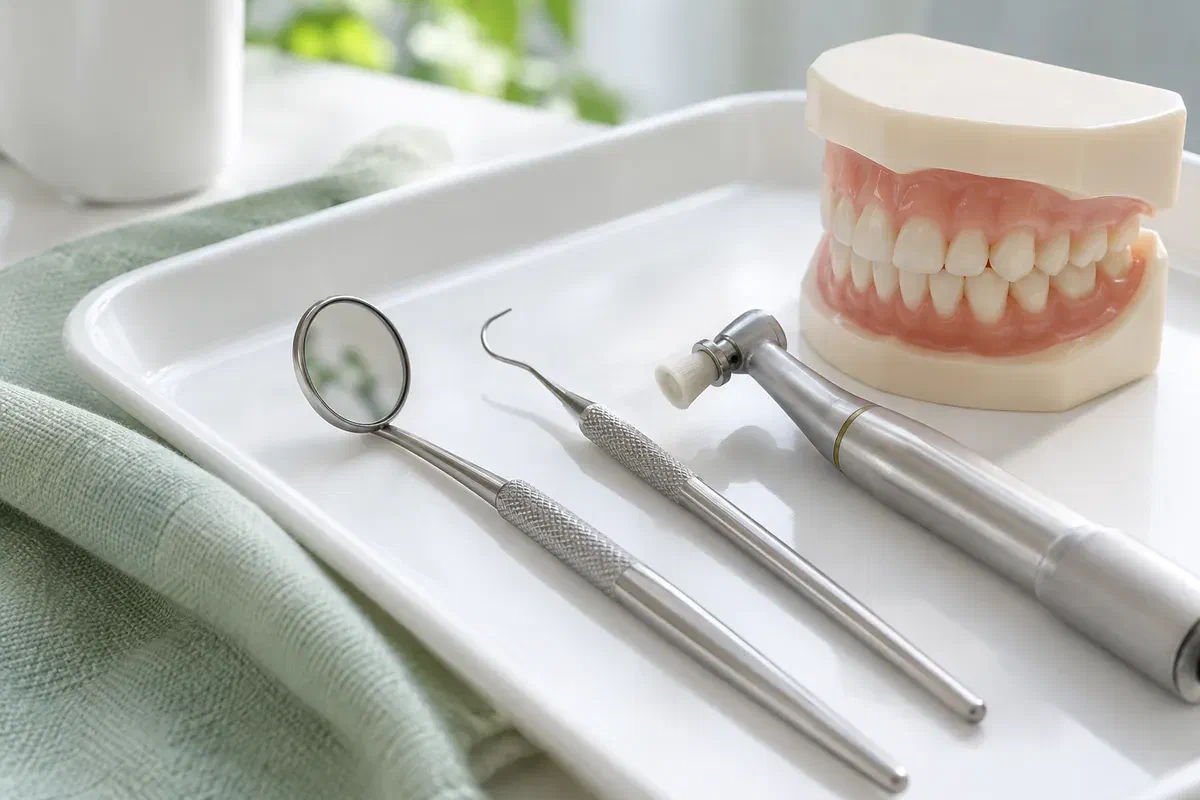
Depending on the area, the hygienist may use hand scalers, a powered scaler, or both. You might feel pressure, a buzzing vibration, or a spray of water. If anything feels sharp or uncomfortable, tell us right away so we can talk it through and adjust.
A polish may be used on surface stain where suitable. It is not whitening, and it is rarely the most important part of the visit. If we suggest a preventive product such as fluoride, we will say why and explain how to look after your teeth afterward.
Before you leave, we explain what you may notice over the next day or two and show you suitable brushes or floss aids. If deeper gum treatment is recommended, we explain how it differs from today.
Follow any instructions linked to the products or treatment you received. Guidance can differ when the visit included freezing, gum treatment, or another procedure.
Carry on with the routine we suggested, using fluoride toothpaste and interdental aids that suit your spacing. A pick bought online is no substitute for professional scaling. Book a check if one spot keeps building up.
Short-lived sensitivity or sore gums can happen after a cleaning, depending on what was treated. Follow the advice you were given and call us if discomfort is getting worse, feels severe, or is not easing as expected. A new symptom is not automatically part of the cleaning.
If fluoride or another product was applied, the instructions for that product decide when you can eat or drink, not a general rule. Keep the review we booked and tell us about ongoing bleeding or changes, so the next plan reflects how your mouth responded.
Bring questions about tools, sore spots, stain, or why a certain type of cleaning was suggested. Each answer should tie back to what was found in your mouth.
Reach our Bronte Street practice to talk about buildup, stain, or the timing of your next hygiene visit. Mention bleeding, sensitivity or a hard past appointment when you book. We will assess what your mouth needs and explain the cleaning and any follow-up clearly.
Appointment length and the type of cleaning depend on what the assessment shows. Tell us about new pain or swelling so the right examination can be booked.
