Heavier or rougher deposits
Thick tartar often responds well to ultrasonic scaling, followed by hand instruments. Let us know where you feel roughness. A scraper bought online is a poor substitute and can nick gums or scratch enamel.


The hum, the water spray, the little hooked tools: they all have a job. For anyone coming in from Puslinch, we explain the instruments as we clean, so the appointment feels less like a mystery.
Lying back in the chair, you hear a high hum and feel a cool mist. That is usually an ultrasonic scaler, which vibrates to break up tartar while water rinses the debris away. Then come small hand instruments for finer work. Tartar is plaque that has hardened, and these tools are how it comes off without harming the tooth.
Which instruments get used, and for how long, depends on your mouth. Tell us about bleeding gums, sensitive spots, rough patches or dental work before we start. Those details help us choose techniques and decide whether routine maintenance is right, or whether gum disease needs a separate assessment and treatment plan.
If not knowing what is happening makes you tense, say so. We can describe each tool before it touches a tooth, and we will agree on how you can ask for a break. Before the drive back to Puslinch, you should understand what was done and how to care for those areas yourself.
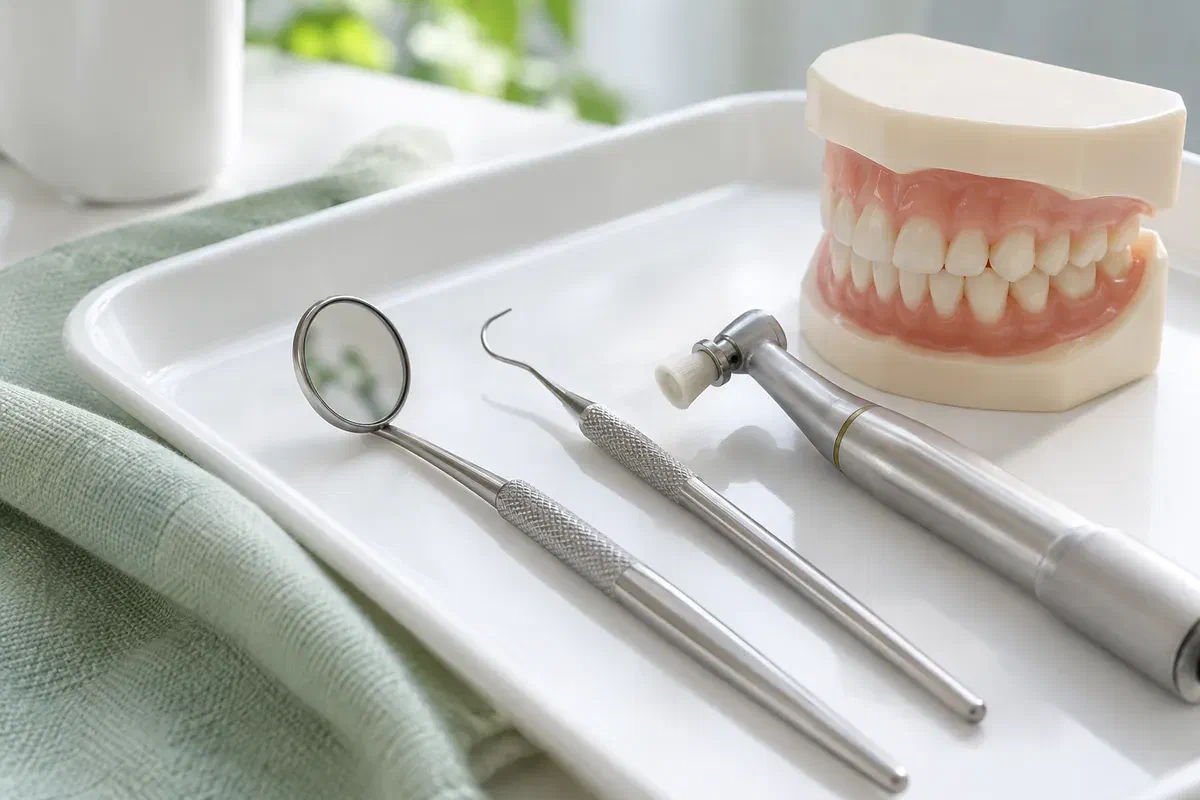
Stain is one thing we notice. Gum tenderness, restorations and how past visits felt guide which instruments we choose and how we use them.
Thick tartar often responds well to ultrasonic scaling, followed by hand instruments. Let us know where you feel roughness. A scraper bought online is a poor substitute and can nick gums or scratch enamel.
Inflamed gums and cold-sensitive teeth can react to vibration or water. Mention them so we can adjust the approach, examine the gums carefully and decide whether a standard cleaning suits.
Some materials need particular instruments or polishing products. Surface stain may lift, but colour in crowns, fillings or the tooth itself will not change the same way. We will explain what to expect.
Share your current medications, including blood thinners, and any advice from your doctor or recent health changes. Some conditions affect which instruments are suitable. Do not change prescribed medication yourself because of a cleaning.
Hardened deposits your brush and floss cannot lift can be removed with professional instruments chosen for the job. Gum inflammation is fed partly by those deposits, so the purpose reaches beyond the smooth feel your tongue notices on the drive home. Gum findings decide how deep the cleaning goes and what follow-up is reasonable.
A thorough cleaning can lighten some surface stain, but no instrument will make every tooth an even white. Cleaning does not repair decay, replace a damaged restoration or regrow bone. We will separate what today handled from what needs its own discussion.
Patient information: NIDCR — plaque, tartar, and gum health
Enamel, root surfaces, porcelain and implants each need appropriate care. Tell us about any dental work not already in your record so the instruments and polishing products suit it.
If the same spot always needs extra scaling, it may be one your routine misses. We can show you a brush, floss holder or other aid that fits the space, which works better than general advice.
Once cleaning is done, gums and comfort can be reviewed. Your next visit may be standard upkeep or a closer look at one area. Ask how the interval was chosen and when it would make sense to come sooner.
What happens and how long it takes depend on the findings. Ask what is planned for today and whether further assessment or another cleaning session may follow.
We review your history and symptoms, then use a mirror and probe to check buildup and gum condition. X-rays may be suggested if more detail is needed. Your stop signal is agreed at this stage.
An ultrasonic scaler may loosen larger deposits with vibration and water, and hand scalers refine the work. You may feel pressure, a buzz or cool spray. If anything is sharp or uncomfortable, tell us and we will change the approach.
A soft rotating cup with polishing paste can address some surface stain. It is different from whitening and seldom the most important step. Any fluoride or preventive product is explained first.
We explain what you might feel later and show you tools suited to your teeth. If gum treatment is recommended, we describe the instruments and visits involved and how they differ from today.
Any instructions for a particular product or treatment take priority. Advice differs if freezing, gum treatment or another procedure was involved.
Use fluoride toothpaste and the between-teeth aids we showed you. Leave metal instruments to the clinic; home scraping can cause damage. If roughness returns quickly in one area, mention it at your next visit or sooner.
Vibration and scaling can leave gums a little sore or teeth sensitive for a short while. Follow the guidance from your visit and call if discomfort increases, is significant or will not settle. New symptoms may have another cause.
Fluoride varnish and similar treatments have their own guidance on eating and drinking afterward. Follow that guidance, keep your review, and let us know about ongoing bleeding or changes.
Ask about the tools, the sensations, or what to use at home. Answers should connect back to what we see in your mouth.
Reach our Bronte Street practice to book a cleaning, ask about buildup or stain, or plan your next maintenance visit. Mention sensitivity, bleeding or any difficult past experience when booking, and we will explain what we find and the care we suggest.
Appointment length and the type of cleaning depend on what the assessment shows. Let us know about any new pain or swelling so we can examine it.
