

Illustrative conversation during a return dental checkup
General & Family Dentistry

Recall Dental Examinations in Brampton

Grandparents, parents and kids rarely share one dental schedule. For Brampton households juggling several recalls, here is how each return checkup is planned around the person in the chair.

One household, several schedules

Different ages, different reasons to come back

In a busy multigenerational home, the calendar on the kitchen wall might hold three or four dental dates at once. Each one is a recall: a planned return after an earlier examination, set for that particular person. Grandma’s visit may focus on older crowns, while a teenager’s may centre on how brushing is going between practices and exams.

What ties them together is the question the dentist keeps asking. What has changed since last time, and does the earlier advice still fit? Feeling comfortable helps answer that, yet gums and teeth sometimes change without much warning, so findings are compared with what was recorded before.

Each family member can help by bringing their own small observations. One may have noticed a tooth reacting to ice water, another that floss keeps catching. By the end of every visit, that person should know what is steady, what needs care, and why their next date was chosen.

Arrange recall visits for your family
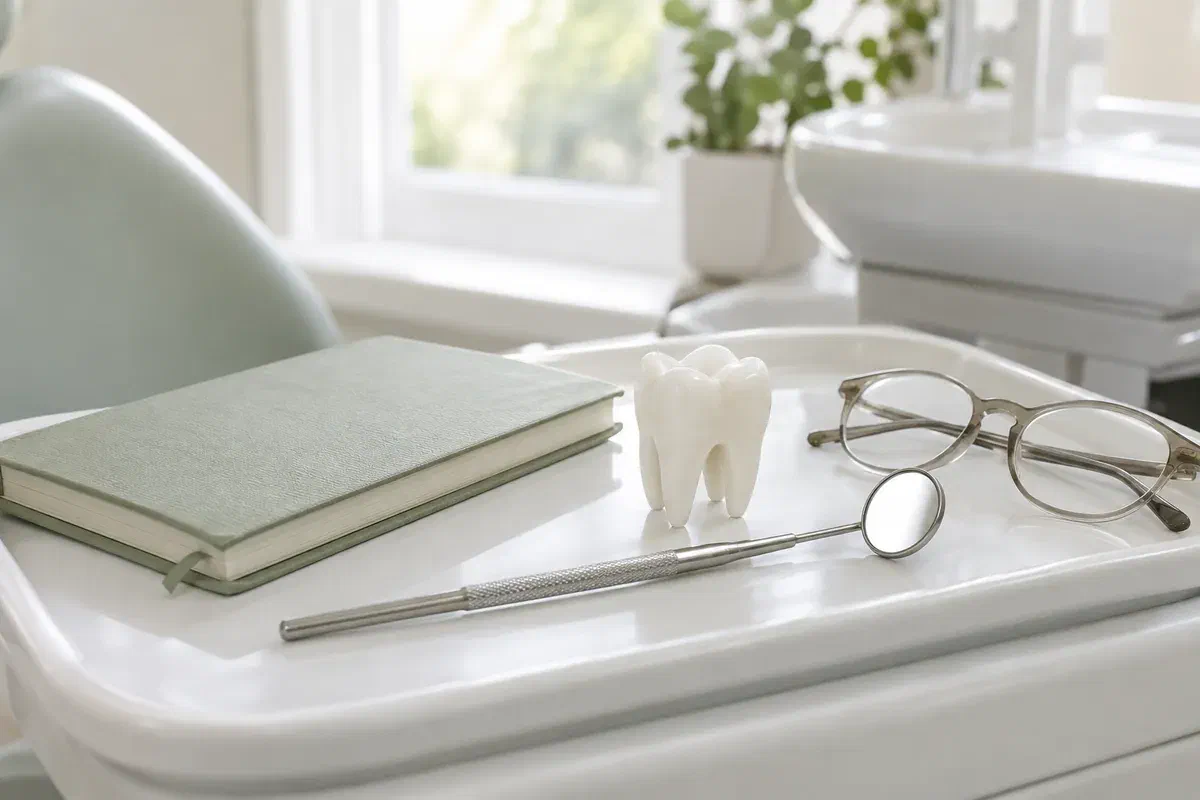
Illustrative dental mirror, tooth model, and notebook for an examination
Worth mentioning for each person

Small changes, told early, guide the exam.

Past notes set the scene. What each person has felt lately, plus any change in their health, tells the dentist where attention belongs at this visit.

A tooth that feels or behaves differently

Chewing that is uncomfortable on one side, a corner that feels rough, sudden sensitivity or a fresh spot where food lodges are all worth describing. Say how often it happens and whether that is increasing. It is fine if it is not happening on the day.

New medicines, conditions or routines

Older relatives in particular may have medication changes since their last visit; bring an updated list. Dry mouth, a new diagnosis or difficulty holding a toothbrush can all shape the conversation, including which prevention ideas make sense.

Areas the dentist planned to recheck

If a tooth, gum site or restoration was singled out last time, raise it again and describe any difference you have noticed. Watching something should come with a purpose that is explained, so everyone knows what change would alter the plan.

When a new problem appears for anyone at home, call instead of waiting for that person’s recall. The team can help decide if a focused or urgent visit suits better.

Why intervals are personal

Same family, separate plans

It can feel simpler to book everyone on the same cycle, and sometimes that works out. Continuing care, however, sets each interval according to that person’s current findings and risk. A parent’s schedule may lengthen while a grandparent’s shortens. Ask what lies behind each recommendation, and whether any treatment needs its own appointment.

Regular recalls are worthwhile, but they do not promise that every issue will be detected, or that something cannot begin after the visit. They are one strand of care, woven together with home habits, advised treatment, and speaking up when symptoms appear. Clear explanations let each person act on their own results.

Patient information: CDA — continuing care and individualized recall

Change measured over time

Earlier notes and images can provide a comparison when they are relevant. For each family member, it is reasonable to ask whether a finding is new, unchanged or uncertain, and what any extra test or watch period is meant to show.

Prevention for each age

A routine that works for a parent might not suit a child or an older adult with limited grip. Tell us what is hard to use or has not helped. That feedback lets the team suggest adjustments that fit each person rather than one rule for all.

Priorities everyone understands

When several things need attention across the household, it helps to know which are pressing and which can wait for review. Ask about purpose, alternatives and timing so the family can plan visits without treating each suggestion as equally urgent.

Inside each recall

Talk first. Then the exam. Then the plan.

Each appointment is shaped by that person’s needs and how the visit was booked. Ask ahead whether it includes a cleaning or imaging, or whether a separate treatment visit might follow.

  1. Updates and the main worry

    The visit opens with what has changed and the question that person most wants answered. Health history and earlier advice are reviewed. For children or older relatives, a parent or companion can help fill in details, and a short list on paper helps.

  2. Checking the mouth

    Teeth, gums and any existing dental work are examined with that person’s history in mind. Let the dentist know about soreness or trouble keeping the mouth open. Anyone in the chair is welcome to ask what is being looked at.

  3. Records when they are useful

    Imaging or another test might be suggested to help settle a particular clinical question. There is no automatic rule that the same X-rays happen at each recall. Asking why one is recommended, and whether recent images exist, is always reasonable.

  4. Next steps, written down

    Findings, any treatment choices and the timing of further care are discussed. Ask what signs should prompt an earlier call. Keep that person’s next routine recall separate in your mind from any visit for a particular problem.

Back home in Brampton

Keep the family plan simple.

Examinations on their own seldom need any recovery care. If a cleaning, fluoride or treatment happened during the same visit, follow the specific instructions for that.

One shared list of next steps

Keep a single household note of who needs what and why, especially when more than one person has follow-up. Ask about terms you do not recognise before booking around them. Knowing each visit’s purpose helps more than tracking dates alone.

Home care that each person can manage

Stick with the brushing and between-teeth cleaning advice given for each mouth. If a child resists or an older relative struggles, tell the team soon instead of at the next checkup. A different tool or a quick demonstration can help.

Phone when something new turns up

If anyone at home develops a toothache, swelling, a damaged filling or a mouth sore that hangs around, give us a call. Mention when their recall is booked, though that date was planned for routine review and may not suit a fresh concern.

Which booking for whom

Pick the visit that matches the reason.

When you call, explain the purpose of each appointment you need. That way the time booked fits the assessment, not just whatever that person had last time.

For ongoing review of oral health

Routine family recall

This is the regular visit where the overall picture, prevention and watched areas are reviewed, and the next interval is agreed. Other care may be arranged at the same time where suitable. Asking what is planned helps everyone know what to expect.

When someone develops a symptom

A visit for a new problem

A child who chips a tooth, a parent with a localized ache, or a grandparent with new swelling may need to be seen before their recall. Describe the symptom and its timing. The team can suggest a next step rather than simply shifting the routine date.

When healing should be checked

A follow-up after treatment

Some treatment has its own review visit to see how things are settling or to answer questions. Its goal and timing can differ from a regular checkup. Confirm whether that person needs both and what each one covers.

Brampton family recall FAQs

Questions households often ask

Answers about booking several people, children’s checkups, older relatives and what a recall does and does not include.

(905) 876-4488
Can we book the whole family for recalls on the same day?
Ask the front desk; it may be possible depending on availability and each person’s needs. Since intervals are set individually, not everyone will always be due at once. The team can help you find a workable arrangement.
How often should my children have recall examinations?
The dentist recommends a schedule based on each child’s findings and risk. Ask what the interval is based on and what might change it. Mention any new habits, such as more snacking or sports, that could be relevant.
My parent takes several medicines. What should we bring?
An up-to-date medication list is the most helpful thing. Mention recent diagnoses, hospital stays or dry mouth. If your parent wears a denture or partial, bring it along so the fit can be discussed.
Can I stay in the room during my child’s checkup?
Ask when you book or on arrival. Parents can usually help by sharing information and asking questions. The team can explain how visits for children are typically arranged.
Is a checkup the same thing as a cleaning?
No. They have different goals and may be booked together or separately. Ask what each family member’s appointment includes, and whether cleaning needs will be decided once their mouth has been examined.
One of us has a toothache, but our recalls are next month. Should we wait?
No, call now and describe the symptoms. A routine visit weeks away may not be soon enough or the right kind of appointment. Mention swelling, fever, injury or worsening pain so the team can guide you.
Recall bookings for Brampton

Bring the family calendar, and we’ll help sort it.

Call our Bronte Street practice to schedule recall examinations. For each person, mention new symptoms, dental care received elsewhere, or health changes so suitable appointments can be planned.

Every person’s recall interval is set on its own. If anyone develops new pain or swelling, let us know straight away, even if a checkup is already booked.

Visit Milton Dental Clinic
Unit 1, 342 Bronte St. S, Milton, ON L9T 5B7
Get directions Clinic hours
Monday–Thursday
11am–7pm
Friday–Sunday
By appointment only

Areas we serve

  • Milton
  • Oakville
  • Mississauga
  • Georgetown
  • Halton Hills
  • Acton
  • Campbellville
  • Brampton
  • Burlington
  • Puslinch
  • Rockwood
  • Erin
  • Caledon
  • Etobicoke
  • Old Milton
  • Bronte Meadows
  • Timberlea
  • Dorset Park
  • Dempsey
  • Clarke
  • Beaty
  • Coates
  • Harrison
  • Scott
  • Willmott
  • Ford
  • Bowes
  • Cobden
  • Walker
  • Mountain View
  • Milton Heights
  • Hawthorne Village
  • Valley View
  • Fallingbrook
  • Nassagaweya
  • Trafalgar
  • Esquesing
  • Nelson
  • Brookville
  • Moffat
  • Glen Williams
  • Norval
  • Limehouse
  • Stewarttown
  • Ashgrove
  • Hornby
  • Silver Creek
  • Speyside
  • Scotch Block
  • North Oakville
  • River Oaks
  • Glen Abbey
  • West Oak Trails
  • Palermo
  • Bronte Creek
  • College Park
  • Joshua Creek
  • Uptown Core
  • Preserve
  • Iroquois Ridge
  • Lisgar
  • Meadowvale
  • Meadowvale Village
  • Churchill Meadows
  • Erin Mills
  • Central Erin Mills
  • Streetsville
  • East Credit
  • Creditview
  • Heartland
  • Sheridan
  • Mount Pleasant
  • Credit Valley
  • Huttonville
  • Churchville
  • Springbrook
  • Northwest Brampton
  • Bram West
  • Fletcher's Meadow
  • Fletcher's Creek South
  • Alton Village
  • Orchard
  • Millcroft
  • Headon Forest
  • Tansley
  • Brant Hills
  • Tyandaga
  • Kilbride
  • Lowville
  • Aberfoyle
  • Morriston
  • Arkell
  • Hillsburgh
  • Freelton
  • Carlisle
  • Waterdown
  • Flamborough
  • Mountsberg

How can we help?

Milton Dental Clinic

Have a question about your smile? Choose the option that works best for you.

For urgent dental concerns, please call.
Messages are reviewed during clinic hours.