

Illustrative conversation during a return dental checkup
General & Family Dentistry

Recall Dental Examinations in Burlington

Your checkup reminder has arrived. Before you book from Burlington, here is what a recall examination is meant to do, how your interval is chosen, and what to mention so the visit is worth the trip.

When the reminder lands

A date on the fridge, and a reason behind it

Recall reminders are easy to set aside, especially when nothing is bothering you. Yet the date was chosen for a reason. This return visit follows up on your earlier assessment so the dentist can see what has changed and decide whether the plan made back then still makes sense.

Feeling well is helpful to know, but teeth and gums do not always announce trouble. During the recall, previous findings are compared with what the dentist sees today, along with anything you have noticed: a cold twinge, a ragged edge, or brushing that has fallen off during a busy few months.

You can expect one of a few outcomes. Things may simply be watched, prevention may be adjusted, or treatment may be discussed. In each case, ask what is stable and why your next visit is timed as it is, so you know what to do in between and when to call.

Book the visit on your reminder
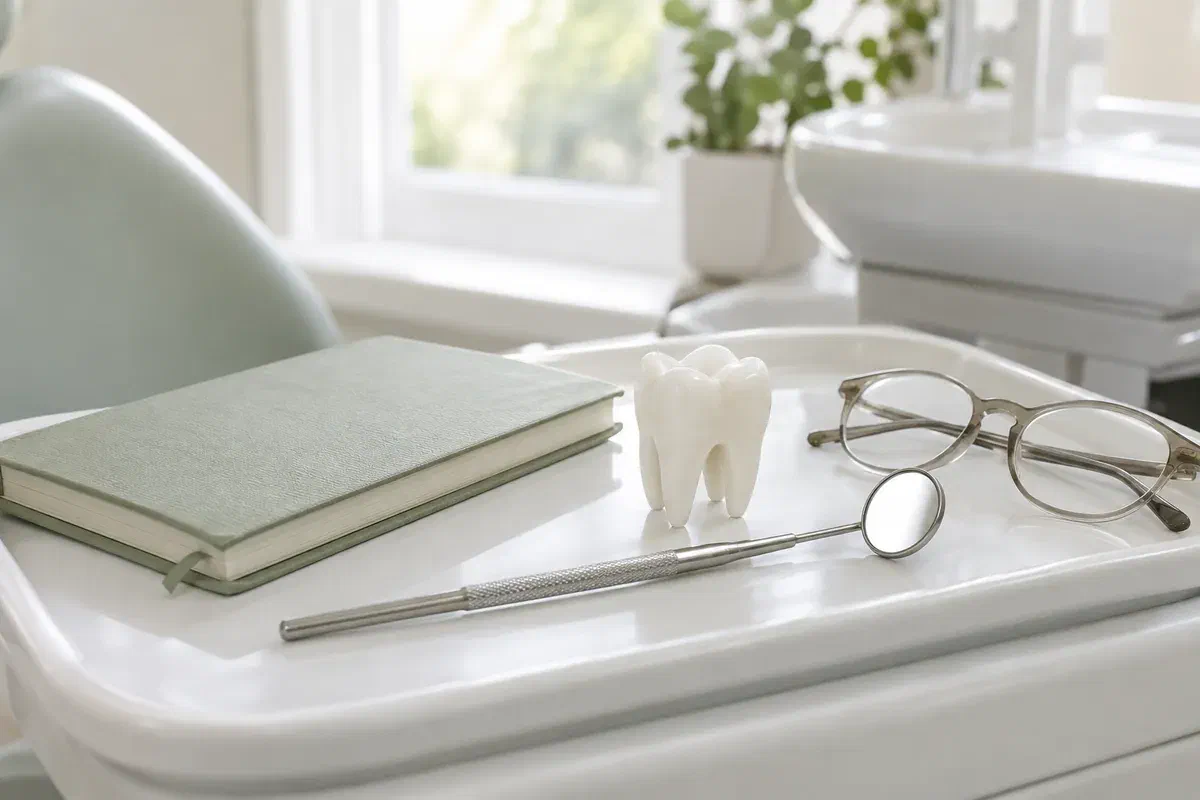
Illustrative dental mirror, tooth model, and notebook for an examination
Before you confirm the booking

Three things worth jotting down

Your earlier visit sets the background. Today’s symptoms, health news and questions decide what the dentist should look at most closely.

Changes you can feel

Think about chewing comfort, temperature sensitivity, a chipped corner or a new place where food gets stuck. When does it happen, and is it more frequent lately? Intermittent symptoms are still useful, and you will not be asked to make them appear on cue.

Changes in your health

Medication updates, a new condition, ongoing dry mouth or a routine that has become harder to manage are all relevant. A current list of your medicines is useful when anything has changed. These details may influence both the questions and the prevention advice.

Things already being watched

If a tooth, gum area or filling was discussed at a past visit, ask about it again and say whether it has felt different. Any monitoring should have a clear reason behind it and a plan for review, so you know what change would lead to new advice.

A new problem is a reason to call now, not a note to save for your recall. The team can help sort out whether a focused or urgent appointment would serve you better.

Why the interval matters

Six months is not a rule for everyone.

Many people assume checkups happen on a fixed cycle. Continuing care works differently: the interval is meant to reflect your current findings and level of risk. It may grow longer, shorter or stay put as your oral and general health change. Ask what your timing rests on and whether treatment needs its own appointment.

A recall is valuable, but it is not a guarantee. It cannot ensure every condition is identified, nor that nothing new will arise later. Think of it as one part of your care, with daily habits, any advised treatment, and prompt reporting of symptoms. Clear explanations help you decide what to do next.

Patient information: CDA — continuing care and individualized recall

Seeing what has moved

Relevant earlier records can show the dentist how things looked before. Ask whether a finding is new, the same, or not yet certain. If further testing or a wait-and-see period is suggested, find out what it is supposed to tell you.

A routine that suits you

The visit is a chance to discuss whether your current approach to prevention fits. If a product is hard to use or a method has not helped, let us know. Frank feedback opens the door to a change you can realistically manage.

A sense of order

Where several findings need attention, ask which should come first and which can be revisited later. Knowing the purpose, options and timing of each makes planning easier and avoids assuming every recommendation is equally urgent.

From check-in to checkout

Here is how a typical recall unfolds.

What is included depends on your needs and what was scheduled. Ask ahead of time whether cleaning, X-rays or a separate treatment visit are part of the day or may be advised.

  1. Catching up

    Share what has changed since your last visit and name the concern you would most like addressed. Relevant health details and earlier recommendations are reviewed. A few notes written in advance can make sure the important questions come first.

  2. Looking closely

    The dentist examines your mouth and existing dental work, keeping your history and current findings in mind. Mention discomfort or trouble opening wide. If you are unsure what part of the examination is for, feel free to ask.

  3. Weighing extra records

    Imaging or other assessments may be suggested where they are expected to help answer a clinical question. You will not automatically have the same X-rays at each recall. Ask why a record is recommended and whether recent images can be used.

  4. Leaving with a plan

    Go over findings, treatment choices and when further care is advised. Ask which symptoms should bring you back early. Make sure you can tell your next routine recall apart from any appointment booked for a particular problem.

Back home in Burlington

Small habits carry you to the next checkup.

Examinations by themselves generally need no special aftercare. If cleaning, fluoride or treatment happened at the same appointment, follow the instructions given for that.

Record the next steps

Note what was recommended and the reason, especially when the plan involves more than one visit. Ask about any unfamiliar terms before scheduling around them. Understanding the purpose of your next appointment is more useful than knowing only when it is.

Keep to your home care plan

Continue the brushing and interdental cleaning advice tailored to your mouth. If something about it is not working, tell the team rather than waiting months to bring it up. A simpler tool or a demonstration might make all the difference.

Call when you notice a change

Pain that is new, swelling, a broken restoration or a mouth change that does not go away deserves a call. Mention the recall on your calendar, but do not assume it is still the right time. The new issue may need a different assessment.

Choosing what to book

Recall, problem visit or post-treatment review

Say why you are calling when you book. The appointment needs to suit the assessment you require rather than simply repeat the type of your last visit.

For regular oral health review

Recall examination

Here the overall picture is updated, prevention and watched areas are revisited, and your next interval is set. Other care may be arranged with it where it fits. Ask what is planned so you arrive knowing what to expect.

When something new needs attention

Visit for a specific problem

A broken tooth, localized pain or new swelling might need to be seen before your recall is due. Describe the symptom and how long it has been going on. The team can suggest an appropriate next step instead of just moving your checkup date.

When progress needs checking

Post-treatment review

Some treatment includes a planned follow-up to check how you are healing or to answer questions about the work. Its purpose and timing may differ from those of a regular exam. Ask whether you need both and what each is for.

Burlington recall questions

What people ask before a return visit

Here are answers to common questions about reminders, intervals, rescheduling and what a recall does and does not include.

(905) 876-4488
Why did my reminder suggest a different interval from my spouse’s?
Intervals are set individually, based on each person’s findings, history and risk. Two people in the same home can reasonably have different schedules. Ask the dentist what your own timing is based on.
What should I do if I need to reschedule my recall?
Contact the clinic as early as you can and ask about the next suitable time. If you have new symptoms, mention them so the team can decide whether waiting is appropriate or a sooner visit makes more sense.
Does a recall checkup always come with a cleaning?
Not automatically. The two serve different purposes and can be booked together or apart. Confirm what your appointment includes, and ask whether cleaning needs will be decided once your mouth has been examined.
Can I ask for a summary of my findings to take home?
Yes, feel free to ask. A brief note of what was found, what is being watched and what comes next can help you plan. If something in the summary is unclear, ask about it before you leave.
Is it normal for my gums to bleed a little after the exam?
Mention any bleeding to the dentist, as it can be relevant to your gum health. If it is heavy, continues, or comes with swelling or pain, contact the clinic. The team can tell you whether it needs attention.
Should I let you know about health changes even if they seem unrelated to my teeth?
Yes. New medicines, diagnoses or symptoms elsewhere in the body can be relevant to dental care. Share them when you book or at the start of the visit, and bring an updated medication list.
Planning your visit from Burlington

Pick a time that works, and bring your questions.

Call our Bronte Street practice to book your recall examination. When you do, mention any recent symptoms, treatment from another provider, or health changes so we can arrange the most suitable appointment.

Recall intervals are personal and can change. Let us know about new pain or swelling right away, even if your next checkup is already scheduled.

Visit Milton Dental Clinic
Unit 1, 342 Bronte St. S, Milton, ON L9T 5B7
Get directions Clinic hours
Monday–Thursday
11am–7pm
Friday–Sunday
By appointment only

Areas we serve

  • Milton
  • Oakville
  • Mississauga
  • Georgetown
  • Halton Hills
  • Acton
  • Campbellville
  • Brampton
  • Burlington
  • Puslinch
  • Rockwood
  • Erin
  • Caledon
  • Etobicoke
  • Old Milton
  • Bronte Meadows
  • Timberlea
  • Dorset Park
  • Dempsey
  • Clarke
  • Beaty
  • Coates
  • Harrison
  • Scott
  • Willmott
  • Ford
  • Bowes
  • Cobden
  • Walker
  • Mountain View
  • Milton Heights
  • Hawthorne Village
  • Valley View
  • Fallingbrook
  • Nassagaweya
  • Trafalgar
  • Esquesing
  • Nelson
  • Brookville
  • Moffat
  • Glen Williams
  • Norval
  • Limehouse
  • Stewarttown
  • Ashgrove
  • Hornby
  • Silver Creek
  • Speyside
  • Scotch Block
  • North Oakville
  • River Oaks
  • Glen Abbey
  • West Oak Trails
  • Palermo
  • Bronte Creek
  • College Park
  • Joshua Creek
  • Uptown Core
  • Preserve
  • Iroquois Ridge
  • Lisgar
  • Meadowvale
  • Meadowvale Village
  • Churchill Meadows
  • Erin Mills
  • Central Erin Mills
  • Streetsville
  • East Credit
  • Creditview
  • Heartland
  • Sheridan
  • Mount Pleasant
  • Credit Valley
  • Huttonville
  • Churchville
  • Springbrook
  • Northwest Brampton
  • Bram West
  • Fletcher's Meadow
  • Fletcher's Creek South
  • Alton Village
  • Orchard
  • Millcroft
  • Headon Forest
  • Tansley
  • Brant Hills
  • Tyandaga
  • Kilbride
  • Lowville
  • Aberfoyle
  • Morriston
  • Arkell
  • Hillsburgh
  • Freelton
  • Carlisle
  • Waterdown
  • Flamborough
  • Mountsberg

How can we help?

Milton Dental Clinic

Have a question about your smile? Choose the option that works best for you.

For urgent dental concerns, please call.
Messages are reviewed during clinic hours.