

Illustrative conversation during a return dental checkup
General & Family Dentistry

Recall Dental Examinations in Campbellville

Rural life runs on planning. For households in Campbellville, a recall examination fits best when you know what it covers, what needs its own booking, and how to group the family’s visits sensibly.

Planning from the countryside

One trip into town, planned with care

When you live out in the Nassagaweya countryside, a trip into Milton’s centre often doubles up with groceries, errands or a child’s practice. Dental checkups slot into that rhythm. Knowing what a recall examination is for makes it easier to plan around.

In short, a recall is your scheduled return after an earlier assessment. The dentist looks at what has changed, rechecks anything that was being watched, and asks whether past advice still suits you. Comfort helps, but quiet changes in teeth and gums can happen without pain, so today’s findings are compared with before.

Bring the details you have noticed in everyday life. A molar that dislikes a cold glass of water, gums that bleed after a hectic week outdoors, food catching in a new spot. At the end, ask what is stable, what needs care, and whether any follow-up can sensibly share a trip.

Plan your next recall visit
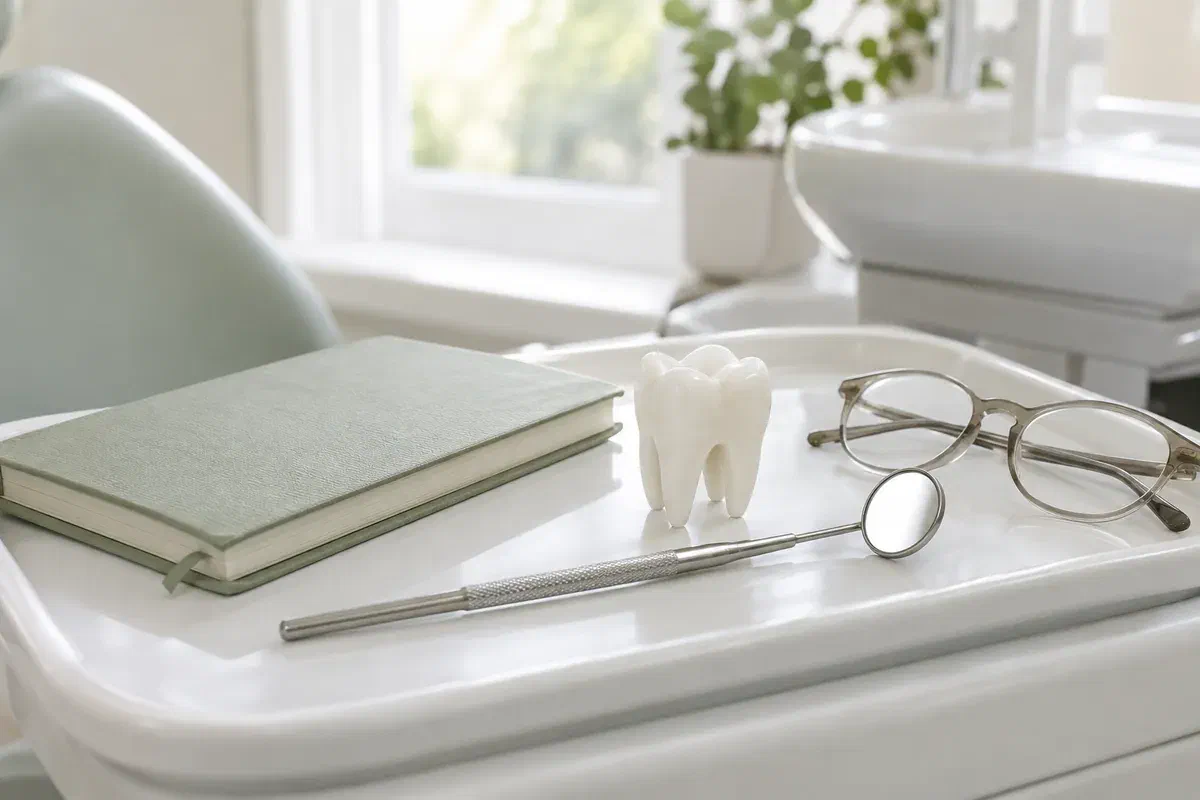
Illustrative dental mirror, tooth model, and notebook for an examination
On your list before you leave home

Note it down while it is fresh.

Last visit’s notes provide the background. What has happened since, in your mouth and your health, points the dentist toward what matters now.

Teeth that have felt different

Jot down sensitivity, an ache on biting, a jagged edge or a new food trap, and when each tends to show up. Say whether it is happening more often. If the symptom comes and goes, mention it anyway; it does not need to appear during the exam.

Changes in health or habits

New prescriptions, a diagnosis, dry mouth or a stretch when brushing fell behind are all worth sharing. Pack a current medication list. Health changes outside the mouth can steer the questions asked and the prevention ideas suggested.

Anything on the watch list

Ask about the tooth, gum area or restoration that was mentioned at a past visit, and whether it has felt any different since. You should hear why it is being watched and what sort of change would alter the dentist’s advice.

Before driving in for a new problem, phone first. The team can help you decide whether it calls for a focused visit, an urgent appointment, or can safely wait for your recall.

Why the return visit pays off

Timing that fits your mouth, and your planning

With continuing care, the gap between recalls is set by your own findings and risk rather than one rule for every household. It may get longer or shorter as your health changes. Ask what the recommendation is based on, and if treatment is needed, whether it should be booked as a separate trip or alongside something else.

It is worth being realistic. A recall cannot guarantee every condition will be found, or that nothing new will start later. It is one part of your care, together with daily habits, advised treatment and a call when symptoms change. When findings are explained plainly, deciding what to do next is simpler.

Patient information: CDA — continuing care and individualized recall

Change over time

Relevant earlier records give the dentist a point of comparison. Ask whether what you are hearing about is new, stable since last time, or still unclear. If a test or a period of observation is suggested, find out what it should settle.

Prevention that suits rural routines

Long days and early mornings can make bedtime routines hard to keep. Let us know if a recommended product is awkward, tricky to buy locally, or if a method simply has not worked for you. Honest feedback makes it far easier to find something manageable that fits the way your household actually runs.

What comes first

If several things need attention, ask which are pressing and which can be reviewed at a later visit. Knowing the purpose, options and timing of each helps you plan trips into town without treating every recommendation as urgent.

In the chair

How a recall appointment generally goes

Its contents depend on your needs and the booking. Ask ahead whether cleaning, imaging or a separate treatment slot is part of the day or may be recommended.

  1. Updates and priorities

    Begin by describing what has changed and the one question you most want answered. Your health information and previous recommendations are reviewed. If several family members are coming, a short note for each person keeps things clear.

  2. A thorough look

    The dentist examines your teeth, gums and existing dental work with your history in mind. Say if anything is sore or if opening wide for long is uncomfortable. Questions about what is being checked are welcome.

  3. Extra records, if useful

    Where a particular clinical question needs it, an X-ray or another assessment may be suggested. You will not necessarily have the same images taken at every recall. Ask why a record would help and whether recent ones are already available.

  4. Next steps and timing

    Review findings, any treatment options and when further care is recommended. Ask which signs mean you should phone early. Before leaving, separate your next routine recall from any appointment for a specific problem, and ask whether visits can be grouped.

Home again in Campbellville

Keep the plan where the family can see it.

An examination on its own rarely needs any special care afterward. If a cleaning, fluoride or treatment took place during the same visit, follow the instructions given for that.

Post the plan on the fridge

Write down what was advised and why, especially if a follow-up visit is involved. Ask about unfamiliar terms before booking around them. When the household calendar is busy, the reason for each appointment is easier to plan around than a date on its own.

Keep up your home care

Continue the cleaning routine discussed for your mouth, including between your teeth. If it is hard to fit around early starts or late chores, tell the team now rather than at the next recall. A simpler tool or a quick demonstration may help.

Phone before you drive in

Fresh pain, swelling, a broken filling or a lasting mouth change is worth a call. Mention your upcoming recall, but understand it may not be the right timing for a new concern, which could need a separate assessment.

Booking the right visit

What kind of appointment are you after?

Explain why you are calling so the booking fits the assessment you need, rather than copying the name of your last visit.

For continuing review of oral health

Routine recall

The scheduled visit that updates the overall picture, revisits prevention and watched areas, and sets your next interval. Where it makes sense, it may be coordinated with other care on the same trip. Ask in advance what the appointment covers.

For a new or worsening symptom

A focused examination

A broken tooth, pain in one area or fresh swelling may need to be looked at before your recall comes due. Describe the symptom and how long it has been bothering you, so the team can suggest the right kind of visit.

When healing should be checked

A review after treatment

Some treatment comes with a planned follow-up to see how you are getting on. Its purpose and timing may not match those of your regular exam. Ask whether you need both, and whether they can share a trip.

Campbellville recall FAQs

Common questions from rural households

Answers on grouping visits, recall timing, what an exam includes and when to call instead of waiting.

(905) 876-4488
Can several family members have recalls back to back?
Ask the front desk; it may be possible depending on availability. Remember that each person’s interval is set individually, so not everyone will be due at the same time every round. Booking well ahead gives you the best chance of finding adjoining times that suit the whole household.
Can follow-up treatment be scheduled on the same trip as my recall?
Sometimes. It depends on what is needed and what time is available. Some treatment is best planned once the examination findings are known. Ask the team which parts can be combined.
Is there anything I should bring from home?
A current medication list, notes on any symptoms, and details of dental work done elsewhere are all useful. If you wear a removable appliance or night guard, ask whether to bring it. Your reading glasses can help too, if you would like to look over any written information before you leave.
Why does my recall interval differ from what I expected?
Intervals are based on your findings, history and risk, not a fixed rule. Ask what yours is based on and what might change it. Mention if a particular schedule is difficult to keep.
Does every recall include X-rays?
No. Images are taken when the dentist has a specific clinical question they could help with. Ask why images are or are not being recommended, and whether recent records can be used.
My tooth chipped last week and my recall is next month. Can it wait?
Call and describe what happened instead of waiting. A chip may or may not need prompt attention, and your recall may not be the right type of visit. Mention pain, sharp edges or swelling.
Recall bookings for Campbellville

Plan the trip, and we’ll plan the visit.

Call our Bronte Street practice to arrange your recall examination. Let us know about any new symptoms, care received elsewhere, or health changes, and mention if you would like to coordinate visits for the household.

Recall timing is set individually. If new pain or swelling appears, phone when it starts, even if your checkup is already on the calendar.

Visit Milton Dental Clinic
Unit 1, 342 Bronte St. S, Milton, ON L9T 5B7
Get directions Clinic hours
Monday–Thursday
11am–7pm
Friday–Sunday
By appointment only

Areas we serve

  • Milton
  • Oakville
  • Mississauga
  • Georgetown
  • Halton Hills
  • Acton
  • Campbellville
  • Brampton
  • Burlington
  • Puslinch
  • Rockwood
  • Erin
  • Caledon
  • Etobicoke
  • Old Milton
  • Bronte Meadows
  • Timberlea
  • Dorset Park
  • Dempsey
  • Clarke
  • Beaty
  • Coates
  • Harrison
  • Scott
  • Willmott
  • Ford
  • Bowes
  • Cobden
  • Walker
  • Mountain View
  • Milton Heights
  • Hawthorne Village
  • Valley View
  • Fallingbrook
  • Nassagaweya
  • Trafalgar
  • Esquesing
  • Nelson
  • Brookville
  • Moffat
  • Glen Williams
  • Norval
  • Limehouse
  • Stewarttown
  • Ashgrove
  • Hornby
  • Silver Creek
  • Speyside
  • Scotch Block
  • North Oakville
  • River Oaks
  • Glen Abbey
  • West Oak Trails
  • Palermo
  • Bronte Creek
  • College Park
  • Joshua Creek
  • Uptown Core
  • Preserve
  • Iroquois Ridge
  • Lisgar
  • Meadowvale
  • Meadowvale Village
  • Churchill Meadows
  • Erin Mills
  • Central Erin Mills
  • Streetsville
  • East Credit
  • Creditview
  • Heartland
  • Sheridan
  • Mount Pleasant
  • Credit Valley
  • Huttonville
  • Churchville
  • Springbrook
  • Northwest Brampton
  • Bram West
  • Fletcher's Meadow
  • Fletcher's Creek South
  • Alton Village
  • Orchard
  • Millcroft
  • Headon Forest
  • Tansley
  • Brant Hills
  • Tyandaga
  • Kilbride
  • Lowville
  • Aberfoyle
  • Morriston
  • Arkell
  • Hillsburgh
  • Freelton
  • Carlisle
  • Waterdown
  • Flamborough
  • Mountsberg

How can we help?

Milton Dental Clinic

Have a question about your smile? Choose the option that works best for you.

For urgent dental concerns, please call.
Messages are reviewed during clinic hours.