

Illustrative conversation during a return dental checkup
General & Family Dentistry

Recall Dental Examinations in Mississauga

Squeezing a checkup into a full week? From Mississauga, a little preparation lets one recall visit cover what has changed, what was being watched, and when you genuinely need to come back.

Checkups that fit a working week

Make one appointment do its full job.

Time off work, a drive west, a meeting waiting afterward: when you arrive from Meadowvale or Churchill Meadows in Mississauga, you want the visit to be useful. A recall examination revisits your mouth after an earlier assessment, looking for what has changed and testing whether past recommendations still apply.

The best preparation is a few minutes of thought before you leave home. Which tooth has been reacting to cold? Has food started trapping in a new spot? Did a hectic quarter at work push flossing aside? Details like these connect the exam to how your mouth has actually been doing.

Comfort, by itself, does not settle the question of health, so the dentist compares today’s findings with earlier ones. By the end you should hear which areas look steady, which need attention, and why the next recall falls when it does, along with when to call before then.

Plan your recall appointment
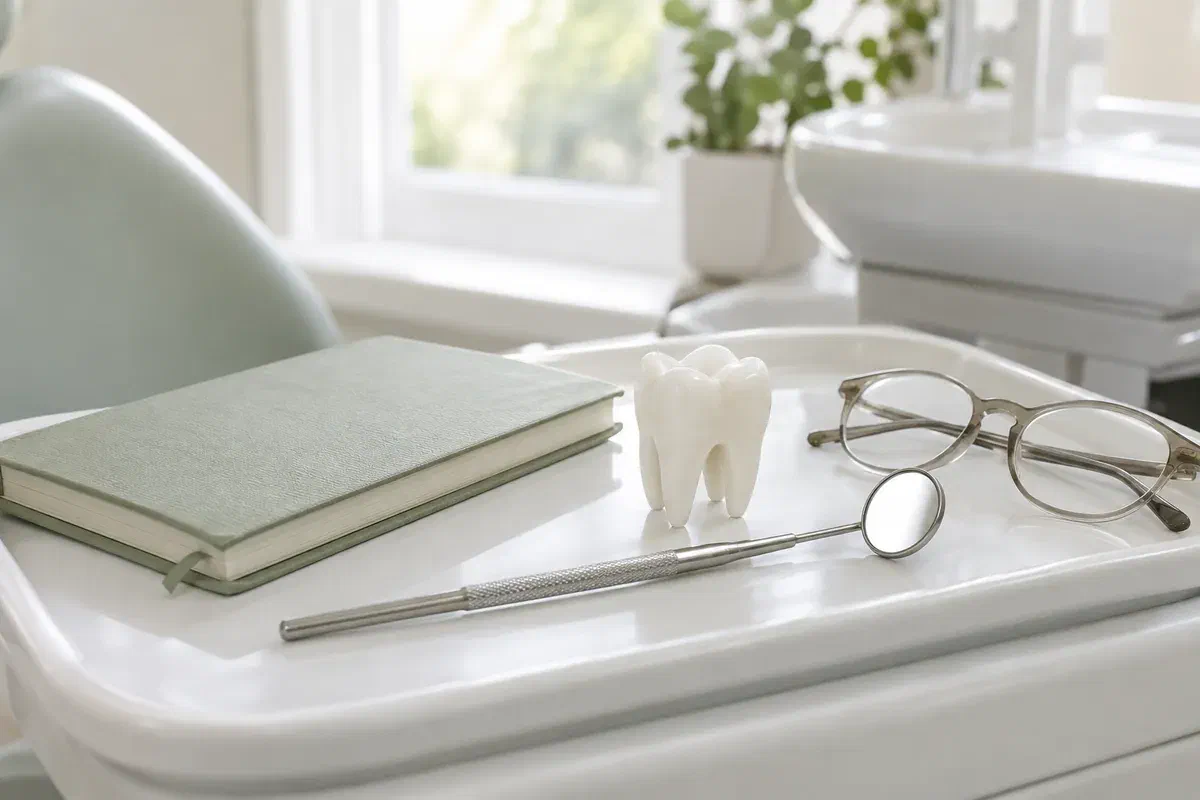
Illustrative dental mirror, tooth model, and notebook for an examination
A two-minute checklist

Have these ready before you sit down.

Previous notes tell the dentist where things stood. Your fresh observations, health updates and questions tell them where to look first today.

Anything that feels off

Note sensitivity, discomfort on biting, a sharp edge or a new food trap. Jot down roughly when it happens and whether it is getting more common. Symptoms that come and go still count; you will not need to reproduce them in the chair.

Medication and health news

Keep a current medication list on your phone and mention any new diagnosis, dry mouth or difficulty keeping up with home care. Health changes outside the mouth can shape the questions you are asked and the prevention ideas discussed.

Old items on the agenda

Recall any tooth, gum area or restoration the dentist mentioned before and say whether it has seemed different. Watching an area should come with a stated reason and a review plan, so you understand what change would lead to different advice.

Please do not hold a new problem until your recall date. Call and describe it, and the team can help you decide whether a focused or urgent appointment is the better choice.

What continuing care buys you

Fewer guesses, better-timed visits

Busy people sometimes worry that recall visits are just routine. In continuing care, though, recommendations follow your current findings and risk, not a universal timetable. Your interval can change as your mouth and general health change. Ask what the timing is based on, and whether a treatment visit should be booked on its own.

No examination can promise that every condition is found, or that nothing will develop after you leave. The recall works together with your habits, any treatment that is recommended, and your attention to symptoms between visits. Clear explanations of findings help you decide what to do with your time and care.

Patient information: CDA — continuing care and individualized recall

Now compared with before

Where they are relevant, earlier records give a basis for comparison. Ask whether a finding is new, unchanged or uncertain. If an extra test or a monitoring period is suggested, ask what the dentist hopes to learn from it.

Prevention for your schedule

Talk about whether your current routine is realistic. If a product takes too long, or a technique never seemed to work, tell us. Practical feedback makes it easier to find a version you will actually keep doing on weeknights.

Clear next priorities

If there are several items to discuss, ask which matter now and which can wait for a later review. Understanding each one’s purpose, alternatives and timing helps you plan around work without treating every suggestion as equally urgent.

Step by step

What to expect once you are in the chair

No two recalls are quite the same length or content. Before the day, check with the front desk if a cleaning, imaging or a later treatment slot is part of your booking, or could be suggested.

  1. Open with your top question

    Explain what has changed and the concern you most want resolved. The team reviews health information and earlier recommendations with you. If you have several questions, starting with the most important one keeps the visit on track.

  2. The dentist’s examination

    With your history in mind, the dentist checks teeth, gums, fillings and other restorations. Say so if anything is tender or if opening your mouth for long is hard. Curious about a particular step? Ask, and it can be explained as you go.

  3. Extra records only when they help

    Sometimes an X-ray or another test is the clearest way to settle a clinical question, and then it may be proposed. A recall does not by default mean a fresh set of images. You can ask what a new record would show and whether ones taken recently are still usable.

  4. A plan you can schedule around

    Go through findings, any treatment options and recommended timing for further care. Ask which symptoms should prompt an earlier call. Before leaving, be clear on which upcoming visit is your routine recall and which is for a particular problem.

Back to your routine

Between visits, keep things practical.

An examination alone usually needs no special recovery. If you also had cleaning, fluoride or treatment, follow the separate guidance for that part of the visit.

Save the plan somewhere handy

Put a short note in your phone of what was advised and why, especially if more than one appointment is involved. Ask about unfamiliar words before booking around them. The purpose of the next visit is more useful to remember than its date.

Keep the routine realistic

Follow the brushing and between-teeth cleaning advice discussed for your mouth. If late nights or travel make it difficult, mention it now rather than at your next exam. A quicker method or a demonstration may help it fit your week.

Call rather than wait

Phone us about fresh pain, swelling, a cracked filling or any mouth change that hangs around. It is helpful to mention your upcoming recall, though that slot was planned for routine review. A problem that has just appeared might be better handled by a separate, sooner visit.

Booking the right slot

Tell us the reason, and we can match the visit.

Explain why you are calling when you book. The appointment should suit the assessment you need rather than mirror the name of your last visit.

For continuing oral health review

Standard recall

The big-picture visit: prevention is reviewed, watched areas get a second look, and your next interval is agreed. Other care is sometimes added to the same booking. Find out in advance what is on the plan so you can set aside enough time from work.

When a new symptom shows up

Concern-specific examination

Chipped a tooth on the weekend? Noticed one sore spot, or a swelling that was not there before? That may need its own visit before your recall comes around. Tell the team what started and when, and they can suggest how best to proceed.

When healing or response needs review

Treatment follow-up

After certain treatment, a dedicated review checks how things are settling or answers questions about the work done. It can run on a different timeline from your routine exam and look at different things, so ask if you need both.

Mississauga recall FAQs

Practical questions, plain answers

These answers cover scheduling, time in the chair, records and the difference between a checkup and other appointments.

(905) 876-4488
Are evening recall appointments available?
The clinic is open until 7pm Monday to Thursday, and Friday to Sunday visits are by appointment only. Ask the front desk about times that suit your work schedule when you book.
Can I combine a recall with treatment on the same day to save a trip?
Sometimes, depending on what is needed and what time is available. Ask when booking and again at your recall. Some treatment is better planned separately once the examination findings are known.
How long should I block off for a recall?
That depends on the booking. A visit that is only an examination tends to be quicker than one that also includes a cleaning, and findings can add discussion time. The front desk can give you a realistic estimate for your calendar.
My dentist used to take X-rays every time. Why not here?
Imaging is recommended when it is expected to help answer a clinical question, not automatically at every visit. Ask the dentist why images are or are not suggested, and whether recent records from another office can be reviewed.
I had a filling done elsewhere last year. What should I share?
Mention the tooth, the approximate date, and anything the other dentist said still needed doing. We can talk about requesting the records from that office, which saves you trying to recall the technical specifics.
Does feeling fine mean I can stretch my recall interval?
Not on its own. Comfort does not show whether everything is healthy, and some changes cause no symptoms. Discuss the timing with the dentist, who can explain what the interval is based on.
Recall visits from Mississauga

Book once, cover what matters.

Reach our Bronte Street practice to book your recall examination. Mention new symptoms, care received at another office, or health changes when you call, so the appointment can be planned around what you need.

Recall timing is tailored to each person. If new pain or swelling appears, tell us when it starts rather than waiting for your booked checkup.

Visit Milton Dental Clinic
Unit 1, 342 Bronte St. S, Milton, ON L9T 5B7
Get directions Clinic hours
Monday–Thursday
11am–7pm
Friday–Sunday
By appointment only

Areas we serve

  • Milton
  • Oakville
  • Mississauga
  • Georgetown
  • Halton Hills
  • Acton
  • Campbellville
  • Brampton
  • Burlington
  • Puslinch
  • Rockwood
  • Erin
  • Caledon
  • Etobicoke
  • Old Milton
  • Bronte Meadows
  • Timberlea
  • Dorset Park
  • Dempsey
  • Clarke
  • Beaty
  • Coates
  • Harrison
  • Scott
  • Willmott
  • Ford
  • Bowes
  • Cobden
  • Walker
  • Mountain View
  • Milton Heights
  • Hawthorne Village
  • Valley View
  • Fallingbrook
  • Nassagaweya
  • Trafalgar
  • Esquesing
  • Nelson
  • Brookville
  • Moffat
  • Glen Williams
  • Norval
  • Limehouse
  • Stewarttown
  • Ashgrove
  • Hornby
  • Silver Creek
  • Speyside
  • Scotch Block
  • North Oakville
  • River Oaks
  • Glen Abbey
  • West Oak Trails
  • Palermo
  • Bronte Creek
  • College Park
  • Joshua Creek
  • Uptown Core
  • Preserve
  • Iroquois Ridge
  • Lisgar
  • Meadowvale
  • Meadowvale Village
  • Churchill Meadows
  • Erin Mills
  • Central Erin Mills
  • Streetsville
  • East Credit
  • Creditview
  • Heartland
  • Sheridan
  • Mount Pleasant
  • Credit Valley
  • Huttonville
  • Churchville
  • Springbrook
  • Northwest Brampton
  • Bram West
  • Fletcher's Meadow
  • Fletcher's Creek South
  • Alton Village
  • Orchard
  • Millcroft
  • Headon Forest
  • Tansley
  • Brant Hills
  • Tyandaga
  • Kilbride
  • Lowville
  • Aberfoyle
  • Morriston
  • Arkell
  • Hillsburgh
  • Freelton
  • Carlisle
  • Waterdown
  • Flamborough
  • Mountsberg

How can we help?

Milton Dental Clinic

Have a question about your smile? Choose the option that works best for you.

For urgent dental concerns, please call.
Messages are reviewed during clinic hours.