

Illustrative conversation during a return dental checkup
General & Family Dentistry

Recall Dental Examinations in Oakville

Is a recall just the same checkup again? Not quite. For visitors from Oakville, it is a focused return visit that asks what has changed, rechecks watched areas and sets sensible timing for what follows.

Same chair, different purpose

Why isn’t a recall just a repeat of last time?

It is a fair question. You lie back, the light comes on, and it can feel identical to your previous checkup. The difference lies in what the dentist is asking: not simply whether your teeth look healthy, but whether anything has moved since the earlier assessment and whether past advice still holds.

That comparison is where small observations become valuable. If you are coming from Oakville and have noticed a tooth reacting to cold drinks, food catching somewhere new, or gums bleeding more after a stressful stretch, say so. Those clues tie the exam to your real life instead of to a checklist.

Afterward, the outcome may be to keep watching, to tweak your prevention, or to talk through treatment. Ask which findings are stable and which are not, and why a particular return date was chosen. You should leave knowing what to do day to day and when to phone sooner.

Request a return checkup
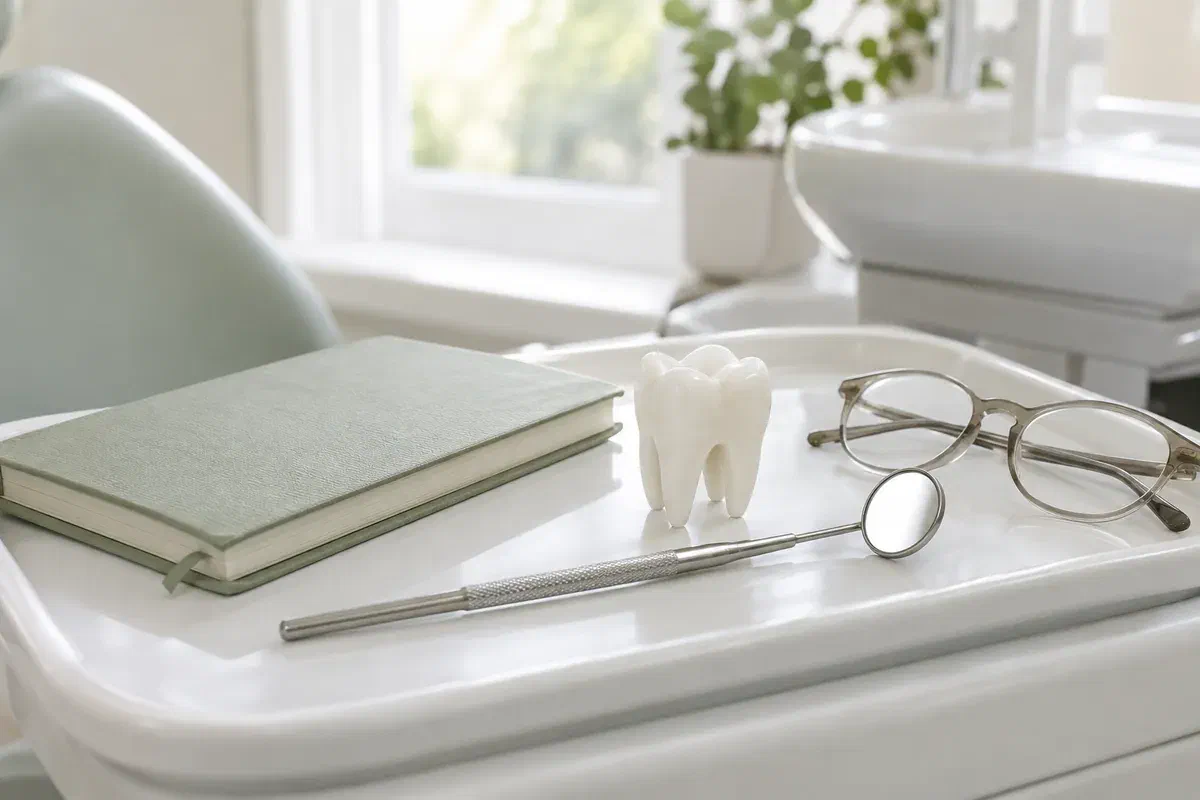
Illustrative dental mirror, tooth model, and notebook for an examination
Questions to bring along

What have you noticed that we haven’t?

The last appointment gives the team context. Your recent symptoms, health updates and questions point to what matters at this one.

A change in how a tooth feels or works

Sensitivity, an ache when biting, a rough spot or a fresh food trap are all worth describing. Explain when it shows up and whether it is happening more often. A symptom that comes and goes still helps; nobody expects you to recreate it during the visit.

Updates to your health or habits

Tell the team about new prescriptions, diagnoses, a persistently dry mouth or trouble keeping up with brushing. If your medicines have changed, bring the current list. What happens elsewhere in the body can influence the questions asked and the prevention advice offered.

Areas already on the watch list

Ask about any tooth, gum site or restoration that came up before, and mention whether it has felt any different. Keeping an eye on something should have a defined reason and a review plan, so you know what sort of change would alter the recommendation.

There is no need to wait for your recall when a new problem crops up. Phone the clinic and describe it; the team can help work out whether a focused visit or urgent care is more suitable.

Why the return visit earns its place

Timing that follows you, not the calendar

Continuing care exists so advice can track your current findings and risk instead of a single schedule for everyone. If your oral or general health shifts, the recommended gap between visits may shift too. It is reasonable to ask what supports your interval and whether a treatment appointment should be booked separately.

Let’s be honest about limits. A recall cannot promise to find every condition, and something may still develop after you leave. It sits beside your home habits, any recommended treatment, and timely attention to new symptoms. Clear explanations are what let you make good use of the findings.

Patient information: CDA — continuing care and individualized recall

A reference point

When earlier records are relevant, they give the dentist something to compare against. Ask plainly whether a finding is new, unchanged or still uncertain. If an extra test or a period of watching is suggested, ask what question it should answer.

Advice that fits real life

Use the visit to talk about how prevention is actually going. Mention if a recommended product is fiddly or a cleaning technique has not worked. Practical feedback makes it easier to land on an adjustment you can maintain.

Sorting what matters most

When there are several things to discuss, ask which deserve attention first and which can be reviewed later. Hearing the purpose, alternatives and timing of each helps you plan your next steps without treating everything as equally urgent.

Inside the appointment

Listen, examine, explain, plan.

Your visit’s scope depends on your needs and how it was arranged. Ask beforehand whether cleaning, imaging or a separate treatment appointment is included or may be suggested.

  1. Your news and your main question

    Start by sharing what has changed and the one thing you most want to understand. The team goes over relevant health information and past recommendations with you. A brief written list is handy if you have several questions.

  2. Examination of teeth, gums and dental work

    The dentist looks at your mouth and any existing restorations, weighing your history alongside today’s findings. Speak up about soreness or difficulty keeping your mouth open. Ask if you would like to know what a step is checking.

  3. Deciding on any extra information

    X-rays or another assessment may be proposed if they are expected to help with a specific clinical question. Recall visits do not automatically involve identical images each time. Ask what the record would add and whether recent ones can be reviewed instead.

  4. Putting the plan together

    Review findings, treatment options if any, and the recommended timing of future care. Ask what symptoms should prompt an earlier call. Before you go, separate your next routine recall from any appointment meant to assess or treat something specific.

After you head home

What to keep doing, and what to watch for

Most examinations on their own need no special recovery. Follow any separate instructions if cleaning, fluoride or treatment was carried out at the same visit.

Jot down the recommendations

Write a quick summary of what was advised and why, especially if more than one appointment is planned. Ask about unfamiliar terms before you try to schedule around them. Knowing what the next visit is meant to do matters more than its date alone.

Keep up the agreed routine

Follow the brushing and between-teeth cleaning guidance discussed for your mouth. If it is not working for you, let the team know now instead of waiting for the next checkup. A simpler approach or a quick demonstration may help it stick.

Phone if something shifts

New pain, swelling, a damaged filling or crown, or a mouth change that persists warrants a call. Mention your booked recall, but do not assume it is still the right timing. A new concern may need a different kind of assessment altogether.

Which appointment fits?

Not every return visit is a recall.

When you contact the clinic, explain why. The appointment should allow the right kind of assessment, not just match the name of your previous visit.

For continuing oral health review

Routine recall

This visit refreshes the full picture, revisits prevention and anything under watch, and sets your next interval. It can be coordinated with other care when appropriate. Ask what is planned so you know what to expect.

When a symptom is new

Examination for a specific concern

A broken tooth, pain in one place or new swelling may need a focused look sooner. Describe what you are feeling and when it began. The team can discuss the next step with you rather than just shifting your recall forward.

When healing needs a check

Follow-up after treatment

Some treatment includes a dedicated review to assess how you are doing or to answer a question about the work. That appointment may differ in purpose and timing from your regular exam. Confirm whether both are needed and what each will establish.

Oakville recall FAQs

Quick answers before you book

A routine visit can still leave you wondering. These answers cover timing, scheduling and what sets a recall apart from other appointments.

(905) 876-4488
How is a recall different from a new patient examination?
A new patient examination builds a starting picture of your oral health. A recall returns to that picture to see what has changed and whether earlier advice still applies. If you have not been here before, ask which type of appointment suits you.
Who decides how often I should come back?
The dentist recommends an interval based on your findings, history and risk, and you can discuss it. Ask what the timing is based on and what could change it. Let the team know if practical barriers make a particular schedule hard to keep.
Can I combine my recall with my partner’s on the same day?
It may be possible, depending on availability and what each of you needs. Ask the front desk when booking. Bear in mind that your recommended intervals might not match, so appointments will not always fall together.
If nothing hurts, can I skip this round and come next year instead?
Comfort does not prove that everything is fine, since some changes cause no symptoms. Before you postpone, talk to the clinic about the recommended timing and the reason for it. The examination can review areas you cannot check yourself.
Do I need to tell you about dental work done at another office?
Yes, it helps. Share what was done, roughly when, and whether follow-up is still pending. Ask about having relevant records sent over so the dentist is not relying on memory for technical details.
A tooth started aching last night. Should I wait for my recall?
Call and describe the symptoms instead. Your booked visit may not be soon enough or the right type of appointment. Mention any swelling, fever, injury or pain that is getting worse so the team can advise you.
Recall exams for Oakville

Book the visit that picks up where you left off.

Contact our Bronte Street practice to set up your recall examination. Let us know about new symptoms, care received elsewhere, or health changes when you call so the right appointment can be planned.

How often you return is decided for you individually. Report new pain or swelling as soon as it begins, even with a checkup already booked.

Visit Milton Dental Clinic
Unit 1, 342 Bronte St. S, Milton, ON L9T 5B7
Get directions Clinic hours
Monday–Thursday
11am–7pm
Friday–Sunday
By appointment only

Areas we serve

  • Milton
  • Oakville
  • Mississauga
  • Georgetown
  • Halton Hills
  • Acton
  • Campbellville
  • Brampton
  • Burlington
  • Puslinch
  • Rockwood
  • Erin
  • Caledon
  • Etobicoke
  • Old Milton
  • Bronte Meadows
  • Timberlea
  • Dorset Park
  • Dempsey
  • Clarke
  • Beaty
  • Coates
  • Harrison
  • Scott
  • Willmott
  • Ford
  • Bowes
  • Cobden
  • Walker
  • Mountain View
  • Milton Heights
  • Hawthorne Village
  • Valley View
  • Fallingbrook
  • Nassagaweya
  • Trafalgar
  • Esquesing
  • Nelson
  • Brookville
  • Moffat
  • Glen Williams
  • Norval
  • Limehouse
  • Stewarttown
  • Ashgrove
  • Hornby
  • Silver Creek
  • Speyside
  • Scotch Block
  • North Oakville
  • River Oaks
  • Glen Abbey
  • West Oak Trails
  • Palermo
  • Bronte Creek
  • College Park
  • Joshua Creek
  • Uptown Core
  • Preserve
  • Iroquois Ridge
  • Lisgar
  • Meadowvale
  • Meadowvale Village
  • Churchill Meadows
  • Erin Mills
  • Central Erin Mills
  • Streetsville
  • East Credit
  • Creditview
  • Heartland
  • Sheridan
  • Mount Pleasant
  • Credit Valley
  • Huttonville
  • Churchville
  • Springbrook
  • Northwest Brampton
  • Bram West
  • Fletcher's Meadow
  • Fletcher's Creek South
  • Alton Village
  • Orchard
  • Millcroft
  • Headon Forest
  • Tansley
  • Brant Hills
  • Tyandaga
  • Kilbride
  • Lowville
  • Aberfoyle
  • Morriston
  • Arkell
  • Hillsburgh
  • Freelton
  • Carlisle
  • Waterdown
  • Flamborough
  • Mountsberg

How can we help?

Milton Dental Clinic

Have a question about your smile? Choose the option that works best for you.

For urgent dental concerns, please call.
Messages are reviewed during clinic hours.