

Illustrative conversation during a return dental checkup
General & Family Dentistry

Recall Dental Examinations in Rockwood

An emergency filling while travelling, a specialist referral, a crown done near work: care in between visits is common. From Rockwood, a recall examination brings those pieces back into one connected picture.

Joining up the pieces

Care from several places, one clear picture

Life does not always keep dental care under one roof. A cracked tooth on holiday, a referral to a specialist, or treatment booked closer to a workplace can all happen between checkups. When you return from Rockwood for a recall, those episodes are part of the story the dentist needs to hear.

The recall itself is a planned follow-up after an earlier assessment. Its task is to see what has changed and whether past recommendations still apply. Feeling well is a helpful sign, though not a complete one; the dentist compares today’s findings with what was recorded before, including any new work done elsewhere.

Bring what you can: the name of the other office, roughly what was done and when, and any instructions you were given. Add the everyday details as well, like a new filling that feels high or floss that now catches. You should leave with a joined-up plan and clear timing for what follows.

Book your recall examination
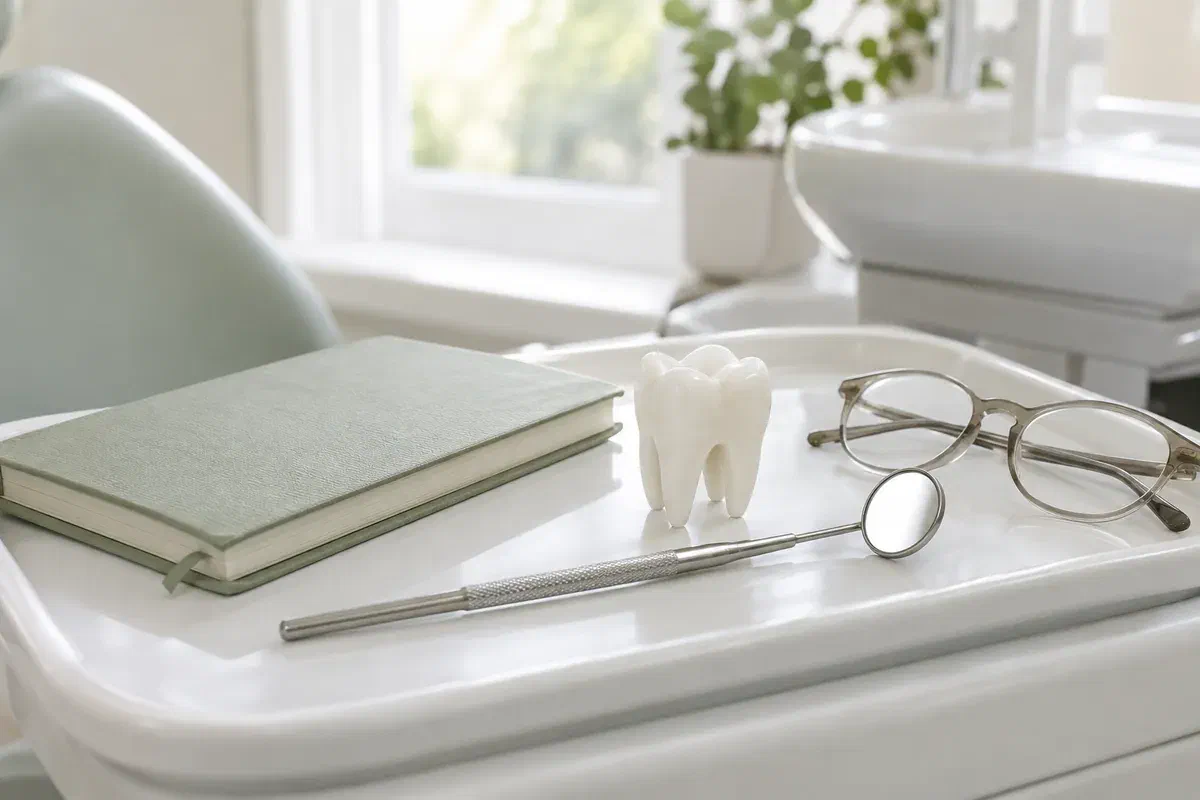
Illustrative dental mirror, tooth model, and notebook for an examination
What has happened since

Fill in the gaps your file cannot.

Your existing record shows where things stood at your last visit. Treatment elsewhere, recent symptoms and health changes complete the picture for today.

Changes in how your teeth feel

Mention a bite that feels uneven after new work, sensitivity to cold or sweets, a rough edge or a new gap for food. Describe when it happens and whether it is increasing. Symptoms that come and go are still useful clues for the examination.

Health updates and outside care

Tell us about new medicines, diagnoses, dry mouth, or any treatment from another dentist or specialist. A current medication list is helpful, as are any written instructions you received. These details can shape the questions asked and the prevention advice offered.

Anything previously flagged

If a tooth, gum area or restoration was being watched before, ask about it, and say whether another provider treated it in the meantime. You should understand why monitoring continues, or why it is no longer needed.

If a new problem appears, there is no need to wait for your recall. Call and explain; someone can talk through whether it needs a dedicated problem visit or more urgent care.

The value of continuity

Connected records make clearer decisions.

In continuing care, your interval follows your own findings and risk rather than a standard schedule. When other providers have been involved, that context can affect what is recommended next. Ask what your timing is based on, and whether any follow-up from outside treatment should be booked separately or reviewed at your recall.

A recall cannot guarantee that every issue will be found, or that nothing will arise afterward. It works together with your home care, treatment when advised, and prompt contact about new symptoms. When findings are explained clearly, including how they relate to care received elsewhere, you can act on them with confidence.

Patient information: CDA — continuing care and individualized recall

One baseline to compare with

Earlier notes and images, including those from another office where relevant, give the dentist a reference point. Ask whether something has changed since then or looks the same. If a test or a waiting period is suggested, find out what it should clarify.

Prevention that reflects recent work

New crowns, fillings or appliances may call for small changes in how you clean. If a product or technique is difficult around new work, mention it. Practical feedback helps the team suggest an approach you can maintain.

Priorities, clearly ordered

When several findings or loose ends come up, ask which should be handled first and which can be reviewed later. Knowing the reason, alternatives and timing for each makes it easier to organize the next steps calmly.

Step by step

History, examination, records, plan

Each visit depends on your needs and what was booked. Ask ahead whether a cleaning, imaging or a separate treatment visit is included or might be recommended.

  1. Bring the dentist up to date

    Describe changes since your last appointment, any treatment elsewhere, and the one thing you would most like explained today. Your health information and previous recommendations are reviewed. A written timeline of outside care, even a rough one with approximate months, can be very helpful.

  2. Examine the mouth and any new work

    The dentist checks your teeth and gums, along with existing and recently placed restorations, in light of your history. Mention any soreness or difficulty keeping your mouth open, and ask what a step is for if you are unsure.

  3. Consider outside and new records

    Records from another office may be requested where they would help. An X-ray or other assessment may be suggested when it is expected to answer a clinical question. Images are not automatically repeated, so ask whether existing ones can be used.

  4. Agree the follow-up

    Go over the findings, any treatment choices and when further care is recommended. Ask which symptoms should prompt an earlier call. Before leaving, clarify which appointment is your routine recall and which, if any, deals with a particular problem or outside follow-up.

Between now and next time

Keep the records, and the routine, together.

An examination alone generally needs no special recovery. If you had a cleaning, fluoride or treatment during the same visit, follow the separate instructions for that.

Keep one folder

Store notes from this visit with any paperwork from other offices, so you have one place to look. Write down what was recommended and why, and ask about any unfamiliar terms. Knowing the purpose of each next step helps more than tracking dates.

Care for new and old work alike

Follow the brushing and between-teeth cleaning approach discussed, including around recent restorations. If something is hard to clean or feels awkward, tell the team now rather than at the next exam. A different tool or a demonstration may help.

Call if something changes

New pain or swelling, a crown or filling that loosens, or a mouth change that lingers deserves a phone call. Mention your booked recall, but bear in mind that a fresh concern may need its own, separate assessment.

Which visit to book

Name the reason, and the right appointment follows.

Explain why you are calling, including any outside treatment. The visit should fit the assessment needed rather than simply repeat your last booking.

For ongoing oral health review

Routine recall

This visit updates the overall picture, revisits prevention and watched areas, and agrees your next interval. It can sometimes be coordinated with other care. Ask ahead what the appointment will involve so you can plan your day.

When a new problem appears

Focused examination

A broken tooth, a new ache in one place, or swelling that was not there before might need attention ahead of your recall. Describe the symptom and when it started, so the team can help you choose a sensible next step.

When recent work needs checking

Treatment review

Some treatment, here or elsewhere, comes with a planned review to see how things are settling. That visit may differ in purpose and timing from your routine exam. Ask whether both are needed and what each is for.

Rockwood recall questions

Outside care, records and recall timing

Answers about treatment from other offices, transferring records and what to expect at a return checkup.

(905) 876-4488
How do I get records from another dental office sent to you?
Contact the other office and ask about their process for sharing records, then let our team know. You may need to sign a consent form. Doing this before your recall gives the dentist time to review them.
I saw a specialist since my last checkup. Does that change my recall?
It may. Let us know who you saw, what was done, and whether they asked for follow-up. The dentist can discuss how that fits with your recall timing and whether separate appointments are needed.
A filling done elsewhere feels high. Can you check it at my recall?
Mention it when you book. If your bite feels uncomfortable now, call rather than waiting, as it may need attention sooner. The dentist can examine it and explain the options.
What if I can’t remember exactly what treatment I had?
Share what you do remember, such as which tooth, roughly when, and whether it involved an injection, an impression or a temporary. Records from the other office can fill in the details. You do not need to know the technical terms, and nobody expects you to.
Does a recall examination include a cleaning automatically?
Not necessarily. A checkup assesses; a cleaning treats. They can share one appointment or be split across two, depending on how things are booked. If you had a cleaning at another office recently, say so, since that may affect what is arranged this time. The front desk can tell you exactly what is on your booking.
My teeth feel fine. Is the recall still worthwhile?
Yes. Comfort does not confirm that everything is healthy, and the examination looks at areas you cannot easily check. If you are thinking of postponing, talk to the clinic about the timing first.
Return checkups for Rockwood

Bring the whole story, and we’ll connect it.

Get in touch with our Bronte Street practice to arrange your recall. Mention any new symptoms, treatment from other offices, or changes in health when you call so the right appointment can be planned.

Recall intervals are individual. If new pain or swelling develops, let us know when it starts, even if your next checkup is already booked.

Visit Milton Dental Clinic
Unit 1, 342 Bronte St. S, Milton, ON L9T 5B7
Get directions Clinic hours
Monday–Thursday
11am–7pm
Friday–Sunday
By appointment only

Areas we serve

  • Milton
  • Oakville
  • Mississauga
  • Georgetown
  • Halton Hills
  • Acton
  • Campbellville
  • Brampton
  • Burlington
  • Puslinch
  • Rockwood
  • Erin
  • Caledon
  • Etobicoke
  • Old Milton
  • Bronte Meadows
  • Timberlea
  • Dorset Park
  • Dempsey
  • Clarke
  • Beaty
  • Coates
  • Harrison
  • Scott
  • Willmott
  • Ford
  • Bowes
  • Cobden
  • Walker
  • Mountain View
  • Milton Heights
  • Hawthorne Village
  • Valley View
  • Fallingbrook
  • Nassagaweya
  • Trafalgar
  • Esquesing
  • Nelson
  • Brookville
  • Moffat
  • Glen Williams
  • Norval
  • Limehouse
  • Stewarttown
  • Ashgrove
  • Hornby
  • Silver Creek
  • Speyside
  • Scotch Block
  • North Oakville
  • River Oaks
  • Glen Abbey
  • West Oak Trails
  • Palermo
  • Bronte Creek
  • College Park
  • Joshua Creek
  • Uptown Core
  • Preserve
  • Iroquois Ridge
  • Lisgar
  • Meadowvale
  • Meadowvale Village
  • Churchill Meadows
  • Erin Mills
  • Central Erin Mills
  • Streetsville
  • East Credit
  • Creditview
  • Heartland
  • Sheridan
  • Mount Pleasant
  • Credit Valley
  • Huttonville
  • Churchville
  • Springbrook
  • Northwest Brampton
  • Bram West
  • Fletcher's Meadow
  • Fletcher's Creek South
  • Alton Village
  • Orchard
  • Millcroft
  • Headon Forest
  • Tansley
  • Brant Hills
  • Tyandaga
  • Kilbride
  • Lowville
  • Aberfoyle
  • Morriston
  • Arkell
  • Hillsburgh
  • Freelton
  • Carlisle
  • Waterdown
  • Flamborough
  • Mountsberg

How can we help?

Milton Dental Clinic

Have a question about your smile? Choose the option that works best for you.

For urgent dental concerns, please call.
Messages are reviewed during clinic hours.