

Illustrative conversation about caring for exposed root surfaces
General & Family Dentistry

Root-Cavity Prevention in Campbellville

Waking up with a parched mouth night after night can leave exposed roots with less natural protection. For households in Campbellville, we look at the roots, talk through night-time dryness, and plan care that fits around rural life.

Mornings, dryness and roots

You wake up dry. Your roots notice too.

Saliva flow naturally drops during sleep, and sleeping with your mouth open, certain medicines, or other health factors can make mornings feel especially dry. Meanwhile, any root exposed by receding gum has no enamel coat, so it relies more on saliva and fluoride for protection. Dryness plus exposure raises a question about risk; it does not mean decay has begun.

From Campbellville, out in rural Nassagaweya, a visit to our Bronte Street practice can cover the full picture in one sitting. The dentist examines the exposed roots, and we ask when you notice dryness, what you keep by the bed, what medicines you take, and which areas trap food or are hard to brush. That separates protection needs from anything needing repair.

The plan that follows aims at the hours when protection is lowest. It may include a bedtime fluoride step, guidance on what to sip overnight, a gentler cleaning method for the root, and a suggestion to mention dryness to your doctor. No product guarantees a healthy root, and the plan should change when your health or medicines do.

Talk about night-time dryness and roots
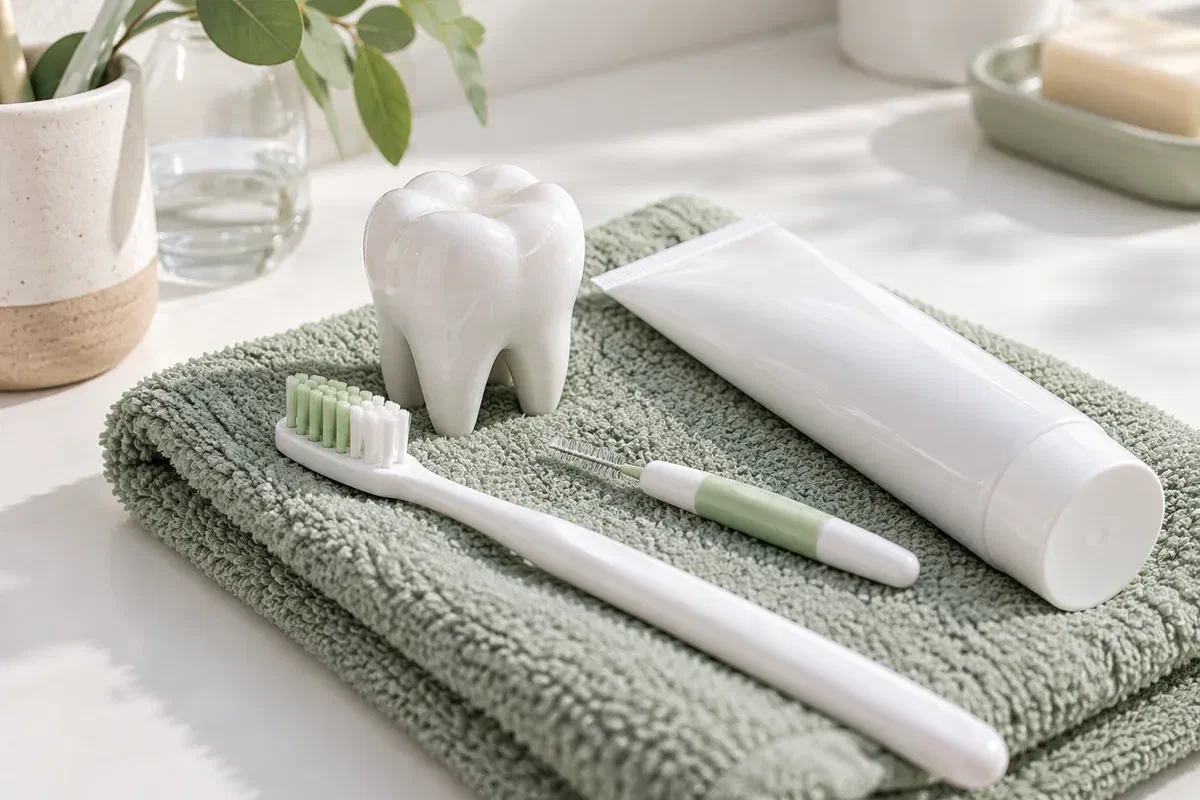
Illustrative soft toothbrush and interdental brush for a preventive routine
Clues from Campbellville mornings

Pay attention to the first hour of the day.

Root risk reflects the exposed surface, saliva, and how easily the area can be cleaned. Tell us what you notice, and the examination will judge whether there is decay.

Morning sensitivity at the gum

A cold glass of water on waking might sting one tooth near the gumline. Note which tooth and when this began. Sensitivity has several possible causes, so the dentist examines the area before choosing a product or settling on recession as the reason.

A dry tongue on waking

A sticky mouth, cracked lips, or reaching for water during the night are worth mentioning, as is any link to a new medicine. Bring a complete list. Do not stop prescribed treatment; the dryness can be raised with whoever prescribed it.

A spot that is easy to skip

Back teeth, a crowded contact, or the edge of a filling can be missed, especially at the end of a long day. Show us which area. A quick demonstration with a small brush tends to help more than brushing harder.

A darkened area where root meets gum is not, on its own, a diagnosis of decay. Leave it alone rather than scraping at it. Book an assessment if it changes, collects food, or becomes uncomfortable.

Protection for the dry hours

Support the root when saliva cannot.

Prevention weighs cleaning, fluoride, sugar frequency, and saliva together. Dryness shifts that balance, so someone with a dry mouth and a past root cavity usually needs more than someone with slight recession, plenty of saliva, and few fillings.

No plan can replace lost structure or ensure that an exposed root stays healthy, and exposure alone is not a reason for a filling. If we recommend something, ask which aim it serves: keeping a healthy surface healthy, calming an early change, or repairing damage already identified.

Patient information: ADA — aging, exposed roots, and caries risk

A bedtime routine that counts

Cleaning thoroughly before bed matters more when the night is dry. We show you which roots to focus on and how to angle the brush. A short practice in the chair makes it easier to repeat when you are tired.

Fluoride explained plainly

If a fluoride product is suggested, we say what it is meant to do, when to use it, and whether a pharmacist must dispense it. Let us know what you already use, so the routine stays short enough to keep.

Room to adapt

Dryness can change with health, new medicines, or seasons of life. Tell us at reviews if mornings are getting worse or better, or if new dental work has changed how you clean. The plan should move with you.

How the appointment unfolds

From your mornings to a written plan.

An examination tells an exposed but sound root from one with active decay. The recommendations then match what we find and what fits your evenings and mornings.

  1. Describe your nights and days

    We ask about dryness, sleep, medicines, past cavities, recession, snacks and drinks, and how you clean. Mention if someone helps you. The everyday detail is what lets us suggest changes you will keep.

  2. Examine the exposed roots

    The dentist checks root surfaces and gums and decides whether further records would help. Ask which areas look healthy, which should be monitored, and which, if any, need treatment. Seeing the spot yourself in a hand mirror helps.

  3. Agree on home and in-office steps

    Together we choose cleaning aids, a fluoride approach, and ways to ease dryness or cut down on frequent sweets. Directions for any prescribed product or professional application are written down. If decay needs treating, the dentist explains that choice on its own, including what it can and cannot do.

  4. Book the review

    Set a recheck date and know what the dentist will compare. If dryness worsens or the routine stops working before then, phone us. Prevention keeps improving as findings and your feedback shape it.

Looking after roots at home

Before bed matters most.

Use the routine recommended for you. Prescribed fluoride needs its own directions and a storage spot that children cannot reach.

Clean carefully, not forcefully

Use the brush and angle we demonstrated at the gumline instead of pressing hard. Ask how to clean between teeth gently. If brushing is painful, let us know so we can check the cause and adjust the method.

Choose overnight sips wisely

A sweetened drink or lozenge on the nightstand can work against the plan when saliva is low. Tell us what you reach for during the night. We can suggest better options and discuss having persistent dryness assessed.

Tell us about changes

When a root starts to ache, feels gritty under your tongue, or begins to catch food, phone us instead of testing it with cold water or a pointed object. Keep your reviews even if things feel fine, because comfort cannot confirm a root surface is stable.

Matching the plan to the finding

Three situations, handled differently

Ask what the exam shows before weighing approaches. A root that is uncovered but sound, a surface where a lesion is just beginning, and a tooth where decay has broken structure down each need their own plan.

Sound roots that need protecting

Home prevention for dry mouths

A careful cleaning method, suitable fluoride, and attention to overnight sipping and snacking form the base. You will know which roots we are keeping an eye on and the date of the next look. This path still includes review of any diagnosed concern.

Higher risk or an early lesion

Extra fluoride or lesion management

When dryness is marked or a surface is starting to soften, a professionally applied fluoride or a stronger product for bedtime use might be discussed, or another approach to an early lesion. Find out its purpose, its limits, any effect on appearance, and how progress will be judged at review.

When prevention cannot do enough

Repairing the damage

Depth, location, access, and the overall state of the tooth guide whether and how a cavity is repaired. The dentist will explain the options. Prevention carries on afterward, since a filling does not change the dryness or habits behind the decay.

Patient information: ADA — fluoride and caries prevention

Dry mouth and root questions

What about the nights?

Bring your questions about dryness, sleep, recession, and fluoride. Answers should come from an examination of your teeth and a look at your health history.

(905) 876-4488
Why is my mouth so dry when I wake up?
Saliva naturally decreases during sleep, and mouth breathing, some medicines, and certain health conditions can add to that. Tell us what you notice. If dryness is persistent, it may be worth discussing with your doctor as well.
Is it all right to keep water by the bed?
Plain water is generally a reasonable choice for easing night-time dryness. Sweetened or acidic drinks sipped overnight are more of a concern for exposed roots. Ask what suits your plan.
Should I use fluoride at night rather than in the morning?
Timing advice depends on the product and your risk. Some people are asked to use a fluoride product before bed and not rinse afterward. Follow the directions you are given and ask if anything is unclear.
Can mouth breathing affect root-cavity risk?
Breathing through the mouth, especially at night, can dry the mouth, and less saliva may leave exposed roots less protected. Mention it at your visit. If nasal breathing is difficult, your doctor may be able to help.
Can I book my visit alongside other family appointments when coming in from Campbellville?
Ask the front desk; grouping appointments on one day is often possible, depending on the schedule. Hours are Monday to Thursday, 11am to 7pm, with Friday to Sunday by appointment only.
Will dry-mouth products protect my roots on their own?
Saliva substitutes and moisturizing products may ease discomfort, but they are not a full prevention plan. Cleaning, fluoride, and diet still matter. Bring any product you use so we can discuss how it fits.
For Campbellville

A plan for the dry hours and the daytime too.

Call our Bronte Street practice about dryness, recession, or changes near the gum. The dentist will examine your exposed roots, explain what was found, and help you choose the preventive or treatment approach that suits.

A root that shows is not necessarily decayed. If pain appears or a surface keeps changing, have it examined rather than relying on prevention products.

Visit Milton Dental Clinic
Unit 1, 342 Bronte St. S, Milton, ON L9T 5B7
Get directions Clinic hours
Monday–Thursday
11am–7pm
Friday–Sunday
By appointment only

Areas we serve

  • Milton
  • Oakville
  • Mississauga
  • Georgetown
  • Halton Hills
  • Acton
  • Campbellville
  • Brampton
  • Burlington
  • Puslinch
  • Rockwood
  • Erin
  • Caledon
  • Etobicoke
  • Old Milton
  • Bronte Meadows
  • Timberlea
  • Dorset Park
  • Dempsey
  • Clarke
  • Beaty
  • Coates
  • Harrison
  • Scott
  • Willmott
  • Ford
  • Bowes
  • Cobden
  • Walker
  • Mountain View
  • Milton Heights
  • Hawthorne Village
  • Valley View
  • Fallingbrook
  • Nassagaweya
  • Trafalgar
  • Esquesing
  • Nelson
  • Brookville
  • Moffat
  • Glen Williams
  • Norval
  • Limehouse
  • Stewarttown
  • Ashgrove
  • Hornby
  • Silver Creek
  • Speyside
  • Scotch Block
  • North Oakville
  • River Oaks
  • Glen Abbey
  • West Oak Trails
  • Palermo
  • Bronte Creek
  • College Park
  • Joshua Creek
  • Uptown Core
  • Preserve
  • Iroquois Ridge
  • Lisgar
  • Meadowvale
  • Meadowvale Village
  • Churchill Meadows
  • Erin Mills
  • Central Erin Mills
  • Streetsville
  • East Credit
  • Creditview
  • Heartland
  • Sheridan
  • Mount Pleasant
  • Credit Valley
  • Huttonville
  • Churchville
  • Springbrook
  • Northwest Brampton
  • Bram West
  • Fletcher's Meadow
  • Fletcher's Creek South
  • Alton Village
  • Orchard
  • Millcroft
  • Headon Forest
  • Tansley
  • Brant Hills
  • Tyandaga
  • Kilbride
  • Lowville
  • Aberfoyle
  • Morriston
  • Arkell
  • Hillsburgh
  • Freelton
  • Carlisle
  • Waterdown
  • Flamborough
  • Mountsberg

How can we help?

Milton Dental Clinic

Have a question about your smile? Choose the option that works best for you.

For urgent dental concerns, please call.
Messages are reviewed during clinic hours.