

Illustrative conversation about caring for exposed root surfaces
General & Family Dentistry

Root-Cavity Prevention in Etobicoke

Exposed roots need a plan you can keep up between visits, especially when each trip takes some organising. From Etobicoke, we help you make each appointment count: a thorough exam, a clear home routine, and sensible review timing.

Making the trip worthwhile

Fewer visits, better prepared.

Root surfaces are what you see when gums have pulled back from the teeth. They do not have the enamel coating found higher up, so in some mouths they are quicker to decay. Seeing an exposed root does not mean a cavity is present, but it does mean the area benefits from a deliberate plan, and that is something we can organise efficiently.

When you are travelling from Etobicoke, preparation helps. Bring your medicine list, the toothpaste and aids you use, and a note of any twinges, dryness, or food-trapping spots. With that information, the first appointment can cover your history and a full examination of the exposed roots, so we can tell protection apart from repair.

You should leave with a routine you can run on your own for a while: a cleaning method for the exposed surfaces, fluoride advice with clear instructions, and thoughts on dryness if it applies. Nothing guarantees a root stays healthy, so let us know between visits if your health, medicines, or routine change.

Plan an efficient root-care visit
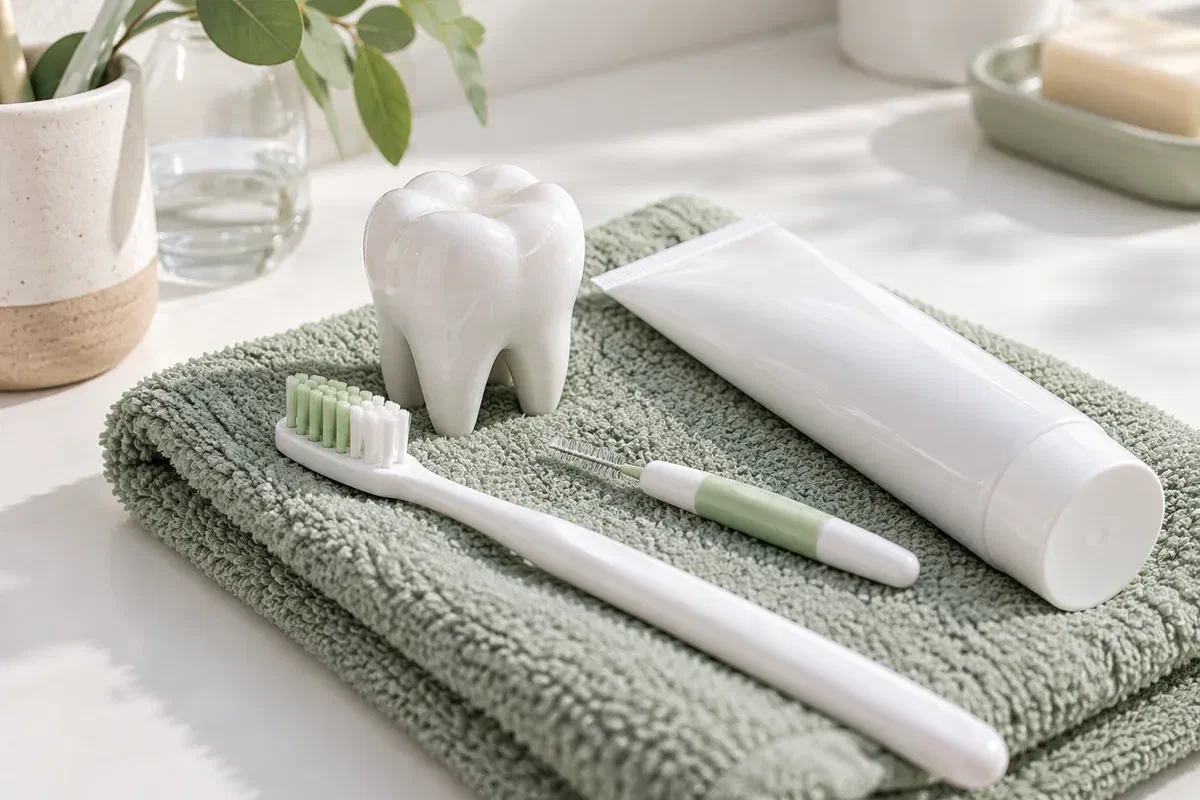
Illustrative soft toothbrush and interdental brush for a preventive routine
Note these before you come

A short list makes the visit more useful.

Risk at the root depends on the surface and its surroundings. Jot down what you notice and leave the decision about decay to the examination.

Where and when it twinges

Write down which tooth feels sensitive near the gum, what triggers it, and roughly when it began. Sensitivity can have several causes. With your notes and an exam, we can decide whether a product helps or whether something else is going on.

How dry your mouth feels

Note whether dryness is worse at night, after talking, or since a medicine change. Bring the full list of what you take. Do not stop a prescription; we can discuss raising the dryness with your doctor or pharmacist.

Spots that never feel clean

Overlapping teeth, a crown edge, or a stiff wrist can mean one area gets missed. Tell us exactly where. A demonstration during the visit often helps more than pushing harder or trying another rinse when you get home.

A colour change at the gumline is not proof of root decay. Please do not dig at it. Ask for an assessment if it is changing, collecting food, or uncomfortable.

What a good plan gives you

A routine that holds up between appointments.

Root-surface prevention combines cleaning, fluoride, sugar frequency, and saliva into one approach suited to you. Someone with a dry mouth and earlier root decay will usually need a more involved plan than someone with slight recession and very few cavities.

A plan cannot rebuild lost structure or guarantee that an exposed root remains sound, and not every root needs a filling. Ask what each recommendation is for: protecting a healthy surface, holding an early lesion in check, or fixing harm that is already there.

Patient information: ADA — aging, exposed roots, and caries risk

Confidence about where to clean

We point out the surfaces that matter and show you the brush angle. Practising during the appointment means you are not relying on memory weeks later. A photo or written note can help too.

Products explained once, clearly

Fluoride advice should cover the reason for the product, timing and amount, and whether it requires a prescription. Tell us what you use already. A short list is easier to sustain between trips than several overlapping products.

Adjustments without extra trips

If dryness increases, medicines change, or the routine becomes hard, phone us. Some questions can be talked through and noted for your next visit. When something needs examining, we will tell you.

How the visit is organised

Covering the essentials in as few trips as sensible.

The exam separates exposed but healthy roots from active decay. The plan reflects what we find and what you can manage on your own between appointments.

  1. Prepare and share

    Bring your notes, medicine list, and products. We discuss past cavities, recession, dryness, diet, and who helps with your oral care, if anyone. The more realistic the picture, the more useful the plan.

  2. Examine the exposed areas

    The dentist checks roots and gums and decides whether additional records would add value. Ask which areas are healthy, which to monitor, and whether any need treatment. If treatment is needed, ask how appointments could be grouped.

  3. Leave with a home plan

    We agree on cleaning tools, the fluoride approach, and steps for dryness or snacking between meals. Any stronger product or in-office application comes with written directions. Treatment for existing decay is explained separately, with benefits and limitations.

  4. Space the reviews sensibly

    Agree on a review interval that suits your risk and know what will be compared. If something changes before then, call. Prevention keeps working when it is updated using findings and your feedback.

Keeping it going at home

Soft on the gum, regular through the month.

Use the advice given for your teeth. Follow prescribed product directions closely and store them where children cannot reach.

Brush without bearing down

Extra force can irritate exposed areas without cleaning them better. Stick with the brush and angle we demonstrated and ask how to clean between teeth gently. If it hurts to clean, let us know by phone rather than waiting months, because a sore spot often gets skipped and the routine quietly falls apart.

Keep an eye on comfort snacks

Sweetened drinks, candies, or lozenges used often for dryness may work against the plan. Mention what you rely on. We can suggest alternatives and talk about having the dryness assessed.

Call about changes

Phone if you notice new pain, a different-feeling surface, or food trapping, rather than repeatedly testing the tooth. Keep your reviews even if it feels fine, since symptoms alone cannot confirm stability.

Where the plan can go

Protection is one option; repair is another.

Start by asking what the exam found. A root that is simply uncovered, a surface showing the first signs of a lesion, and a tooth that has already lost structure each lead somewhere different, with a different number of visits.

Roots that need protecting

Self-managed prevention

A home cleaning method, the right fluoride for your risk, and attention to snacking or sipping form the core. We note which surfaces to watch and when they will be rechecked. Diagnosed concerns are still reviewed.

Higher risk or an early lesion

Professional or prescription steps

The dentist might discuss a fluoride application in the chair, a stronger home product, or another lesion-management approach. Ask what each is for, its limits, any effect on appearance, and how it is monitored, so you can decide confidently.

When prevention will not cover it

Restoration for lost structure

A cavity may need repair depending on depth, location, access, and the tooth’s condition. The dentist will explain your choices and how many visits they involve. Prevention continues afterward, because a repair does not remove the cause.

Patient information: ADA — fluoride and caries prevention

Planning questions

Good questions to settle before you set out.

Bring questions about recession, products, dryness, and how to plan your visits. Many can be answered on the phone when you book; others depend on what the exam shows, and the dentist will explain which is which.

(905) 876-4488
What should I bring to my first root-cavity prevention appointment?
A current medicine list, the toothpaste, brush, and aids you use, and notes on any sensitivity or dryness. If you have records from previous dental care, those can help too. Preparation lets us cover more in one visit.
Can the assessment and a fluoride application happen on the same day?
Sometimes, if the dentist recommends it after the exam and time allows. Ask when you book. Some measures may need a separate visit or a prescription, and the team will explain what applies.
How far apart can my reviews be spaced?
It depends on your risk, history, dryness, and whether a lesion is being monitored. Lower-risk mouths may be reviewed less often. Ask the dentist what interval is appropriate and what will be compared.
What if a tooth starts hurting and I cannot get to the clinic soon?
Call us first to describe what is happening. If you cannot wait, seek urgent dental care nearer to Etobicoke. For facial swelling with breathing or swallowing difficulty, go to emergency medical care right away.
Does gum recession mean my teeth are going to fall out?
Not necessarily. Recession exposes root surface, and its significance depends on the cause and the health of the supporting tissues. Ask whether a separate gum assessment would help. Root-surface prevention is a related but separate discussion.
Can I manage a stronger fluoride toothpaste without frequent check-ups?
Many people use prescribed products at home with routine reviews. Follow the specific directions and keep it away from children. Contact us if you have questions about use or notice irritation between appointments.
From Etobicoke to Bronte Street

Plan one well-used appointment.

Reach our Bronte Street practice to arrange a visit about exposed roots, recession, or dryness. Tell the team when you book that you are coming in from the west end of Toronto, so the appointment can be planned with enough time. You will leave with clear findings and a preventive or treatment plan to follow until your next review.

Uncovered root surface is not the same as decay. Any fresh ache, or a spot that looks different from one month to the next, deserves an examination rather than another product.

Visit Milton Dental Clinic
Unit 1, 342 Bronte St. S, Milton, ON L9T 5B7
Get directions Clinic hours
Monday–Thursday
11am–7pm
Friday–Sunday
By appointment only

Areas we serve

  • Milton
  • Oakville
  • Mississauga
  • Georgetown
  • Halton Hills
  • Acton
  • Campbellville
  • Brampton
  • Burlington
  • Puslinch
  • Rockwood
  • Erin
  • Caledon
  • Etobicoke
  • Old Milton
  • Bronte Meadows
  • Timberlea
  • Dorset Park
  • Dempsey
  • Clarke
  • Beaty
  • Coates
  • Harrison
  • Scott
  • Willmott
  • Ford
  • Bowes
  • Cobden
  • Walker
  • Mountain View
  • Milton Heights
  • Hawthorne Village
  • Valley View
  • Fallingbrook
  • Nassagaweya
  • Trafalgar
  • Esquesing
  • Nelson
  • Brookville
  • Moffat
  • Glen Williams
  • Norval
  • Limehouse
  • Stewarttown
  • Ashgrove
  • Hornby
  • Silver Creek
  • Speyside
  • Scotch Block
  • North Oakville
  • River Oaks
  • Glen Abbey
  • West Oak Trails
  • Palermo
  • Bronte Creek
  • College Park
  • Joshua Creek
  • Uptown Core
  • Preserve
  • Iroquois Ridge
  • Lisgar
  • Meadowvale
  • Meadowvale Village
  • Churchill Meadows
  • Erin Mills
  • Central Erin Mills
  • Streetsville
  • East Credit
  • Creditview
  • Heartland
  • Sheridan
  • Mount Pleasant
  • Credit Valley
  • Huttonville
  • Churchville
  • Springbrook
  • Northwest Brampton
  • Bram West
  • Fletcher's Meadow
  • Fletcher's Creek South
  • Alton Village
  • Orchard
  • Millcroft
  • Headon Forest
  • Tansley
  • Brant Hills
  • Tyandaga
  • Kilbride
  • Lowville
  • Aberfoyle
  • Morriston
  • Arkell
  • Hillsburgh
  • Freelton
  • Carlisle
  • Waterdown
  • Flamborough
  • Mountsberg

How can we help?

Milton Dental Clinic

Have a question about your smile? Choose the option that works best for you.

For urgent dental concerns, please call.
Messages are reviewed during clinic hours.