Illustrative conversation about caring for exposed root surfaces
General & Family Dentistry

Root-Cavity Prevention in Halton Hills

Floss that snags, a gap where food always lands, a root showing between two crowded teeth: these in-between spots are where root decay can quietly start. Households across Halton Hills can have them checked and learn tools that actually reach.

In-between surfaces, Halton Hills

The narrow space between two teeth.

Most brushing reaches the fronts and backs of teeth well. The trouble is the sides, especially once gum has shrunk back and left a small triangle of exposed root between neighbours. Root lacks the enamel that shields the crown, so plaque sitting there can matter more. Recession on its own is not decay, but those hidden sides are worth a careful look.

From Georgetown, Acton, Glen Williams, or one of the smaller hamlets, the first visit to our Bronte Street practice begins with that look. The dentist checks root surfaces, including between teeth, and we ask about bleeding, food packing, sensitivity, and dryness. That helps us separate areas needing protection from any that need repair.

Then we get practical. You may need an interdental brush in a particular size, a floss holder, or a different way to angle your toothbrush, along with fluoride advice and a look at medicines that dry the mouth. No tool or paste guarantees a healthy root, so the plan is reviewed when your health, prescriptions, or hands change.


Ask about cleaning between exposed roots
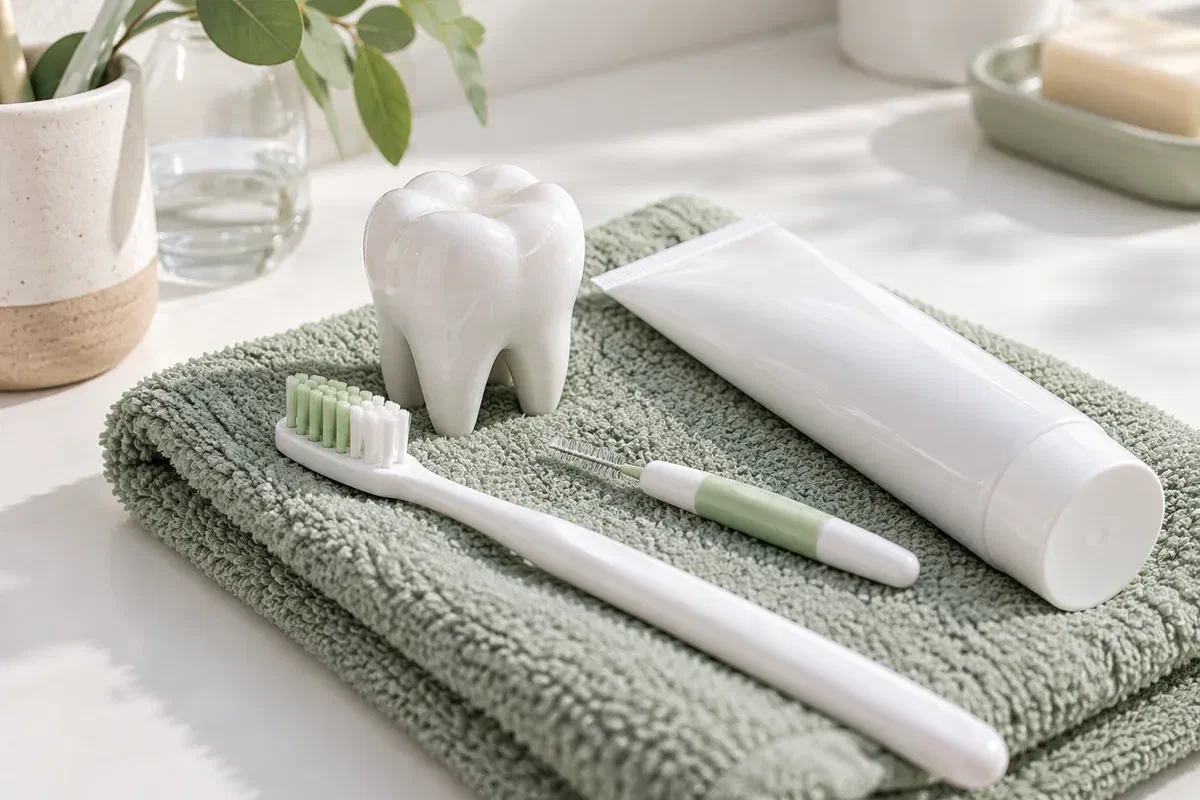
Illustrative soft toothbrush and interdental brush for a preventive routine
In-between warning signs

Where does food keep getting stuck?

Root-cavity risk often hides where a brush does not reach. Describe what you feel or see, and let the examination settle whether decay is present.

A tender spot at the gum

You might feel a twinge when floss slides down between two teeth or when cold water hits one corner. Tell us which teeth and when it began. Because sensitivity can come from more than one cause, we examine before suggesting a product.

Dryness that lets plaque linger

With less saliva, food and plaque may cling longer between teeth. Mention if dryness started with a new medicine and bring your list. Keep taking prescribed treatment; we can talk about raising the dryness with the prescriber.

Floss that frays or catches

Crowded teeth, a rough filling edge, or a small gap that food packs into can make one contact difficult. Show us which one. Choosing the right size of interdental brush and practising it in the chair often solves more than flossing harder.

A brown shadow between teeth is not enough on its own to diagnose root decay. Avoid poking at it with a toothpick. Ask for an assessment if it seems to be changing, food keeps packing, or the area aches.

Why the in-between matters

Reach the surface, and much of the work is done.

Prevention links several things: how thoroughly the surfaces are cleaned, fluoride reaching them, how often sugar is around, and saliva. The emphasis changes from person to person. Someone with dry mouth and previous root decay usually needs more than someone whose only concern is a slight gap with healthy roots.

Even a thorough routine cannot replace tooth that has been lost or promise a root will stay healthy. It also does not follow that every exposed root needs a filling. When we suggest a step, ask what it is aiming at: keeping a sound root sound, slowing an early change, or addressing established damage.

Patient information: ADA — aging, exposed roots, and caries risk

The right size of tool

Interdental brushes come in many widths, and one that is too large or too small does little good. We can test sizes on the spaces that matter and show you how to guide each one. Practising before you leave builds a habit you can repeat.

Fluoride that reaches the sides

We explain what a fluoride product is meant to do, how to get it onto the in-between surfaces, and whether it is something you buy or something prescribed. Tell us what you already use so we do not add products without reason.

A plan that changes when you do

New dental work may change a contact, dryness may grow, or hand strength may decline. Bring those changes to reviews. A routine that still reaches the right places matters more than one followed out of habit.

How the appointment works

We look between, then plan together.

Examination distinguishes an exposed but healthy root from active decay, including in spaces that are hard to see. Advice then fits what we find and what you can do at home.

  1. Describe your cleaning routine

    We ask about past cavities, recession, dryness, medicines, snacks and drinks, and how you clean between your teeth now. Mention any help you receive. An honest account of what happens most days is more useful than the textbook version.

  2. Check the hidden surfaces

    The dentist examines roots and gums, paying attention to the spaces between teeth, and decides whether further records would help. Ask which areas look healthy, which to watch, and whether any need treatment. A mirror can show you the spots.

  3. Choose tools and products

    We pick interdental aids in the right sizes, agree on fluoride, and consider strategies for dryness or frequent sweets. Anything prescribed or applied in the chair comes with clear directions and a follow-up plan. Where a cavity is already present, the dentist talks through repairing it as its own decision, covering what it offers and where it falls short.

  4. Arrange the recheck

    Agree when the areas will be reviewed and what will be compared. If a tool is hard to use or makes the gum sore before then, let us know. Root-surface care improves as it is adjusted from findings and your experience.

Between visits

Small tools, used daily, used gently.

Use the advice given for your own teeth. Store prescribed fluoride products safely away from children and follow their specific directions.

Slide, don’t force

Guide the interdental brush or floss gently into the space rather than pushing it through. If a brush will not fit without force, it is probably the wrong size. Tell us if cleaning causes pain so the cause and the tool can be reviewed.

Think about grazing

Snacks and sweet drinks taken across the day leave food between teeth for longer, and sugary lozenges used for dryness can add to it. Tell us what you reach for. We can suggest alternatives and look at the dryness itself.

Report changes promptly

If food starts packing in a new place, a space feels rough, or a tooth aches, let us know rather than probing with a toothpick. Keep your reviews even when nothing hurts, because comfort cannot show whether a root surface is stable.

Possible next steps

Clean it, treat it early, or repair it.

The findings decide which applies. An uncovered but sound root, a spot with an early lesion, and a cavity where tooth has broken down are handled in quite different ways.

Sound roots that need protecting

Everyday prevention that reaches

Interdental cleaning, suitable fluoride, and attention to snacking or sipping form the base. We record the spaces to watch and when they will be checked again. Choosing prevention never means overlooking a diagnosed problem.

When risk is higher or a lesion is starting

Further fluoride or early-lesion care

The dentist may suggest an added fluoride step, at home or in the chair, or another approach for an early lesion. Ask what it aims to do, where it falls short, whether it affects appearance, and how progress will be judged.

When structure has been lost

Restoring a cavity between teeth

Cavities between teeth can be harder to reach, so depth, position, access, and the tooth’s condition all shape the repair. The dentist will explain the choices. Prevention carries on afterward, because restoring one surface does not remove what caused the decay.

Patient information: ADA — fluoride and caries prevention

In-between cleaning questions

Floss, brushes and roots, answered.

Bring your questions about interdental cleaning, recession, fluoride, and dryness. Recommendations should follow an examination of your teeth.

(905) 876-4488
Is floss or an interdental brush better for exposed roots?
It depends on the space. Tight contacts may suit floss, while wider gaps left by recession often clean better with a correctly sized interdental brush. We can check each area and show you which tool fits where.
Why do my gums bleed when I start cleaning between my teeth?
Bleeding can be a sign of gum inflammation, and it often improves with gentle, regular cleaning. If it continues or worsens, mention it at your visit. A separate gum assessment may be worthwhile, and you should not give up cleaning because of it.
Can water flossers replace interdental brushes?
Some people find them helpful, especially around bridges or crowded teeth. Whether one can stand in for brushes depends on your mouth. Bring yours to the visit if you use one, and we can discuss how it fits your plan.
Will cleaning between my teeth make the gaps bigger?
Gentle cleaning with the right size tool is not meant to create gaps. Gum that was swollen can look different once it settles, which may make a space more noticeable. If you are concerned, ask the dentist to explain what is happening in your mouth.
Do I need a different routine around a bridge or implant?
Often, yes. Spaces under a bridge or around an implant can trap plaque near neighbouring roots. Ask how to clean those areas and which aids suit them. Report soreness or food trapping there.
If one exposed root has decay, are the others likely to follow?
Not necessarily, but a past root cavity can signal higher risk. The dentist considers your history, saliva, and cleaning access across the mouth. Ask which surfaces need extra attention and how often they should be reviewed.
Visits from Halton Hills

Let’s find the spaces your brush misses.

Call our Bronte Street practice about recession, food trapping, or changes between your teeth. The dentist will check each exposed root, explain the findings plainly, and help you choose the prevention or treatment that suits your mouth.

A root showing between teeth is not proof of decay. Fresh discomfort, or a space that starts behaving differently, should be examined before you try another product.

Visit Milton Dental Clinic
Unit 1, 342 Bronte St. S, Milton, ON L9T 5B7
Get directions Clinic hours
Monday–Thursday
11am–7pm
Friday–Sunday
By appointment only

Areas we serve

  • Milton
  • Oakville
  • Mississauga
  • Georgetown
  • Halton Hills
  • Acton
  • Campbellville
  • Brampton
  • Burlington
  • Puslinch
  • Rockwood
  • Erin
  • Caledon
  • Etobicoke
  • Old Milton
  • Bronte Meadows
  • Timberlea
  • Dorset Park
  • Dempsey
  • Clarke
  • Beaty
  • Coates
  • Harrison
  • Scott
  • Willmott
  • Ford
  • Bowes
  • Cobden
  • Walker
  • Mountain View
  • Milton Heights
  • Hawthorne Village
  • Valley View
  • Fallingbrook
  • Nassagaweya
  • Trafalgar
  • Esquesing
  • Nelson
  • Brookville
  • Moffat
  • Glen Williams
  • Norval
  • Limehouse
  • Stewarttown
  • Ashgrove
  • Hornby
  • Silver Creek
  • Speyside
  • Scotch Block
  • North Oakville
  • River Oaks
  • Glen Abbey
  • West Oak Trails
  • Palermo
  • Bronte Creek
  • College Park
  • Joshua Creek
  • Uptown Core
  • Preserve
  • Iroquois Ridge
  • Lisgar
  • Meadowvale
  • Meadowvale Village
  • Churchill Meadows
  • Erin Mills
  • Central Erin Mills
  • Streetsville
  • East Credit
  • Creditview
  • Heartland
  • Sheridan
  • Mount Pleasant
  • Credit Valley
  • Huttonville
  • Churchville
  • Springbrook
  • Northwest Brampton
  • Bram West
  • Fletcher's Meadow
  • Fletcher's Creek South
  • Alton Village
  • Orchard
  • Millcroft
  • Headon Forest
  • Tansley
  • Brant Hills
  • Tyandaga
  • Kilbride
  • Lowville
  • Aberfoyle
  • Morriston
  • Arkell
  • Hillsburgh
  • Freelton
  • Carlisle
  • Waterdown
  • Flamborough
  • Mountsberg

How can we help?

Milton Dental Clinic

Have a question about your smile? Choose the option that works best for you.

For urgent dental concerns, please call.
Messages are reviewed during clinic hours.