
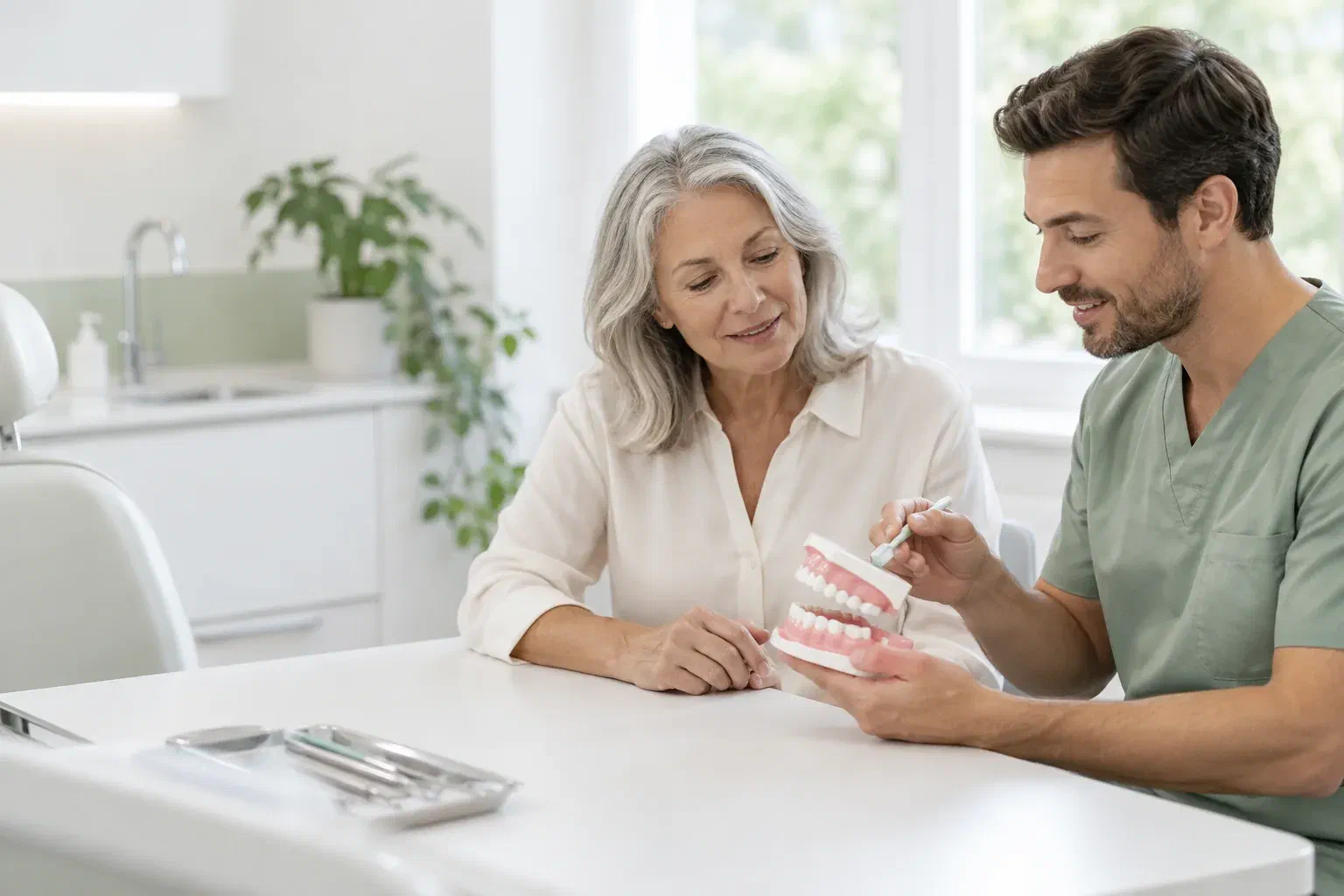
Illustrative conversation about caring for exposed root surfaces
General & Family Dentistry

Root-Cavity Prevention in Oakville

A new prescription, a dry mouth, and gums that have drifted back can quietly raise the risk to exposed roots. Visiting from Oakville, you can have those surfaces checked and leave with a routine built around your saliva and habits.

Saliva, roots and Oakville routines

A glass of water by the bed, and a root that needs watching.

Saliva does a lot of quiet work: it rinses food away and helps buffer the acids that wear at teeth. When it drops off, often after a medication change, exposed root surfaces lose some of that help. Roots have no enamel cap, so they can be more prone to decay. Dryness and recession together are a reason to look, not a sign that a cavity is already there.

If you are coming from Oakville, the first appointment focuses on understanding the full picture. We examine the gumline and ask when the dryness started, what you drink through the day, and where food tends to linger. Hearing that alongside the exam lets us separate a surface needing protection from one needing repair.

Your plan then targets what we find. It could include fluoride with clear instructions, a gentler cleaning method for the root, or a suggestion to mention the dryness to whoever prescribed your medicine. No single product guarantees protection, and the routine should be reviewed if your health or prescriptions change.

Ask about dry mouth and exposed roots
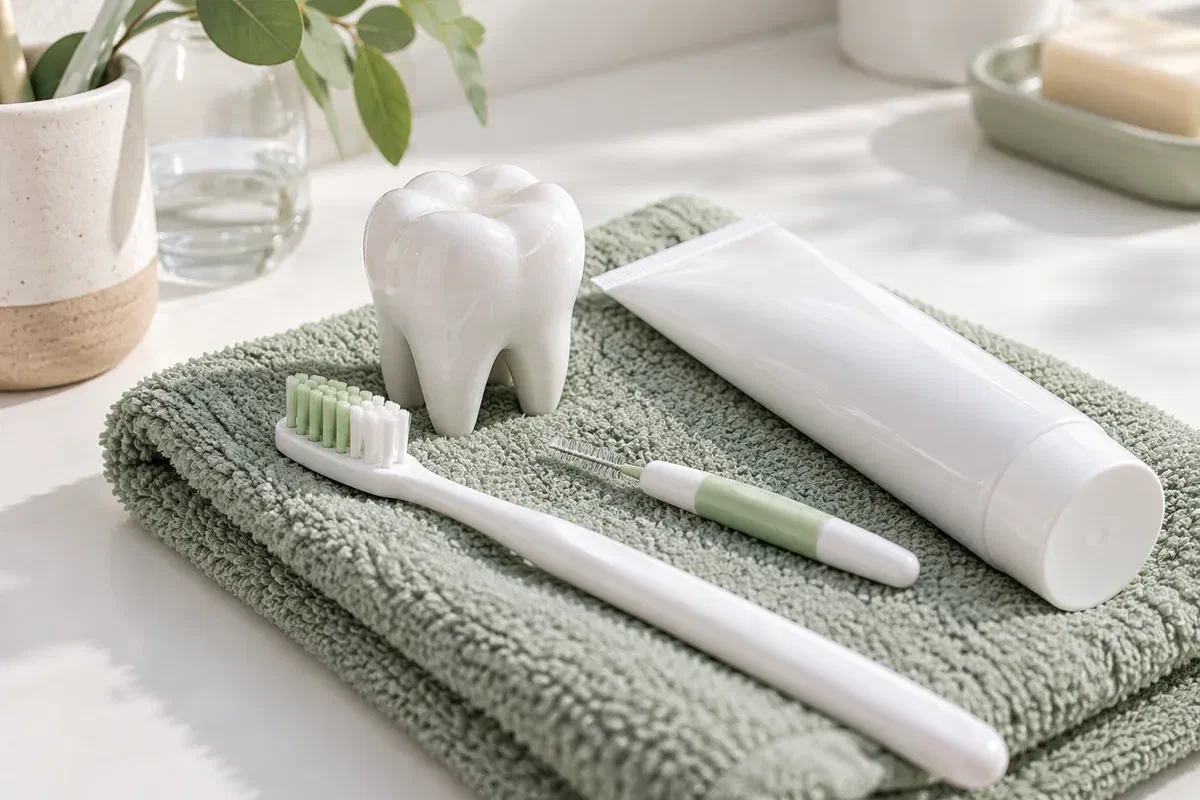
Illustrative soft toothbrush and interdental brush for a preventive routine
Clues worth sharing

Tell us what your mouth is doing.

The exposed root is only part of the story; saliva, cleaning access, and diet matter too. Share your observations and let the exam determine whether decay is present.

Sensitivity along a receding edge

A sharp twinge with cold, or a tooth that now looks longer, may point to exposed root. Note when it started and what triggers it. Because sensitivity can come from several sources, we check before recommending a desensitizing paste or blaming recession.

Dryness that started with a medicine

Sticky saliva, waking thirsty, or trouble with dry foods can follow some prescriptions. Bring a list of everything you take. Keep taking prescribed medicine as directed; if it seems connected, we can talk about raising it with your physician or pharmacist.

One area that stays fuzzy

Crowding, the edge of a filling, or an awkward angle can mean a spot is missed every time. Show us where. Watching the right small brush at work usually does more than scrubbing harder or switching rinses.

Discolouration at the gumline cannot confirm root decay by itself. Please do not scrape or test the spot. Have it assessed, especially if it is changing, catching food, or feeling sore.

The value of planning ahead

Work on the factors you can change.

Daily cleaning, fluoride contact, sugar frequency, and saliva flow all feed into root-surface risk. The weighting is personal. A person with a dry mouth and a past root cavity will usually need a fuller plan than someone with slight recession and a clear record.

Prevention will not rebuild what has been lost, nor can it promise an exposed root will stay healthy. It also does not mean every exposed root needs filling. Ask whether a recommendation aims to stop a new lesion, manage an early change, or treat damage already found.

Patient information: ADA — aging, exposed roots, and caries risk

Focused home care

When you know exactly which surface matters, brushing becomes more purposeful. We can show the spot in a mirror and demonstrate the brush angle. Trying it yourself during the visit helps the technique stick at home.

Fluoride with a purpose

Each product suggestion should come with its aim, the right amount and timing, and a note on whether it is over the counter or prescribed. Tell us what you already have. More products do not mean more protection, particularly if the instructions become too much to keep up.

Adjustments as life shifts

A dose change, rising dryness, new dental work, or a helper with brushing can all alter what works. Mention it at your review. A routine that still fits is better than an old instruction followed out of habit.

What the visit involves

Assess, decide, then check back.

Examination distinguishes a vulnerable surface from active disease. Advice then follows the findings and the care you can sustain at home.

  1. Share your health and habits

    We ask about medicines, dryness, previous cavities, recession, and your usual food, drink, and cleaning patterns. Mention any help you get with oral care. Plain detail about what really happens is far more useful than an ideal routine.

  2. Examine root surfaces

    The dentist looks at exposed roots and nearby gum and decides whether further records are needed. You can ask for each area to be labelled as sound, worth monitoring, or in need of treatment. Seeing it in a mirror or photo often makes the location clearer.

  3. Settle the plan

    We agree on cleaning tools, fluoride, and strategies for dryness or frequent sugar. If a prescription product or professional application is suggested, confirm the directions and how it will be reviewed. Any treatment for existing decay is explained on its own, with benefits and limits.

  4. Plan the next look

    Know when the areas will be rechecked and what will be compared. If the routine becomes hard before then, let us know. Prevention works as an ongoing conversation shaped by findings and feedback, rather than a product handed over once.

Between appointments

Consistency beats force.

Use the guidance given for your teeth. Prescribed products should be used as directed and stored safely away from children.

Go gently at the root

Follow the demonstrated method with the recommended brush instead of pressing harder on exposed surfaces. Ask how to clean between teeth without irritating the gum. If soreness gets in the way of cleaning, report it so we can review the cause and technique.

Rethink the dry-mouth fixes

Tell us which drinks, candies, or lozenges you use to manage dryness. Sugary or acidic choices taken often can undercut the plan. Ask about alternatives, and have persistent dryness assessed, rather than adding new products by yourself.

Note changes as they happen

Report new pain, a surface that feels different, or food trapping instead of repeatedly testing with cold water or a sharp edge. Keep reviews even when comfortable. Symptoms alone cannot show whether a root surface is stable.

Sorting the options

Healthy root, early lesion, or cavity?

Start with what the exam found before comparing approaches. Each situation leads to a different plan.

When surfaces need protecting

A routine tailored to your risk

Cleaning guidance, suitable fluoride, and attention to habits like frequent sipping form the foundation. The plan should name the sites of concern and the follow-up. Prevention never means a diagnosed problem goes without review.

When risk is raised or an early lesion is seen

Added professional or prescription care

The dentist may discuss a further fluoride measure or another suitable way to manage an early lesion. Ask about its purpose, limitations, any appearance effects, and monitoring. Confirm suitability rather than assuming from general descriptions.

When prevention cannot do enough

Repair when structure is lost

Depth, position, access, and the overall condition of the tooth guide whether a cavity needs restoring. The dentist explains the choices. Prevention continues to matter afterward, because one repair does not address what caused the decay.

Patient information: ADA — fluoride and caries prevention

Common questions

Dryness, fluoride and roots: what people ask.

Bring your questions about medicines, recession, and gumline changes. Good advice follows an examination, not a guess from the mirror.

(905) 876-4488
Why would a new prescription affect my teeth?
Some medicines reduce saliva flow, and saliva helps protect teeth, including exposed roots. Tell us what you take and when dryness began. Keep taking it as prescribed; we can discuss whether to raise the dryness with your doctor or pharmacist.
Does sipping water all day help or hurt?
Plain water is generally a reasonable way to ease dryness. The concern is usually frequent sugary or acidic drinks and sweets. Tell us what is in your glass and how often, and we can talk about choices that support the plan.
Is a root cavity unavoidable once a root is exposed?
No. Exposure means a surface may need more care, not that decay will follow. The dentist considers your history, saliva, and how well you can reach the area. Ask what protection and review suit you before assuming a filling is needed.
Are sugar-free lozenges a safer choice for dry mouth?
They may be a better option than sugary ones, but ingredients and frequency still matter. Bring the product or its label to your visit. We can talk about it alongside an assessment of why your mouth is dry.
Will fluoride make my gums cover the root again?
Fluoride is meant to help protect the tooth surface; it does not restore gum that has receded. If the recession worries you, ask about its cause and whether a gum assessment would help. That is a separate discussion from root-surface prevention.
How will I know an early lesion is not getting worse?
The dentist compares the area at planned reviews, looking at its appearance and other relevant signs. Ask what is being tracked and when. Your comfort is useful feedback but does not replace that professional check.
Root care for Oakville

Bring your medicine list and your questions.

Reach our Bronte Street practice to talk about dryness, recession, or a change near the gum. We will examine the area, explain the findings, and help you choose preventive or treatment options that fit your mouth.

An exposed root is not automatically decayed. New pain or a surface that is changing should be examined rather than managed only with products.

Visit Milton Dental Clinic
Unit 1, 342 Bronte St. S, Milton, ON L9T 5B7
Get directions Clinic hours
Monday–Thursday
11am–7pm
Friday–Sunday
By appointment only

Areas we serve

  • Milton
  • Oakville
  • Mississauga
  • Georgetown
  • Halton Hills
  • Acton
  • Campbellville
  • Brampton
  • Burlington
  • Puslinch
  • Rockwood
  • Erin
  • Caledon
  • Etobicoke
  • Old Milton
  • Bronte Meadows
  • Timberlea
  • Dorset Park
  • Dempsey
  • Clarke
  • Beaty
  • Coates
  • Harrison
  • Scott
  • Willmott
  • Ford
  • Bowes
  • Cobden
  • Walker
  • Mountain View
  • Milton Heights
  • Hawthorne Village
  • Valley View
  • Fallingbrook
  • Nassagaweya
  • Trafalgar
  • Esquesing
  • Nelson
  • Brookville
  • Moffat
  • Glen Williams
  • Norval
  • Limehouse
  • Stewarttown
  • Ashgrove
  • Hornby
  • Silver Creek
  • Speyside
  • Scotch Block
  • North Oakville
  • River Oaks
  • Glen Abbey
  • West Oak Trails
  • Palermo
  • Bronte Creek
  • College Park
  • Joshua Creek
  • Uptown Core
  • Preserve
  • Iroquois Ridge
  • Lisgar
  • Meadowvale
  • Meadowvale Village
  • Churchill Meadows
  • Erin Mills
  • Central Erin Mills
  • Streetsville
  • East Credit
  • Creditview
  • Heartland
  • Sheridan
  • Mount Pleasant
  • Credit Valley
  • Huttonville
  • Churchville
  • Springbrook
  • Northwest Brampton
  • Bram West
  • Fletcher's Meadow
  • Fletcher's Creek South
  • Alton Village
  • Orchard
  • Millcroft
  • Headon Forest
  • Tansley
  • Brant Hills
  • Tyandaga
  • Kilbride
  • Lowville
  • Aberfoyle
  • Morriston
  • Arkell
  • Hillsburgh
  • Freelton
  • Carlisle
  • Waterdown
  • Flamborough
  • Mountsberg

How can we help?

Milton Dental Clinic

Have a question about your smile? Choose the option that works best for you.

For urgent dental concerns, please call.
Messages are reviewed during clinic hours.