Illustrative conversation about caring for exposed root surfaces
General & Family Dentistry

Root-Cavity Prevention in Puslinch

“We’ll keep an eye on it” can leave you wondering what is being watched and why. From Puslinch, learn what an early root lesion means, what you can do at home in the meantime, and how each review tells us whether it is stable.

Puslinch, and the watch-and-protect approach

What does “monitoring” a root actually mean?

Not every change on a root needs drilling. When gum has receded, the exposed root lacks enamel and can develop decay more readily, but the dentist may find an area that looks like an early change rather than a cavity. In that case, the plan can be to protect it and watch it, so that any progression is caught.

For a household in rural Puslinch, monitoring works best when you know exactly what it involves. At our Bronte Street practice, the dentist examines the area and the other exposed roots, records what is seen, and explains it. We also ask about sensitivity, dryness, food catching, and spots you struggle to clean, because those affect whether the area is likely to stay stable.

Meanwhile, you have a part to play: a careful cleaning method, fluoride used as directed, attention to frequent sugar, and possibly steps for dryness. None of this can guarantee the area stays healthy, so reviews matter, and the plan is updated if your health, medicines, or routine change.


Ask what monitoring involves
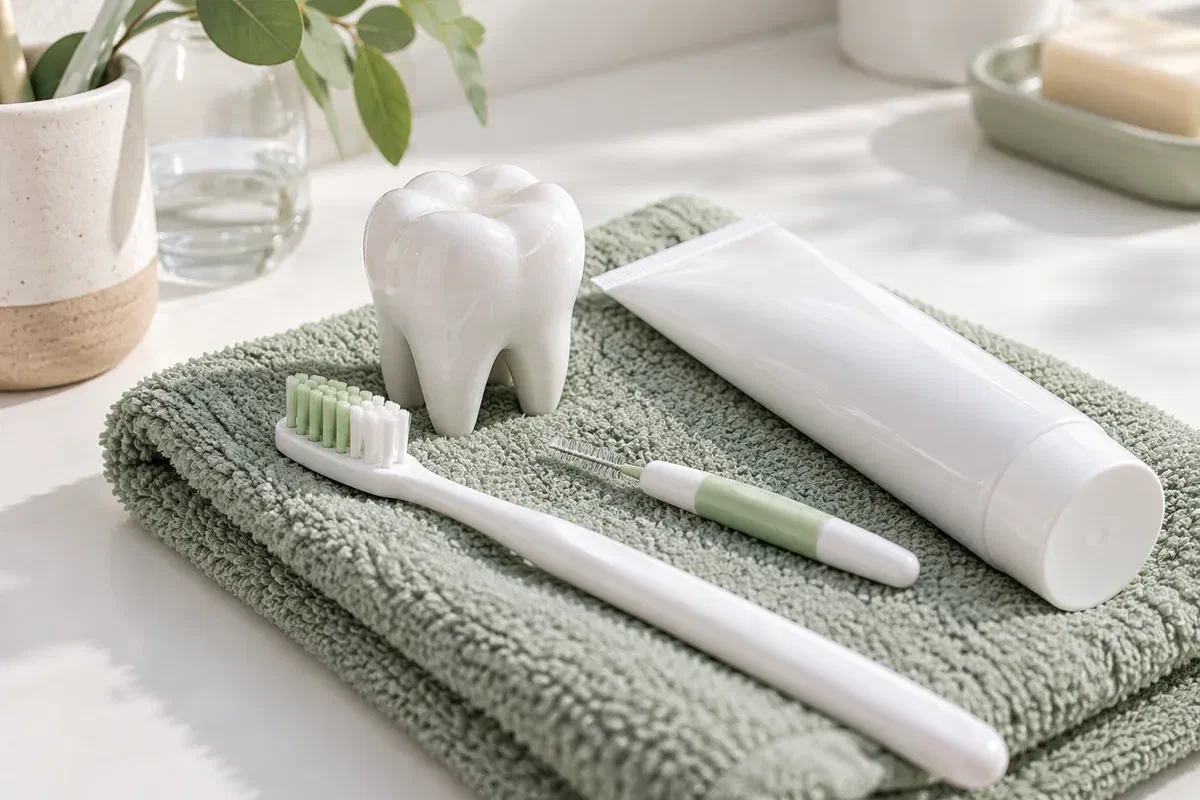
Illustrative soft toothbrush and interdental brush for a preventive routine
What can tip the balance

Conditions that help, and conditions that hinder.

Whether an early change stays stable depends on the surface and on what surrounds it. Tell us what you notice, and let the examinations track the area.

New or changing sensitivity

If the monitored tooth, or another near the gum, starts to twinge with cold or sweets, mention it. Note when it began. Sensitivity has several causes, so a check is needed rather than an assumption that the lesion has grown.

Dryness that comes and goes

Saliva helps protect roots, so tell us if your mouth has been drier, perhaps after a medicine change. Bring your current list. Keep prescribed treatment as it is; the dryness can be raised with the doctor or pharmacist who prescribed it.

The spot that is hardest to reach

A monitored area is often in a place that is awkward to clean. Show us how you reach it now. Adjusting the brush angle or adding a small interdental brush is usually more useful than scrubbing harder.

Watching an area does not mean ignoring it. Please do not probe it with a sharp object at home. Call for an assessment before your planned review if it changes colour, catches food, or becomes uncomfortable.

Why watching can be the right call

Protect it, track it, and act if it changes.

Prevention around an early lesion brings together cleaning, fluoride, sugar frequency, and saliva. The emphasis depends on you. A dry mouth with past root decay generally needs a stronger approach than a single early spot in a mouth with good saliva and few cavities.

Monitoring is not a promise that the area will stay the same, and a preventive plan cannot rebuild lost structure. It does mean a filling is not placed before one is needed. Ask at each step whether the aim is to keep healthy roots healthy, to hold this early change steady, or to treat damage.

Patient information: ADA — aging, exposed roots, and caries risk

A clear target for home care

When you can see the monitored spot in a mirror, cleaning it becomes deliberate. We show you the angle and tool to use and let you practise. That way the area gets attention every day, not just at reviews.

Fluoride with defined directions

If fluoride is part of managing the area, we explain what it is meant to do, when to apply it, and whether it needs a prescription. Tell us what you already use so the routine stays simple.

Decisions based on comparison

Each review compares the area with earlier findings. If dryness increases, a new restoration changes access, or the routine becomes hard, mention it. The plan can step up, or stay as it is, depending on what we see.

How monitoring is organised

Record, protect, compare, decide.

The first examination establishes a starting point for the early change and identifies any other exposed roots. Later visits compare against it.

  1. Start with the background

    We ask about previous cavities, recession, dryness, medicines, diet, and how you clean, plus whether anyone helps. Real-life detail helps us judge what might push the lesion one way or the other.

  2. Establish the baseline

    The dentist examines the early change and other root surfaces and decides whether additional records would help. You will hear which areas are healthy, which are being monitored, and whether anything needs treatment now, with the location shown to you.

  3. Put the protection in place

    We agree on cleaning aids, a fluoride approach, and steps for dryness or frequent sugar. Any prescription product or in-chair application comes with written directions. If treatment is needed instead, the dentist sets out its benefits and limits in a separate conversation.

  4. Compare at each review

    Know when the area will be rechecked and what the dentist will look at. Contact us sooner if something changes or the routine is difficult. Monitoring is an ongoing process, adjusted using findings and your feedback.

Your role between reviews

Quiet, consistent protection.

Use the routine set out for your teeth. Prescribed fluoride should be applied as instructed and stored where children cannot get to it.

Clean the spot gently

Give the monitored area careful, light attention with the recommended brush rather than extra force. If the area sits beside a tight contact, we can show you a floss or small-brush method that slips in without catching the gum. If cleaning it hurts, tell us so we can look at why.

Cut down on frequent sweets

Sugary drinks, candies, or lozenges taken often, particularly for dryness, can work against an early lesion staying stable. Tell us what you use. We can suggest alternatives and discuss assessment of the dryness.

Report rather than inspect

New pain, a change in the surface, or food trapping should be reported instead of tested repeatedly. Keep your reviews even if you feel fine, because comfort alone cannot show whether the area is stable.

If the picture changes

From watching to acting

What the reviews show determines the next step. Healthy roots, a stable early lesion, and a lesion that has progressed to a cavity each call for a different response.

Healthy roots and stable areas

Routine prevention

Gentle cleaning, suitable fluoride, and attention to sugar frequency make up the foundation. We note which areas to keep watching and how often. Taking this route does not mean any diagnosed change goes unchecked.

When an early lesion needs more support

Stepped-up lesion care

A fluoride application in the chair, a prescription product for home, or another lesion-management approach might be raised. Ask what it is meant to achieve and what it will not do, whether the tooth might look different afterward, and what the next review will use to judge it.

When tooth structure has been lost

Restoration if it progresses

If an area develops into a cavity, its depth, location, access, and the tooth’s condition guide the repair. The dentist will explain the options. Prevention continues afterward, because the repair does not remove the conditions that allowed decay.

Patient information: ADA — fluoride and caries prevention

Monitoring questions

Living with a lesion that is being watched

Ask about early lesions, review timing, fluoride, and dryness. Each answer depends on what the examinations show.

(905) 876-4488
Why not just fill an early root lesion straight away?
An early change may stay stable or improve with good care, and a filling removes some tooth and needs its own maintenance. The dentist weighs those factors with you. Ask why monitoring was suggested for your particular area.
Can an early root lesion harden again?
Some early lesions can become stable with fluoride and good cleaning, which is the aim of monitoring. It is not guaranteed. Reviews compare the area over time, and the plan changes if it does not respond.
What signs would mean the lesion is getting worse?
The dentist looks for changes in appearance, texture, and other clinical signs at reviews. At home, new pain, food trapping, or a rough feel are reasons to call. Do not try to judge it by probing it yourself.
How long can an area be monitored?
There is no fixed limit. Some areas are watched for a long time, while others need treatment sooner. It depends on what the reviews show. Ask what would prompt a change of plan.
Can I group monitoring reviews with other appointments when coming from Puslinch?
Often, yes, if the schedule allows. Ask the front desk about pairing your review with cleanings or family visits. Weekday appointments run Monday to Thursday until 7pm, and weekends are by appointment only.
Do photos help track a root lesion?
Photos or other records may help compare an area over time, and the dentist decides what is useful. Ask whether records will be taken and how they will be used at your next visit.
Planning from Puslinch

Know what is being watched, and why.

Contact our Bronte Street practice to discuss an early root change, recession, or dryness. The dentist will examine the area, explain the findings, and set out a monitoring, preventive, or treatment plan that makes sense for you.

A watched spot is not the same as a cavity, and most reviews are simply routine. If pain appears or the area seems to be changing, though, call rather than waiting for the planned date.

Visit Milton Dental Clinic
Unit 1, 342 Bronte St. S, Milton, ON L9T 5B7
Get directions Clinic hours
Monday–Thursday
11am–7pm
Friday–Sunday
By appointment only

Areas we serve

  • Milton
  • Oakville
  • Mississauga
  • Georgetown
  • Halton Hills
  • Acton
  • Campbellville
  • Brampton
  • Burlington
  • Puslinch
  • Rockwood
  • Erin
  • Caledon
  • Etobicoke
  • Old Milton
  • Bronte Meadows
  • Timberlea
  • Dorset Park
  • Dempsey
  • Clarke
  • Beaty
  • Coates
  • Harrison
  • Scott
  • Willmott
  • Ford
  • Bowes
  • Cobden
  • Walker
  • Mountain View
  • Milton Heights
  • Hawthorne Village
  • Valley View
  • Fallingbrook
  • Nassagaweya
  • Trafalgar
  • Esquesing
  • Nelson
  • Brookville
  • Moffat
  • Glen Williams
  • Norval
  • Limehouse
  • Stewarttown
  • Ashgrove
  • Hornby
  • Silver Creek
  • Speyside
  • Scotch Block
  • North Oakville
  • River Oaks
  • Glen Abbey
  • West Oak Trails
  • Palermo
  • Bronte Creek
  • College Park
  • Joshua Creek
  • Uptown Core
  • Preserve
  • Iroquois Ridge
  • Lisgar
  • Meadowvale
  • Meadowvale Village
  • Churchill Meadows
  • Erin Mills
  • Central Erin Mills
  • Streetsville
  • East Credit
  • Creditview
  • Heartland
  • Sheridan
  • Mount Pleasant
  • Credit Valley
  • Huttonville
  • Churchville
  • Springbrook
  • Northwest Brampton
  • Bram West
  • Fletcher's Meadow
  • Fletcher's Creek South
  • Alton Village
  • Orchard
  • Millcroft
  • Headon Forest
  • Tansley
  • Brant Hills
  • Tyandaga
  • Kilbride
  • Lowville
  • Aberfoyle
  • Morriston
  • Arkell
  • Hillsburgh
  • Freelton
  • Carlisle
  • Waterdown
  • Flamborough
  • Mountsberg

How can we help?

Milton Dental Clinic

Have a question about your smile? Choose the option that works best for you.

For urgent dental concerns, please call.
Messages are reviewed during clinic hours.