

Illustrative older adult speaking with a hygienist before a cleaning visit
General & Family Dentistry

Teeth Cleaning for Seniors in Campbellville

Two of you, one drive, two cleanings? Couples and households in Campbellville can ask about grouping seniors’ appointments, while each person still gets a plan based on their own teeth, gums and comfort.

One trip, two appointments

Same household, different mouths

In rural households, one person often drives and both partners need cleanings. Asking for appointments on the same day can make sense. What should not be shared is the plan: a husband with a mouthful of crowns and a wife with a lower partial will need quite different care, even if they have brushed side by side for decades.

Each cleaning starts from what is actually present. Natural teeth, bridges, implants and removable appliances all call for appropriate handling, and the gums show whether routine maintenance or more involved treatment is suitable. Age is not the deciding factor. We also ask each person about comfort, hearing, grip and the help they want.

The hygienist removes deposits that brushing cannot reach and points out where home care is slipping. A cleaning is not an examination and will not repair a cracked tooth. Each of you should leave knowing what was done, what needs separate attention, and which routine suits you back home in Campbellville.

Ask about grouped cleanings
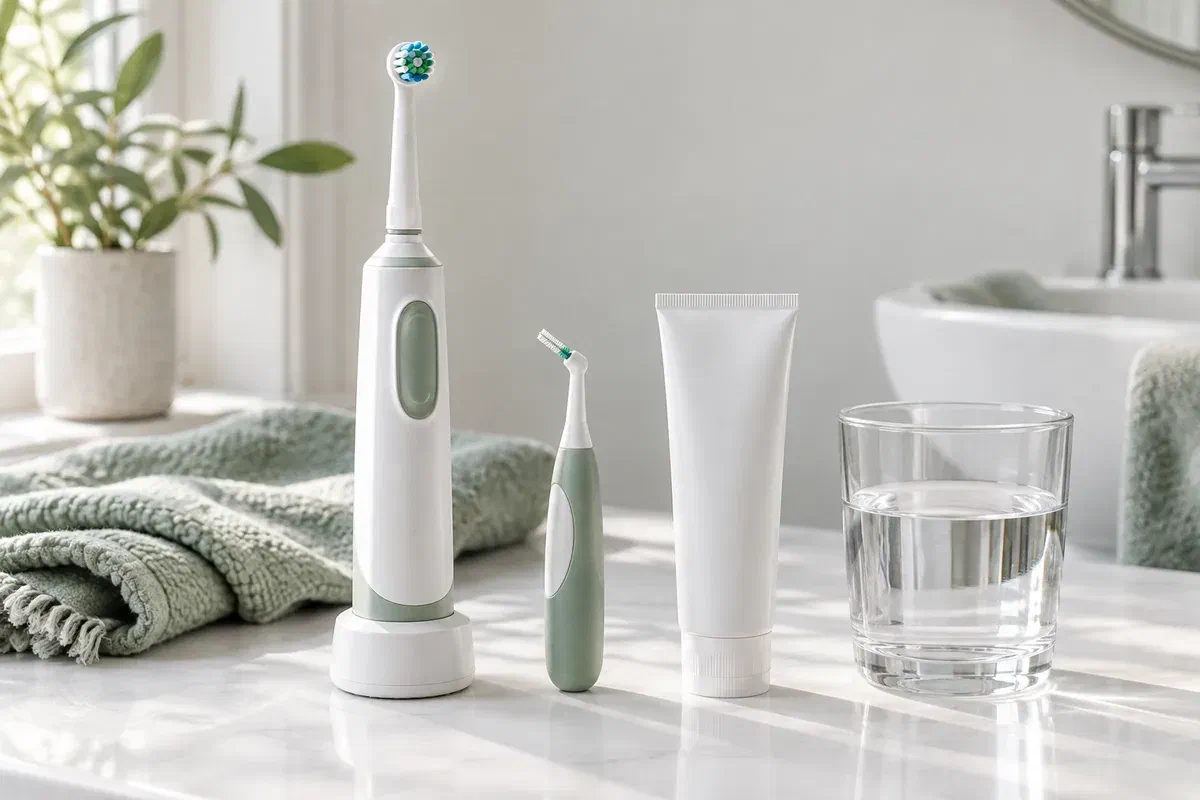
Illustrative easy-grip toothbrush and oral-care tools on a bright counter
Preparing for the drive in

Each person brings their own list

Practical needs are easiest to arrange when we know them at booking. If two people are coming, bring a separate medication list and dental history for each.

Signs around teeth or dental work

Note any bleeding, tender spots, food catching between teeth, or a rough crown edge. Mention removable appliances too. A loose tooth or broken filling needs more than a routine clean, so flag it when booking in case additional time or an examination is advisable.

Routines that have quietly changed

Partners sometimes notice that the other has stopped flossing or struggles to hold a brush. If grip, eyesight or memory now get in the way, mention it, ideally with the person concerned agreeing. It helps the team suggest a method that fits.

Health needs and comfort in the chair

Bring current medicines and any instructions from a physician. Say if either of you finds swallowing hard, has a breathing condition, or feels uneasy tipped back in a chair. Raise access or communication needs before the day so the team can explain what is possible for each of you.

Take any blood thinner or other prescribed medicine exactly as usual on the day of your cleaning. Changes should only ever come from the clinician who manages that medicine. Bring the information so we can plan around it.

What each visit gives you

Maintenance that fits rural routines

Removing hardened deposits is the obvious part. Less obvious, but just as useful, is a clear picture of how your gums are responding, which areas home care keeps missing, and whether older restorations are wearing. When visits are planned around longer drives, knowing exactly what to do at home makes a difference.

Some promises a cleaning cannot make. It cannot ensure teeth or restorations last for good, reverse every gum or bone change, or explain pain whose source has not been found. Ask the team to separate routine maintenance from anything that needs its own examination or treatment plan.

Patient information: CDA — dental examinations and oral care as you age

Care suited to what is in your mouth

Natural teeth, implants and bridges each need their own approach. If any work was done elsewhere and is not on file, describe it. The hygienist can then explain how cleaning and home advice apply to each area.

Tools you can use without fuss

A thicker handle, a different brush head or a simple interdental aid may make home care easier. Try it out with the hygienist before choosing. The best option is one you can use properly every day.

Partners helping partners

Couples often help each other at home. If you would like your partner involved in your instructions, discuss it with the team. Their help should support your understanding and choices, with consent clarified where needed.

On the day

Two visits, back to back

Instruments, time needed and the extent of cleaning depend on each person. Ask early what can be completed today and whether either of you may need a follow-up or recheck.

  1. Catch up on health and preferences

    Each person reviews health changes, medicines, recent dental work and their concerns with the team. Say how you like instructions given. Agree on a pause signal, and mention any discomfort when lying back before the cleaning starts.

  2. Check deposits and gum health

    The hygienist looks at build-up and the gums to decide whether routine cleaning fits or gum treatment should be discussed. Point out bleeding that recurs. An examination may be recommended for findings cleaning cannot explain.

  3. Clean according to the findings

    Instruments suit the deposits, surfaces and clinical needs of each mouth. Ask for a break, more explanation or help with water at any point. Adjustments are discussed according to what is clinically appropriate.

  4. Leave with your own routine

    Ask for a demonstration around any awkward bridge, implant or receding gum area. Check the purpose of the next booking and any product instructions. If your partner will help, they can hear the guidance with your permission.

Back at home

Separate routines at a shared sink

Follow the aftercare for the treatment you received. If a step is hard because of poor eyesight, stiff hands, swallowing or memory, call and the advice can be revisited.

Keep your own tools

Use the brush or interdental aid you practised with, using the technique shown. A powered brush or wider grip helps some people but is not needed by all. If yours is awkward, ask for another approach.

Watch for dryness and changes

Dryness that never quite goes away, a fresh sore patch, or food that feels odd to chew should all be reported. These are not just part of growing older. The team can advise whether a check is needed and how to adjust care for now.

Follow appliance-specific instructions

A partial denture, a bridge and an implant crown each have particular care needs. A strong product suited to one material may harm another. Look after removable pieces and your own teeth as separate jobs.

Patient information: ADA — oral care considerations for older adults

Each person’s plan

Your partner’s plan may look nothing like yours

Ask why each recommendation is made, and whether a visit targets cleaning, gum disease, repairs or a combination.

When prevention and deposit removal are the goal

Routine cleaning

This visit clears the deposits found and supports your home routine. Frequency depends on your own mouth, not your partner’s or your age. Ask why a recall interval is suggested rather than assuming everyone is seen on one schedule.

When the gums and bone need closer care

Gum treatment and reassessment

Established gum disease may lead to a more detailed plan with follow-up. Ask how that differs from routine cleaning, how many visits it may take, what comfort arrangements are possible, and what will be checked later.

When something else affects care

Extra assessment or coordination

Pain, a broken restoration, medical complexity or substantial support needs may call for more planning. Other clinicians may need to be involved. A cleaning should be one part of that wider plan, never a substitute.

Campbellville households ask

Booking together, caring separately

Ask about anything that would make the visit or your care afterward easier. Practical planning questions are welcome.

(905) 876-4488
Can my wife and I book cleanings on the same day?
Ask when calling. Back-to-back appointments may be possible depending on the schedule and what each of you needs that day. The team will still plan each visit separately, based on individual assessment, and will say if one of you needs a longer or extra appointment.
Why might my husband be seen more often than me?
Recall intervals depend on each person’s gums, deposits and dental work. Two people of similar age, living in the same house, can need quite different schedules. Ask the team to explain the reasoning for each of you, and what might change it later.
Can I sit in on my partner’s appointment?
Only if your partner wants that. Talk it over beforehand and mention it when booking. The team will speak directly with the person receiving care, respect their privacy, and check that they are comfortable with you being there.
We share a bathroom. Should we use the same products?
Not necessarily. Each of you may be advised to use different brushes, interdental aids or products for your own mouth and dental work. Keep your tools separate, label them if that helps, and follow your own instructions rather than your partner’s.
What if roads are bad on the day of our appointment?
Call the clinic to talk about rescheduling rather than taking an unsafe drive. If one of you has worsening symptoms, describe them so the team can advise on timing, and seek emergency care nearby for severe problems.
Is a deep cleaning standard for people over seventy?
No. Periodontal treatment depends on the condition of the gums and supporting tissues, not age. Ask what the findings show, what a deeper cleaning would aim to achieve, and the purpose of any recommended appointment before agreeing to it.
Cleaning visits for Campbellville seniors

Plan one trip around both of your cleanings

Get in touch with our Bronte Street practice and ask about arranging seniors’ cleanings together. Mention each person’s dental work, sore spots and any comfort or support needs so the visits can be discussed ahead of time.

Please confirm access and support needs for each person when booking. Treatment and appointment length depend on each individual assessment.

Visit Milton Dental Clinic
Unit 1, 342 Bronte St. S, Milton, ON L9T 5B7
Get directions Clinic hours
Monday–Thursday
11am–7pm
Friday–Sunday
By appointment only

Areas we serve

  • Milton
  • Oakville
  • Mississauga
  • Georgetown
  • Halton Hills
  • Acton
  • Campbellville
  • Brampton
  • Burlington
  • Puslinch
  • Rockwood
  • Erin
  • Caledon
  • Etobicoke
  • Old Milton
  • Bronte Meadows
  • Timberlea
  • Dorset Park
  • Dempsey
  • Clarke
  • Beaty
  • Coates
  • Harrison
  • Scott
  • Willmott
  • Ford
  • Bowes
  • Cobden
  • Walker
  • Mountain View
  • Milton Heights
  • Hawthorne Village
  • Valley View
  • Fallingbrook
  • Nassagaweya
  • Trafalgar
  • Esquesing
  • Nelson
  • Brookville
  • Moffat
  • Glen Williams
  • Norval
  • Limehouse
  • Stewarttown
  • Ashgrove
  • Hornby
  • Silver Creek
  • Speyside
  • Scotch Block
  • North Oakville
  • River Oaks
  • Glen Abbey
  • West Oak Trails
  • Palermo
  • Bronte Creek
  • College Park
  • Joshua Creek
  • Uptown Core
  • Preserve
  • Iroquois Ridge
  • Lisgar
  • Meadowvale
  • Meadowvale Village
  • Churchill Meadows
  • Erin Mills
  • Central Erin Mills
  • Streetsville
  • East Credit
  • Creditview
  • Heartland
  • Sheridan
  • Mount Pleasant
  • Credit Valley
  • Huttonville
  • Churchville
  • Springbrook
  • Northwest Brampton
  • Bram West
  • Fletcher's Meadow
  • Fletcher's Creek South
  • Alton Village
  • Orchard
  • Millcroft
  • Headon Forest
  • Tansley
  • Brant Hills
  • Tyandaga
  • Kilbride
  • Lowville
  • Aberfoyle
  • Morriston
  • Arkell
  • Hillsburgh
  • Freelton
  • Carlisle
  • Waterdown
  • Flamborough
  • Mountsberg

How can we help?

Milton Dental Clinic

Have a question about your smile? Choose the option that works best for you.

For urgent dental concerns, please call.
Messages are reviewed during clinic hours.