

Illustrative older adult speaking with a hygienist before a cleaning visit
General & Family Dentistry

Teeth Cleaning for Seniors in Milton

Decades of fillings, crowns and perhaps an implant or partial denture make every mouth different. In Milton, a seniors’ cleaning visit starts with what you have now, what feels tender, and what has become harder to manage at home.

Cleaning a mouth with a history

Your dental work tells part of the story

By the later decades, most mouths carry a record of earlier care: an old filling here, a crown there, maybe a bridge, an implant or a removable partial. Each of those surfaces collects deposits differently, and the gums around them can change over time. A cleaning plan should start with that real mix, not with a birthday.

Tell us which parts feel easy and which have started to give you trouble. Perhaps a back corner traps food, a root is tender to cold, or your hands no longer grip a toothbrush the way they did. Those details shape how the appointment is arranged, and you decide how much help you want.

A professional cleaning removes build-up that brushing cannot, and shows how maintenance is going. It is not a substitute for an examination, and it will not fix a cracked or decayed tooth. You should leave knowing what was cleaned, what needs a separate look, and which routine is practical for you in Milton.

Book a seniors’ cleaning
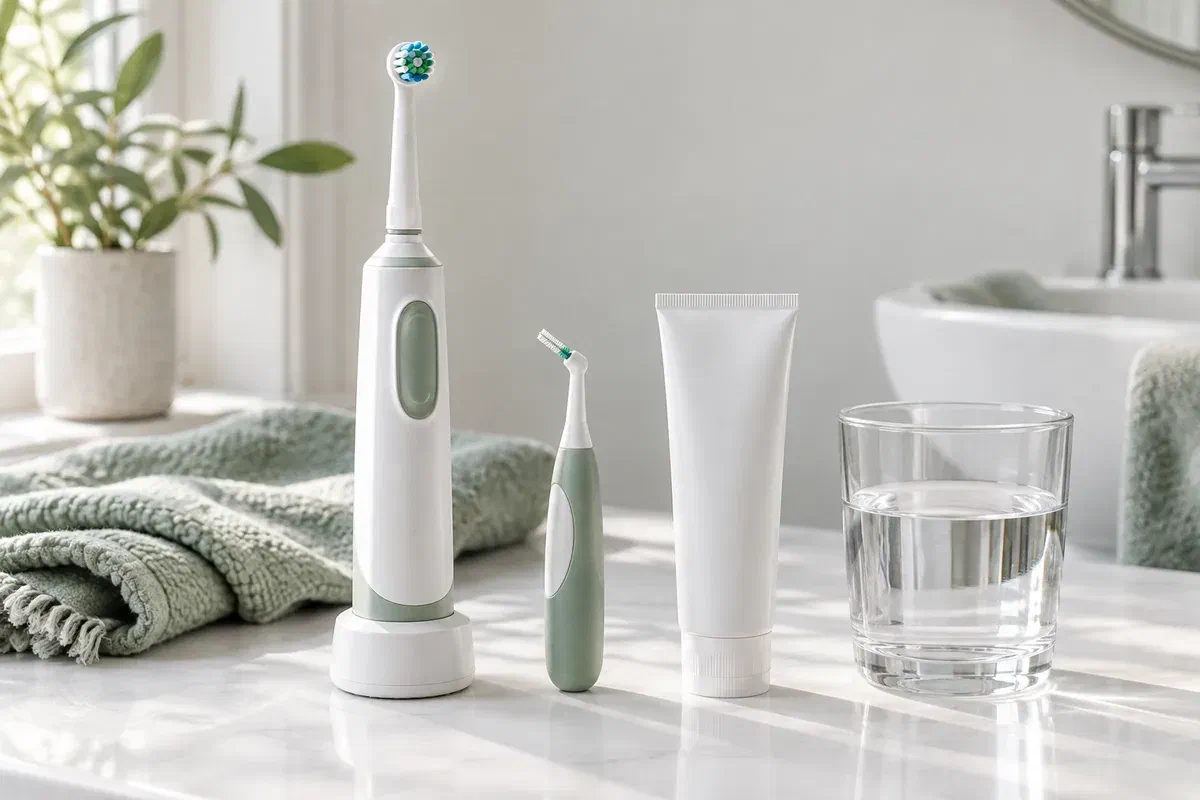
Illustrative easy-grip toothbrush and oral-care tools on a bright counter
Worth raising before your Milton visit

Small changes can matter at the next cleaning

A quick note when you book lets us prepare the visit properly. Please bring a list of the dental work you have had and any recent updates to your health.

Something different around a tooth or crown

Mention gums that bleed, a spot that aches when you chew, food that catches in the same place, or an edge that feels sharp to your tongue. Include partial dentures as well as crowns and bridges. A tooth that moves or a filling that has broken calls for assessment beyond a routine clean.

A routine that no longer fits

Say so if gripping the brush, guiding floss between teeth, seeing the back of your mouth, or keeping track of each step has become a struggle. That information points us toward methods you can actually manage. An old habit does not have to stay just because it once worked.

Medical and comfort considerations

Bring an up-to-date list of medicines and any advice your physician has given. Mention swallowing problems, breathing concerns, or difficulty reclining. Ask about access or communication support ahead of time so the team can explain what is possible.

Keep taking blood thinners and other prescribed medication as usual unless the clinician who manages them has told you otherwise. We only need the details so your cleaning can be planned with them in mind.

What regular maintenance can offer

More than a polish

A cleaning appointment deals with hardened deposits, but it is also a check on how well daily care is reaching every surface. Shiny teeth are only one sign. How the gums respond, which areas are hard to clean, and how older crowns or fillings are holding up are just as important to note.

Honest limits help here. Cleaning cannot promise that teeth or restorations will last forever, undo every change in the supporting gums and bone, or explain pain with no clear cause. Ask which findings belong to maintenance and which need their own examination.

Patient information: CDA — dental examinations and oral care as you age

Care matched to your materials

Enamel, porcelain, composite and implant parts each need suitable handling. If some of your dental work was done at another office and is not on file, describe it. Then ask how both the cleaning and your home advice take those particular surfaces into account.

Keeping daily care in your hands

Some people find a thicker handle, a smaller brush head, or a different between-teeth tool far easier to use. Ask to try a technique in the chair instead of leaving with only a product name. What counts is that you can use it well and without strain.

Help on your terms

A spouse, adult child or caregiver can be part of the conversation if you would like that. They might help you recall instructions or lend a hand with daily brushing. Their role should support your own understanding and decisions, with consent and any decision-making arrangements clarified where they apply.

How the visit unfolds

Four steps, adjusted to you

How much cleaning is done, which instruments are used, and how long it takes all depend on your mouth. Ask at the start what today can cover and whether a follow-up or recheck is likely.

  1. Catch up and set comfort signals

    We go over health changes, current medicines, recent dental work, and anything you want looked at. Let us know how you like things explained. Decide on a hand signal for a pause, and raise any concern about reclining before we begin, instead of putting up with discomfort quietly.

  2. Look at deposits and the gums

    The team reviews where build-up has collected and whether a routine clean is enough or a fuller gum-care conversation is needed. Point out bleeding or tenderness that keeps coming back. Some findings need an examination.

  3. Clean what the findings call for

    Instruments are chosen to suit the deposits, the surfaces involved and your clinical needs. Speak up if you need a break, a plainer explanation, or help with water during the appointment. Adjustments can be talked through, within what is clinically suitable.

  4. Practise at home, plan what comes next

    Ask to be shown how to reach around a tricky bridge, implant or exposed root. Make sure you know why the next visit is booked and whether anything used today has its own instructions. If someone helps you at home, talk about how to pass those directions on, with your permission.

Between appointments

A routine you can keep doing

Follow the instructions given for the care you received. If anything is hard to do because of eyesight, hand strength, swallowing, memory or another practical reason, tell us so the advice can be adjusted.

Pick tools that suit your hands

Use the method you practised with the brush or interdental aid that was chosen. An electric brush or wider handle helps some people, though nobody is required to own one. If the recommended tool feels awkward or sore to use, ask for another way.

Mention dryness and new symptoms

Report a mouth that stays dry, a new sore patch, or chewing that feels different. None of this should be written off as part of getting older. Ask what needs checking and whether your home care should change while the cause is looked into.

Clean appliances by their own rules

A removable partial, a bridge and an implant crown each come with specific care instructions, so follow the ones that apply. Avoid using a strong cleaner on everything in the same way. Ask how to care for the appliance and your remaining teeth as two distinct tasks.

Patient information: ADA — oral care considerations for older adults

Deciding what level of care fits

Your gums, not your age, set the plan

Ask what each recommendation is for, and whether a visit is meant for cleaning, gum disease treatment, repairs, or several of these together.

When removing deposits and preventing problems is the goal

Regular maintenance cleaning

This appointment removes the deposits that were found and backs up your daily routine. How often you come and how much is done depend on your own mouth. Ask why a particular interval suits you, rather than assuming all older adults follow one schedule.

When the gums and bone need closer attention

Gum treatment with follow-up checks

Established gum disease can call for a more involved plan and later reassessment. The team should explain how that differs from an ordinary cleaning. Talk about how many visits to expect, how comfort will be handled, and what will be measured to judge progress.

When another issue shapes the appointment

Further assessment or coordinated care

Pain, a broken filling, important medical factors, or complex support needs can mean extra planning. Ask whether another clinician should take part. A cleaning sits within that wider plan rather than standing in for it.

Seniors’ cleaning questions

Answers that help you prepare

Ask whatever would make the visit clearer or the care afterward easier. Everyday questions are a normal part of planning the right treatment.

(905) 876-4488
Is a deeper cleaning automatic once I reach a certain age?
No. Whether periodontal treatment is needed depends on the condition of your gums and the tissues supporting your teeth. Age on its own does not decide it. Ask the team to walk you through what they found and why a particular type of cleaning is suggested before you compare appointment lengths.
Why does the hygienist ask about every crown and bridge I have?
Different materials and shapes collect deposits in different ways, and some need particular instruments or home-care tools. Knowing what is in your mouth, including work done elsewhere, helps the team clean suitably and notice anything that has changed. A list or old records can be useful to bring.
Can my daughter come into the room with me?
Mention it when you book and explain what you would like her to do, whether that is taking notes or helping with questions. With your permission, a support person can be involved. The team will still speak to you directly and clarify consent or decision-making arrangements where they apply.
What if my mouth feels dry most of the day?
Mention it, along with your current medicines, because a persistently dry mouth deserves assessment rather than being accepted as normal. The team can discuss what might be contributing and whether your home routine or preventive advice should change. Report it again if it continues.
My upper partial covers most of my palate. Does it change the cleaning?
The natural teeth that remain, and the tissues under the partial, still need assessment and care. Bring the appliance to the visit. Ask how to clean the teeth, the partial and the gums beneath it, because each part may need its own approach.
Is there a way to make a long appointment less tiring?
Tell the team what tires you, whether that is keeping your mouth open, lying back, or concentrating on instructions. Agreeing on pauses beforehand can help. The team can discuss whether care should be organised differently, depending on what is clinically suitable for you.
Seniors’ cleaning, close to home in Milton

Tell us what would make the visit easier

Call our Bronte Street practice to arrange an assessment of your cleaning needs. Mention your dental work, tender spots, and the comfort or support you would like, so the visit can be talked through first.

Please confirm any access or support needs when you book. The type of treatment and the length of the visit depend on your individual assessment.

Visit Milton Dental Clinic
Unit 1, 342 Bronte St. S, Milton, ON L9T 5B7
Get directions Clinic hours
Monday–Thursday
11am–7pm
Friday–Sunday
By appointment only

Areas we serve

  • Milton
  • Oakville
  • Mississauga
  • Georgetown
  • Halton Hills
  • Acton
  • Campbellville
  • Brampton
  • Burlington
  • Puslinch
  • Rockwood
  • Erin
  • Caledon
  • Etobicoke
  • Old Milton
  • Bronte Meadows
  • Timberlea
  • Dorset Park
  • Dempsey
  • Clarke
  • Beaty
  • Coates
  • Harrison
  • Scott
  • Willmott
  • Ford
  • Bowes
  • Cobden
  • Walker
  • Mountain View
  • Milton Heights
  • Hawthorne Village
  • Valley View
  • Fallingbrook
  • Nassagaweya
  • Trafalgar
  • Esquesing
  • Nelson
  • Brookville
  • Moffat
  • Glen Williams
  • Norval
  • Limehouse
  • Stewarttown
  • Ashgrove
  • Hornby
  • Silver Creek
  • Speyside
  • Scotch Block
  • North Oakville
  • River Oaks
  • Glen Abbey
  • West Oak Trails
  • Palermo
  • Bronte Creek
  • College Park
  • Joshua Creek
  • Uptown Core
  • Preserve
  • Iroquois Ridge
  • Lisgar
  • Meadowvale
  • Meadowvale Village
  • Churchill Meadows
  • Erin Mills
  • Central Erin Mills
  • Streetsville
  • East Credit
  • Creditview
  • Heartland
  • Sheridan
  • Mount Pleasant
  • Credit Valley
  • Huttonville
  • Churchville
  • Springbrook
  • Northwest Brampton
  • Bram West
  • Fletcher's Meadow
  • Fletcher's Creek South
  • Alton Village
  • Orchard
  • Millcroft
  • Headon Forest
  • Tansley
  • Brant Hills
  • Tyandaga
  • Kilbride
  • Lowville
  • Aberfoyle
  • Morriston
  • Arkell
  • Hillsburgh
  • Freelton
  • Carlisle
  • Waterdown
  • Flamborough
  • Mountsberg

How can we help?

Milton Dental Clinic

Have a question about your smile? Choose the option that works best for you.

For urgent dental concerns, please call.
Messages are reviewed during clinic hours.