

Illustrative older adult speaking with a hygienist before a cleaning visit
General & Family Dentistry

Teeth Cleaning for Seniors in Mississauga

Told you might need a “deep cleaning” and not sure why? Older adults coming from Mississauga can have the gum findings explained first, then choose between maintenance and periodontal care with a clear picture.

Routine clean or gum care?

Understand the recommendation before you accept it

“Deep cleaning” is a phrase many older adults hear and few have explained to them. Sometimes it is the right call because the gums and the bone beneath them need more attention. Sometimes a regular maintenance clean is all that is indicated. Getting older, by itself, settles nothing either way.

Your mouth is the deciding factor: how many natural teeth remain, what crowns, bridges, implants or partials are in place, and what the gum measurements show. We also want to know what is uncomfortable, what has become difficult at home, and how involved you would like a family member to be.

Whichever type of cleaning is suggested, it removes deposits and helps reveal where maintenance is falling behind. It is not a replacement for an examination, and it cannot restore a broken tooth. You are entitled to know what was found, what was done, and how the plan fits your health and daily life.

Book a cleaning assessment
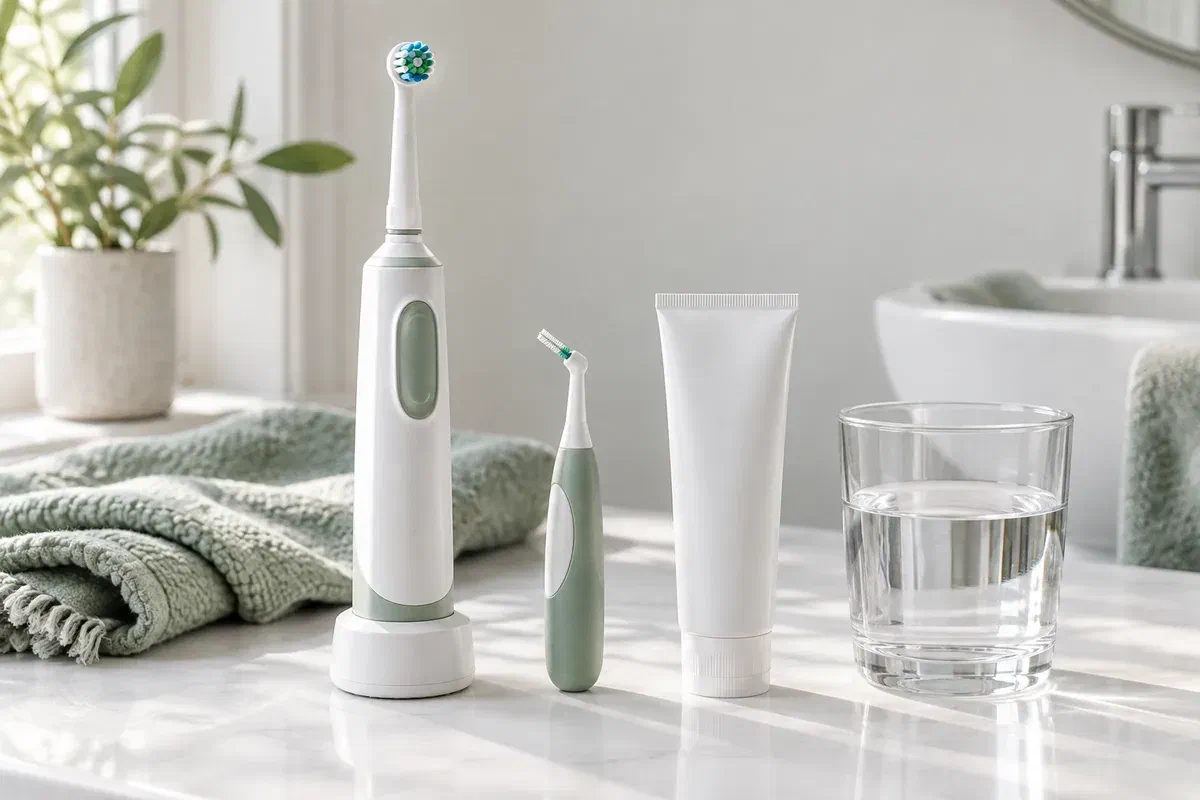
Illustrative easy-grip toothbrush and oral-care tools on a bright counter
Clues worth reporting

What your gums may already be telling you

Practical needs are easier to arrange when we hear about them at booking. Bring health information and a record of past dental treatment if you have one.

Bleeding, tenderness or trapped food

Gums that bleed when you brush, a spot that throbs after eating, or food packing between the same two teeth are all worth describing. Mention dentures and partials too. A loose tooth or a damaged filling calls for an assessment beyond ordinary cleaning.

Areas you can no longer reach

Changes in grip, eyesight or memory can mean some surfaces are missed day after day. Tell us which steps have become difficult. That helps the team understand the findings and suggest a technique you can realistically use.

Medical history and comfort

Bring a current list of medicines and any relevant advice from your physician. Mention swallowing problems, breathing concerns, diabetes or other conditions on your record, and any trouble lying back. Ask about access and communication support before the day.

Leave your blood thinner and other prescribed medicines exactly as they are unless the clinician who manages them says otherwise. Share the details with us so the cleaning, especially any gum treatment, can be planned with them in view.

What the right cleaning can do

Clearer gums, clearer decisions

Removing hardened deposits is only part of the value. Each visit records how the gums respond, which areas home care struggles with, and whether older restorations are holding up. Those observations are what separate a routine clean from a case for more involved gum treatment.

Be realistic about the limits. Neither maintenance nor periodontal care can guarantee teeth or dental work will last forever, and neither can reverse every change in the supporting tissues. Unexplained pain needs its own investigation. Ask which findings are being managed by cleaning and which need a separate plan.

Patient information: CDA — dental examinations and oral care as you age

Instruments suited to each surface

Implants, bridges, crowns and natural roots are not all handled alike. Describe any dental work done elsewhere that is missing from our records. Ask how the cleaning and your home advice account for those surfaces.

A home routine you can sustain

For some people, a larger handle, a smaller brush head or a different between-teeth aid makes the hardest areas reachable. Practise the motion in the chair rather than relying on a product name. What matters is that it works for you.

Family support, on your terms

A relative or caregiver can join the discussion or help with daily cleaning, if you wish. Talk with the team about their role. Their involvement should support your understanding and your choices, with consent and decision-making arrangements clarified where relevant.

How the appointment runs

From measurement to plan

Appointment length, instruments and the extent of cleaning depend on what is found. Ask early what can be achieved today and whether another visit or a reassessment may follow.

  1. Talk through health and comfort

    We review health updates, medicines, recent treatment and the areas you are concerned about. Say how you prefer information explained. Agree on a pause signal, and mention any positioning difficulty before we start rather than coping quietly.

  2. Measure the gums and check deposits

    The hygienist assesses build-up and the condition of the gums to judge whether routine cleaning suits you or periodontal care should be discussed. Mention bleeding that recurs. Some findings require an examination to interpret.

  3. Carry out the cleaning that fits

    Instruments are selected for the deposits, the surfaces and your clinical needs. If gum treatment is planned, it may be organised differently from a maintenance visit. Ask for a pause, more explanation or help with water whenever you need it.

  4. Plan home care and the next visit

    Request a demonstration for any awkward bridge, implant or exposed root. Confirm what the next appointment is for and whether any product used today has instructions. With your permission, the guidance can be shared with whoever helps you at home.

After the cleaning

Keeping the gums on track

Follow the specific aftercare for the treatment you received. If an instruction is hard because of eyesight, hand strength, swallowing, memory or anything practical, tell the team so it can be adapted.

Practise with the aid you were given

Use the brush or interdental tool chosen at the visit, with the technique demonstrated. A powered brush or broader grip can help some people, but neither is required. Ask for an alternative if the tool is uncomfortable.

Note dryness and changing symptoms

Tell us about lasting dryness, a new tender area, or chewing that feels different. These deserve attention instead of being put down to age. Ask what assessment is needed and whether your routine should change meanwhile.

Clean appliances on their own terms

Partials, bridges and implant restorations each have particular care instructions. A harsh cleaner is not suitable for every surface. Clean removable parts and remaining teeth as separate steps.

Patient information: ADA — oral care considerations for older adults

The choice in front of you

Maintenance, gum treatment or something more?

Every recommendation should come with a reason. Ask whether visits are aimed at cleaning, periodontal disease, repairs or a combination.

Suitable when gums are stable and deposits are routine

Regular maintenance

This care removes the deposits identified and supports your daily routine. Its frequency and extent depend on your mouth. Ask why the proposed interval suits you rather than assuming every older adult follows one timetable.

Suitable when the supporting tissues need more

Periodontal therapy and reassessment

Established gum disease may call for a more detailed plan and follow-up measurements. The team should explain how it differs from a maintenance clean, how many visits to expect, how comfort will be handled, and what will show whether it is working.

Suitable when another concern is involved

Assessment beyond cleaning

A painful tooth, a broken crown, medical complications or complex support needs may require extra planning. You may be referred, or another provider may be consulted. Cleaning should be one piece of that bigger plan, not a substitute for it.

Mississauga seniors ask

Questions about gum care and cleaning

Ask whatever would make the appointment or your care afterward easier to understand. Practical questions help shape appropriate treatment.

(905) 876-4488
What is the difference between a regular cleaning and scaling and root planing?
A regular cleaning removes deposits as part of maintenance. Scaling and root planing is a gum treatment that addresses deposits below the gumline when the supporting tissues need it. The team should explain which applies to you and why.
What do the gum pocket numbers actually mean?
They describe measurements around each tooth that help assess the gums. Ask the hygienist to explain your readings in plain terms, which areas concern them, and what change they would hope to see at the next visit.
Does my age mean my gums will keep getting worse?
Not necessarily. Gum health depends on many factors, and age alone does not decide the outcome. Ask what your findings show and what part daily care, maintenance visits and any treatment play in managing them.
Will gum treatment take more than one visit?
It may, depending on the extent of the findings and what is comfortable for you. Ask how the treatment would be divided, what reassessment involves, and how the plan fits your schedule and support arrangements.
Can my son help me decide whether to go ahead?
With your agreement, a family member can join the conversation and help you weigh the information. The team will still speak with you directly. Mention any decision-making arrangements so they can be respected.
How should I plan treatment visits if I’m coming from Mississauga?
Share travel and scheduling limits when booking so appointments can be organised sensibly. Ask how many visits the plan may need. If sudden severe symptoms develop, seek care nearby rather than waiting to travel.
From Mississauga to our Milton office

Get the gum findings explained

Contact our Bronte Street practice to arrange a cleaning assessment. Mention your dental work, sore or bleeding areas, and any support or comfort needs, so the appointment can be discussed before you arrive.

Please confirm access and support needs when booking. Whether you need maintenance or gum treatment, and how long it takes, depends on individual assessment.

Visit Milton Dental Clinic
Unit 1, 342 Bronte St. S, Milton, ON L9T 5B7
Get directions Clinic hours
Monday–Thursday
11am–7pm
Friday–Sunday
By appointment only

Areas we serve

  • Milton
  • Oakville
  • Mississauga
  • Georgetown
  • Halton Hills
  • Acton
  • Campbellville
  • Brampton
  • Burlington
  • Puslinch
  • Rockwood
  • Erin
  • Caledon
  • Etobicoke
  • Old Milton
  • Bronte Meadows
  • Timberlea
  • Dorset Park
  • Dempsey
  • Clarke
  • Beaty
  • Coates
  • Harrison
  • Scott
  • Willmott
  • Ford
  • Bowes
  • Cobden
  • Walker
  • Mountain View
  • Milton Heights
  • Hawthorne Village
  • Valley View
  • Fallingbrook
  • Nassagaweya
  • Trafalgar
  • Esquesing
  • Nelson
  • Brookville
  • Moffat
  • Glen Williams
  • Norval
  • Limehouse
  • Stewarttown
  • Ashgrove
  • Hornby
  • Silver Creek
  • Speyside
  • Scotch Block
  • North Oakville
  • River Oaks
  • Glen Abbey
  • West Oak Trails
  • Palermo
  • Bronte Creek
  • College Park
  • Joshua Creek
  • Uptown Core
  • Preserve
  • Iroquois Ridge
  • Lisgar
  • Meadowvale
  • Meadowvale Village
  • Churchill Meadows
  • Erin Mills
  • Central Erin Mills
  • Streetsville
  • East Credit
  • Creditview
  • Heartland
  • Sheridan
  • Mount Pleasant
  • Credit Valley
  • Huttonville
  • Churchville
  • Springbrook
  • Northwest Brampton
  • Bram West
  • Fletcher's Meadow
  • Fletcher's Creek South
  • Alton Village
  • Orchard
  • Millcroft
  • Headon Forest
  • Tansley
  • Brant Hills
  • Tyandaga
  • Kilbride
  • Lowville
  • Aberfoyle
  • Morriston
  • Arkell
  • Hillsburgh
  • Freelton
  • Carlisle
  • Waterdown
  • Flamborough
  • Mountsberg

How can we help?

Milton Dental Clinic

Have a question about your smile? Choose the option that works best for you.

For urgent dental concerns, please call.
Messages are reviewed during clinic hours.