

Illustrative patient describing tooth sensitivity during a dental conversation
General & Family Dentistry

Treatment for Sensitive Teeth in Erin

Most sensitivity care happens at the bathroom sink, not in the dental chair. For households in Erin and Hillsburgh, we diagnose the cause first, then help you set up a home routine with a clear purpose and a sensible date to review it.

Care that lives at home

The sink, the brush, and a plan worth following

For many people with sensitive teeth, the treatment that matters most is the one carried out twice a day at home. A suitable toothpaste, a soft brush, and a gentle technique can make a real difference when the problem is exposed dentin. The difficulty is knowing that exposed dentin is actually the problem, and how long to persist before asking again.

That is where the examination earns its place. Decay, a cracked tooth, a worn filling, or a gum condition can mimic ordinary sensitivity, and none of them respond to a better brushing routine alone. Our Bronte Street dentist listens to how your teeth behave, examines them, and only then suggests the home care, in-office treatment, or repair that suits the finding.

Avoid putting the tooth through repeated tests on your own. Instead, describe ordinary days: what you eat and drink, when brushing hurts, and how long the feeling lasts. You will leave with an explanation, a routine designed for your diagnosis, and a clear idea of when progress should be reviewed.

Plan your sensitivity care with us
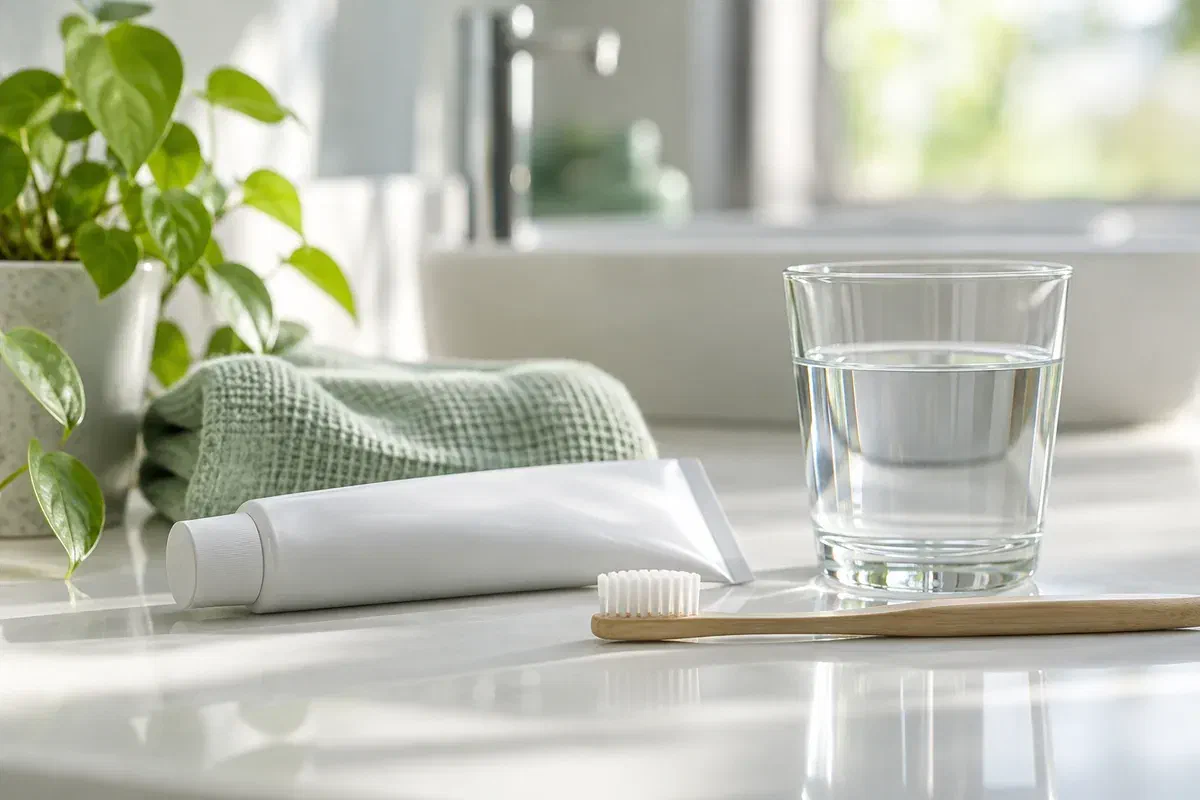
Illustrative soft toothbrush, toothpaste, and drinking water for gentle daily care
Before you start a routine

Which pattern are you dealing with?

Look at the location, the trigger, and how long it lasts. Report what you notice, and let the examination decide whether home care is the right starting point.

Short, repeatable sensitivity

A quick reaction to cold, air, or the brush that fades fast is the kind of pattern home care may suit. Still, mention whether it involves one tooth or many, and have it checked if it is new, growing, or interfering with cleaning.

Pain that persists or begins by itself

Lingering discomfort, sleep disruption, or pain without a trigger points away from a simple home routine. Call so the team can decide how soon you should be seen and which tests may help.

Sensitivity that followed a change

Tell us about recent treatment, whitening, a new toothpaste or rinse, an injury, or a bite that feels different. Timing can guide the conversation, though the tooth itself still needs to be examined.

Call promptly about swelling, a broken tooth, significant pain on biting, or symptoms that are steadily worsening. If you already have a checkup booked, tell us about the new sensitivity so we can decide whether an earlier visit makes sense.

Why diagnosis makes home care work

Effort at home pays off when it is aimed well.

Dentin is the layer beneath enamel and, along the root, beneath the gum. When its covering wears or the gum recedes, cold and touch can reach the nerve more easily. Other conditions cause similar sensations, so examination is what confirms whether home care is the right tool. If it is not, care may involve an application in the clinic or treatment for a specific problem.

Even with a well-chosen routine, relief may be gradual and is not guaranteed to be permanent. Ask what the approach should change, how exactly to use it, and when it will be reviewed. You should also leave knowing what to do if sensitivity holds steady or behaves differently.

Patient information: ADA MouthHealthy — sensitive teeth and possible causes

A routine with a purpose

When the dentist explains why a product or technique is recommended, it is easier to stick with it. Ask what result to look for and how long a fair trial should be for your situation.

Treatment where home care is not enough

If the examination shows decay, a damaged restoration, or another concern, it can be addressed directly rather than left behind a toothpaste. Ask the dentist to connect each recommendation to its finding.

Cleaning that stays thorough

Sensitive spots often get skipped, which makes daily care harder over time. Show us where brushing hurts so your method and choice of brush can be reviewed, keeping your routine complete while progress is followed.

Your visit from Erin

Diagnose first, then design the routine.

Testing depends on what the dentist finds. If you are worried about discomfort during the examination, mention it, and each step will be explained beforehand.

  1. Describe your current routine and symptoms

    Tell us which toothpaste, brush, and rinses you use, when the sensitivity began, what sets it off, and how long it lasts. Night pain and recent treatment matter too. You do not need to know the exact tooth.

  2. Examine teeth and gums

    The dentist checks the surfaces involved, any restorations, and the gum line. Suitable tests or X-rays may be suggested to find the source. Ask what each one shows, and say so whenever you would like to pause.

  3. Explain the cause and the plan

    You will hear what is clear and what is uncertain. If home care is appropriate, the team walks through the product, technique, and what to watch for. If treatment is needed, ask about the options, drawbacks, and timing.

  4. Set a review date

    Agree on when to report progress and which changes should bring an earlier call. A home trial should have a defined length and goal, so you are never left wondering whether to keep going while the cause remains unclear.

Your daily routine

Small, consistent steps at the sink

Follow the guidance for your diagnosis and the product or treatment you were given. Instructions after a repair can be quite different from those for a desensitizing toothpaste.

Brush gently and skip the tests

Use a soft brush and the motion you were taught, with light pressure on the tender area. Resist checking the tooth with ice water. If an area still cannot be cleaned without discomfort, let us know.

Use the product as directed, consistently

A desensitizing toothpaste may need regular use for a while before you can judge it. Follow the directions rather than adding extra products or using it more often. Ask about whitening if it seems to make the sensitivity worse.

Check in at the agreed time

A short note of triggers, duration, and whether daily life feels easier makes the review more useful. You do not have to provoke the tooth. Call earlier if pain grows, starts without a trigger, or simply is not improving.

Where the plan can go

Home care, in-office care, or repair

Ask what each option is meant to achieve. Treating exposed dentin, repairing a tooth, and treating the inside of a tooth are different decisions.

When conservative care suits the findings

A home routine, possibly with an in-office boost

For a suitable surface, you may be advised to use a specific toothpaste at home, sometimes alongside a treatment applied at the clinic. Ask how to use it, its limits, and when you will review it. It follows a diagnosis rather than replacing one.

When a tooth or filling needs treatment

Repairing the source

Decay, damage, or a restoration problem may need a repair or a protective step. The choice depends on the condition and the amount of sound tooth that remains. Ask why it is advised and what other approaches are reasonable.

When the diagnosis calls for more

Additional gum or inner-tooth care

Some findings lead to a separate discussion about gum care or treatment inside the tooth, and a referral may be considered. Root canal treatment is never a default for sensitivity; it depends on what the examination shows.

Erin questions

Making home care for sensitive teeth work

Ask about products, technique, triggers, and the review date. Sensitivity can describe more than one problem, so the plan starts with the cause.

(905) 876-4488
How do I know whether my sensitivity toothpaste is working?
Ask the dentist what change to look for and how long a fair trial is for you. A simple record of triggers and duration helps. If there is little change by the review, or symptoms worsen sooner, call.
Should I spit and not rinse after using a sensitivity toothpaste?
Follow the instructions on the product and any advice from the dental team, as directions can vary. If you are unsure how to use a recommended toothpaste, ask at your visit so the routine is clear.
Is a mouthwash for sensitive teeth enough on its own?
A rinse may play a role for some people, but whether it suits you depends on the cause. Mention any rinse you use, and ask whether it fits with the rest of your recommended routine.
My toothpaste helped. Do I still need an examination?
Improvement is encouraging but does not prove there is no cavity or other issue. Have new or unexplained sensitivity examined, and tell the dentist which product you used and what changed.
Is it all right to stop whitening while my routine is reviewed?
If whitening seems to bring on sensitivity, pausing it and asking for advice is sensible. Bring the product details to your visit, rather than adding more sensitivity products while continuing the same whitening.
How can I avoid extra trips in from Erin if the routine is not working?
Ask at your visit how progress will be reviewed and whether an update can be given by phone. If symptoms clearly worsen, swelling develops, or pain lingers, call before the review date.
Sensitive teeth care for Erin

A clear diagnosis makes home care worth the effort.

Phone our Bronte Street team to describe your sensitivity and what you have already tried, and we will arrange an assessment. Mention whether pain lingers, starts on its own, or followed recent treatment.

Care is based on the cause. Swelling or significant, worsening pain should be reported promptly instead of handled with home products alone.

Visit Milton Dental Clinic
Unit 1, 342 Bronte St. S, Milton, ON L9T 5B7
Get directions Clinic hours
Monday–Thursday
11am–7pm
Friday–Sunday
By appointment only

Areas we serve

  • Milton
  • Oakville
  • Mississauga
  • Georgetown
  • Halton Hills
  • Acton
  • Campbellville
  • Brampton
  • Burlington
  • Puslinch
  • Rockwood
  • Erin
  • Caledon
  • Etobicoke
  • Old Milton
  • Bronte Meadows
  • Timberlea
  • Dorset Park
  • Dempsey
  • Clarke
  • Beaty
  • Coates
  • Harrison
  • Scott
  • Willmott
  • Ford
  • Bowes
  • Cobden
  • Walker
  • Mountain View
  • Milton Heights
  • Hawthorne Village
  • Valley View
  • Fallingbrook
  • Nassagaweya
  • Trafalgar
  • Esquesing
  • Nelson
  • Brookville
  • Moffat
  • Glen Williams
  • Norval
  • Limehouse
  • Stewarttown
  • Ashgrove
  • Hornby
  • Silver Creek
  • Speyside
  • Scotch Block
  • North Oakville
  • River Oaks
  • Glen Abbey
  • West Oak Trails
  • Palermo
  • Bronte Creek
  • College Park
  • Joshua Creek
  • Uptown Core
  • Preserve
  • Iroquois Ridge
  • Lisgar
  • Meadowvale
  • Meadowvale Village
  • Churchill Meadows
  • Erin Mills
  • Central Erin Mills
  • Streetsville
  • East Credit
  • Creditview
  • Heartland
  • Sheridan
  • Mount Pleasant
  • Credit Valley
  • Huttonville
  • Churchville
  • Springbrook
  • Northwest Brampton
  • Bram West
  • Fletcher's Meadow
  • Fletcher's Creek South
  • Alton Village
  • Orchard
  • Millcroft
  • Headon Forest
  • Tansley
  • Brant Hills
  • Tyandaga
  • Kilbride
  • Lowville
  • Aberfoyle
  • Morriston
  • Arkell
  • Hillsburgh
  • Freelton
  • Carlisle
  • Waterdown
  • Flamborough
  • Mountsberg

How can we help?

Milton Dental Clinic

Have a question about your smile? Choose the option that works best for you.

For urgent dental concerns, please call.
Messages are reviewed during clinic hours.