Cold drinks feel different
A brief sharp sensation can develop when protective tooth surfaces become thinner. Tell us which teeth react, whether heat also triggers it, and how long the feeling continues after the drink is gone.


When enamel starts to wear, small changes can affect everyday comfort. Explore acid-wear care in Milton, from understanding the cause to protecting and restoring the tooth surfaces you depend on.
Acid wear, also called dental erosion, happens when acids soften and gradually dissolve tooth surfaces. It is different from a cavity caused by bacteria, although the two problems can occur together. Teeth may become more sensitive, develop shallow hollows, or look thinner along their edges.
A repair is only part of the conversation. Frequent acidic drinks, reflux, vomiting, dry mouth, and the way teeth meet can all influence the pattern of damage. Understanding those factors helps the dentist recommend care that addresses the cause as well as the visible changes.
At your Milton appointment, bring the details that seem ordinary: what you sip through the day, when sensitivity occurs, and whether you have noticed changes in your bite. A useful plan begins with your daily routine and an examination of the teeth themselves.
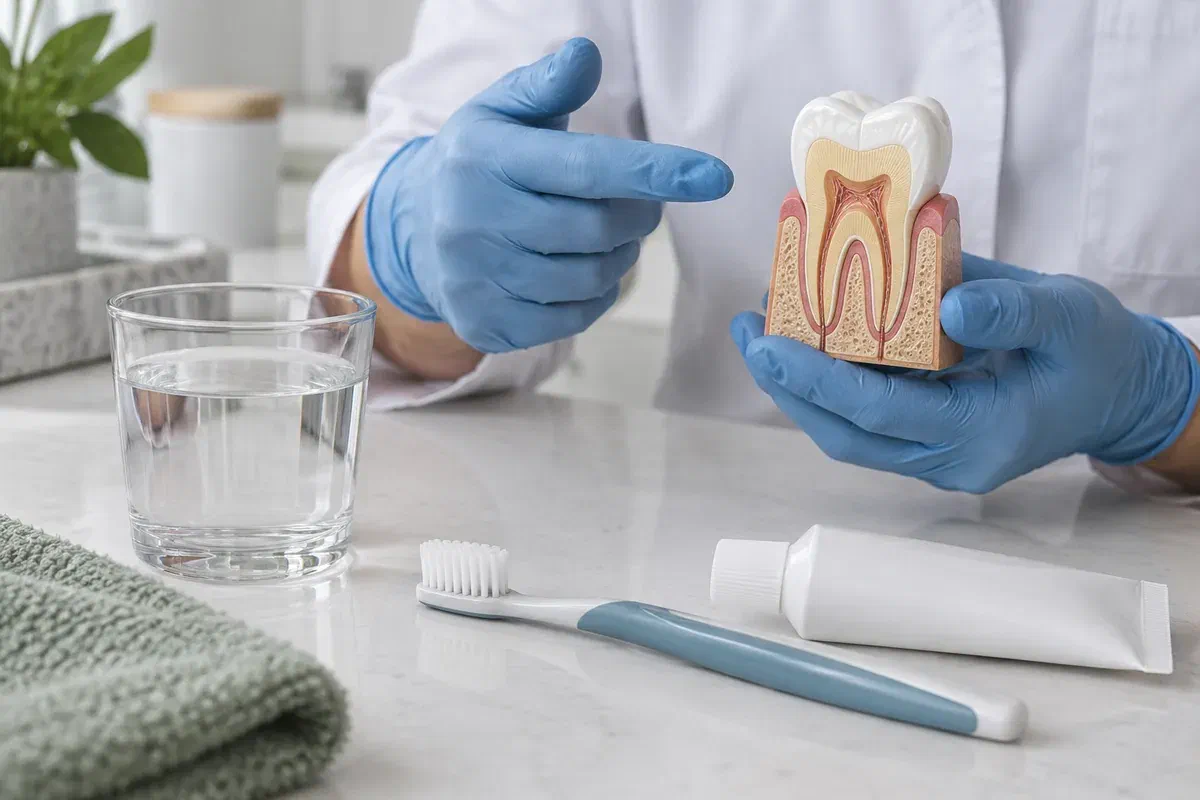
You may first notice discomfort with a cold drink or a change in the appearance of a tooth. An assessment helps distinguish erosion from decay, brushing abrasion, grinding, and other causes of sensitivity.
A brief sharp sensation can develop when protective tooth surfaces become thinner. Tell us which teeth react, whether heat also triggers it, and how long the feeling continues after the drink is gone.
Front teeth may appear more translucent, shorter, or chipped. Photographs and a careful examination can help establish whether the appearance reflects active wear, older changes, or a separate problem with the tooth.
Smooth hollows or fillings that seem to stand above surrounding enamel can be clues to surface loss. The dentist also checks how your teeth contact, since acid exposure and mechanical wear may occur together.
A change in colour alone does not establish acid erosion. Avoid choosing whitening or a new toothpaste as the solution before the cause of the change has been assessed.
Early care focuses on reducing the exposures that continue to affect enamel and managing symptoms. Recommendations may include changes to drinking habits, fluoride products, or a conversation with your medical clinician if reflux or recurrent vomiting could be contributing.
Lost tooth structure does not grow back. When damage affects comfort, appearance, or function, restorative care may be considered alongside prevention. The amount of remaining enamel and the pattern of wear influence whether a small bonded repair or more extensive treatment is appropriate.
Patient information: ADA — dietary acids and teeth
Looking at diet, symptoms, and the distribution of wear can make prevention more specific than simply being told to avoid every acidic food.
Reducing ongoing exposure helps create a more sensible foundation for restorative treatment. It also gives you practical steps to work on between appointments.
Some teeth need observation and symptom management; others need restoration. A plan can identify which changes deserve attention first and which can be monitored.
The appointment is an opportunity to connect what you feel with what the dentist can see. Treatment can be staged, particularly when several teeth are affected or the source of acid exposure needs further attention.
Describe sensitivity, changes in appearance, eating and drinking patterns, and relevant health concerns. Bring your medication list and mention dry mouth or reflux rather than assuming they are unrelated to your teeth.
The dentist examines tooth surfaces, existing restorations, and the bite. Photographs, scans, or other records may help document the starting point; X-rays are used when they would answer a specific clinical question.
Review the likely contributors, options for managing sensitivity, and whether restoration is needed now. Ask which proposed steps address the cause and which rebuild structure already lost.
Follow-up compares symptoms and tooth surfaces with the initial findings. The plan can be adjusted if wear continues, symptoms change, or restorative work needs further shaping and monitoring.
Choose the measures recommended for your teeth rather than trying several aggressive products at once. The aim is a routine you can follow comfortably and consistently.
Frequent sipping can keep teeth in contact with acid throughout the day. Discuss the drinks you use most often, including sugar-free options, and make plain water your regular choice between meals where possible.
Use a soft toothbrush and the fluoride toothpaste advised for you. Ask about brushing after an acid exposure rather than scrubbing immediately to remove a sour taste or a feeling of surface roughness.
Note when sensitivity, reflux, or a dry mouth occurs and bring that information to review visits. Repeated exposure from a health condition may need medical attention alongside dental care.
These questions often come up when someone notices sensitivity or a thinner-looking tooth. Your own examination determines which advice and treatments fit.
Visit our Bronte Street practice with your questions about sensitivity, thinning enamel, or worn surfaces. We can assess the pattern and discuss a practical sequence of prevention, monitoring, and repair that reflects your teeth.
If discomfort becomes severe or swelling develops, please call. Online enquiries are not a substitute for urgent assessment.
