Cold that suddenly stings
As enamel thins, cold drinks may cause a quick, sharp response. Note which teeth react, whether hot drinks have the same effect, and whether the feeling passes in seconds or lingers.


Protecting worn enamel is mostly daily work, done between appointments. Erin patients can have acid wear assessed, leave with a routine that suits their teeth, and return only when repairs or reviews are due.
Much of what protects worn enamel happens at the bathroom sink and the kitchen table. Erosion occurs when acid softens enamel repeatedly until it dissolves, a chemical process separate from the bacteria that cause cavities, although both can affect the same teeth. It can bring sensitivity, smooth hollows and edges that look thin.
Which acids matter for you depends on your days: citrus, pop, hot lemon water, reflux, vomiting, a dry mouth from medication. Your bite can focus wear in particular places. Once the dentist knows the likely contributors, home care can be tailored to slow them, and repairs can be saved for teeth that need them.
For Erin and Hillsburgh patients, the first appointment is a chance to set up a routine you can manage on your own. Tell us what you drink, when teeth are sensitive and whether your bite has changed.
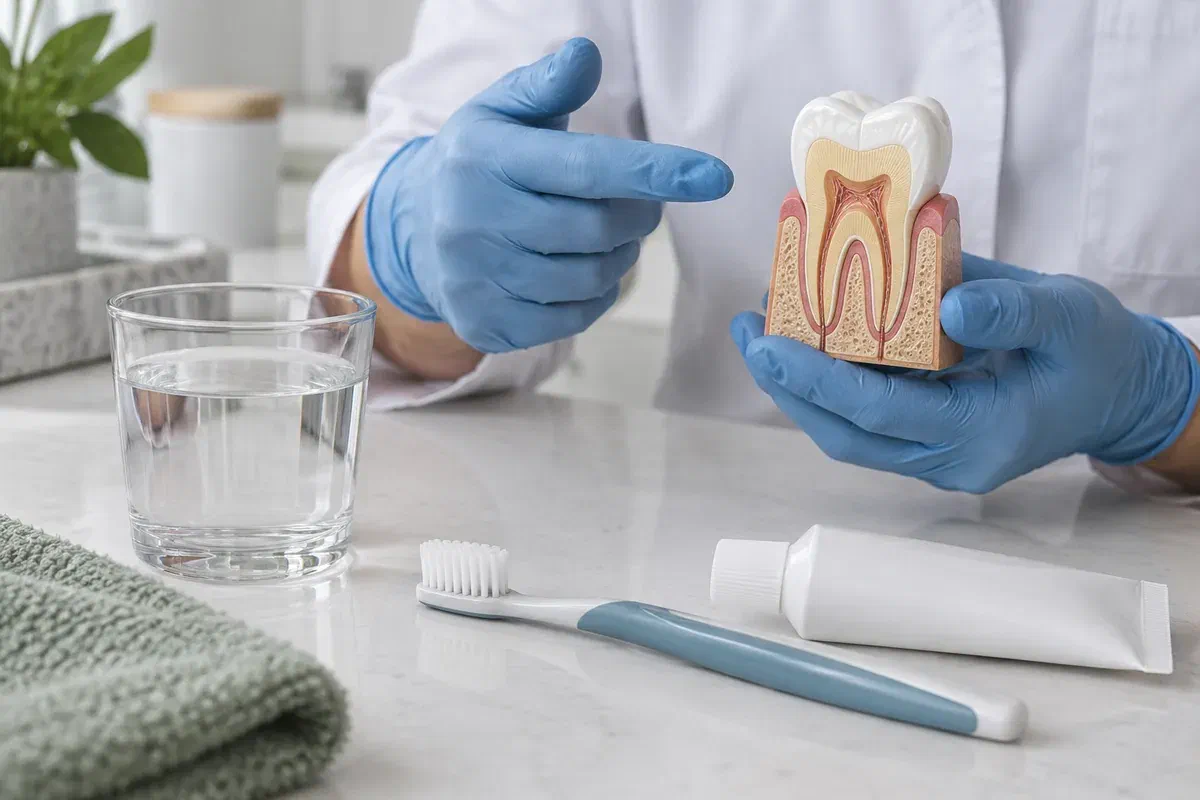
Sensitivity or a slight change in how a tooth looks is often the first sign. An exam separates erosion from decay, brushing abrasion, grinding and other causes of discomfort.
As enamel thins, cold drinks may cause a quick, sharp response. Note which teeth react, whether hot drinks have the same effect, and whether the feeling passes in seconds or lingers.
Upper front teeth may look translucent, chipped or shorter than before. With photographs and an examination, the dentist can work out whether wear is active, older and stable, or something else.
Smooth dips on chewing surfaces, or fillings that now sit higher than the surrounding enamel, can suggest loss. Food may catch in places it never used to. The bite is checked too, because grinding often adds to acid damage.
Colour change alone does not prove erosion. A bleaching kit or a switch of paste can wait until the reason your teeth look different has been worked out.
Early care typically focuses on what you can change: fewer acid exposures, a fluoride product suited to your teeth, sensible brushing habits, and a conversation with your doctor if reflux or repeated vomiting might be contributing. These steps also tend to ease sensitivity.
Lost enamel cannot regrow. When wear causes discomfort, makes chewing harder or changes the look of a tooth, restorations may be planned together with prevention. How much tooth remains and the pattern of loss guide whether a limited composite repair or a more involved plan makes sense.
Patient information: ADA — dietary acids and teeth
Linking your habits and symptoms to the wear pattern gives specific steps rather than a long list of forbidden foods.
Reducing acid at home before restoring helps new work last, and the routine continues to protect teeth between visits.
Some teeth need only observation, others need repair. The plan makes clear when you need to come in and why.
The appointment links what you feel with what can be seen. Not everything has to happen at once: repairs can wait until your new routine has had time to work, or until a doctor has looked into reflux or another medical source of acid.
Tell us about sensitivity, appearance changes, typical drinks and meals, and health concerns. Bring your medication list and the toothpaste and mouthwash you currently use.
The dentist looks closely at enamel, existing fillings and the bite. Photos or scans can capture a baseline, and X-rays are taken only when a specific question calls for them.
We discuss likely causes, products and brushing habits that suit your teeth, and whether any repair is needed now. Ask which steps slow the wear and which replace what is lost.
Review visits compare your teeth and symptoms with the baseline. If wear continues, sensitivity changes or a restoration needs work, the plan is revised.
Use the specific products recommended for you rather than experimenting with several strong ones together. Consistency matters more than intensity.
Sipping an acidic drink slowly keeps teeth exposed for longer. Review your most frequent drinks with us, sugar-free ones included, and make water the usual choice between meals.
Use a soft brush and the fluoride toothpaste advised for you. After brushing, spitting rather than rinsing may help fluoride stay on the teeth; we can confirm what suits you.
Write down when sensitivity, heartburn or dryness occurs and bring it to your review. If a health condition is the source, your doctor may need to be involved.
These questions come up once people start changing their routine. Your own exam decides which advice applies.
Bring your questions from Erin about sensitivity, thinning teeth or worn fillings to our Milton clinic. We will explain what is wearing your enamel, show you the routine that suits it, and say plainly which teeth, if any, need repair.
If pain becomes severe or swelling develops, please call. Online requests are not for urgent care.
